About Our Authors Reading Comprehension Worksheets
Authors can entertain us, introduce us to unforgettable characters, and use their words to explore important ideas about the world. This collection introduces students to twelve influential writers from different countries, cultures, and periods of history. Readers meet figures such as William Shakespeare, Jane Austen, Charles Dickens, Edgar Allan Poe, J.R.R. Tolkien, Maya Angelou, and Gabriel García Márquez while exploring the experiences that shaped their writing. Students also encounter many different forms and styles of literature, including plays, epic poetry, fantasy, mystery, magical realism, satire, and autobiography.
Our Authors Reading Comprehension Worksheets help students strengthen nonfiction reading skills through engaging biographies of famous writers. As they read, students practice identifying main ideas, finding supporting details, following chronological events, recognizing cause and effect, and connecting an author's experiences with the works they created. The passages also introduce useful vocabulary related to literature, historical periods, writing styles, and publishing. These skills help students become more confident readers while giving them a broader understanding of literature and its place in history.
Learning about authors also gives children an opportunity to explore creativity, perseverance, identity, and the power of storytelling. Many of these writers faced financial struggles, personal hardships, social limitations, rejection, or political challenges but continued developing their voices. Students see how childhood experiences, culture, historical events, personal beliefs, and individual interests can influence what an author chooses to write. We hope these worksheets encourage students to appreciate famous literature while becoming curious about the people behind the stories.
Meet the Worksheets
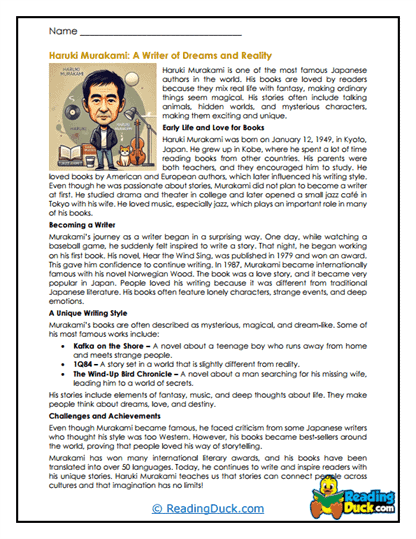
Dreamlike Stories
Students explore the unusual imagination and writing career of Haruki Murakami. They learn how his interests in literature, music, mysterious events, and questions about reality helped shape books such as Kafka on the Shore and The Wind-Up Bird Chronicle. This worksheet strengthens supporting-detail and inference skills by connecting an author's personal interests with characteristics of his writing. Readers also discover how Murakami's distinctive stories have reached audiences from many different cultures.
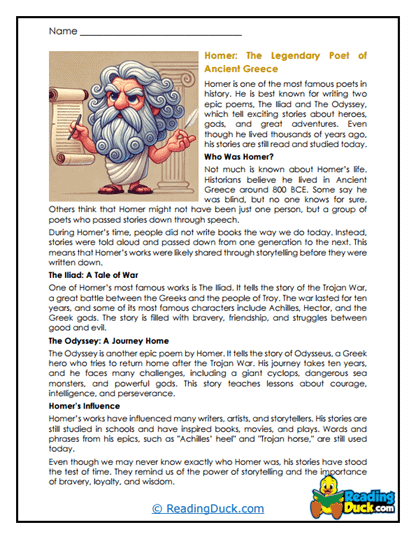
Epic Beginnings
Students travel back to ancient Greece to learn about Homer and the epic poems traditionally associated with his name. They explore The Iliad and The Odyssey while discovering how stories could be passed through oral tradition before eventually being written down. This worksheet strengthens comparison and critical-reading skills by separating what historians know about Homer from what remains uncertain. Readers also examine timeless themes such as courage, loyalty, friendship, and perseverance.
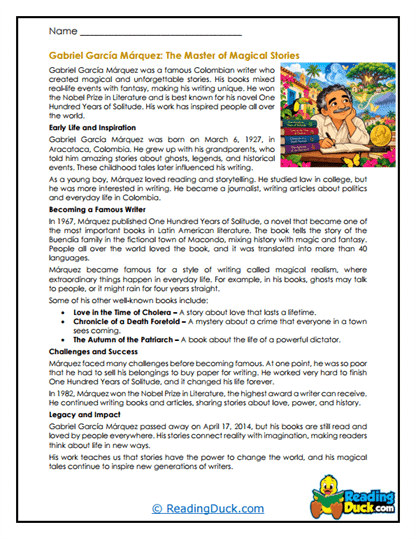
Magical Realities
Students discover how Gabriel García Márquez blended ordinary life with extraordinary events to create unforgettable stories. They learn how his childhood in Colombia and the stories told by his grandparents helped influence the magical realism found in his writing. This worksheet strengthens chronological comprehension by connecting early influences, career challenges, and later accomplishments. Readers also discover how perseverance helped García Márquez progress from financial struggles and rejection to receiving the Nobel Prize in Literature.
Master of Mystery
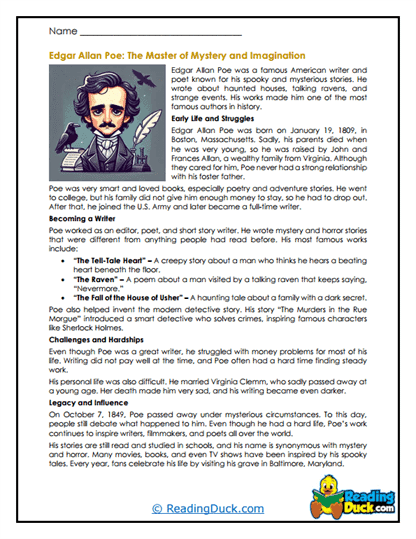
Students explore the life and dark imagination of Edgar Allan Poe. They learn about his difficult childhood and financial struggles while examining famous works such as The Raven and "The Tell-Tale Heart." This worksheet strengthens sequencing and cause-and-effect skills by connecting Poe's experiences with recurring themes in his writing. Readers also discover how his work helped influence horror fiction and the modern detective story.
Middle-earth Maker
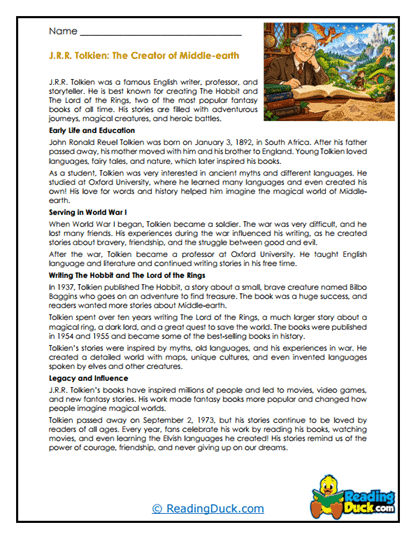
Students discover how J.R.R. Tolkien transformed his fascination with languages, legends, and mythology into the fantasy world of Middle-earth. They follow his journey from childhood and military service to his work as an Oxford professor and the author of The Hobbit and The Lord of the Rings. This worksheet strengthens biographical comprehension by connecting Tolkien's interests and experiences with his writing. Readers also explore how one carefully imagined world can inspire generations of books, movies, games, and other creative works.
Powerful Novels
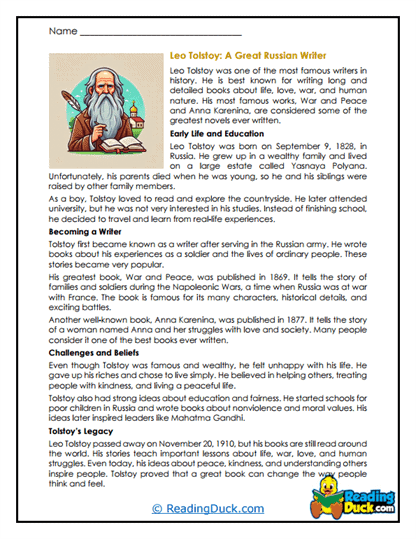
Students explore the life and ideas of Russian author Leo Tolstoy. They learn about his childhood, military experiences, changing beliefs, and famous novels such as War and Peace and Anna Karenina. This worksheet strengthens chronological and cause-and-effect comprehension by connecting Tolstoy's experiences with the subjects and ideas in his writing. Readers also discover how his interests in education, kindness, simplicity, and nonviolence extended his influence beyond literature.
Powerful Voice
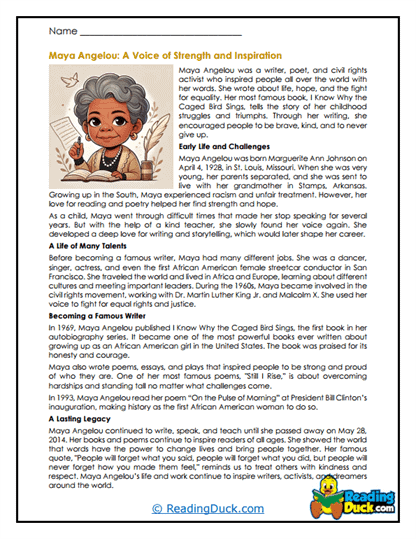
Students follow Maya Angelou's journey from a difficult childhood to a remarkable career as a writer, poet, performer, teacher, and civil rights activist. They learn about I Know Why the Caged Bird Sings while exploring how Angelou used personal experiences to write about identity, equality, strength, and perseverance. This worksheet strengthens comprehension by helping readers identify important challenges, accomplishments, and turning points. Students discover how writing can become a powerful way to encourage others and speak about injustice.
Quiet Rebellion
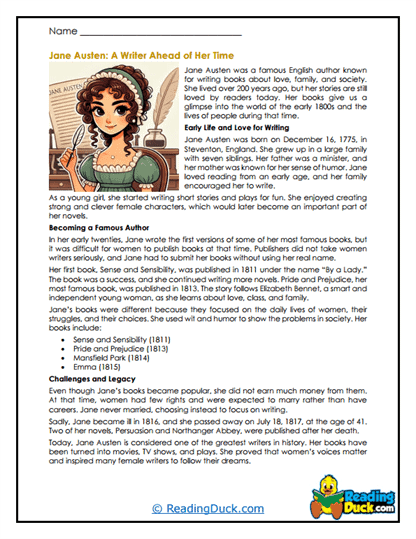
Students learn how Jane Austen became a successful novelist during a time when women writers faced significant limitations. They explore works such as Pride and Prejudice, Sense and Sensibility, and Emma while examining how Austen used humor and memorable characters to write about society and women's lives. This worksheet strengthens sequencing and evidence-based comprehension by connecting historical conditions with Austen's career. Readers also consider how an author's influence can continue growing long after their lifetime.
Riverboat Storyteller
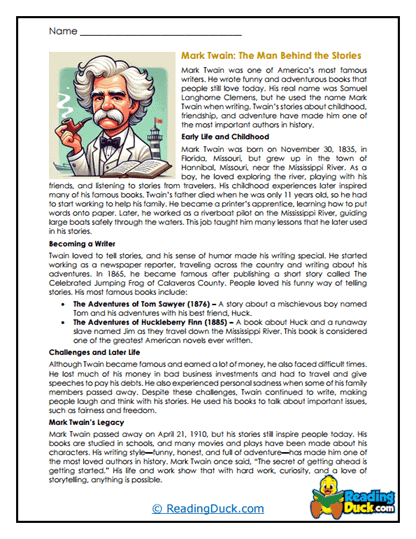
Students discover how Samuel Clemens became Mark Twain and transformed his experiences along the Mississippi River into memorable American stories. They learn about his work as a riverboat pilot, journalist, and author while exploring The Adventures of Tom Sawyer and Adventures of Huckleberry Finn. This worksheet strengthens sequencing and supporting-detail skills by connecting Twain's personal experiences with his writing. Readers also see how humor and adventure can be used to explore more serious subjects.
Stage and Stories
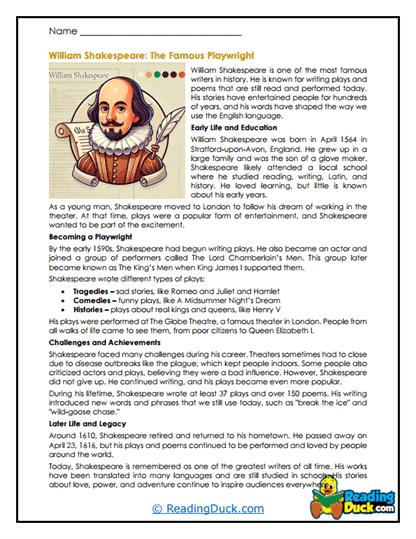
Students explore the life and remarkable career of William Shakespeare. They learn about his childhood in Stratford-upon-Avon, move to London, work in the theater, and famous tragedies, comedies, and histories such as Hamlet, Romeo and Juliet, and A Midsummer Night's Dream. This worksheet strengthens sequencing and classification skills by helping readers organize events and distinguish among different kinds of writing. Students also discover why Shakespeare's influence on literature, theater, and language has lasted for centuries.
Truth Through Words
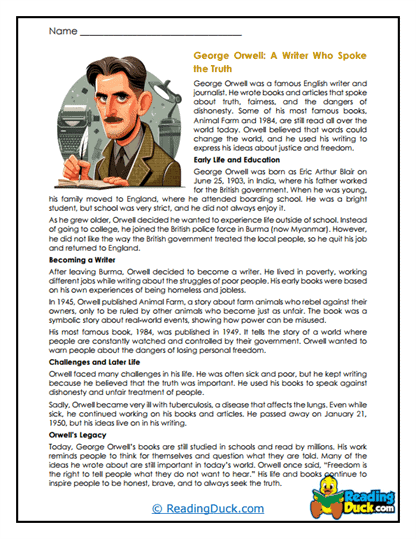
Students investigate how George Orwell used fictional stories to explore ideas about truth, freedom, government, and power. They learn about experiences that influenced his career while examining famous works such as Animal Farm and 1984. This worksheet strengthens comprehension by connecting biographical details with important themes in Orwell's writing. Readers also consider why questions about truth and independent thinking can keep literature relevant long after it is published.
Voice for Change
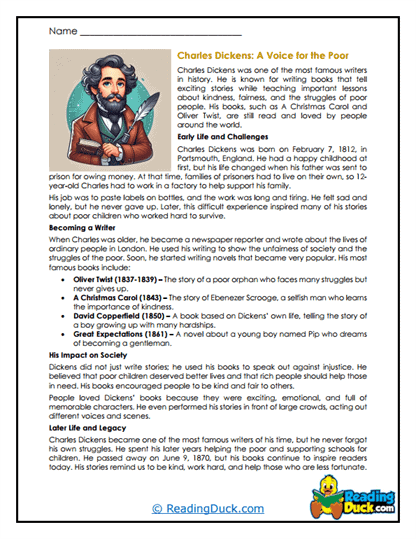
Students discover how Charles Dickens used memorable characters and powerful stories to draw attention to poverty and unfair treatment in Victorian England. They learn how his difficult childhood influenced novels such as Oliver Twist, A Christmas Carol, David Copperfield, and Great Expectations. This worksheet strengthens cause-and-effect comprehension by connecting real experiences with later creative work. Readers also see how literature can entertain an audience while encouraging people to think about problems in society.
A Better Look At Authors
Authors throughout history have used words to entertain, inform, challenge, and inspire their readers. Some created imaginary worlds filled with heroes and adventures, while others wrote about injustice, relationships, mystery, freedom, identity, or the societies in which they lived. Their personal experiences and historical surroundings often played an important role in shaping the stories they chose to tell. Studying these writers helps students understand that literature can reflect both an author's individual imagination and the larger world around them.
Reading about authors also helps students become stronger readers while introducing them to literature, history, culture, and creative expression. They practice following biographies, comparing writing styles, identifying challenges and accomplishments, recognizing cause-and-effect relationships, and explaining how experiences can influence an author's work. Just as importantly, these stories demonstrate how curiosity, persistence, imagination, and a distinctive voice can leave a lasting impact. With every passage, students gain reading confidence while discovering the people behind some of the world's most influential stories and ideas. Pasted text
Make sure to bookmark our website now.
Enjoy all our free reading worksheets.
Our materials adhere to the principles of the Science of Reading.