About Our Comedians Reading Comprehension Worksheets
Comedians have entertained audiences for generations by finding creative ways to make people laugh. This collection introduces students to twelve influential performers who helped shape stand-up comedy, television, movies, and entertainment. Readers meet figures such as Charlie Chaplin, Lucille Ball, Richard Pryor, Robin Williams, Eddie Murphy, Tina Fey, and Kevin Hart while exploring the experiences that shaped their careers. Students also discover that comedy can involve much more than telling jokes, including physical humor, acting, writing, impressions, music, social commentary, and creative storytelling.
Our Comedians Reading Comprehension Worksheets help students strengthen nonfiction reading skills through engaging biographies of famous entertainers. As they read, students practice identifying main ideas, finding supporting details, following chronological events, recognizing cause and effect, examining character traits, and connecting challenges with accomplishments. The passages also encourage readers to consider how comedians developed distinctive styles and responded to setbacks throughout their careers. These skills build reading confidence while introducing students to the history and development of comedy.
Learning about comedians also gives children an opportunity to explore perseverance, creativity, individuality, and courage. Many of these performers spent years working in small clubs, experienced rejection or failure, challenged expectations, or took major risks before finding success. Students see how childhood experiences, personal interests, social issues, and changing entertainment industries can all influence a performer's career. We hope these worksheets help readers appreciate the work behind the laughter while showing how determination and creativity can lead people in unexpected directions.
Meet the Worksheets
Breaking Barriers
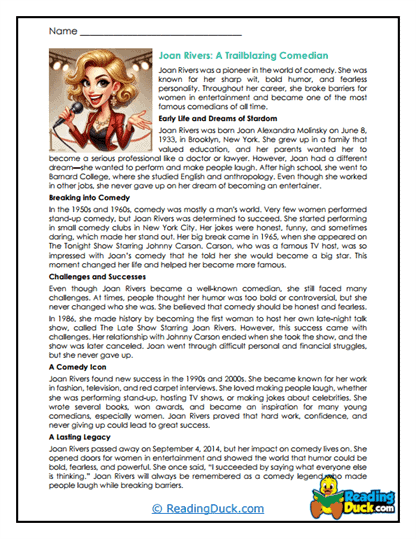
Students explore how Joan Rivers built a comedy career during a time when relatively few women performed stand-up professionally. They follow her journey from small comedy clubs to The Tonight Show and later television, fashion, and red-carpet work. This worksheet strengthens sequencing and supporting-detail skills while highlighting important accomplishments and setbacks. Readers also discover how Rivers' determination helped open doors for future generations of female comedians.
Comedy Courage
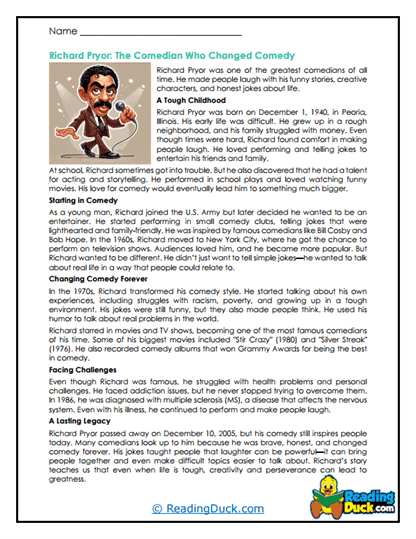
Students learn how Richard Pryor transformed his comedy by becoming increasingly open about his experiences, struggles, and observations. They follow his journey from a difficult childhood in Illinois to comedy clubs, successful albums, stand-up performances, and movies. This worksheet strengthens biographical and cause-and-effect comprehension by connecting changes in Pryor's life with changes in his comedy. Readers discover how taking creative risks helped him influence many performers who followed.
Comedy Trailblazer
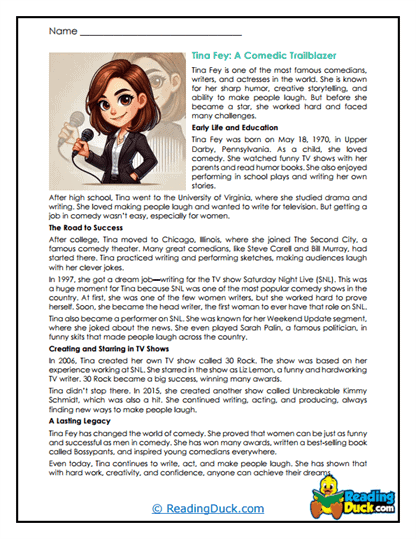
Students follow Tina Fey's journey from studying and performing comedy to becoming a groundbreaking writer and television star. They learn about Second City, Saturday Night Live, 30 Rock, Mean Girls, and her achievement as the first female head writer in SNL history. This worksheet strengthens chronological comprehension by helping readers organize major career events and accomplishments. Students also see how determination and strong writing skills helped Fey break barriers for women in comedy.
Comic Heart
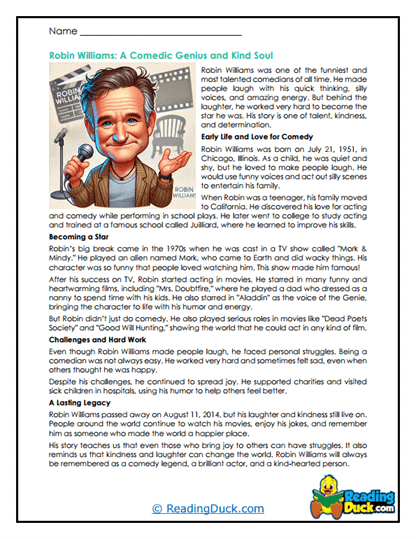
Students explore Robin Williams' career as a comedian and actor known for both rapid-fire humor and emotional performances. They learn about his training, breakthrough on Mork & Mindy, and memorable roles in movies such as Mrs. Doubtfire, Aladdin, and Good Will Hunting. This worksheet strengthens comprehension by asking readers to identify important events and character traits throughout his life. Students also discover how Williams used his success and humor to help and entertain others.
Creative Comedy
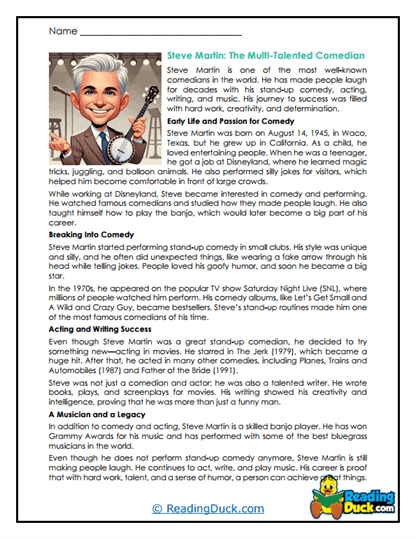
Students discover how Steve Martin created an unusual comedy style by combining jokes with magic, juggling, music, and unexpected humor. They follow his journey from working at Disneyland to performing stand-up, appearing on Saturday Night Live, acting in movies, writing, and playing music. This worksheet strengthens sequencing and supporting-detail skills by connecting Martin's early interests with his later accomplishments. Readers see how exploring different talents can lead to a creative and varied career.
Laughing Forward
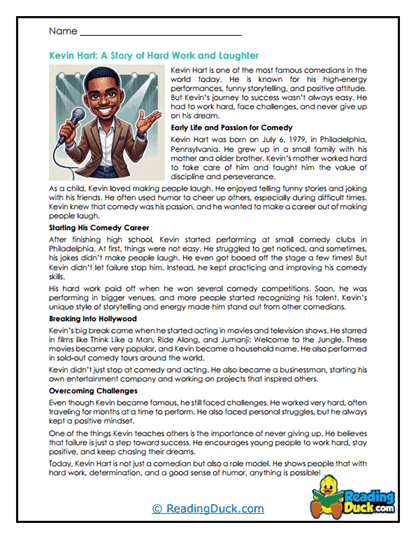
Students learn how Kevin Hart turned years of practice and early failures into a successful entertainment career. They follow his journey from small comedy clubs and difficult performances to comedy competitions, major movies, and business ventures. This worksheet strengthens comprehension by helping readers identify challenges, accomplishments, and character traits. Students also discover how learning from failure and continuing to improve can help someone move toward a long-term goal.
Laughing Legend
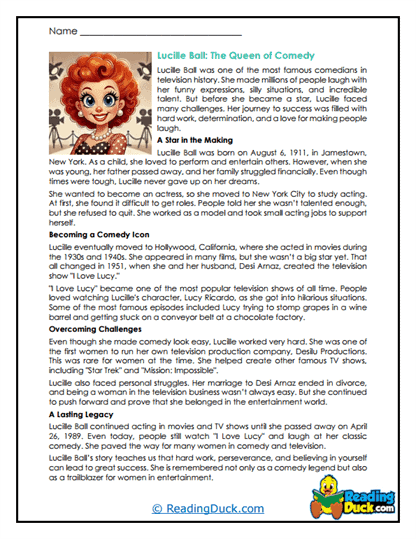
Students explore how Lucille Ball became one of television's most influential comedy stars. They learn about her early struggles as an actress, the enormous success of I Love Lucy, and her groundbreaking work behind the scenes at Desilu Productions. This worksheet strengthens biographical comprehension by connecting obstacles with important accomplishments. Readers discover how Ball influenced entertainment both as a performer and as the first woman to run a major television studio.
Rocking Comedy
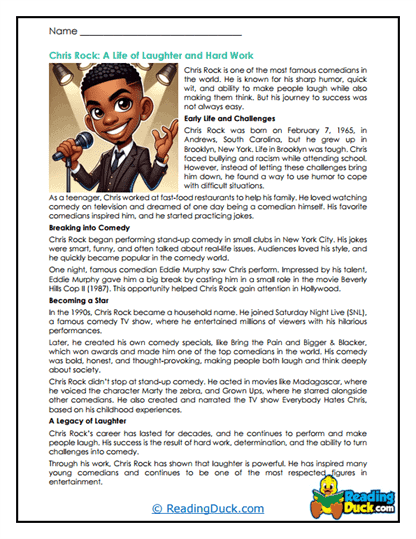
Students follow Chris Rock from a challenging childhood in Brooklyn to a decades-long career in comedy. They learn how persistence led from small New York comedy clubs to Saturday Night Live, successful stand-up specials, movies, television, and voice acting. This worksheet strengthens supporting-detail and chronological reading skills by organizing important challenges and achievements. Readers also see how Rock developed a distinctive comedic voice by using humor to discuss serious subjects.
Silent Smiles
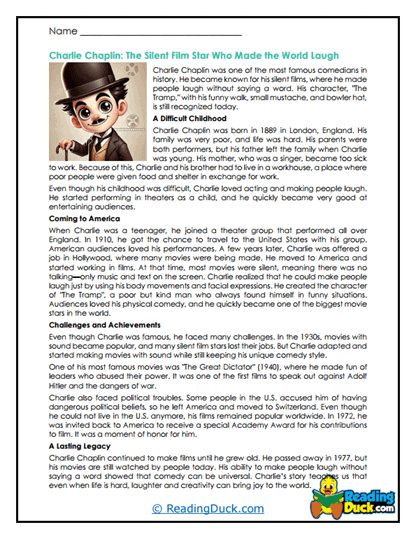
Students travel back to the era of silent movies to learn how Charlie Chaplin became one of the world's most recognizable comedians. They explore his difficult childhood, early stage performances, famous Tramp character, and ability to adapt as filmmaking changed. This worksheet strengthens sequencing and cause-and-effect skills by connecting challenges with Chaplin's creative responses. Readers also discover how he eventually used comedy in movies such as The Great Dictator to communicate larger ideas.
Superstar Laughs
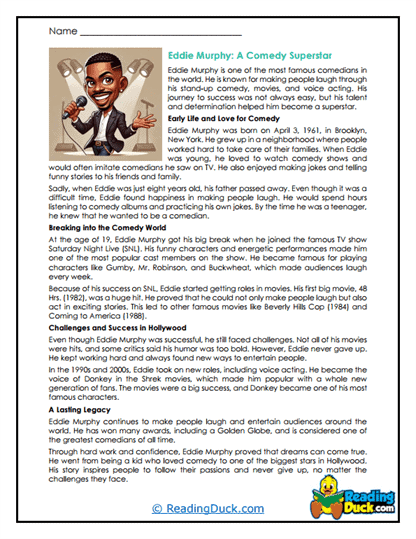
Students discover how Eddie Murphy became a comedy star while still remarkably young. They follow his early performances and impressions through his breakthrough on Saturday Night Live and later movies such as Beverly Hills Cop, Coming to America, and Shrek. This worksheet strengthens sequencing and perseverance-based comprehension by examining both major successes and career setbacks. Readers see how continuing to work through disappointments helped Murphy build a lasting entertainment career.
Thinking Laughs
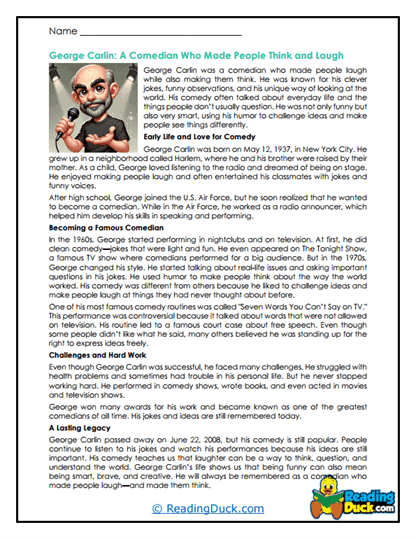
Students explore how George Carlin used comedy not only to entertain audiences but also to make them question familiar ideas. They follow his journey from radio work and early stand-up to a distinctive style focused on language, society, politics, and everyday life. This worksheet strengthens chronological and cause-and-effect comprehension while examining the controversies surrounding some of Carlin's work. Readers discover how humor can become a way of expressing ideas and encouraging audiences to think differently.
Walking Away
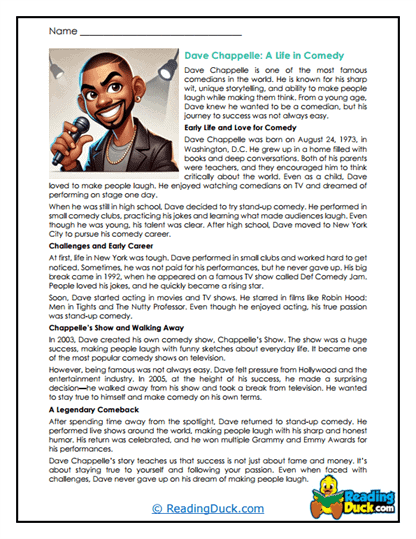
Students examine Dave Chappelle's unusual decision to step away from enormous success at an important point in his career. They follow his journey from small comedy clubs to Chappelle's Show and explore why pressure within the entertainment industry influenced his decision to leave. This worksheet strengthens cause-and-effect and motivation-based comprehension by asking readers to consider the reasons behind major choices. Students also discover that personal definitions of success can involve more than fame, popularity, or money.
A Better Look At Comedians
Comedy can take many forms, from Charlie Chaplin's silent physical humor to stand-up performances, television sketches, movies, impressions, social commentary, and creative writing. Each comedian in this collection developed a distinctive approach based partly on individual talents, experiences, and interests. Some broke barriers within the entertainment industry, while others challenged audiences to think about serious subjects through humor. Studying their careers helps students understand that making people laugh often requires creativity, observation, practice, courage, and an ability to connect with an audience.
Reading about comedians also helps students become stronger readers while introducing them to entertainment history and creative expression. They practice following biographies, recognizing cause-and-effect relationships, identifying challenges and accomplishments, examining motivations, and using details to understand character traits. Just as importantly, these stories show that successful careers rarely follow perfectly smooth paths and often include rejection, experimentation, setbacks, and change. With every passage, students gain reading confidence while discovering the people, ideas, and experiences behind some of comedy's most recognizable performers. Pasted markdown
Make sure to bookmark our website now.
Enjoy all our free reading worksheets.
Our materials adhere to the principles of the Science of Reading.