Louisa May Alcott's Little Women is a beloved classic that has touched the hearts of readers for generations. With its strong characters, rich themes, and relatable life lessons, this novel provides the perfect foundation for helping students explore literature in an accessible and inspiring way. Our worksheet collection is designed to bring this timeless story to life for young readers through a variety of thoughtful and interactive exercises.
Each printable worksheet in this collection includes reading comprehension questions, vocabulary-building tasks, character analysis prompts, and theme exploration activities. Students are invited to think critically about the choices and experiences of the March sisters while practicing key literacy skills.
A Look At Each Worksheet
Amy's Transformation
This worksheet traces Amy's arc from vain, youngest sister to more thoughtful, confident young woman-with the kind of glow-up that makes teachers cheer. Through three engaging prompts, it invites readers to reflect on how Amy changes across chapters, and encourages comparisons to real-life growth moments. It's like watching a bird fledge-and then asking why leaving the nest is so bittersweet (in the best possible way).
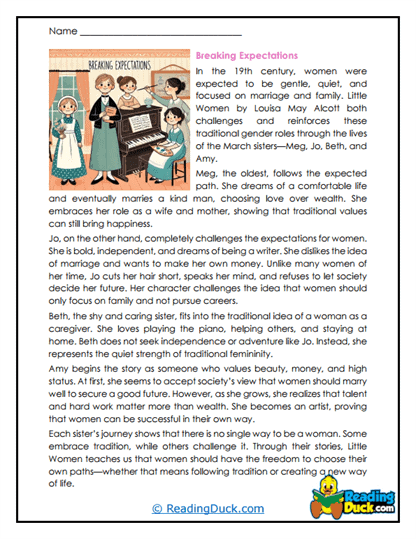
Breaking Expectations
Here's a worksheet that gleefully smashes assumptions-whether it's about gender roles or a sister's behavior. It challenges learners to spot where characters defy norms, and then invites personal parallels ("When have you surprised someone-and yourself?"). It's fiercely empowering, full of insight, and perfect for sparking lightbulb moments.
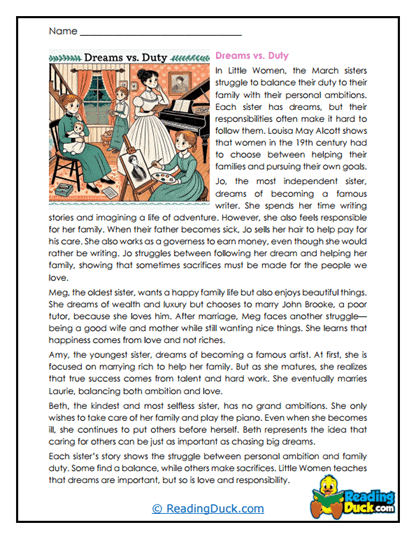
Dreams vs. Duty
Life is full of crossroads, and this worksheet places students right at the intersection-Jo's ambition versus the demands of family, for instance. The three tasks encourage weighing options, understanding consequences, and relating those pressures to their own lives. It's a thoughtful tug-of-war that teaches that conflicts aren't villains-they're characters in our own stories.
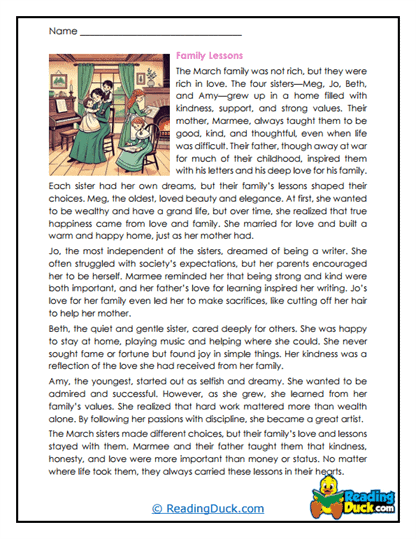
Family Lessons
All those March family dinners? They're packed with teachable moments, and this worksheet plucks them out with charm. Through targeted questions, it helps students pinpoint key values-loyalty, kindness, responsibility-and consider how those lessons still echo today. It reads like a cozy chat over cocoa with Marmee, but with better reflection.
Future Finds
This prompt invites students to peer into the future-of characters, themselves, or even the world they live in. It gently nudges them to link decisions made in the story to possible outcomes ahead. It's less fortune-telling and more "what-if thinking"-great for sparking creativity and smart forecasting.
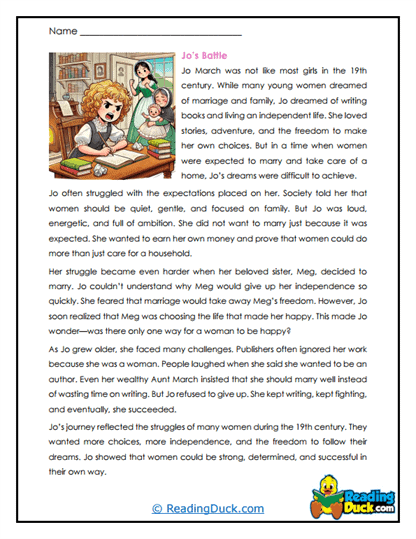
Jo's Battle
Not all battles require swords-Jo's is one of words, identity, and independence. This worksheet hones in on her internal and external struggles with an engaging structure that helps readers articulate her conflict and relate it to their own stand-offs. It's honest, bold, and feels like celebrating quiet courage.
Lasting Wisdom
What pearls of wisdom have the March sisters left behind? This worksheet curates the sage tallies and invites students to weigh their meaning-and perhaps to offer their own budding wisdom in return. It's learning that feels evergreen and deeply anchored in heart.
Laughter and Lessons
A worksheet that knows humor isn't trivial-it's transformative. It highlights the funniest moments of the novel and helps students unpack what's behind the laughter: humility, relief, or a lesson disguised as a joke. It's like academic clowning-unexpectedly deep and hugely fun.
Lessons of Sacrifice
Here's where the tissue box might make an appearance. This worksheet prompts readers to confront Beth's illness, the March girls' sacrifices, and what selflessness actually means. It's sensitive, sob-worthy, deeply human-and perfect for forging empathy.
Love and Choices
Romance, friendship, family ties-the Marches navigate them all. This worksheet tightens its focus on decision points colored by love, asking students to consider motivations, consequences, and alignment with personal values. It's matchmaking meets morality-subtle, sweet, and revealing.
Sister Journeys
Separate paths, shared roots. This worksheet tracks the sisters' individual journeys-geographic, emotional, and aspirational-and asks students to compare and connect them. It reads like genealogy for feelings, with insightful side-glances at sisterhood.
War and Home
Set against Civil War shadows, this prompt draws lines between the battlefield and the hearth. It invites students to examine how conflict shapes family, growth, and individual purpose. It's history, literature, and ethics rolled into compassionate questions.
How the Worksheets Connect to the Novel
Each worksheet in the collection is thoughtfully designed to align with key moments, characters, and themes from the novel. From Jo's dream of becoming a writer to Beth's quiet strength, and from Meg's family-first values to Amy's creative ambition, students explore each sister's journey through targeted questions and writing prompts.
The worksheets address literary elements such as plot development, character change, conflict resolution, and moral lessons. They also guide students through the novel's exploration of gender roles, personal sacrifice, and the meaning of success-helping them see how the story remains relevant today.
By making these connections clear and accessible, the worksheets ensure that students don't just read-they truly understand it. They come away with a richer, more personal connection to the novel and a better understanding of how literature reflects life.
Summary of Little Women
(By Louisa May Alcott - retold for young readers)
A long time ago, during the time of the Civil War in America, there lived four sisters: Meg, Jo, Beth, and Amy March. They lived in a cozy little house with their kind mother, whom they lovingly called "Marmee." Their father was away, serving as a chaplain in the war, so the girls had to be extra strong and help each other through hard times.
Even though the March family didn't have a lot of money, they were rich in love. They worked hard, played games, and looked after each other. Each sister was different, with her own dreams and personality. Meg was the oldest and the most proper. She dreamed of living in a beautiful house and having nice clothes. Jo, the second sister, was bold and full of energy. She loved to write stories and didn't like to act like a "proper lady." Beth was the shy and gentle one. She loved playing the piano and helping others. The youngest, Amy, was a little dramatic and loved painting and drawing. She often dreamed of being famous someday.
The story follows the girls as they grow up, learn lessons, and go through happy and sad times. They don't always get what they want, and sometimes they argue, but they always come back together with love. One snowy Christmas, they decide to give away their breakfast to a poor family, even though they are hungry themselves. This shows how kind they are and how much they care about others.
Their neighbor, a rich boy named Laurie, becomes one of their best friends. He lives with his grandfather in a big house next door. Laurie loves spending time with the March girls and even joins in their fun plays and secret clubs. Jo and Laurie especially become very close. They're like best friends, always laughing and going on adventures together.
As the girls get older, life changes. Meg falls in love with a kind man named John Brooke and gets married. Jo works hard on her writing and even moves to New York for a while. Beth becomes sick, and the whole family worries and takes care of her. Sadly, Beth's illness doesn't go away, and she passes away peacefully, which brings both sadness and love to the family.
Amy grows up and travels to Europe with their rich aunt. There, she meets Laurie again. This time, something changes, and they fall in love and get married! At first, Jo is surprised, but she is happy for them. Later, Jo meets a smart and kind man named Professor Bhaer. They share a love for books and learning, and Jo finds her own kind of love with him.
In the end, Jo opens a school for boys and girls, where they can learn in a fun and loving way-just like how she and her sisters grew up. The March family may have had hard times, but they always stayed strong by loving each other and helping those around them.
The big lesson in Little Women is that growing up isn't always easy, but being kind, staying true to yourself, and caring for your family makes everything better. Each sister has her own path, and that's okay. Their hearts stay close, no matter where life takes them.
Make sure to bookmark our website now.
Enjoy all our free reading worksheets.
Our materials adhere to the principles of the Science of Reading.