Each worksheet in this collection is carefully crafted around a reading passage from The Day the Crayons Quit, a humorous and emotionally intelligent story told through a series of letters written by discontented crayons.
The worksheets include a structured progression of activities: beginning with multiple-choice questions to assess basic comprehension, followed by short-answer prompts encouraging textual evidence and analysis, and culminating in open-response questions designed to spark critical thinking and deeper engagement. These printable PDFs are designed for immediate classroom use, whether for guided instruction, independent work, or homework. Every question aligns with key English Language Arts (ELA) standards, focusing on core skills such as theme analysis, vocabulary development, character understanding, and author's craft. Whether you're teaching in a physical classroom or supporting learning at home, these worksheets provide a ready-made, pedagogically sound way to bring literature alive.
Picture a box of crayons so fed up, they stage a letter-writing strike-each crayon with grievances, demands, and a healthy dose of sass. That's the premise of The Day the Crayons Quit by Drew Daywalt, illustrated by Oliver Jeffers. It's a picture-book masterpiece where inanimate coloring tools find their voices-and boy, do they have things to say. The result is uproarious, emotionally clever, and sneakily educational: kids laugh, adults nod in recognition, and everyone learns that even crayons-and people-deserve to be heard.
A Look At Each Worksheet
Color Clash
This worksheet invites students into a dramatic showdown among crayons, setting the stage for them to analyze conflict and perspective in a playful yet focused way. As young readers weigh each crayon's "complaint," they practice identifying differing viewpoints and tone. It's an engaging launch pad for discussion that's both colorful and contemplative.
Color Complaints
Here, learners sift through letter-style complaints to infer emotions and motivations behind each crayon's gripe. The worksheet encourages careful reading and inference as students connect feelings to textual clues. It's fun, empathetic, and subtly sharpens emotional vocabulary skills.
Colorful Emotions
Students step into the vibrant world of feelings with this activity-decoding mood, tone, and emotional nuance from each crayon's letter. The exercise blends empathy with analysis, asking budding readers to recognize how word choice and punctuation convey tone. It's both colorful and emotionally intelligent.
Colorful Personalities
This worksheet brings each crayon's unique persona to the forefront, encouraging students to compare, contrast, and classify character traits. As they assess traits, motivations, and quirks, they build understanding of characterization in a lively, engaging context. It's like a character party in worksheet form-with educational flair.
Crayon Voices
Voice takes center stage here, as students examine how each crayon expresses itself through word choice, tone, and style. The worksheet helps students recognize authorial voice and how articulating distinct characters builds meaning in narrative. It's literary experimentation dressed in bright crayons.
Creative Chaos
Students dive into the messy magic of a crayon revolt, unpacking the emotional and narrative impact of chaos in storytelling. This worksheet encourages learners to reflect on how disruption and creativity interplay to advance theme and tone. It's playful, smart, and just a bit mischievous.
Creative Fixes
After the chaos comes the creativity-this worksheet guides students to analyze solutions offered in the story and connect them to themes like collaboration and innovation. It's an imaginative space where students consider how problems can be resolved with heart and smarts. Engaging, wise, and resourceful.
Feelings Spectrum
Here, students map emotions across a spectrum, comparing and contrasting how different crayons feel and why. The activity hones inference and emotional literacy, encouraging students to step into multiple perspectives with nuance. It's analytical and heartwarming in equal measure.
Lasting Lessons
The big takeaways are spotlighted here: students distill central themes and message from the crayons' letters. This worksheet underscores lessons of empathy, self-expression, and creative problem-solving. It's reflective, meaningful, and beautifully connects story to life.
Overworked Colors
Students explore burnout through the eyes of overused crayons-deepening comprehension by linking textual evidence to emotional and character-driven inferences. The worksheet sensitively introduces concepts like balance and fairness within an engaging, familiar frame. It's smart, gentle, and resonant.
Silly Scribbles
Creativity meets comprehension in this lighthearted activity, where students interpret doodles or "scribbles" as clues to tone, mood, and subtext. The worksheet invites playful interpretation while building inference skills. It's joyfully analytical-the kind of learning that sneaks up while having fun.
Solution Splash
This closing worksheet lets students splash into the heart of resolution: how each crayon's issue finds its creative fix. They reflect, summarize, and celebrate storytelling's power to resolve conflict and foster understanding. It's satisfying, educational, and full of narrative color.
Summary of The Day the Crayons Quit
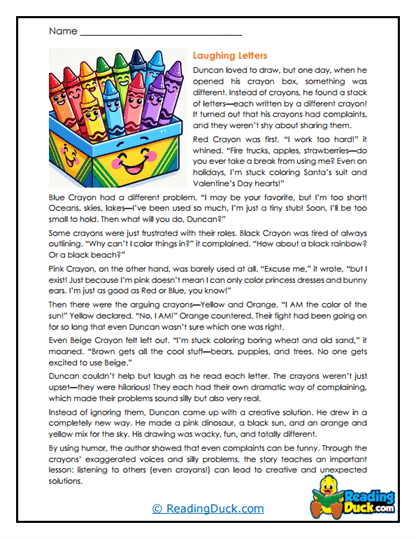
Written by Drew Daywalt and illustrated by Oliver Jeffers, The Day the Crayons Quit is a fun and creative story about a boy named Duncan who just wants to color. But when he opens his crayon box, he finds a stack of letters-each written by a different crayon! One by one, the crayons explain how they're feeling: Red is tired from working too hard, Pink feels ignored, Blue is worn down, and Yellow and Orange are arguing about who should be the color of the sun. Every crayon has its own personality and opinion about how it's being used (or not used), and they've decided they've had enough-they quit!
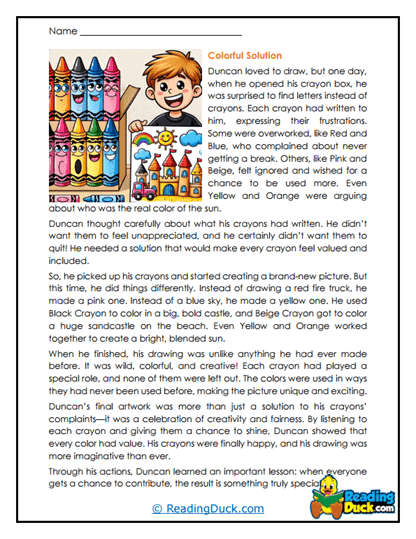
Duncan listens to their complaints and decides to find a creative solution. By the end of the story, he uses all the crayons in a new and imaginative way, giving each one a chance to shine in his colorful masterpiece.
Message and Theme Explanation
At its heart, The Day the Crayons Quit is a story about understanding, empathy, and creativity. Each crayon has a different point of view and feelings, just like people do. The book teaches readers to listen to others, even if they seem small or quiet, and to think about how everyone wants to feel seen, appreciated, and respected.
It also encourages readers to think outside the box-just like Duncan does when he solves the problem by coloring in a whole new way. The story reminds us that there isn't just one right way to do things, and that using your imagination and being kind can lead to amazing results.
Make sure to bookmark our website now.
Enjoy all our free reading worksheets.
Our materials adhere to the principles of the Science of Reading.