Shakespeare's Julius Caesar is one of the most famous plays in literature, filled with drama, powerful speeches, and unforgettable characters. Set in ancient Rome, it explores timeless themes like loyalty, power, betrayal, and the meaning of true leadership. While the language may seem challenging at first, the story is thrilling and full of life lessons that still matter today.
Our printable worksheets are designed to help students dive deeper into this classic in a way that's age-appropriate and meaningful. The collection includes comprehension questions, vocabulary activities, character explorations, theme analysis, and writing prompts that encourage critical thinking. Each worksheet focuses on a key part of the play, guiding students through the plot while building skills.
Students won't just read about Caesar, Brutus, and Mark Antony-they'll think about their choices, discuss their motives, and connect those ideas to their own lives. These activities help students become active readers and confident learners who are excited to explore big ideas through literature.
A Look At Each Worksheet
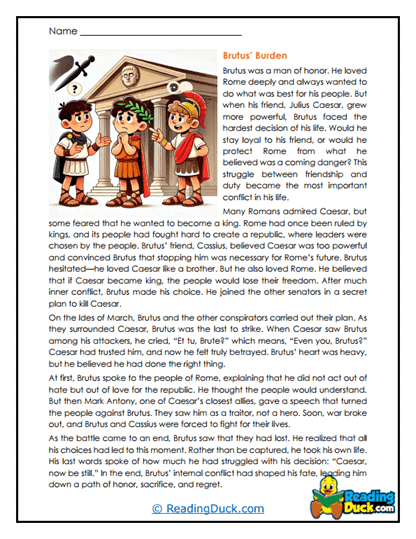
Brutus' Burden
This worksheet invites students to step into Brutus's sandals and weigh the heaviest of moral decisions-friendship versus duty. Through thoughtful prompts, learners reflect on Brutus's internal conflict with a mix of empathy and curiosity. It's like a moral tug-of-war that entertains while sharpening critical thinking.
Calpurnia's Dream
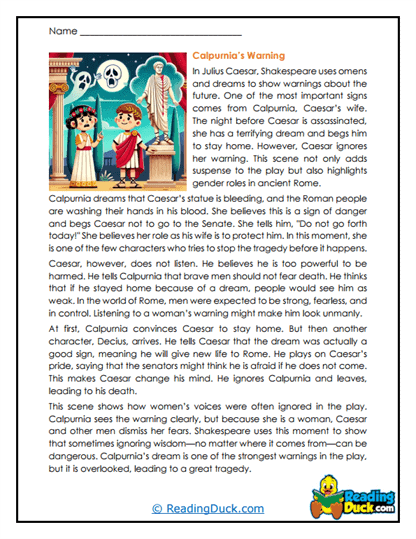
Here, students dive into one of the creepiest dreams in literature (sorry, Sandman, you've got competition). They'll explore symbols, foreshadowing, and what it feels like when you have that "bad-things-are-about-to-happen" hunch. Expect insightful interpretations with a dash of "creepy prophecy fun."
Cassius' Scheme
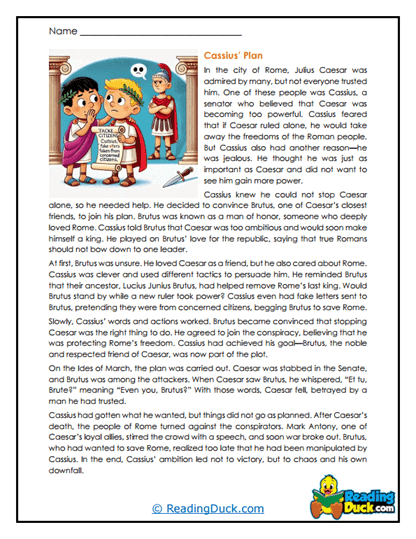
With persuasive flair as slippery as an eel, Cassius's plotting becomes prime reading material for inference and motive analysis. Students get to smell the manipulation from a mile away-unless they're totally drawn into the drama, which is the goal. It's a mini-masterclass in how to spot political whispering at an early age.
Classic Clash
Here lies a showdown of ideas, power, and personalities-think rhetorical smackdown meets intellectual showdown. Students are encouraged to see how conflict propels plot and character growth with a mix of clarity and delight. It's where literary friction sparks flame; no jackets required, but thinking caps are highly recommended.
Crowd Control
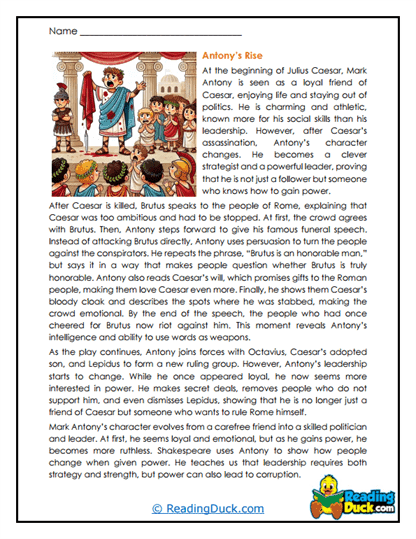
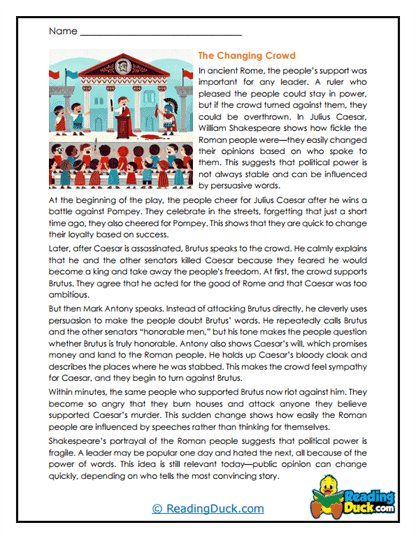
Masses in motion and rhetoric on point-this sheet brings Mark Antony's manipulative genius into the classroom, with a focus on how crowds flip faster than a pancake. Learners examine how speeches wield sway and how language shapes loyalty. Expect discussions that might even spill into "if I were a Roman mob..." role-playing.
Fateful Choice
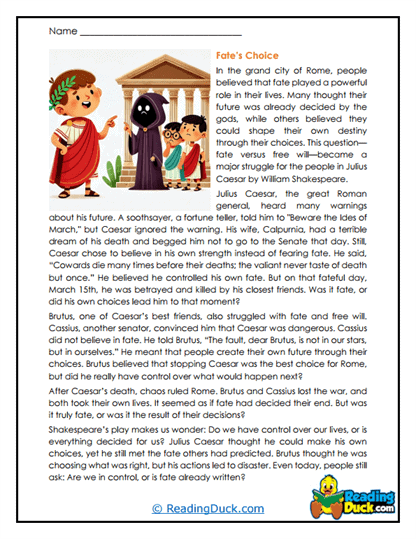
Zoom in on that gut-wrenching moment when destiny and free will tango-and Brutus must choose his step. The worksheet encourages students to trace cause and effect, highlighting how one decision ripples into catastrophe. Touches of gravity and humor make it memorable without feeling like a history lecture.
Ominous Signs
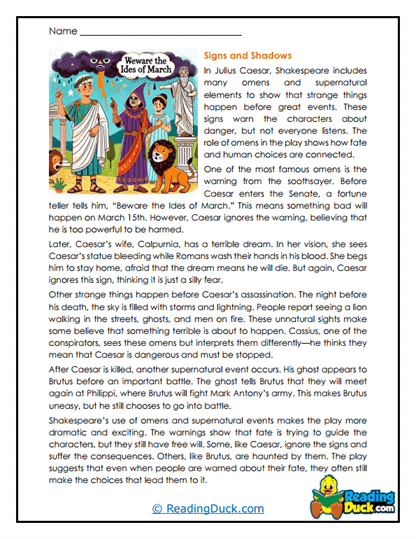
Light the shadowy candles-portents are afoot. Students interpret eerie signals (crows, storms, your uncle's weird twitch) and discuss how mood and tone affect plot direction. This one is half literary analysis, half "let's pretend we're in the Senate and something creepy just happened."
Power Clash
Here, power grabs center stage with clashing wills and shifting loyalties. Students will weigh who's really in charge and how power dynamics shift with subtle tactics and loud declarations. Think boardroom drama...only with togas and possibly more daggers.
Power Struggle
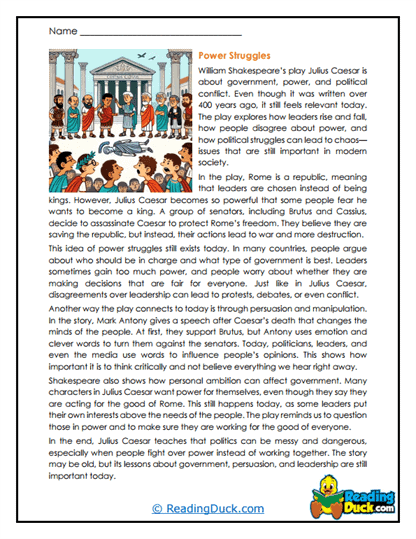
A deeper dive into that heavy tug-of-war over who runs Rome, this sheet helps students unpack motives, alliances, and the messy consequences of ambition. The language is serious-but the discoveries will be lively, insightful, and maybe a bit dramatic (in a good way).
Rising Rhetoric
Wordplay, persuasion, crescendo: this worksheet spotlights how language builds tension and branding for a cause. Students analyze metaphors, cadence, and how one speech can rally-or unravel-a nation. After this, "rhetoric" might feel more like a superpower than a school subject.
Speech Duel
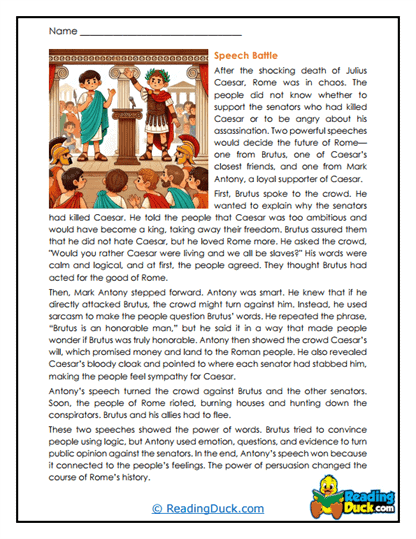
Get your gladiator helmets ready-this is a showdown of speeches, heart versus head, emotion versus logic. Students compare different orators in the play, unpacking what makes language persuasive or chilling. It's lively, enlightening, and the kind of exercise that might spark real debate (i.e., "Mom, which speech is better, Antony's or Brutus's?").
Tragic Pride
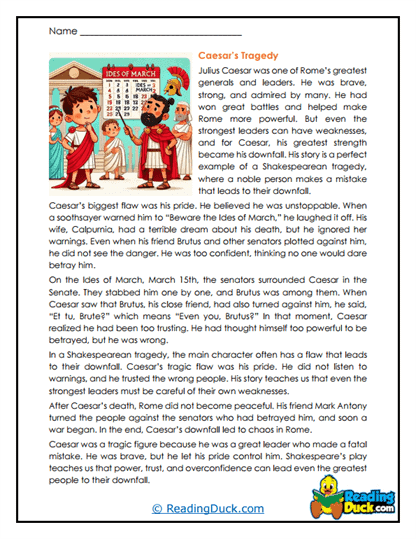
This worksheet homes in on the fatal flaw: pride. Students trace how overconfidence and hubris topple even the mightiest of men. It's a thoughtful reflection on human ambition-served with a knowing wink at the third wall.
How the Worksheets Connect to the Novel
Each worksheet is thoughtfully crafted to align with the most important scenes, characters, and themes in Julius Caesar. Students explore key events-like Caesar ignoring warnings, Brutus's painful decision, and Antony's powerful speech-to understand how each moment moves the story forward and shapes the characters' fates.
The activities explore literary elements like foreshadowing, dramatic irony, symbolism, and persuasive language. Students are encouraged to reflect on what makes a hero, how power can change people, and whether fate or free will controls our lives. These connections help students not only follow the plot but feel the meaning behind it.
By connecting the worksheets directly to the heart of the story, students gain a richer, more memorable understanding of Julius Caesar-and they'll leave with a stronger appreciation for Shakespeare's genius.
Julius Caesar - A Story of Friendship, Power, and Choices
(Retold for young readers)
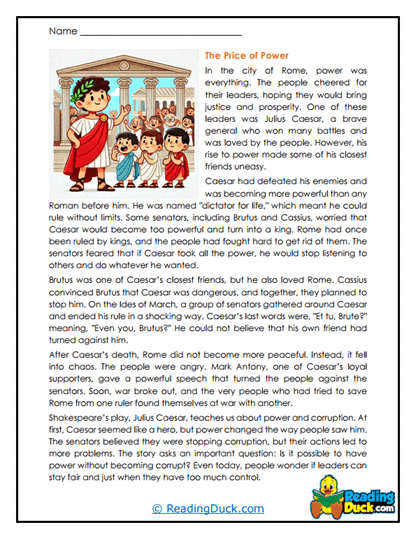
A long time ago, in ancient Rome, there lived a brave and powerful man named Julius Caesar. He was a great leader, and many people in Rome loved and respected him. They thought he was smart, strong, and good at helping the city. Some even believed he should become king.
But not everyone agreed.
There were some other important men in Rome who were worried. One of them was Brutus. Brutus was a kind and thoughtful man who loved Rome more than anything. He was also a good friend of Caesar's. Another man, named Cassius, didn't like how powerful Caesar was becoming. Cassius thought that if Caesar became too powerful, he might hurt the freedom of the Roman people.
Cassius talked to Brutus and said, "If Caesar becomes king, Rome might lose its freedom. We must stop him." Brutus didn't want to hurt his friend, but he believed Cassius might be right. Brutus thought really hard about what to do. In the end, he made a very difficult choice: he would help stop Caesar to protect Rome.
So, Brutus and Cassius gathered a group of men. They made a secret plan to stop Caesar. One day, when Caesar came to the Senate, the group attacked. Caesar was surprised and didn't understand why his own friends were doing this. He looked at Brutus and said, "You too, Brutus?" That meant, "Even you, my friend?" And then Caesar died.
The people of Rome were shocked and confused. They didn't know if the group did the right thing or not. Then, another man named Mark Antony, who had been a friend of Caesar, gave a powerful speech. He reminded everyone how much Caesar had cared for Rome. He made the people feel sad and angry that Caesar had been hurt by his own friends.
The crowd turned against Brutus and Cassius. They started to believe Caesar's death was wrong. Rome became a dangerous place. People began fighting, and a big war started. Brutus and Cassius were very sad about how things had turned out. They didn't want Rome to fall into more trouble, but it did.
In the end, Brutus and Cassius both died during the war. Even though they thought they were doing the right thing, their plan didn't bring peace. Mark Antony, who had once been Caesar's friend, said kind words about Brutus. He said Brutus had a good heart and did what he thought was best for Rome, even if it ended badly.
So, what can we learn from this story?
Julius Caesar is a tale about friendship, trust, and hard choices. It shows how power can be dangerous, and how even good people can make mistakes. Brutus didn't want to hurt anyone-he just wanted to protect his city. But sometimes, even when we think we are doing the right thing, things don't go as planned.
This story helps us think about what it means to be a good friend, a good leader, and how important it is to solve problems in peaceful ways. Even though the story is sad, it teaches us to listen carefully, think deeply, and always try to choose kindness.
Make sure to bookmark our website now.
Enjoy all our free reading worksheets.
Our materials adhere to the principles of the Science of Reading.