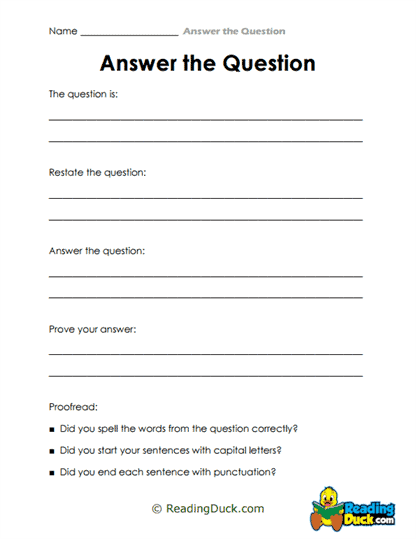
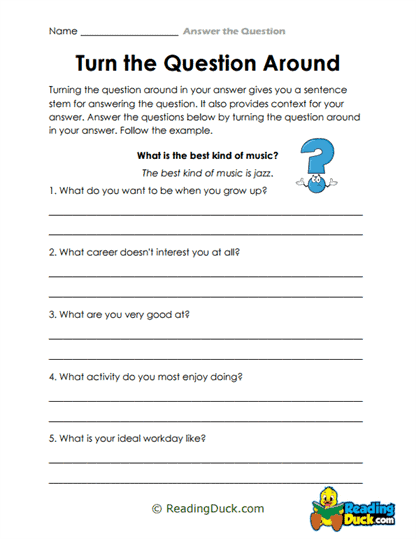
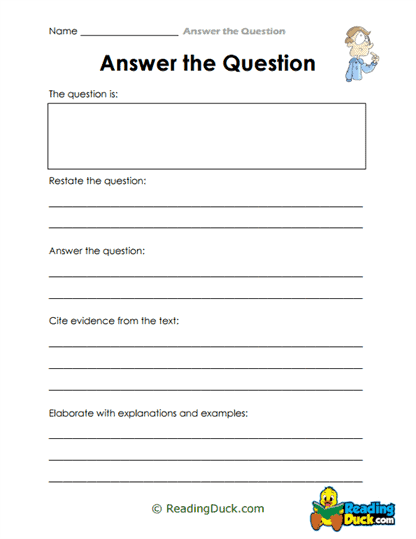
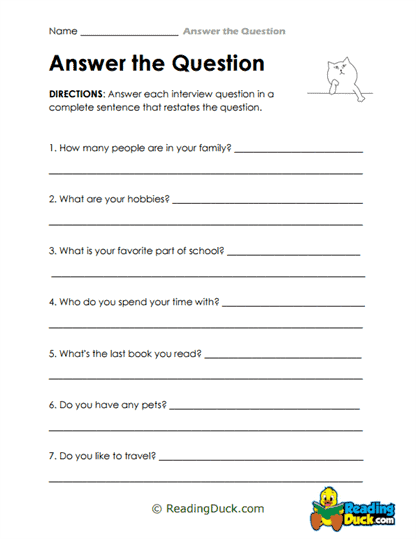
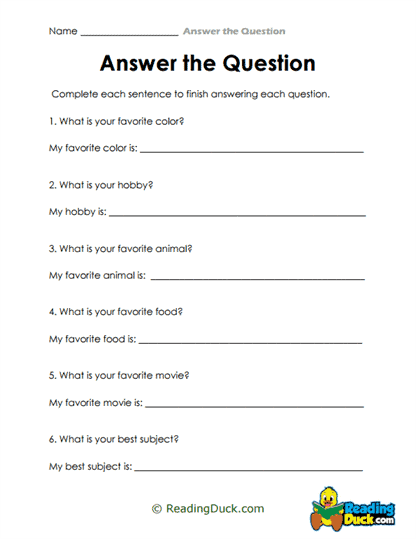
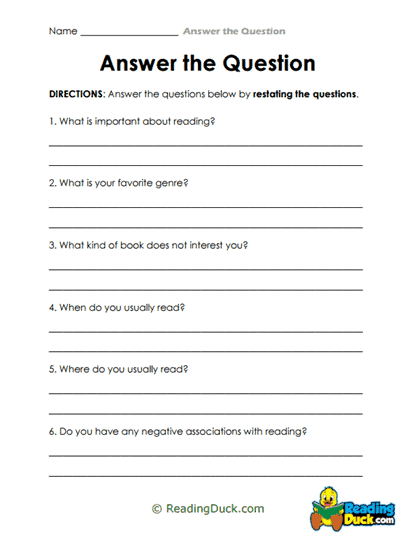
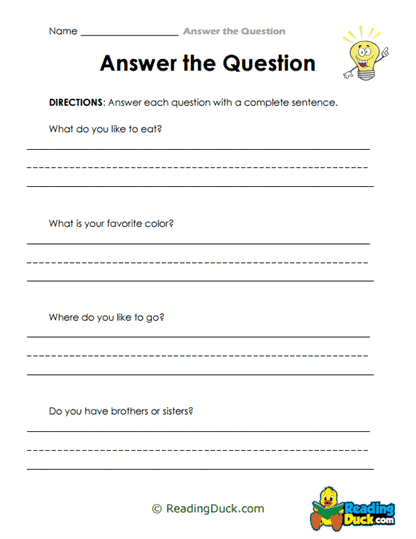
Our Answer the Questions worksheets are like a friendly quiz show-only way more encouraging and way less buzzer punishment! These have been carefully crafted to help students practice the real art of responding to questions-whether they're yes/no, short factual answers, or deeper, thoughtful explanations. By answering different types of questions, students build essential writing muscles: organizing their thoughts, using clear language, and structuring responses that make sense.
The Answer the Questions worksheets are writing tools that focus on helping students respond clearly and accurately to different types of prompts. They include formats like yes/no, open-ended, reflective, and research-based questions-each designed to teach students how to understand what's being asked and give a strong response. As students build these habits, they also develop paraphrasing practice skills, learning how to restate ideas in their own words while keeping the meaning clear and accurate.
Each worksheet helps students master not just the what, but also the how: understanding what's being asked, planning a response, and explaining or justifying their answers. Whether it's in a classroom, homeschooling nook, or solo self-study session, these worksheets adapt to different learning styles and levels. They're effective tools for meeting learning goals while making writing practice feel approachable and rewarding-one question at a time.
Learning to answer questions effectively builds clarity, textual understanding, and critical thinking. It empowers students to communicate ideas with structure and purpose, plus it boosts confidence across all writing tasks-one answer at a time.
Looking At Each Worksheet
Admire and Aspire
Here students reflect on someone they admire and imagine something they'd like to aspire to-sort of like writing their own wish-for-mentor speech. It teaches descriptive writing and thinking about values. It's like crafting a sparkly self-inspiration poster made of words. Super versatile for personal reflection or character-building lessons. Bonus Idea: Have students write a "thank-you note" to their role model-even if that role model is their future self!
Answer Analyzer
Students get to dissect questions and decide what kind of answers belong-like grammar detectives analyzing clues. It builds question-type awareness and response strategy. Think of it as teaching kids to read a question like a secret map. Great warm-up before diving into longer responses. Bonus: Turn it into a "Question of the Day" challenge with bonus points for the sharpest analysis.
Dream Turnaround
This one asks students to flip their dream or goal into a mini-answer-they imagine a dream and then write a response backward or with a twist. It sharpens creative thinking and reflection through an imaginative lens. Kinda like telling your dreams as a surprise plot twist. Fun for creative writing sessions or goal-setting activities. Bonus: Have them illustrate their "dream in reverse" with doodles!
Evidence Builder
Students practice answering a question plus providing supporting details-building their evidence like stacking Lego bricks of logic. This strengthens persuasive and explanatory writing skills. It's like training to be a little lawyer-but for school essays. Perfect for deeper content responses or science observations. Bonus: Create an "Evidence Tracker" where each claim gets two supporting "brick" sentences.
Family Favorites
Kids write about their family's favorite things-and why-so they learn to answer "what" and "why" with personal examples. It's descriptive and reflective, with warm home vibes. Like ordering a favorite meal but with words instead of toppings. Great for family lore or "getting-to-know-you" warmups. Bonus: Let them create a "Favorite Things Menu" to share with classmates.
Favorite Things
Similar-but broader-this worksheet prompts students to answer about their own favorite things, tapping into likes, feelings, and reasons. It's personal, expressive, and builds descriptive justifications. Think of it like writing a mini-review for your own interests. Perfect for introductions or journal starters. Bonus: Turn it into a "Favorite Things Gallery" where peers guess each other's favorites from descriptions.
Movie Memory
Students answer questions about a movie they watched-plot, characters, favorites-boosting recall and organized response writing. It's like reviewing a movie but with clear structure and thoughtful answers. Great for comprehension or reflection lessons. Bonus: Hold a "Mini Movie Awards" with their written responses turned into fun categories ("Best Question Answered," etc.).
Question Chat
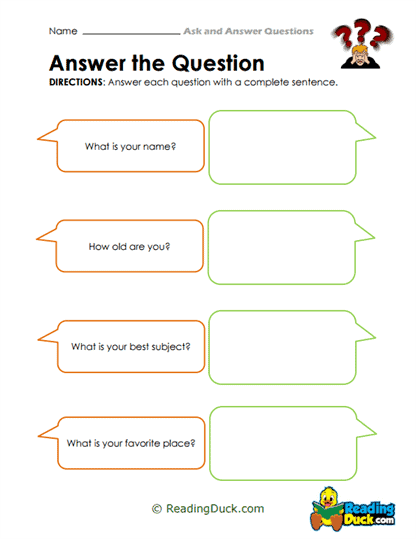
This worksheet invites students to answer questions in a conversational tone-like chatting with a friend through their writing. It helps them learn to answer informally and naturally. It's like turning Q&A into friendly text messages with taste and context. Excellent for email or blog-style practice. Bonus: Pair students to swap worksheets and "reply-to-the-answer" as a conversation partner.
R.A.C.E. Strategy
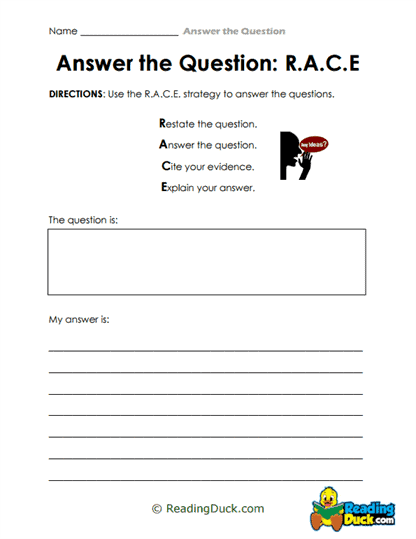
Students use the R.A.C.E. method (Restate, Answer, Cite, Explain) to answer questions-like a proven formula for structured writing responses. It structures thinking and ensures completeness in answers. Think of it as a recipe for quality writing: don't skip any ingredients! Best for essay responses or reading comprehension. Bonus: Create a "R.A.C.E. Race" game where students speed-run structured answers in teams.
Reading Reflection
Here, students answer reflective questions about what they've read-like "What did you think?" or "What would you change?" It encourages connection to text and personal response. It's like writing your reading journal, but more guided and thoughtful. Ideal for literature lessons or metacognitive growth. Bonus: Have them add a "Reflection Emoji" to show how the reading made them think or feel.
Research Helper
This worksheet guides students to answer questions using research sources-learning how to answer with credible evidence. It's like being a tiny detective gathering facts to support answers. Builds research literacy and information synthesis. Perfect for project-based learning or fact finding. Bonus: Challenge them to include a "Fun Fact" that surprised them in their research answer.
Story Sleuth
Students answer questions about a story-plot, motive, prediction-like sleuthing for hidden clues. It boosts critical thinking and narrative understanding. Imagine a magnifying glass over a story's plot twists! Great for reading comprehension or novel studies. Bonus: Create a "Clue Board" where answers and evidence are pinned for others to review.
Weekend Wonder
Kids answer questions about their weekend activities-what they did, felt, learned-bringing informal reflection into writing. It's like sharing a mini-blog post about your own life. Builds personal writing and sequencing. Great for warm-up activities on Mondays. Bonus: Make a "Weekend Weather Report" extra where they describe their mood as a weather pattern!
What I Like
Students answer questions about what they like-colors, games, foods-with reasons. Pretty much a simpler "Favorite Things" but even breezier. Great for vocabulary practice and language building. Excellent for early writers or new class intros. Bonus: Turn it into a quick "Lightning Round" where they answer in under a minute.
Yes-No Know
This playful worksheet blends yes/no questions with what they know, prompting both factual and personal responses. It teaches how to handle different question types in a fun mix. Like doing a mini pop-quiz and opinion survey rolled into one. Wonderful for mixed-question warmups. Bonus: Let students add a drawing or sticker next to their "know" answers for extra flair.
Make sure to bookmark our website now.
Enjoy all our free reading worksheets.
Our materials adhere to the principles of the Science of Reading.