Sentence Types worksheets guide students to understand and use the four basic forms of sentences-declarative (statements), interrogative (questions), imperative (commands or requests), and exclamatory (expressing strong emotion)-building a foundation for clear and effective communication. Students practice recognizing how punctuation, structure, and choice of wording define each type, allowing them to express ideas with purpose and variety. Each worksheet is available in PDF format with answer keys included, making them adaptable for use in classrooms, homeschooling, or independent study. Through active construction and analysis, learners deepen their understanding of sentence function while developing flexible writing skills.
This collection builds awareness of sentence purpose across different contexts. Students learn to write statements to share facts, ask questions to explore ideas, give commands to guide action, and use exclamations to show strong feeling. As they practice these forms, they also develop paraphrasing sentence structure, learning how to restate the same idea in different ways while keeping the meaning clear. This helps writing sound more varied, natural, and expressive instead of repetitive.
Beyond grammar, mastering sentence types nurtures both reading comprehension and writing fluency. Knowing how to switch between types helps students anticipate meaning and tone when reading, and to modulate voice and intent when writing. As they alternate between statement, question, command, or exclamation, they learn to guide readers' attention and evoke engagement. The skills gained from practicing these types become essential tools for confident, expressive communication that fits riders and purpose.
Looking At Each Worksheet
Clause Classifier
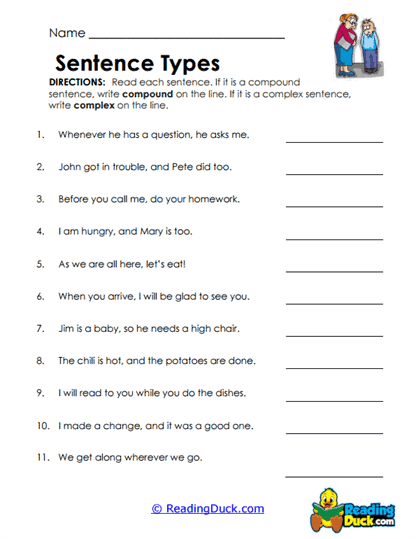
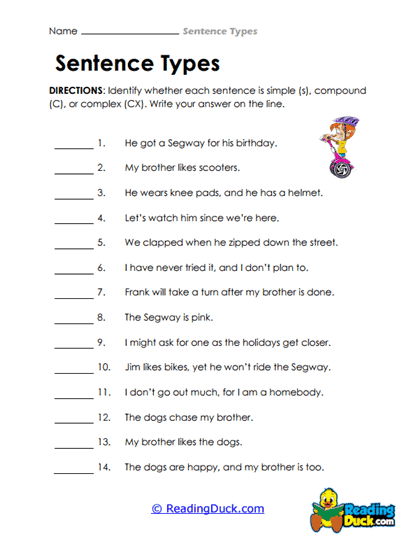
Learners identify sentence types by analyzing clauses and their structures amid scrambled examples. They distinguish between sentence types by focusing on clause functions. This builds deeper understanding of how sentences are built. Great for boosting grammar analytical skills. Students learn to classify sentence types based on structure.
Complex Convertor
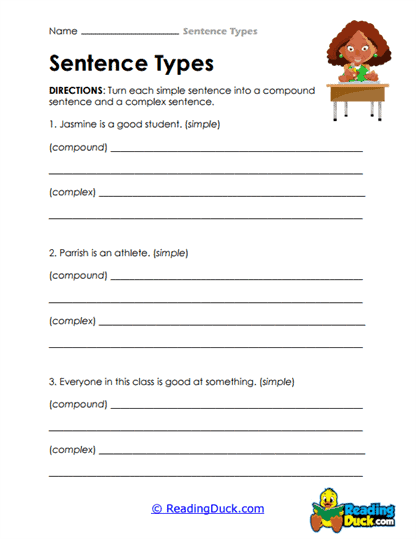
Students transform simple sentence types into complex ones that maintain meaning while adding detail. They practice expanding sentences and adapting types while improving complexity. It emphasizes how purpose remains consistent amid structural growth. Perfect for advanced writing refinement. Writers gain skill in layering complexity while preserving intent.
Complex Crafter
Here, learners create their own complex sentences using varied sentence types as starting points-e.g., turning a declarative base into a layered exclamatory or interrogative form. It teaches flexibility in sentence creation. This encourages both grammar awareness and creative expression. Excellent for free-writing prompts. Writers gain confidence in modulating tone via structure.
Compound Craze
This worksheet focuses on joining sentence types-such as linking two declaratives or combining a question and an exclamation-using conjunctions or punctuation to maintain coherence. It shows how sentence types can mix logically. The activity supports clarity in sophisticated structures. Students practice sentence variety through combination. Writing becomes lively and structurally sound.
Compound Finder
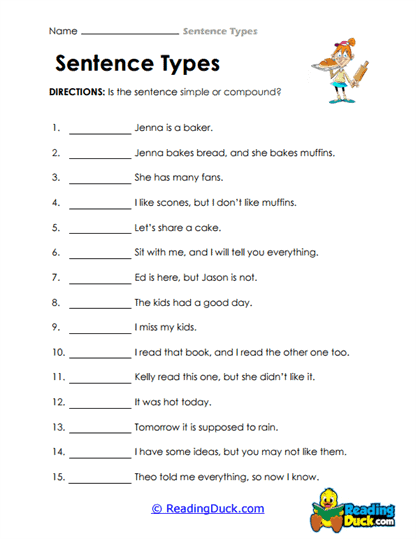
Learners scan passages for compound sentences and categorize their type combinations-e.g., declarative plus interrogative-and analyze how they work. This enhances both recognition and understanding of how types interact. Ideal for reading analysis and editing practice. Students deepen awareness of structural variety. Their analytical writing skills grow.
Picture Prompts
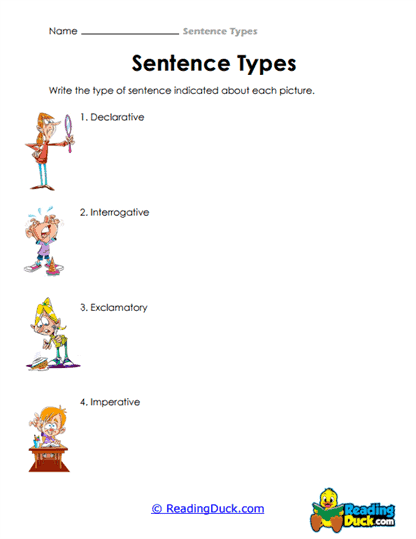
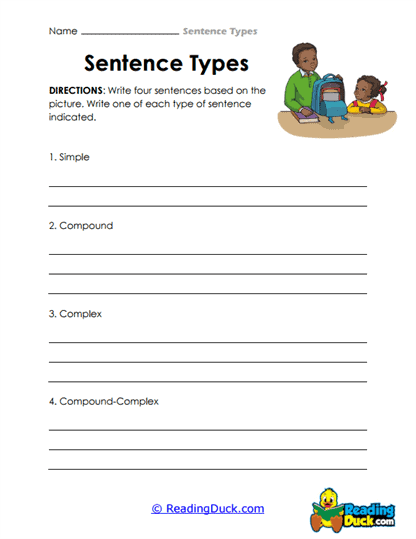
Students view an image and write one sentence of each type based on the same scene-statement, question, command, and exclamation-practicing tone and structure variation. This visual anchor supports creative connection between content and sentence type. It's engaging and concrete. Great for descriptive or creative writing starters. Learners strengthen tone variety through imagery.
Punctuation Pizzazz
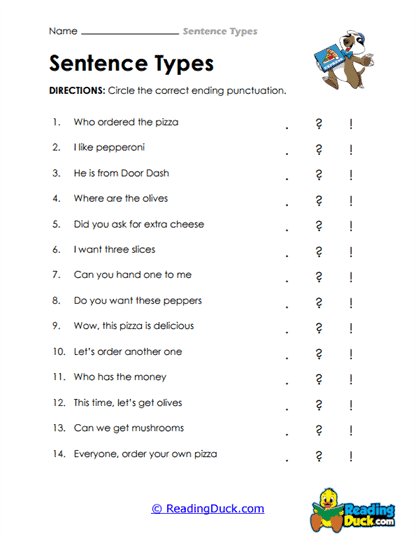
This engaging worksheet asks learners to correct punctuation in given sentences-changing periods to question marks or exclamation points as needed-turning flat declaratives into lively types. It reinforces the power of punctuation in defining sentence type. Useful for precision in writing style. Writers become sensitive to tone through punctuation. Writing gains sparkle and correct intent.
Sentence Sampler
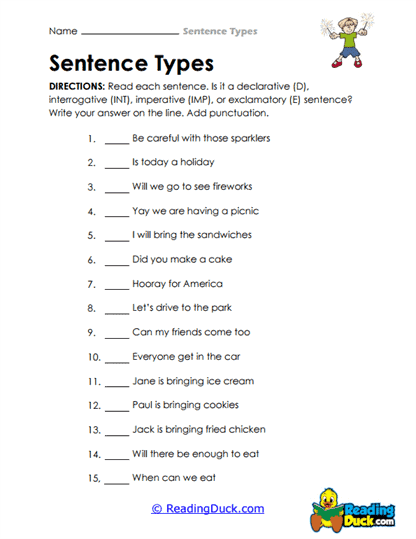
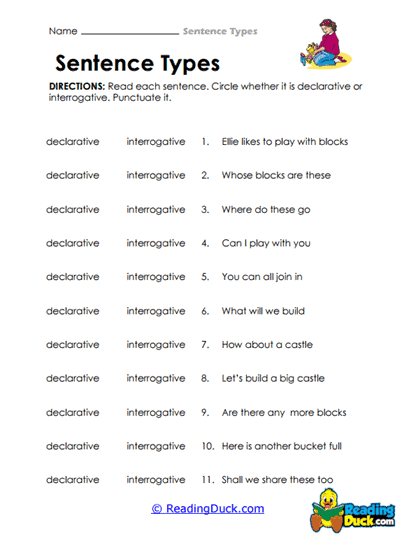
Students receive various sentences and label each type, then rewrite examples in different forms-e.g., turning a command into a question-encouraging both recognition and transformation. This dual focus strengthens both analytical and creative skills. Excellent for transition exercises. Learners internalize how form equals function. Writing becomes adaptable and purposeful.
Sentence Sense
Here, learners judge whether sentences fit their labeled types and correct misclassified sentences. This builds critical reading and classification skills. The task improves attentiveness to structure versus tone. Great for review or assessment rounds. Students sharpen both grammar sense and editing acuity.
Sentence Sleuths
Learners act as detectives, hunting sentences in a text that match specific types or inspecting misuses. The sleuthing theme adds fun to grammar practice. It fosters focused reading and sentence awareness. Perfect for group or peer-check activities. Students build engagement and precision simultaneously.
Sentence Sorter
In this activity, students physically or digitally sort sentences by type-grouping statements, questions, commands, and exclamations-then discuss why each fits. It visualizes sentence function through categorization. Excellent for collaborative learning or stations. Learners organize language conceptually. Writing awareness becomes structured and meaningful.
Sentence Switch
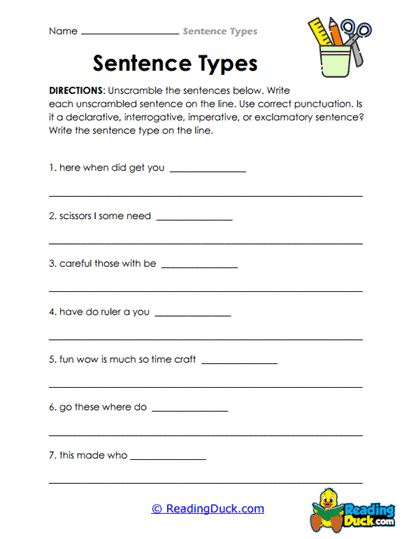
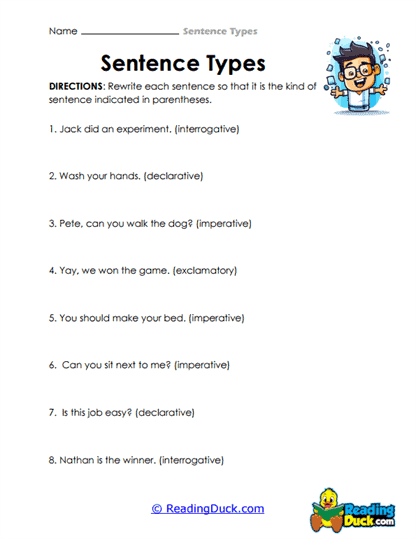
Learners rewrite sentences by switching their type-changing declaratives to exclamations or questions-adapting wording and punctuation to match intent. This deepens understanding of tone and syntax. It's great for practicing voice in writing. Students learn how form shapes feeling. Writing becomes dynamic and expressive.
Structure Sorter
Here, students organize mixed sentence examples by their structural type and highlight punctuation clues that define them. This reinforces how sentence type is signaled beyond meaning. It's a tactile, discerning exercise. Useful for classroom sorting tasks. Students link form, meaning, and symbol intentionally.
Topic Talker
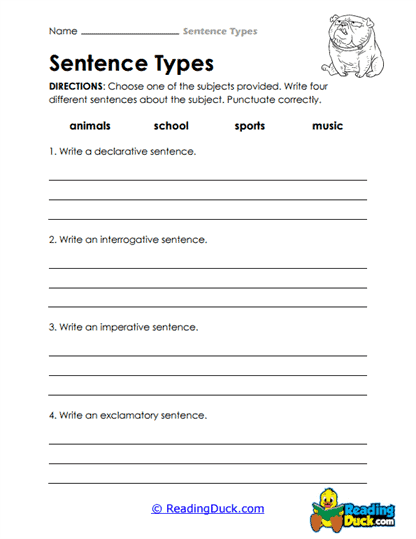
Learners use sentence types to discuss a topic-writing one declaration, one question, one command, and one exclamation about the same idea. This builds versatility and tone awareness. It encourages strategic expression and planning. Great for speech prep or reflective writing. Learners practice flexible thinking through sentence variety.
What Are Sentence Types?
Sentence Types refer to the four fundamental forms of sentences-declarative (statements), interrogative (questions), imperative (commands or requests), and exclamatory (expressions of strong emotion)-each serving a distinct communicative role in writing and speech. Mastering these types helps students match wording, punctuation, and structure to purpose, ensuring they express ideas clearly, ask questions effectively, give instructions confidently, or convey excitement powerfully.
Understanding and using a mix of sentence types enriches writing with rhythm, clarity, and engagement, preventing monotony and aiding reader comprehension. When learners recognize and practice switching between types, they develop a nuanced sense of tone, pacing, and audience-skills vital not just for writing, but for speaking, reading comprehension, and critical thinking.
In mastering sentence types, students gain both structural competence and expressive control. They learn how subtle shifts-like adding a question mark or choosing a commanding verb-can influence the impact of a sentence. This awareness becomes a powerful tool for shaping voice and meaning-whether they're crafting essays, stories, or everyday communication effectively.
Example Uses of Sentence Types
Example 1
Sentence: "Shall we go outside?"
Type: Interrogative
Explanation: This sentence asks a question and ends with a question mark, showing how sentence structure and punctuation work together to invite action or response.
Example 2
Sentence: "Watch out for that moving car!"
Type: Exclamatory
Explanation: The exclamation mark and imperative form convey urgency and strong emotion, turning a simple command into an emphatic warning that grabs attention.
Make sure to bookmark our website now.
Enjoy all our free reading worksheets.
Our materials adhere to the principles of the Science of Reading.