Arbor Day is like Mother Nature's birthday- a day dedicated to planting trees, digging deep into environmental awareness, and honoring those leafy giants of the planet. Think of it as a green-themed celebration where lessons bloom alongside roots, and reading becomes a way to grow curiosity. These worksheets plant the seeds of knowledge around conservation, ecology, and history, all wrapped up in engaging reading passages. In short: your classroom doubles as an eco-lab, minus the dirt under the fingernails... or maybe with a little adventurous dirt.
The tradition reminds us that trees aren't just scenery-they're air-cleaners, shade-givers, and habitats with stories to tell. Arbor Day encourages students to think globally and act locally-from tree planting to clever conservation ideas. It links literacy with responsibility, nurturing reading growth while cultivating respect for the environment. It's meaningful, mindful, and loaded with green vibes.
These worksheets dig into the theme with vibrant visuals, informational reads, and questions that challenge students to think creatively and critically. Each passage weaves in Arbor Day's history, ecological benefits, and global celebrations, while questions encourage personal connection and environmental action. Whether used for class discussion, homework, or independent reading, these sheets grow thoughtful readers and responsible stewards.
A Look At Each Worksheet
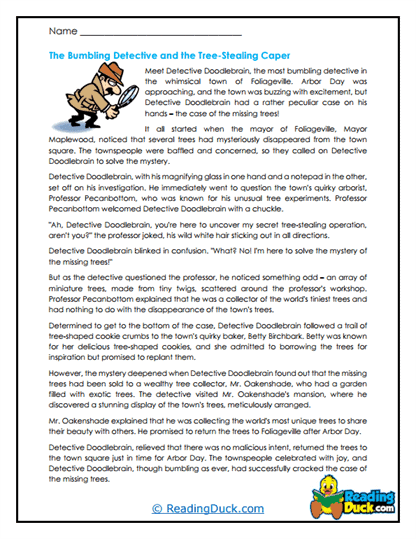
Bumbling Detective's Case
A clumsy investigator stumbles into clues left by mischievous trees. Students read closely to piece together what the trees might be hinting at. The activity encourages inference and deduction. What leafy mystery would you solve with only forest clues?
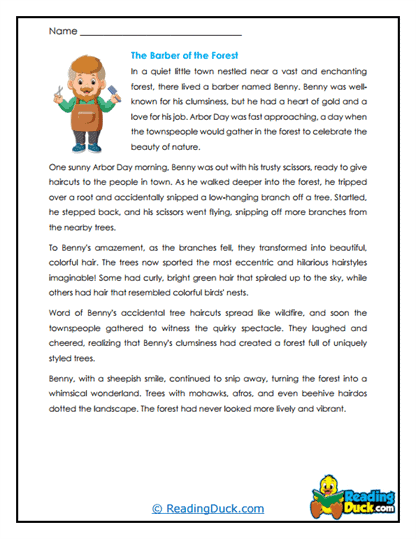
Forest Barber's Fun
A treetop barber gives squirrels fashionable haircuts-complete with nut-themed styles. Readers explore quirky characters and narrative flair. Questions focus on character traits and creative interpretation. If trees could choose hairstyles, what would yours look like?
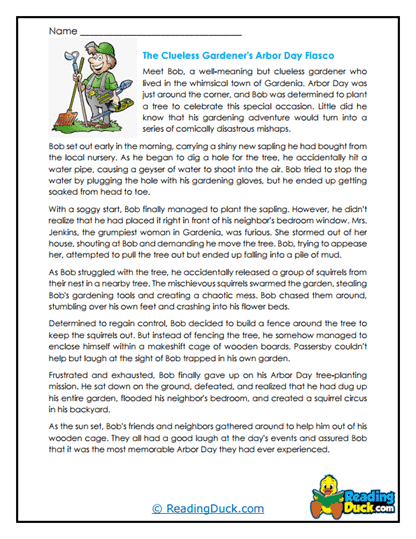
Gardener's Arbor Day Fiasco
A gardener tries to plant hundreds of trees but botches the arrangement-cue comedic chaos and tangled saplings. Students track sequence and cause-and-effect in the mishap. They consider how planning matters even in nature. Could a single misplaced seed change the forest's look?
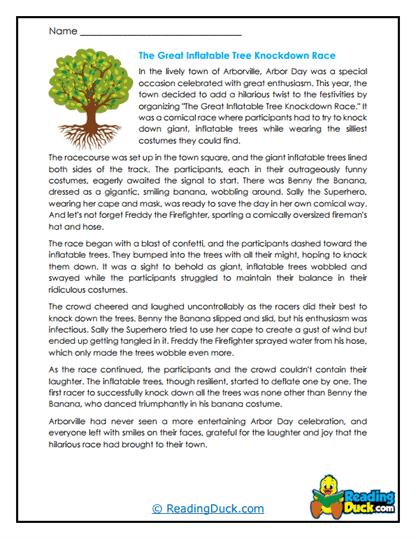
Inflatable Tree Race
Trees race in inflatable suits for a silly, festive competition. Readers identify cause-and-effect and imagery that makes the race pop. Questions invite comparisons and visualization. Have you ever seen a forest race-even if only in your imagination?
Leafton Tree Mischief
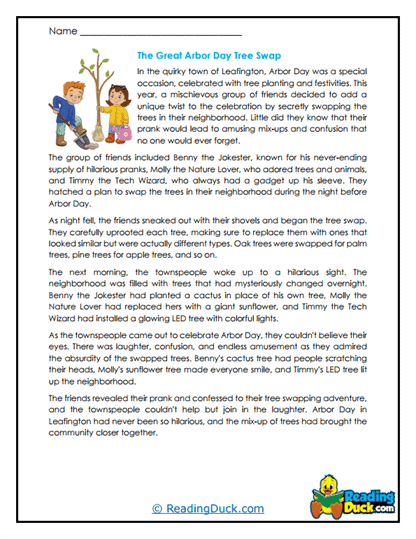
A sprite named Leafton sprinkles playful mischief on trees, causing them to swap places. Readers follow the whimsical confusion. Items emphasize plot and setting interpretation. If leaves could rearrange themselves magically, what might they do?
Oakley's Revenge
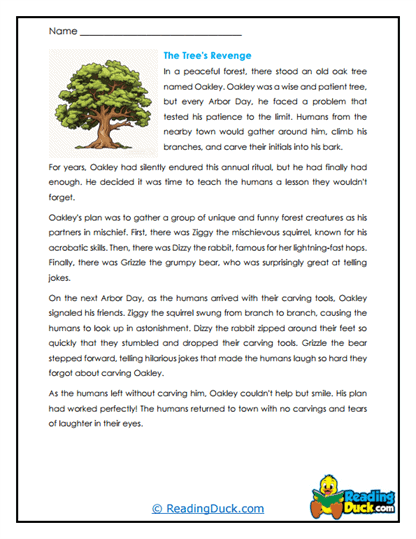
An old oak tree plays payback pranks on park visitors-shaking acorns like popping confetti. Students infer intention and mood. Questions probe for tone and theme. When did nature surprise you with a playful wink?
Oliver's Trick
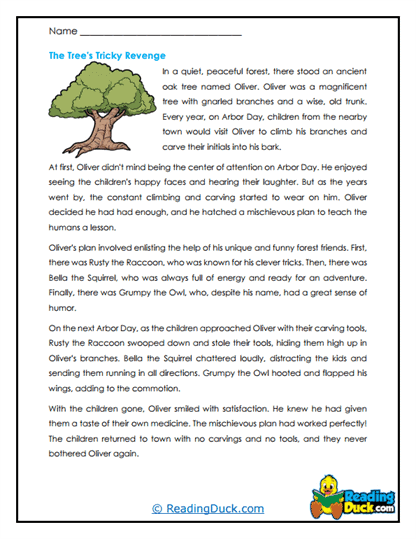
Oliver tries to fool his friends by dressing as a tree-but gets more than he bargained for when the birds respond. Readers unpack character motivation and outcomes. Comprehension centers on effect and result. What would happen if you pulled a tree costume hoax?
Pranking Princess of the Forest
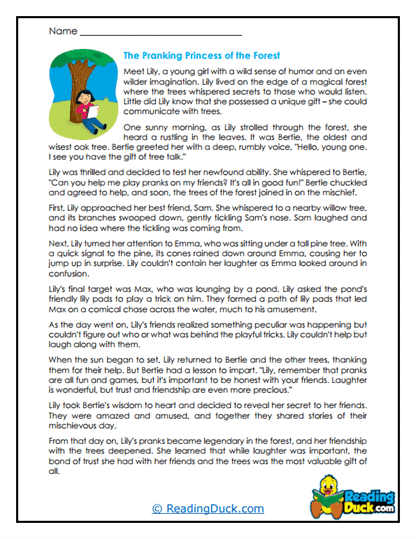
A mischievous forest princess rearranges signs to lead visitors in circles. Students analyze trickery and consequences. They discuss ethics and intention. If you ruled the forest for a day, what harmless mischief would you dream up?
Singing Saplings Extravaganza
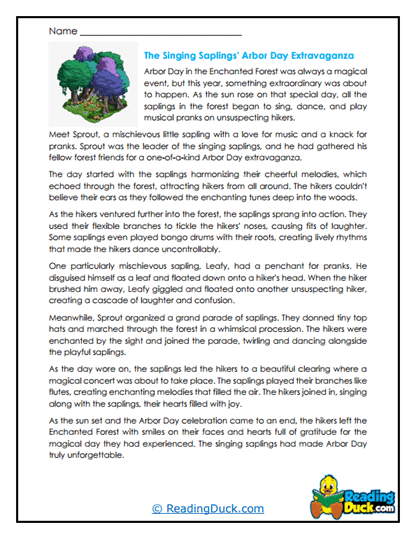
Young saplings break into song, charming garden visitors. Readers explore personification and creative storytelling. Items highlight imagery and tone. If your favorite plant could sing, what song would they croon?
Talking Trees of Arbor Park
Trees gossip, sharing forest secrets and surprising wisdom. Readers gather themes and hidden meaning. Questions explore theme and narrative voice. What would your favorite tree say if it could speak?
Timber's Dream Flight
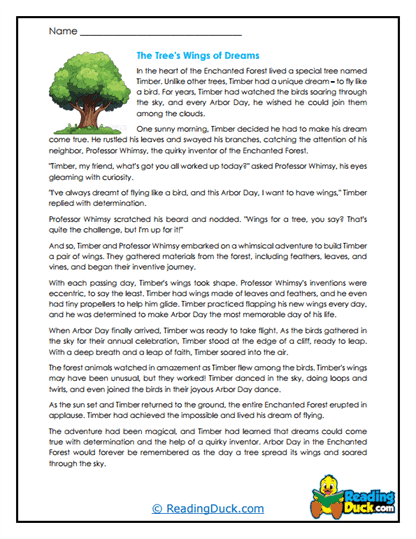
A pine named Timber dreams of flying and imagines soaring above forests. Readers identify themes of aspiration and wishful thinking. Comprehension focuses on main idea and deeper message. If you could fly among trees, what view would inspire you most?
Tree Swap Shenanigans
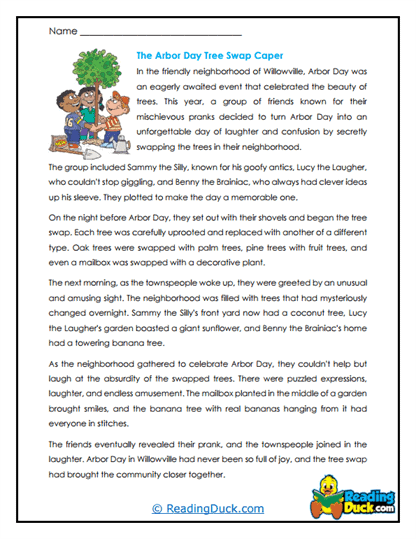
Trees magically swap places at night, causing springtime confusion. Readers interpret cause-and-effect and setting changes. They assess narrative twists. What would happen if your favorite tree suddenly changed spots overnight?
Tree-Planting Rivalry
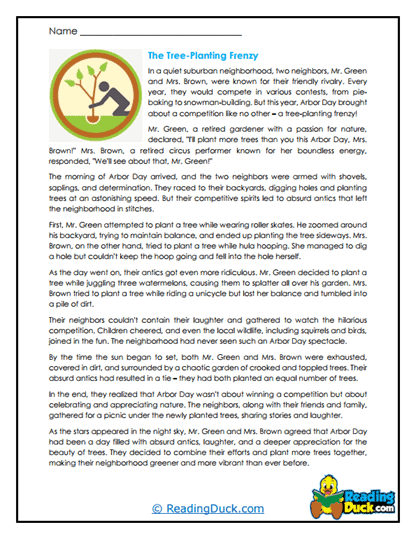
Two friends compete to plant the most trees, turning friendly rivalry into real growth. Students analyze characters and motivation. Questions address conflict resolution and theme. How would you turn competition into a win for nature?
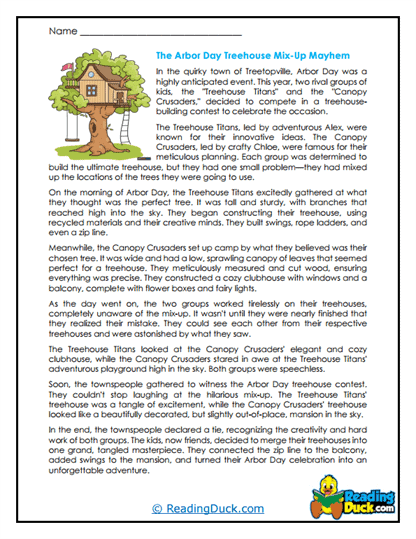
Treehouse Mix-Up
A mix-up swaps treehouses in the middle of an Arbor Day festival. Students trace the misunderstanding and resolution. Items emphasize problem and resolution. If your treehouse swapped spots, what challenges would you face?
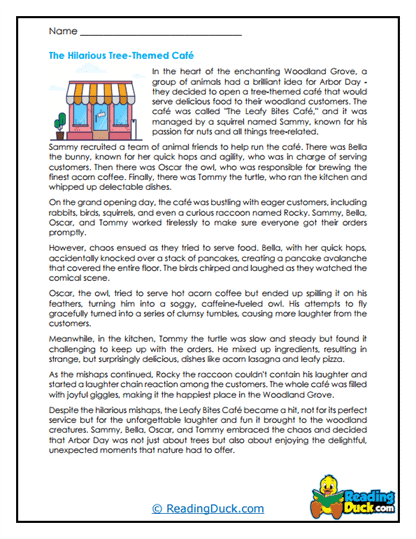
Woodland Café Comedy
Forest animals open a café-and chaos ensues when a squirrel adds a surprise ingredient. Readers follow comedic setup and moral. Questions target inference and textual clues. What woodland snack would you want to try (or avoid)?
A Deep Look At Arbor Day
Arbor Day usually happens on the last Friday in April in the U.S., though some places adjust the date so trees have the best chance to thrive-and because spring weather isn't always predictable. It's one single, green-focused day packed with action, but the lessons often branch out all year.
The idea sprouted in 1872 when J. Sterling Morton, noticing how Nebraska was running out of trees, encouraged people to plant them-turning a need into a national holiday. From there, Arbor Day grew into a global event, taking root in different countries and cultures, each adding local flavor.
On Arbor Day, communities and schools plant trees, explore nature through walks and readings, and reflect on how much trees give-clean air, shelter, beauty, and even community calm. Classrooms might pair reading with planting, posters with poems, or science with storytelling-combining literacy and love for the earth.
It's not just planting-it's planting ideas. Students might host tree-themed plays, craft leaf journals, or host 'tree care' pledges. Sometimes cafès serve "leafy" snacks, gardens bloom with art, and audiences hear songs honoring forests. The day helps kids appreciate how a single seed can spark lasting impact, whether in nature or in life.
Make sure to bookmark our website now.
Enjoy all our free reading worksheets.
Our materials adhere to the principles of the Science of Reading.