Black History Month turns February into a living library-thirty days where stories step off the page and into students' imaginations. Picture classrooms buzzing with voices from the past and present: innovators, artists, leaders, and everyday changemakers whose courage still ripples forward. Our worksheets channel that energy into reading experiences that are vibrant, respectful, and genuinely engaging. The result feels like a month‑long conversation about identity, resilience, and contribution-told through kid‑friendly narratives and clear, thoughtful questions.
At heart, the celebration is about widening the frame of history so more people fit inside it. Students encounter movements that bent the arc of justice and creative breakthroughs that shaped the nation's sounds, styles, and scientific leaps. Along the way, they practice comprehension, inference, and analysis while developing empathy and cultural awareness. It's rigorous literacy work that doubles as a guided tour of courage.
Each worksheet pairs an eye‑catching image with a reading passage that brings context to life, then follows with questions that push beyond basic recall. Learners cite evidence, track cause and effect, trace themes, and make connections to their own lives. The mix of multiple‑choice, short answer, and open‑ended prompts keeps minds active and voices heard. Think of these as reading passages that teach skills and build perspective at the same time.
A Look At Each Worksheet
Artistic Time Travelers
A gallery of artworks becomes a portal through eras, showing how creativity reflects struggle, joy, and community. Students analyze imagery and symbolism to see how artists capture turning points in history. Comprehension questions guide comparisons across time and style. If you could add one piece to this gallery, what story would your art tell?
Betty's Bold Breakthrough
Betty faces a wall of "no" and answers with ingenuity, grit, and a plan that actually works. Readers track obstacles, allies, and the moment a door finally opens. Items focus on theme, character motivation, and cause‑and‑effect. Which bold idea would you champion even if the first answer is "not yet"?
Detective Justice: Hidden History
A student sleuth uncovers unsung heroes whose names are missing from the usual lists. As clues stack up, readers connect evidence to larger historical patterns. Questions emphasize inference, text evidence, and main idea. Whose hidden story in your community deserves the spotlight?
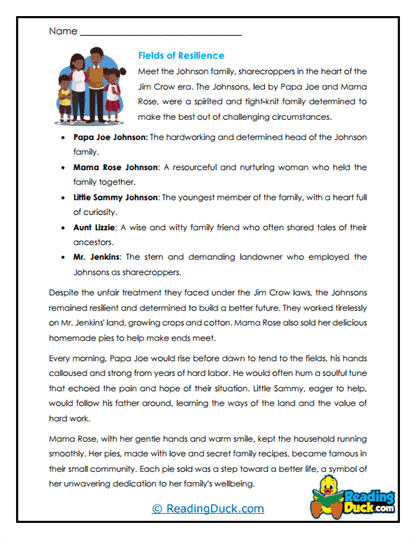
Fields of Resilience
Generations work the land with knowledge, care, and stubborn hope, building community along the rows. Students examine tone, setting, and the deeper meaning of stewardship. Comprehension highlights imagery, theme, and structure. What tradition of care-on land or in life-would you pass down?
Harlem Harmony's Legacy
Music and poetry bloom in a neighborhood that becomes a cultural lighthouse. Readers trace collaboration, creativity, and pride across stages and stoops. Items target central idea, supporting details, and cultural significance. Which song or poem best tells the story of a place you love?
Healing Heroes: Dr. Johnson's Journey
A determined doctor navigates barriers to bring care, comfort, and innovation to her community. Students map the challenges she faces and the choices that shape her impact. Questions delve into problem‑solution and author's purpose. If you could redesign part of healthcare, what would you change first?
Marching for Change
Personal stories weave into a larger march as voices, signs, and steps sync with purpose. Readers follow pacing, turning points, and the power of collective action. Items stress sequence, theme, and citing textual evidence. What cause would you step forward for, and what would your sign say?
Musical Change: Harmony in the Storm
When times turn tough, a chorus rises-music that comforts, rallies, and remembers. Students analyze how lyrics and community shape resilience. Comprehension focuses on mood, symbolism, and structure. If your playlist had a purpose, what message would track one deliver?
Mysteries of Heritage Heights
A neighborhood hides stories in murals, monuments, and family keepsakes. Readers piece together clues about identity and legacy. Items highlight inference, connections across texts, and narrator perspective. What object in your life holds a story the world should hear?
Stellar Dreams
Aspiring astronomers look up and see possibility written in the stars. Students explore ambition, representation, and the science that fuels wonder. Questions target theme, supporting details, and figurative language. What would you name your first discovered star, and why?
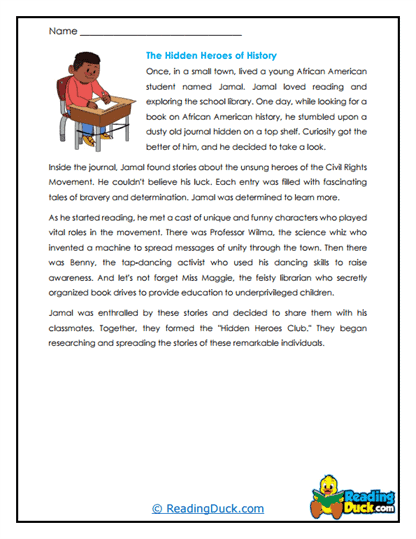
The Hidden Heroes of History
Snapshots of lesser‑known figures reveal everyday acts of courage that moved history forward. Readers synthesize short profiles to find common threads. Items emphasize summarizing, comparing, and author's message. Which everyday hero in your life could anchor a new page in a history book?
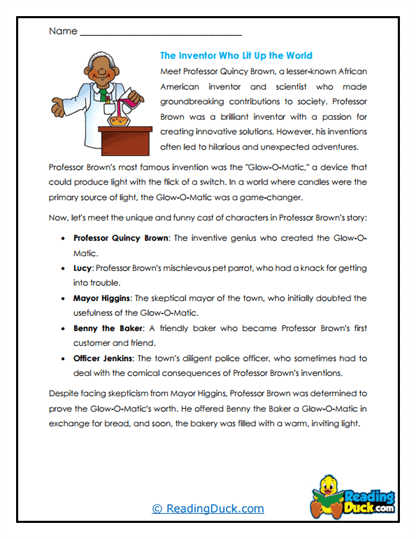
The Inventor Who Lit Up the World
A young inventor's creativity solves a problem and brightens more than a room. Students track the design process from idea to impact. Comprehension focuses on cause‑and‑effect, sequence, and real‑world application. What's one small invention you'd build to make daily life better?
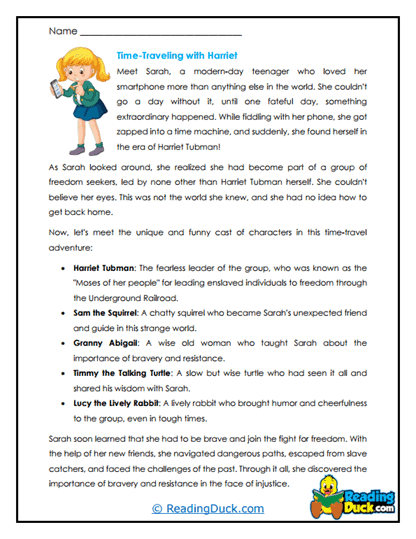
Time‑Traveling with Harriet
A magical journey brings students alongside Harriet-courage, strategy, and solidarity guiding every step. Readers examine decisions under pressure and the networks that made freedom possible. Items cover character analysis, theme, and historical context. What qualities would you pack for a trip toward freedom?
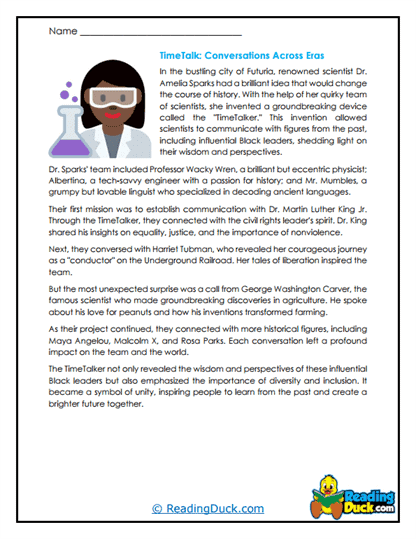
TimeTalk: Voices from History
A conversation across centuries lets readers "interview" leaders, artists, and builders of change. Students distinguish point of view and evaluate claims supported by evidence. Questions emphasize quoting accurately and drawing inferences. Which single question would you ask a historical figure, and why?
Tomorrow's Time Travelers
A futuristic class explores how today's actions become tomorrow's lessons. Readers consider legacy, innovation, and the responsibility of storytellers. Items target prediction, tone, and connecting themes across texts. What story from right now should be preserved for students 100 years from today?
A Deep Look At Black History Month
Black History Month is observed every February in the United States, giving teachers and students a full month to explore a wide range of histories, voices, and achievements. The month‑long format makes room for deeper reading, longer projects, and community events that don't have to be squeezed into a single day. Many schools begin previewing themes in late January and continue conversations into March, ensuring the learning grows roots. It's less a calendar box and more a season of focus-one that complements year‑round inclusion.
Its story begins in 1926, when historian Carter G. Woodson launched "Negro History Week" to promote study often absent from textbooks and classrooms. As interest and impact grew, the observance expanded in 1976 to a full month, aligning with the February birthdays of Frederick Douglass and Abraham Lincoln. Over time, the month has evolved to include not only milestone movements and iconic figures but also local histories, family narratives, and contemporary innovators. The goal remains constant: broaden the narrative, honor contributions, and inspire informed citizenship.
In practice, classrooms blend close reading with creative work: analyzing speeches, crafting biography posters, building timelines, and comparing past movements with current civic efforts. Teachers often pair primary‑source style passages with reflective writing, Socratic seminars, or student‑led presentations. Cross‑curricular links abound-music and poetry units, STEM spotlights on inventors and scientists, and art projects that echo cultural aesthetics. The result is a richer literacy experience where skills and cultural learning reinforce each other.
Celebrations stretch beyond the page: assemblies, guest speakers, hallway galleries, community book clubs, and performances that turn learning into shared memory. Students might curate mini‑museums, record oral histories at home, or host "living libraries" where each learner presents a figure or theme. Food, music, and storytelling add warmth and context, helping young readers see history as lived and alive. By month's end, the big takeaway is simple and powerful: honoring Black history is not a once‑a‑year event-it's a habit of curiosity and respect that keeps growing long after February ends.
Make sure to bookmark our website now.
Enjoy all our free reading worksheets.
Our materials adhere to the principles of the Science of Reading.