Cinco de Mayo brings a burst of color, rhythm, and resilience into the classroom-it's history with a fiesta twist. Readers travel back to the Battle of Puebla, meet families and fiestas, and discover the vibrant culture and pride that now mark this day. Whether it's through mysterious piñata capers or time-traveling tacos, these worksheets pair literacy with cultural storytelling and spark curiosity about Mexican heritage. Think of it as reading that dances, laughs, and celebrates history, all at once.
This holiday honors a surprising underdog victory by the Mexican army on May 5, 1862, and has blossomed into a broader celebration of Mexican identity and joy-especially in the U.S. Our worksheets offer a thoughtful blend of history, community, and critical thinking: kids interpret why the battle matters, how traditions grow, and what resilience really looks like. They learn content and context, while building empathy and appreciation. This is reading that connects timelines with tacos.
Each worksheet opens with a vibrant image-mariachi band, parade float, or piñata in motion-before diving into storytelling that weaves history, culture, and imagination. After the passage, students tackle a mix of question types: multiple-choice for key detail, short-answer for explanation, and open-ended for deeper reflection. It's a feast of reading that blends factual understanding, literary analysis, and personal connection. Viva la lectura!
A Look At Each Worksheet
Cinco de Mayo Connection
A reading builds bridges between past and present, exploring how a 19th-century battle still informs celebrations today. Students interpret symbolism, compare traditions, and connect meanings. Questions highlight cause, significance, and modern cultural ties. If you were designing a Cinco de Mayo event, what historical touch would you include?
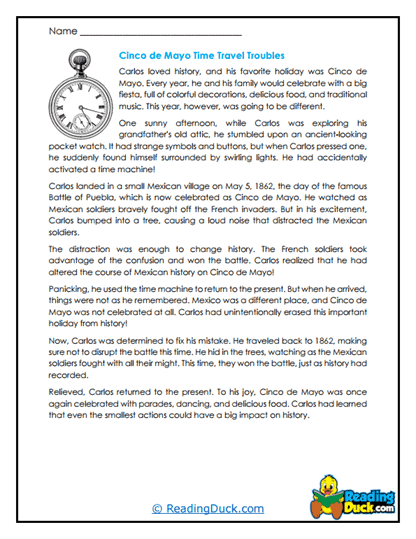
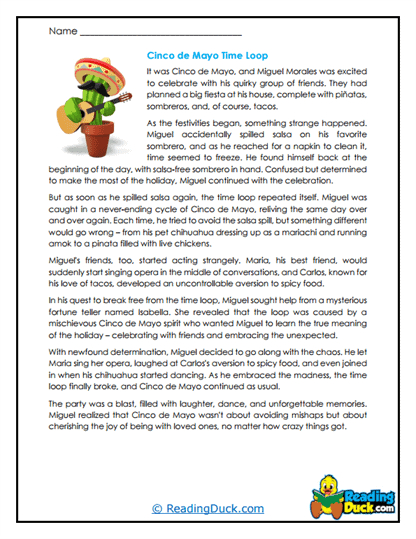
Cinco de Mayo Time Travel / Cinco Time Loop
Readers zoom between eras-from the dusty battleground to vibrant modern festivals-repeating the stories in a time loop. They track differences in perspective, setting, and tone. Items emphasize comparing, contrasting, and sequencing. If you could time-hop to any celebration, past or future, what would you see?
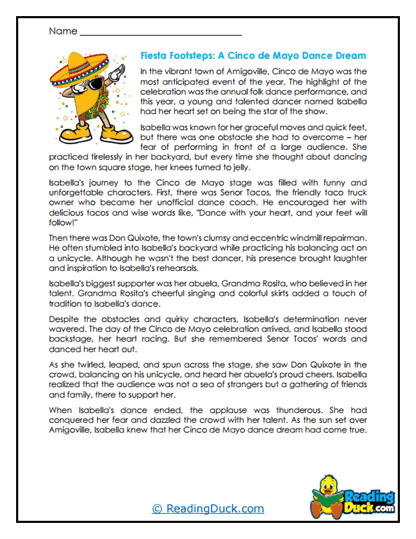
Dance Dream
A young dancer imagines performing on Puebla's streets, blending tradition, rhythm, and history. Readers explore imagery, mood, and cultural movement. Questions focus on theme, tone, and vivid description. What would your dream performance look like in a cultural celebration?
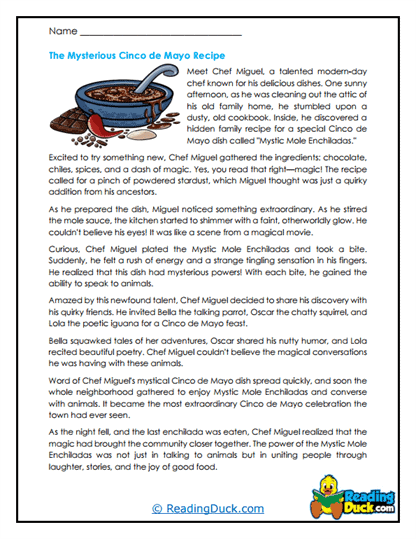
Enchilada Magic
Enchiladas seem to carry secret histories-every bite tells a tale of heritage, ingredients, and family gatherings. Students infer deeper meanings and cultural layers. Comprehension highlights symbolism and cultural connection. What dish in your family holds a story you'd like to share?
Fiesta of Food Friends
Classmates bring dishes to a school celebration-neighbors taste and stories spread around the table. Readers follow community, tradition, and friendship. Items stress setting, tone, and theme. Which dish would you bring to connect everyone at a party?
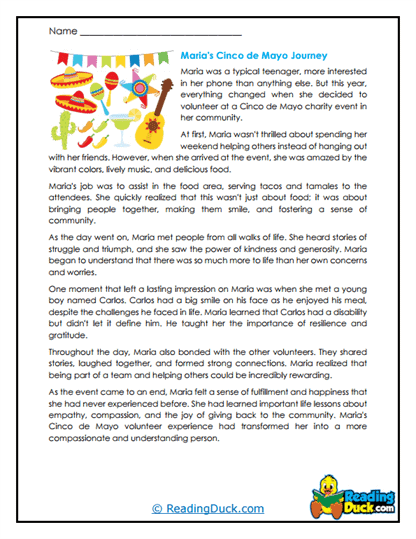
Maria's Cinco Journey
Maria explores her roots by tracing the path of her ancestors from Puebla to her hometown. Readers map challenges, identity, and cultural pride. Questions emphasize character journey, setting, and theme. What journey in your life connects you to your heritage?
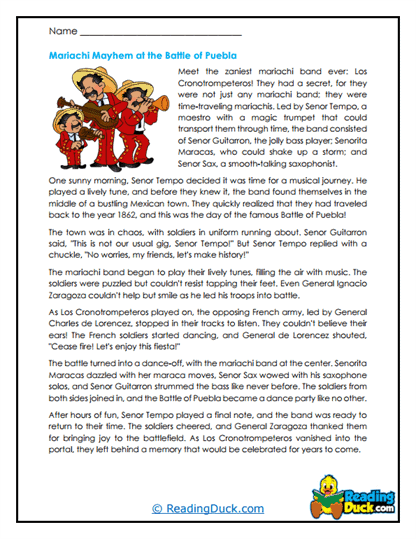
Mariachi Mayhem
When a mariachi performance takes a comedic turn-forgotten instruments, off-beat bandmates-readers follow giggles and harmony. They analyze character relationships and plot structure. Items focus on humor, cause and effect, and narrative flow. If you could add one silly twist to a musical performance, what would it be?
Parade Mix-Up
Floats' labels get switched, parading llamas in place of flags-silly confusion ensues! Students track sequence and humor, then restore order in their minds. Questions target cause-and-effect and critical inference. Have you ever seen something mix up and created laughter instead of chaos?
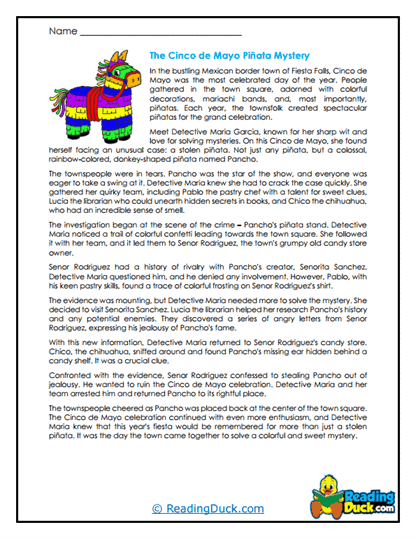
Piñata Mystery
A piñata disappears before the celebration-who took it, and why? Readers follow clues, motives, and red herrings. Items explore inference, evidence, and resolution. What mystery would you solve to save a celebration?
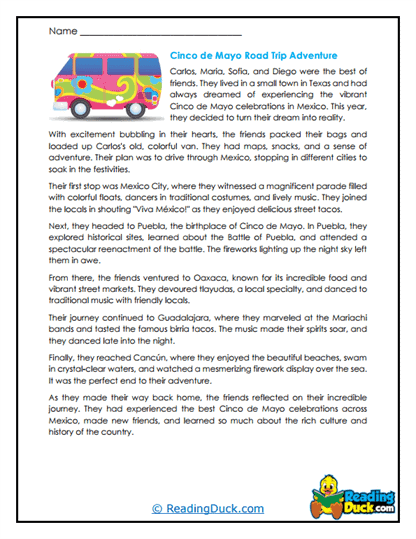
Road Trip Fiesta
A family road trip turns into a cultural discovery-tacos, music, and hometown anecdotes come alive on the GPS. Readers track setting shifts and familial connection. Comprehension emphasizes descriptive details and narrative arc. What road trip fueled your own love for culture?
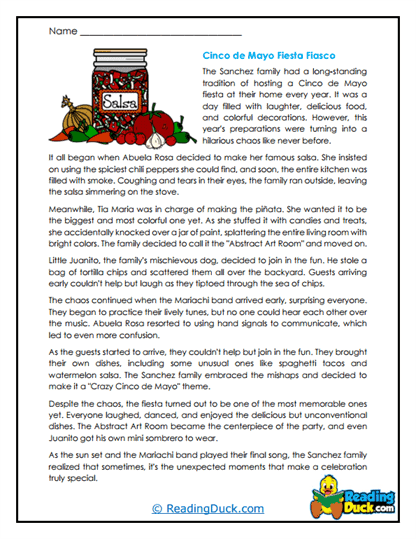
Sanchez Family Fiesta
The whole family pitches in to make a fiesta unforgettable-from cooking to dancing to laughing. Readers interpret collaboration, tradition, and pride. Questions explore theme, character, and cultural richness. What family ritual makes your home feel like a celebration?
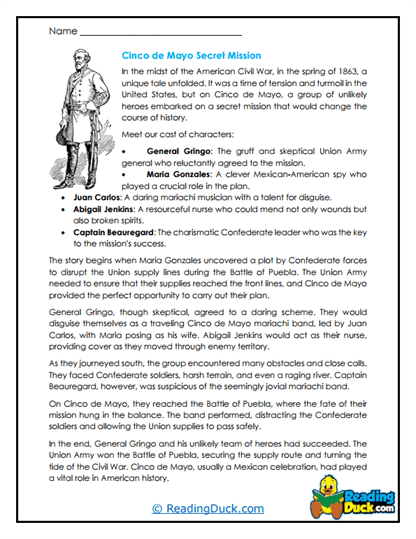
Secret Mission Cinco
A stealth mission unfolds to spread festive cheer throughout town-without being seen! Students unravel strategy, tone, and the joy of surprise. Items target plot, character intention, and thematic depth. What secret festive mission would you dare to undertake?
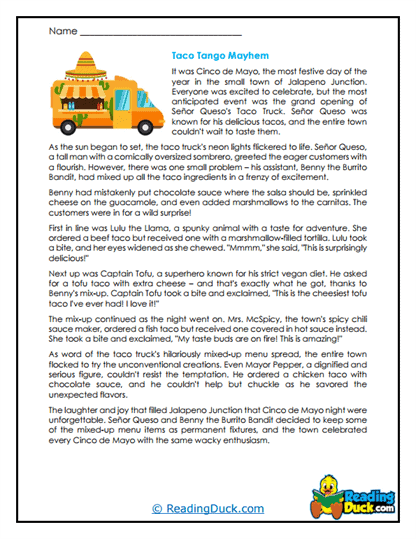
Taco Tango Trouble
Tacos take a tango turn when a dance mishap sends salsa flying-chaos on the dance floor! Readers follow mishaps, humor, and recovery. Questions highlight sequencing and narrative voice. Would you tango with a taco-if only to save the salsa?
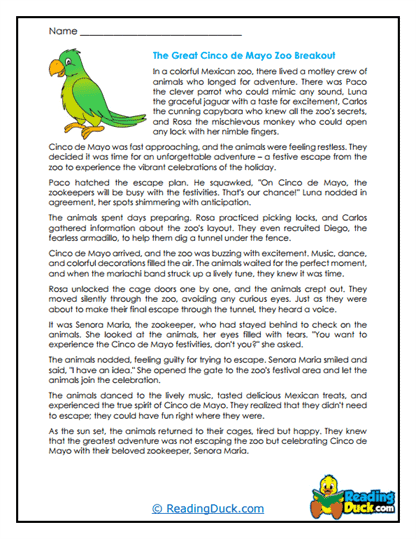
Zoo Breakout
Zoo animals break into a miniature parade-parrot piñatas, dancing llamas, and confused visitors! Readers enjoy whimsy, setting, and character reaction. Items hone tone, character inference, and creative sequence. If your stuffed animals came to life during a festival, what would they do first?
A Deep Look At Cinco de Mayo
Cinco de Mayo lands every year on May 5th, but in schools, it often blossoms into weekend carnivals, culture clusters, or weeklong thematic dives. This timing taps into spring's momentum-history, dance, and learning swirl together, sometimes spanning multiple classes or days.
The holiday commemorates an underdog moment: in 1862, Mexican forces at the Battle of Puebla triumphed against a larger French army, inspiring a nation. Though not Mexico's Independence Day, the victory stands as a symbol of resilience and unity. In the U.S., Cinco de Mayo became a celebration of Mexican heritage and pride-a reminder that identities survive and flourish, even far from home.
In classrooms, learning stretches beyond dates. Teachers pair informational passages with projects like crafting papel picado, composing festive poems, or comparing celebrations across cultures. Reading is enriched with music, art, or kitchen smells-students sample guacamole, trace flag designs, or practice Spanish greetings, grounding comprehension in curiosity. The activities build empathy, cultural literacy, and narrative skills, wrapped in rhythm and color.
But at its heart, Cinco de Mayo is a lesson in identity, celebration, and inclusion. Students connect the dots between history and modern traditions while learning how culture brings people together. These moments are even more meaningful when paired with family vocabulary practice, helping learners better understand the people, roles, and relationships behind each celebration. Whether through parades, poems, or piñata puzzles, students see how language and culture grow together-and how every celebration tells a story.
Make sure to bookmark our website now.
Enjoy all our free reading worksheets.
Our materials adhere to the principles of the Science of Reading.