Imagine a holiday that smells like spring, feels like a pastel cloud, and comes with eggs-lots of eggs. That's Easter for you, a blend of religious tradition and bunny-powered excitement! Whether you're meeting the Easter Bunny or soaking up the story of renewal, this holiday brings together stories, symbols, and a splash of creative fun-all perfect for young learners.
Easter is celebrated to mark the resurrection of Jesus Christ, which symbolizes hope, renewal, and fresh starts. But here's the twist: it's also about colorful eggs, bunny mischief, and the joyous beginnings of spring. Our worksheets balance both-helping students explore the deeper meaning of Easter while having a playful, picture-filled adventure.
These worksheets serve up reading passages infused with bright Easter images and engaging narratives, followed by a mix of multiple-choice, short-answer, and open-ended questions. They're designed not just to build literacy-but to spark curiosity about cultural traditions, inspire creative projects, and invite deeper questions about why we celebrate in the ways we do.
A Look At Each Worksheet
Bunny Mishaps
This worksheet takes readers on a lighthearted adventure where an Easter Bunny's plan goes hilariously off-course. Students dive into the narrative, following comedic twists and the bunny's earnest attempts to fix things. Alongside vibrant illustrations, comprehension questions prompt kids to reflect on problem-solving and empathy. By the end, they might wonder-what would they do if they were in a bunny's shoes (or hopping feet)?
Bunny's Egg-cellent Journey
Here, the Bunny sets out on a quest to deliver eggs but finds the path full of surprises. The story invites learners to follow clues and anticipate what might happen next, perfect for practicing prediction and sequencing. Questions mix factual recall ("What happened first?") with creative reflection ("How do you think the Bunny felt?"). Curious students may ponder how journeys-Easter or otherwise-always teach us something in unexpected ways.
Easter Egg Heist
This one is a mischievous romp where someone-or something-makes off with precious Easter eggs! It's rich in suspense, vocabulary like "heist" and "investigate," and engaging illustrations that set the stage for detective-style thinking. Kids answer literal questions and also get to brainstorm who might be behind the caper. They may find themselves asking, "Could it be the Easter Bunny's mischievous cousin?"
Easter Kingdom Quest
Students are whisked into a magical Easter Kingdom where they must solve clues to save the celebration. The narrative weaves tradition with fantasy, encouraging deeper listening and inference skills. Readers then tackle questions that push them to think about character motives and story structure. It's the kind of tale that sparks "What would you bring to the Kingdom?" kind of creative thinking.
Easter on Mars
Imagine taking an Easter celebration-and a bunny-on a rocket to Mars. This quirky scenario invites readers into a sci-fi twist on holiday fun, with vocabulary like "gravity" and "orbit." Comprehension questions challenge kids to compare Easter traditions on Earth versus Mars and apply imagination. It's a great stretch for creativity-and might make a kid wonder, "What would an Easter egg look like in zero gravity?"
Easter Parade Magic
This worksheet brings a parade to life, full of floats, music, and pastel decorations marching down the street. The descriptive narrative invites cozy imagery and invites students to visualize the pageantry. Following the reading, learners answer colorful questions and reflect on their favorite parade element. It might inspire them to wonder: "What float would you design for an Easter parade?"
Egg Factory Fun
Step into a factory where Easter eggs are crafted with care and color. The story takes an educational turn, showing how items are created in stages-fixing, painting, packaging-and reinforces process-based thinking. Students then answer process-order questions ("What step comes after...?") and share what step they found most interesting. Could a factory for egg decoration double as a quirky art studio?
Egg Time Capsule
This reading takes a thoughtful pause as characters create a capsule filled with Easter memories. It invites students to think about what makes Easter meaningful and how traditions evolve. After reading, children tackle reflective questions, and perhaps even imagine what they'd include in their own time capsule. It can spark the sweet question: "If you buried a time capsule today, what memory from Easter would you preserve for the future?"
Ghostly Easter Adventure
Here's a spooky (but friendly) twist: a ghost floats into an Easter tale-just in time for some gentle, laughter-filled suspense. The narrative blends traditional themes with a dash of supernatural fun, perfect for nuanced reading. Comprehension questions challenge eerie details and friendly feelings. Kids may giggle and ask, "Is that ghost still looking for eggs-or just offering bunny hugs?"
Holiday Bunny Tour
Join the Holiday Bunny on a world tour of Easter traditions in different cultures. This globetrotting story introduces diverse celebrations-such as egg rolling, feasts, and varied symbolism-reflecting cultural awareness. Paired questions help students compare, contrast, and think about their own traditions. It's a mini-world tour that may leave them curious: "Does every country get Easter Bunnies-or do some have different animal ambassadors?"
Magical Egg Hunt
This tale turns egg hunting into a dazzling, enchanted search beneath rainbow-colored trees. The narrative is filled with imagery that supports prediction and attention to detail. Questions encourage readers to recall clues and describe the hunt in their own words. It might even make them wonder: "Could magic be hiding in the next egg clue?"
Pirate Egg Hunt
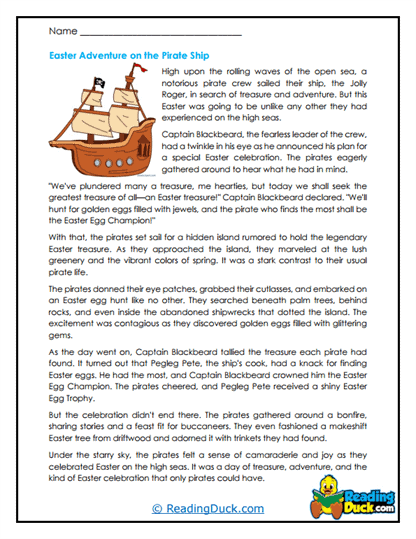
A pirate-themed Easter hunt-with treasure maps, secret codes, and a bold pirate bunny captain-makes literacy doubly fun. The adventurous storyline challenges students to decode clues and navigate plot details. Post-reading, there are map-reference questions and creative writing prompts ("What would you bury at the end of your treasure map?"). Readers may find themselves saying, "Arr! I'd bury chocolate coins instead of gold!"
Rescue Bunny Adventure
Uh-oh-someone needs help, and our heroic readers must rescue the bunny! The story is heartfelt and action-packed, teaching empathy while building suspense. Questions combine problem-solving with emotion-based reflection ("How would you comfort the Bunny?"). It encourages compassion-and maybe a kitten rescue in their own imaginative retelling.
Robot Egg Hunt
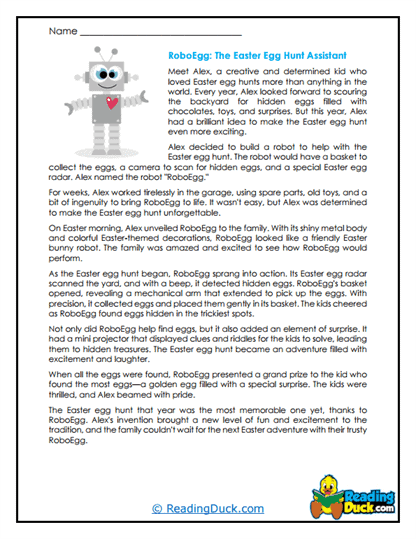
Technology meets tradition in this story where robots help-or hilariously hinder-a classic egg hunt. The narrative seamlessly introduces tech vocabulary ("servo," "sensor") while keeping content fun and accessible. Comprehension questions check understanding and invite comparison between technology-assisted hunts and old-fashioned ones. Kids may ponder, "Would a robot Bunny need a charging station for hopping?"
Wild West Easter
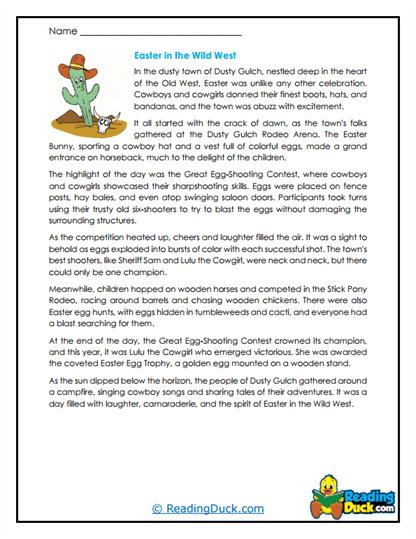
Gallop into the Wild West where cowboys, horses, and Easter collide with egg-themed lassoing and frontier flair. The historical-style narrative blends genres, encouraging contextual thinking. After reading, students answer detail-based and reflective questions ("What toy would you trade at a frontier Easter swap?"). It's a ready-made launch to imagine Easter in any time or place-even the Wild West!
A Deep Look At Easter
When It Is and How Long It Lasts
Easter typically falls on a Sunday between March 22 and April 25, based on the lunar calendar-specifically, the first Sunday after the full moon following the March equinox. While it's observed as a one-day event, its surrounding celebrations span a full week with Holy Week, including Palm Sunday, Maundy Thursday, and Good Friday leading up to Easter. Some cultures continue the festivities with Easter Monday, turning it into a long weekend. Its placement in spring aligns with natural themes of renewal and rebirth.
Where It Came From and Why It's Celebrated
Easter has deep roots in Christian tradition, marking the resurrection of Jesus Christ and symbolizing the victory of life over death. Over centuries, these religious foundations blended with older springtime celebrations that honored fertility and rebirth, creating a tapestry of sacred and secular traditions. Symbols like eggs and hares were adopted for their long-standing cultural associations with new life. Together, they shaped Easter into a holiday that speaks both to faith and seasonal joy.
What People Usually Do for It
Typical Easter traditions include attending church services, enjoying festive meals with family, and participating in egg decorating and egg hunts. Many communities host parades, festivals, and themed gatherings where children follow bunny-led egg hunts and adults share seasonal foods like hot cross buns or lamb roasts. For Christians, it's a deeply meaningful time of reflection and renewal; for others, it's a joyful celebration of spring and family. Regardless of background, Easter often blends meaning with merriment.
Fun Stuff or Events That Happen
From egg rolling contests on grassy hills to community parades full of pastel costumes and floats, Easter events are as varied as they are delightful. Some towns dye rivers or hide giant eggs in public parks for scavenger hunts, while others host sunrise services outside under blooming branches. Culinary treats-like chocolate bunnies, colored eggs, and themed desserts-make the holiday both tasty and festive. Whether it's magic-themed hunts or ghostly bunny cameos, Easter has a tradition for every kind of imagination.
Make sure to bookmark our website now.
Enjoy all our free reading worksheets.
Our materials adhere to the principles of the Science of Reading.