About Our Greenhouse Effect and Climate Change Reading Comprehension Worksheets
Earth's climate is shaped by many natural processes, and one of the most important is the greenhouse effect. This natural process helps keep our planet warm enough for plants, animals, and people to survive. These worksheets introduce students to how greenhouse gases work, how climate changes over time, and how scientists study Earth's changing environment. Along the way, children explore real-world topics such as weather, oceans, forests, renewable energy, and everyday actions that can make a difference.
Our Greenhouse Effect and Climate Change Reading Comprehension Worksheets help students strengthen nonfiction reading skills while building a deeper understanding of Earth science. As they read, students practice identifying main ideas, recognizing cause-and-effect relationships, comparing scientific evidence, expanding academic vocabulary, and drawing conclusions from informational texts. The passages also encourage critical thinking by presenting both the challenges of climate change and the many ways people are working toward solutions. These skills support learning across science, reading, and environmental studies.
Learning about the greenhouse effect and climate change encourages children to become thoughtful observers of the world around them. They discover how scientists gather evidence, how natural systems are connected, and how individual choices can contribute to a healthier planet. As students become more confident readers, they also gain a greater appreciation for the role science plays in understanding and protecting Earth's future. We hope these worksheets inspire curiosity, responsibility, and a lifelong interest in caring for our environment.
Meet the Worksheets
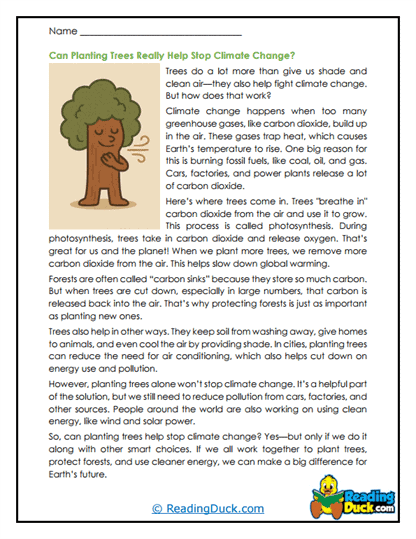
Carbon Helpers
Students discover how forests help remove carbon dioxide from the atmosphere. They learn why trees are called carbon sinks and how healthy forests support Earth's climate. This worksheet strengthens comprehension by connecting plant science with environmental systems. Readers see how protecting forests benefits the entire planet.
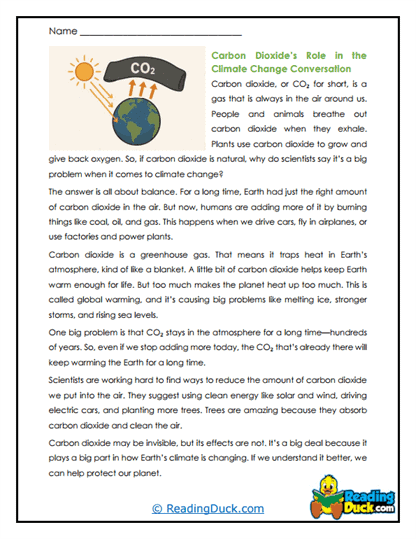
Carbon's Role
Students explore why carbon dioxide is one of the most important greenhouse gases. They learn where it comes from, how plants help remove it, and why scientists study its role in Earth's climate. This worksheet develops cause-and-effect thinking through clear scientific explanations. Readers gain a better understanding of one of climate science's key ideas.
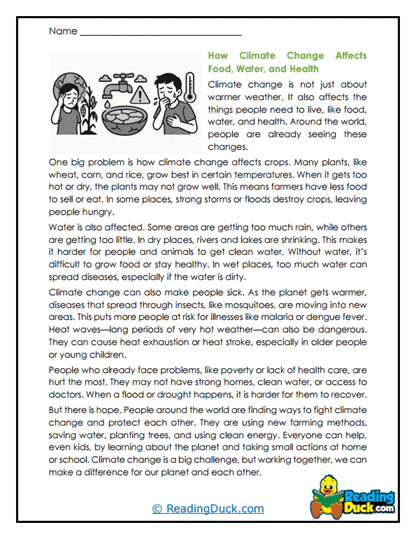
Changing Lives
Students examine how climate change can affect food, water, health, and communities around the world. They also discover how people are adapting through science, technology, conservation, and innovation. This worksheet strengthens comprehension by connecting science to everyday life. Readers learn that knowledge and teamwork can help solve complex challenges.
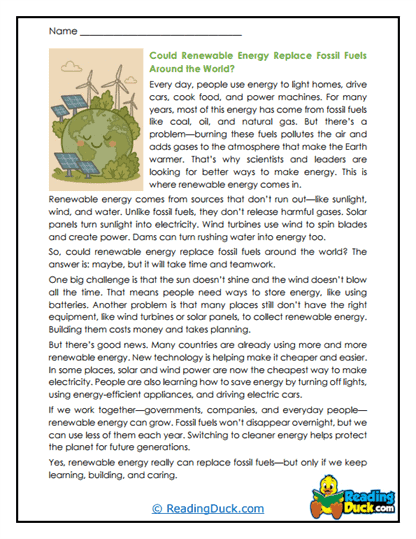
Clean Energy
Students compare renewable energy sources such as solar, wind, and hydropower with fossil fuels. They learn how different energy choices can influence greenhouse gas emissions and why many communities are investing in cleaner technologies. This worksheet strengthens comparison skills and evidence-based thinking. Readers discover that a variety of energy sources may be needed to meet future demands.
Climate Clues
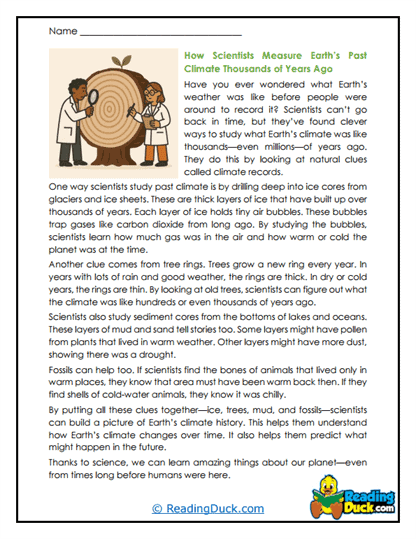
Students investigate how scientists study Earth's past climates using ice cores, tree rings, fossils, and lake sediments. They learn how these natural records help researchers understand long-term climate patterns. This worksheet strengthens analytical thinking by showing how evidence supports scientific conclusions. Readers discover that nature has been recording Earth's history for thousands of years.
Climate Heroes
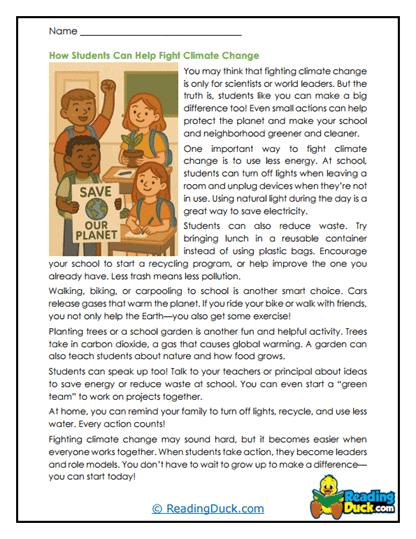
Students discover practical ways they can help care for the environment through everyday actions. They learn how recycling, saving energy, planting trees, and reducing waste can contribute to healthier communities. This worksheet connects science with personal responsibility in an encouraging way. Readers see that even small actions can make a meaningful difference.
Extreme Weather
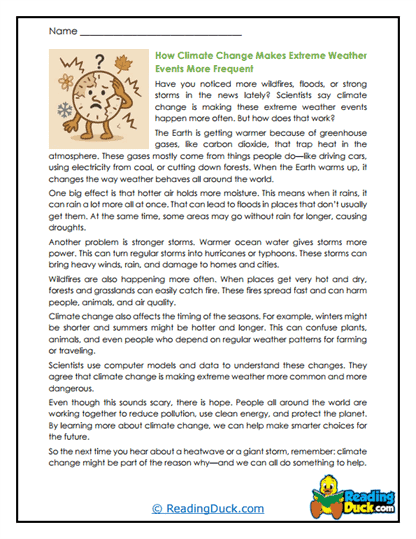
Students explore how climate change can influence heat waves, storms, floods, droughts, and wildfires. They learn how changing temperatures can affect weather patterns without assuming every event has the same cause. This worksheet strengthens cause-and-effect reasoning through real-world examples. Readers gain a clearer understanding of how Earth's systems are connected.
Heat Trap
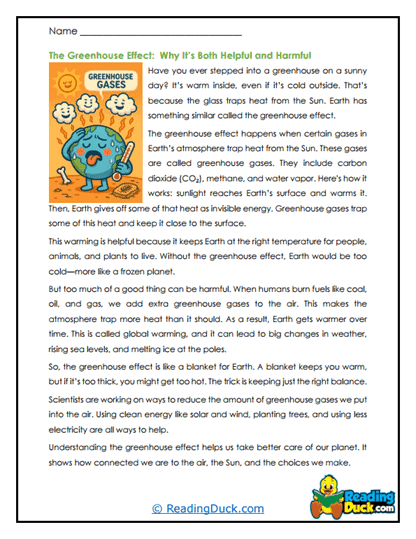
Students are introduced to the greenhouse effect and learn why it is essential for life on Earth. They discover how greenhouse gases naturally trap heat and why increasing greenhouse gas levels can change Earth's climate. This worksheet builds a strong foundation for understanding climate science. Readers quickly see how the atmosphere helps regulate our planet's temperature.
Human Impact
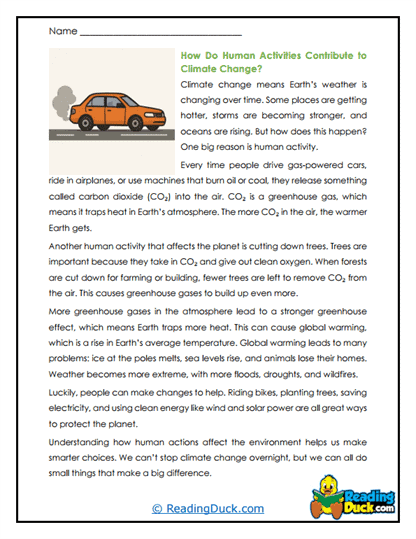
Students examine how everyday human activities contribute to greenhouse gas emissions. They learn about transportation, electricity production, deforestation, and renewable energy while exploring practical ways to reduce emissions. This worksheet strengthens critical thinking by connecting individual actions to larger environmental systems. Readers discover that thoughtful choices can have lasting positive effects.
Methane Sources
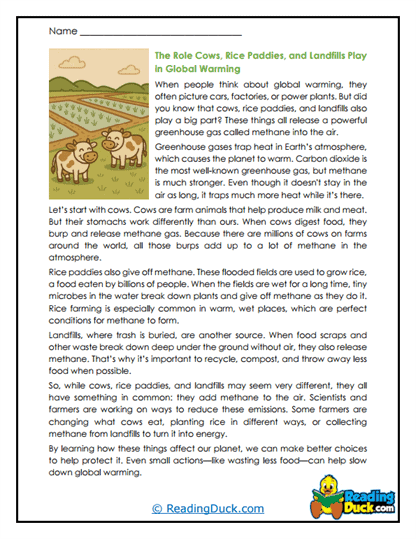
Students learn about methane and how it differs from carbon dioxide as a greenhouse gas. They explore surprising methane sources such as livestock, rice fields, and landfills while learning about efforts to reduce emissions. This worksheet strengthens comparison and cause-and-effect skills. Readers discover that understanding different greenhouse gases helps scientists develop better solutions.
Polar Warming
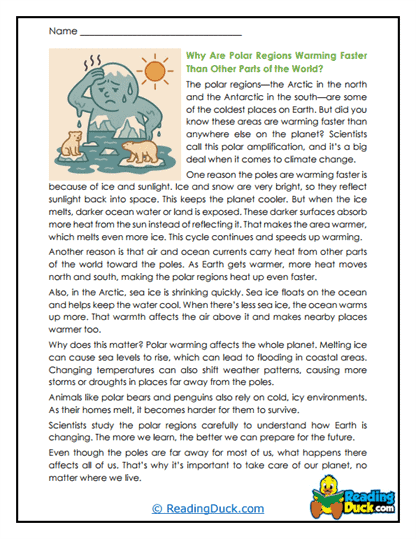
Students investigate why Earth's polar regions are warming faster than many other places. They learn about melting ice, changing ocean conditions, and the effects these changes have on wildlife and global weather patterns. This worksheet develops comprehension through clear scientific explanations. Readers see how events in distant places can affect the entire planet.
Warming Oceans
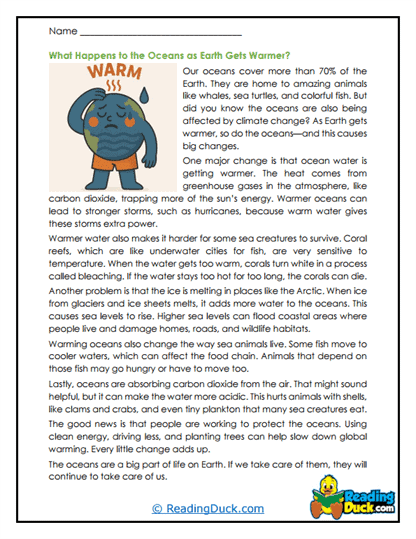
Students explore how rising ocean temperatures affect coral reefs, marine animals, sea levels, and weather. They learn how oceans help regulate Earth's climate while facing important environmental challenges. This worksheet strengthens reading skills by connecting multiple scientific ideas across one topic. Readers gain a greater appreciation for the vital role oceans play in supporting life.
A Better Look At the Greenhouse Effect and Climate Change
The greenhouse effect is a natural process that helps make Earth a comfortable place to live, but changes in greenhouse gas levels can affect the planet's climate over time. Scientists study the atmosphere, oceans, forests, ice, and many other parts of Earth's system to better understand these changes. By gathering evidence from around the world, they continue learning how climate works and how communities can respond to new challenges. Studying climate science helps students understand the connections between people, nature, and the environment.
Reading about the greenhouse effect and climate change also helps students become stronger readers and critical thinkers. They practice following scientific explanations, comparing evidence, building academic vocabulary, and using information from the text to support their ideas. These skills support learning in science, geography, environmental studies, and many other subjects. With every passage, students gain confidence while discovering how knowledge and informed choices can help create a healthier future for our planet.
Make sure to bookmark our website now.
Enjoy all our free reading worksheets.
Our materials adhere to the principles of the Science of Reading.