About Our Meteorology and Weather Forecasting Reading Comprehension Worksheets
Weather affects nearly every part of our daily lives, from choosing what to wear to preparing for storms and planning outdoor activities. Meteorology is the science of studying the atmosphere and using observations, technology, and data to predict what the weather will do next. These worksheets introduce students to the exciting world of weather forecasting while exploring topics such as clouds, storms, satellites, weather balloons, seasons, and the scientists who help keep communities informed and safe.
Our Meteorology and Weather Forecasting Reading Comprehension Worksheets help students strengthen nonfiction reading skills while building a solid understanding of Earth science. As they read, students practice identifying main ideas, following scientific explanations, recognizing cause-and-effect relationships, comparing ideas, and expanding academic vocabulary. The passages also encourage critical thinking by showing how meteorologists collect evidence, analyze patterns, and make predictions based on changing atmospheric conditions. These skills support learning across science, reading, and STEM subjects.
Learning about meteorology encourages children to become careful observers of the world around them. They discover how clouds, wind, air pressure, oceans, and changing seasons all work together to shape the weather they experience each day. As students become more confident readers, they also gain a greater appreciation for the science and technology behind every forecast. We hope these worksheets inspire curiosity about weather, science, and the remarkable systems that help us better understand our changing skies.
Meet the Worksheets
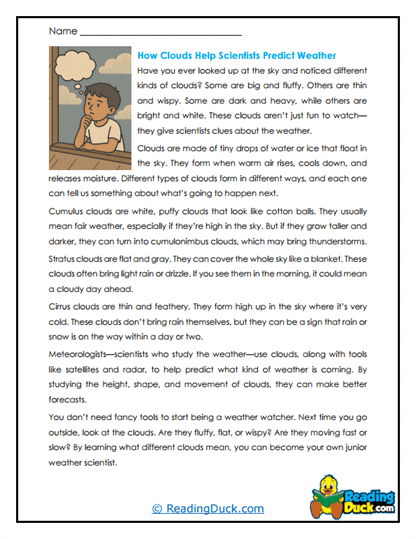
Cloud Clues
Students discover how different types of clouds help meteorologists predict changing weather. They learn to recognize cloud shapes, heights, and movements while exploring what each type reveals about conditions in the atmosphere. This worksheet strengthens observation and inference skills through everyday examples. Readers learn to see clouds as nature's weather forecast.
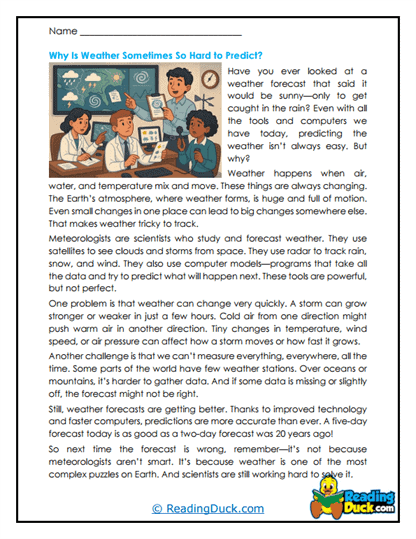
Forecast Challenges
Students investigate why predicting the weather is both a science and a challenge. They learn how small changes in temperature, wind, moisture, and air pressure can affect forecasts while exploring the technology meteorologists use every day. This worksheet strengthens critical thinking and scientific reasoning. Readers discover why forecasts become less certain farther into the future.
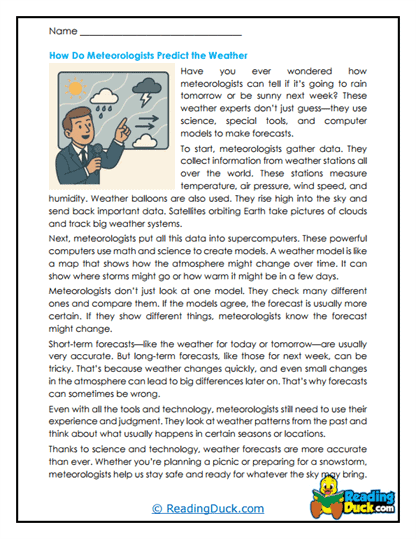
Forecast Detective
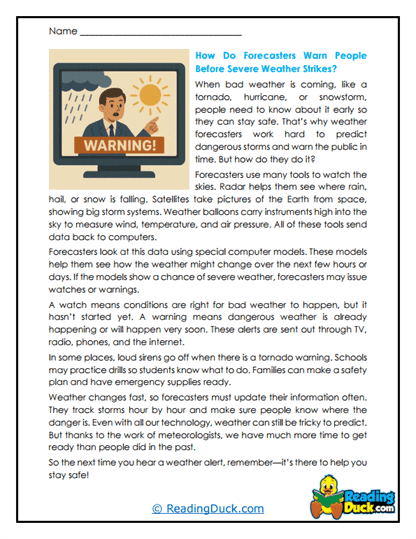
Students are introduced to the science of weather forecasting and the work of meteorologists. They learn how weather stations, satellites, radar, weather balloons, and computer models help predict future conditions. This worksheet builds a strong foundation for understanding modern forecasting. Readers discover that weather predictions are based on careful observations and scientific evidence.
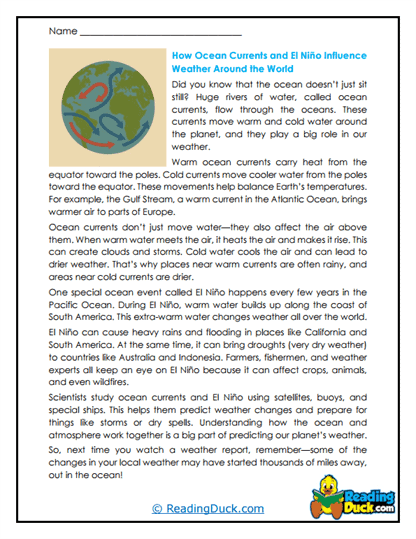
Ocean Influence
Students explore how oceans affect weather patterns around the world. They learn about ocean currents, El Niño, and the movement of heat through Earth's climate system. This worksheet strengthens cause-and-effect thinking by connecting distant oceans to local weather. Readers discover that today's forecast may begin thousands of miles away.
Rain Neighbors
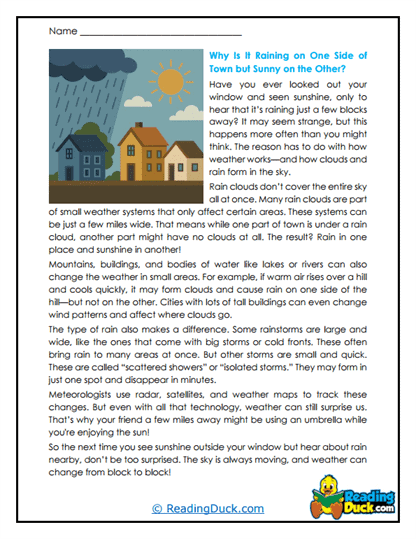
Students investigate why weather can be different across short distances. They learn how local geography, moving clouds, wind patterns, and scattered showers create different conditions within the same community. This worksheet develops observation and comparison skills through familiar situations. Readers discover why one neighborhood can stay dry while another gets soaked.
Season Shift
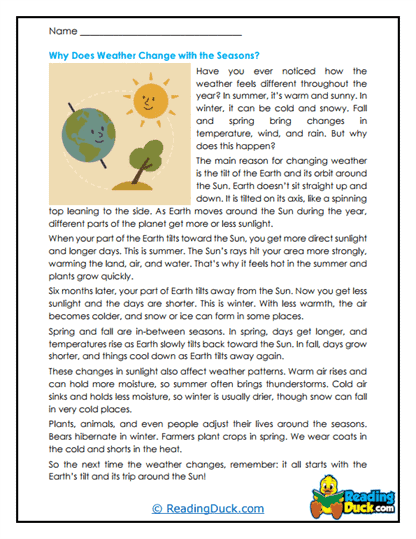
Students learn why Earth's weather changes throughout the year. They explore how Earth's tilted axis and its orbit around the Sun create the four seasons and influence temperatures, daylight, and weather patterns. This worksheet strengthens sequencing and cause-and-effect understanding. Readers connect familiar seasonal changes with the science behind them.
Sky Watchers
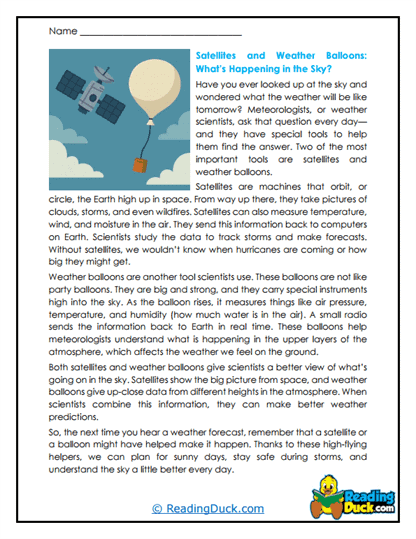
Students discover how satellites and weather balloons help scientists study the atmosphere. They learn how these tools measure temperature, humidity, air pressure, and cloud patterns to improve weather forecasts. This worksheet strengthens comprehension by connecting scientific tools with the information they collect. Readers gain a better appreciation for the technology behind daily weather reports.
Storm Makers
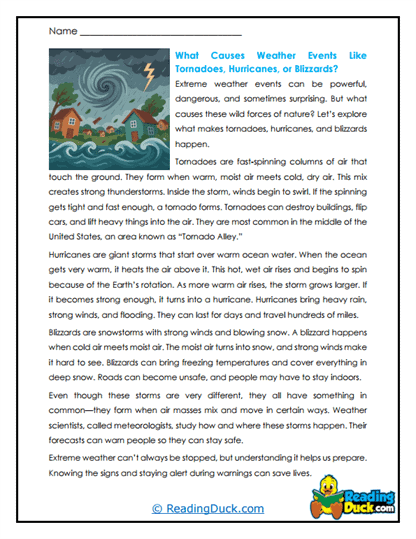
Students explore how tornadoes, hurricanes, and blizzards develop under different atmospheric conditions. They learn how meteorologists study these powerful storms to better understand and predict them. This worksheet strengthens cause-and-effect reasoning through exciting weather examples. Readers discover the forces behind some of Earth's most dramatic storms.
Storm Warnings
Students learn how meteorologists issue watches, warnings, and weather alerts before dangerous conditions arrive. They explore how radar, satellites, weather balloons, and computer models work together to help protect communities. This worksheet develops sequencing and problem-solving skills through real-world applications. Readers discover how weather forecasts can help save lives.
Weather Careers
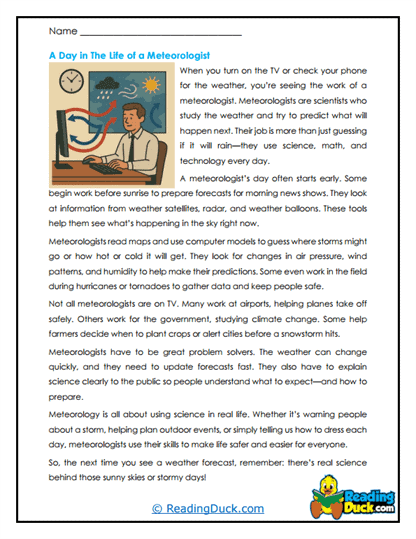
Students take a closer look at the exciting career of a meteorologist. They learn about the daily work of weather scientists, the tools they use, and the many places they can work. This worksheet connects STEM careers with real-world science. Readers discover how meteorologists help people make safe and informed decisions every day.
Weather vs. Climate
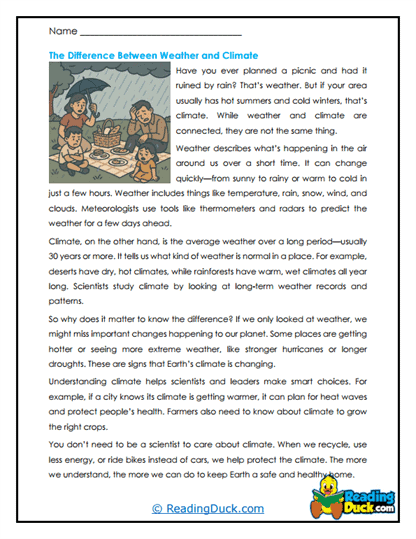
Students compare the differences between weather and climate. They learn that weather describes short-term conditions while climate refers to long-term patterns observed over many years. This worksheet strengthens comparison skills while clearing up a common misconception. Readers gain a better understanding of two important Earth science concepts.
Wind and Pressure
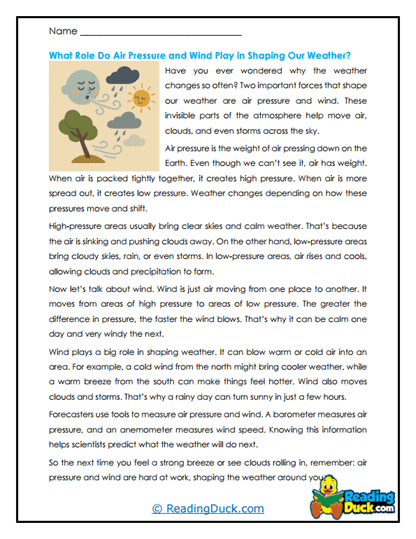
Students investigate two of the invisible forces that drive weather. They learn how differences in air pressure create wind and how these movements influence clouds, storms, and changing weather patterns. This worksheet strengthens scientific reasoning through clear, everyday examples. Readers discover that unseen forces shape the weather all around them.
A Better Look At Meteorology and Weather Forecasting
Meteorology is much more than predicting whether tomorrow will be sunny or rainy. It is the science of studying Earth's atmosphere, understanding how weather systems develop, and using technology to make accurate forecasts that help keep people safe. Meteorologists gather information from satellites, weather balloons, radar, ocean observations, and weather stations to better understand the constantly changing atmosphere. Studying weather helps students appreciate the complex systems that shape everyday life.
Reading about meteorology and weather forecasting also helps students become stronger readers and scientific thinkers. They practice following scientific explanations, analyzing evidence, building academic vocabulary, and connecting ideas across different informational texts. These skills support learning in Earth science, geography, environmental studies, and many other subjects. With every passage, students gain confidence while discovering the fascinating science behind every weather forecast.
Make sure to bookmark our website now.
Enjoy all our free reading worksheets.
Our materials adhere to the principles of the Science of Reading.