
Ad Hominem Attack
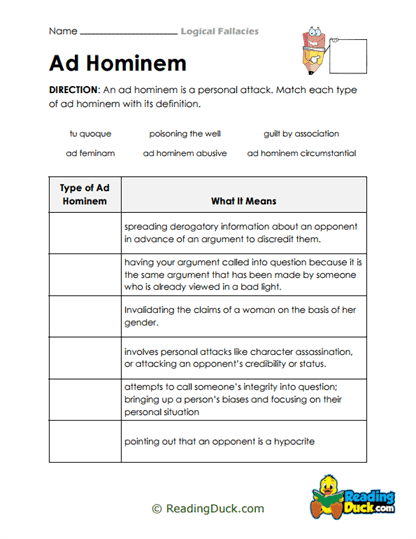
This worksheet introduces students to the ad hominem fallacy, explaining various forms, such as tu quoque, poisoning the well, guilt by association, and ad feminam. Students match each type of ad hominem attack with its definition, learning to identify how each form shifts the argument from the issue to the person. By completing this worksheet, students see how personal attacks are used to distract from actual issues. It emphasizes the importance of focusing on arguments rather than attacking individuals.
Understanding ad hominem fallacies enhances students’ critical thinking and debate skills by teaching them to recognize irrelevant attacks in arguments. This worksheet builds awareness of logical structure and ethical reasoning, helping students evaluate arguments based on merit rather than personal biases. Recognizing ad hominem attacks also develops emotional intelligence and perspective-taking, as students consider how personal attacks undermine fair discussion. It promotes analytical skills, enabling students to better assess arguments in discussions and media.