If you've ever had students confuse alliteration with... well, everything else-you're not alone. Sound devices can be tricky because students hear them before they fully understand them. Consonance, especially, tends to get overlooked or mixed up with other patterns in language.
Consonance is the repetition of consonant sounds within words-not just at the beginning. That small difference makes a big impact, but it's also where many students get stuck. They often need repeated exposure and hands-on practice to really hear and recognize those patterns.
The good news is that once students start noticing consonance, their reading becomes more expressive and their writing becomes more intentional. They begin to hear rhythm, flow, and emphasis in ways they didn't before.
This worksheet collection is designed to build that awareness step-by-step-starting with simple recognition and moving toward creative writing and deeper literary analysis.
Key Language Arts Concepts Covered
Understanding Consonance
Consonance is the repetition of consonant sounds within words or sentences. Unlike alliteration, which happens at the beginning of words, consonance can appear anywhere-middle or end included.
Students often need multiple examples to truly grasp this difference. Once they do, they begin to recognize how sound patterns shape language and make phrases more engaging.
Identifying Sound Patterns in Text
Recognizing consonance requires careful reading and listening. Students learn to slow down and pay attention to how words sound together, not just what they mean.
This builds stronger reading fluency because students start to notice rhythm and flow-two key elements of effective reading and comprehension.
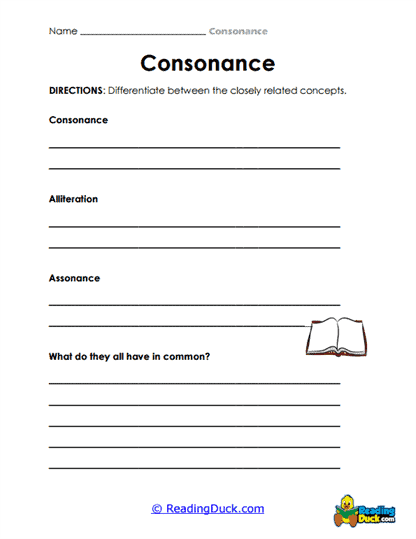
Consonance vs. Alliteration vs. Assonance
These three sound devices are commonly confused. This collection helps students clearly separate them by comparing where and how sounds repeat.
By organizing these concepts side-by-side, students develop a more structured understanding of sound in language, which improves both analysis and writing skills.
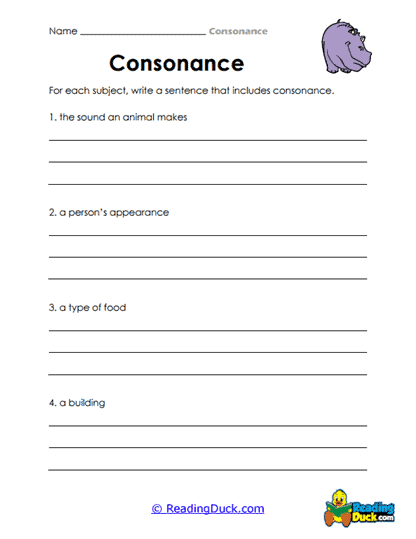
Writing with Consonance
Once students understand the concept, they begin applying it in their own sentences and poetry. This shifts learning from passive recognition to active creation.
This stage is where real growth happens-students experiment with word choice, revise for sound, and begin writing with intention.
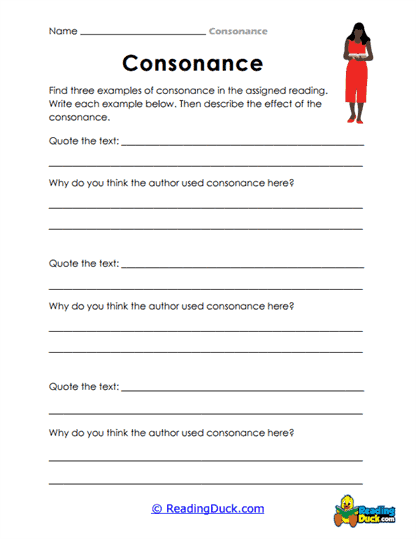
Analyzing Consonance in Literature
Students explore how authors use consonance in poetry and passages to create mood, rhythm, and emphasis.
This builds deeper comprehension because students start asking not just what is happening in a text-but how and why it's written that way.
Exploring the Worksheet Collection
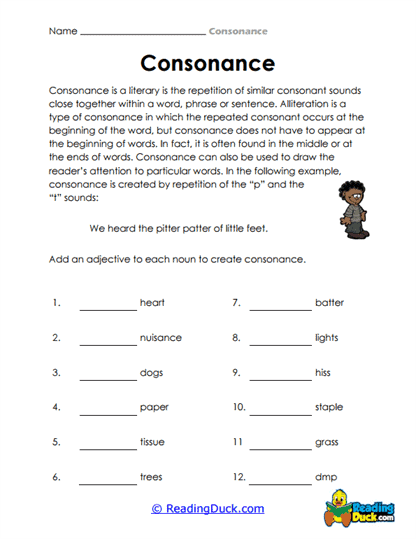
Getting Started - Consonance Introduction, Add an Adjective
These worksheets introduce consonance in a simple, approachable way. Students begin by adding adjectives to nouns to create repeated consonant sounds.
This early stage focuses on hearing patterns. It's playful and interactive, helping students engage with language in a low-pressure way. Over time, this builds foundational awareness that supports both reading fluency and writing creativity.
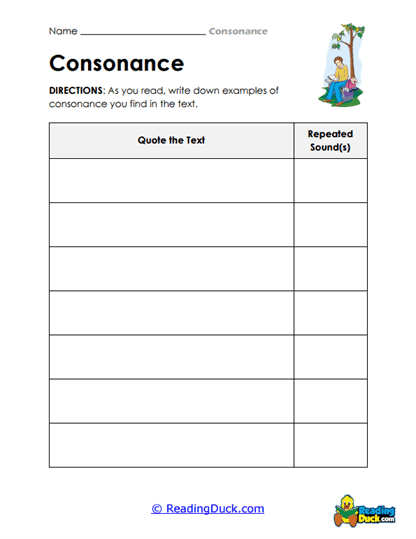
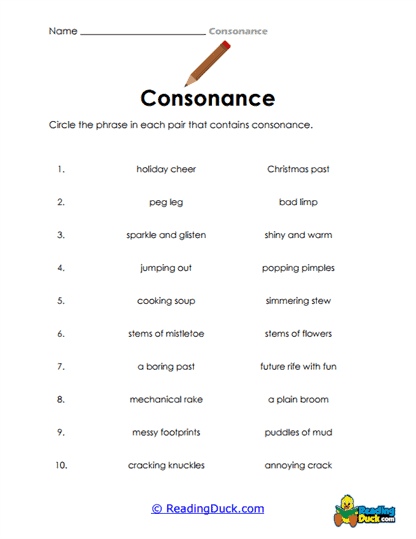
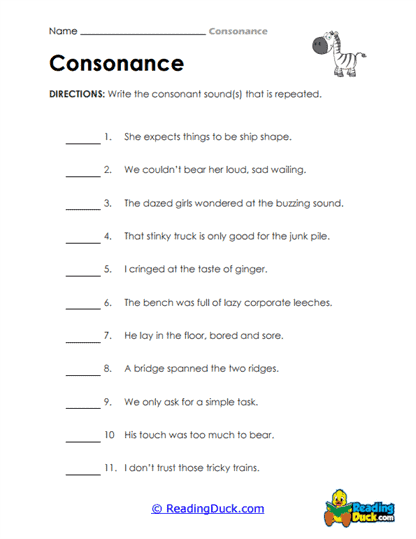
Building Recognition - Identifying Repeated Sounds, Identifying Consonance in Phrases
Here, students shift from creating to recognizing consonance in sentences and phrases. They begin identifying repeated sounds independently.
This step strengthens attention to detail and helps students develop a more analytical approach to reading. They begin noticing patterns they would normally skip over, which improves comprehension.
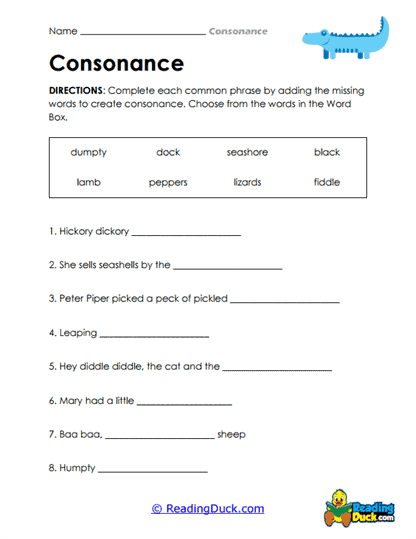
Familiar Patterns - Completing Familiar Phrases
Using nursery rhymes and familiar expressions, students fill in missing words based on sound patterns.
Because students already know many of these phrases, they can focus on how the words sound rather than what they mean. This builds confidence and reinforces how consonance makes language memorable.
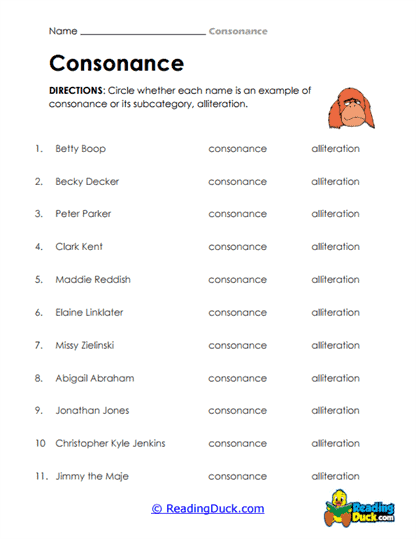
Comparing Sound Devices - Consonance vs. Alliteration, Comparing Sound Devices
These worksheets help students clearly distinguish between consonance, alliteration, and assonance.
By sorting and comparing examples, students refine their understanding and reduce confusion. This is a key step toward mastering literary devices and applying them correctly.
Creative Application - Writing with Consonance, Creative Practice
Students begin writing their own sentences and short poems using consonance.
This stage encourages experimentation. Students try different word combinations, revise for sound, and begin developing a natural sense of rhythm in writing.
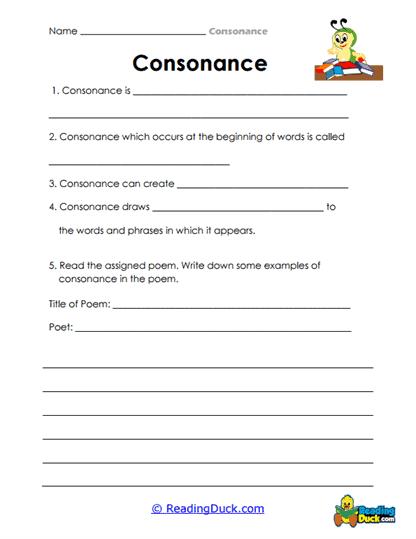
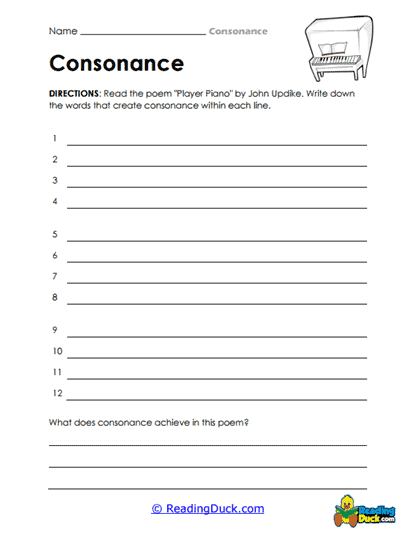
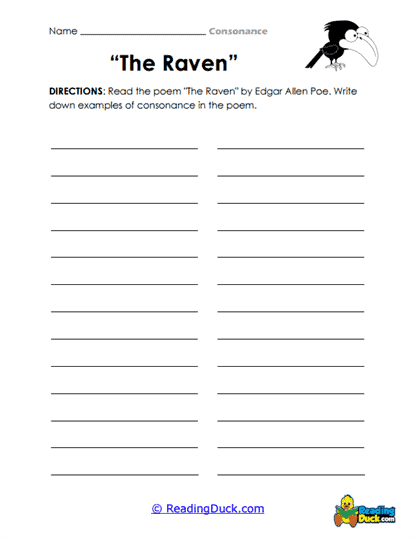
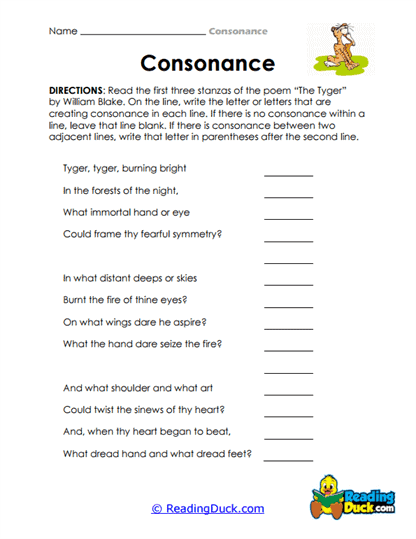
Literary Analysis - "The Tyger," "Player Piano," "The Raven"
Students analyze consonance in authentic poetry from well-known authors.
This is where everything comes together. Students connect sound to meaning, noticing how repeated consonants contribute to tone, mood, and memorability. It builds both literary analysis skills and appreciation for writing techniques.
Real-World Application - Listening for Consonance, Consonance in Reading, Text Evidence
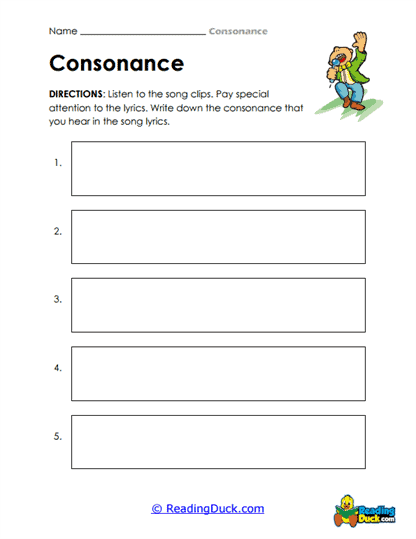
These worksheets extend learning into songs and reading passages.
Students identify consonance through listening and reading, then explain why authors use it. This deepens understanding and helps students see writing as intentional and purposeful.
Instructional Tips for Teachers & Homeschool Parents
The "Sound Echo" Trick
Tell students: "Consonance is like an echo inside words-not just at the front."
Have them say phrases out loud and listen for repeating sounds. It clicks quickly when they hear it.
Common Student Mistakes
Thinking consonance only happens at the beginning (that's alliteration!)
Focusing only on spelling instead of sound
Missing consonance in longer words or phrases
Quick Classroom Activity
Sound Hunt Challenge:
Read a sentence aloud and have students raise their hand when they hear repeating consonant sounds.
Bonus: Let them create their own "sound-heavy" sentences and challenge classmates to find the pattern.
Grade Levels and Standards Alignment
These consonance worksheets support key language standards related to sound patterns, reading fluency, and literary analysis.
Common Core State Standards (CCSS)
CCSS.ELA-LITERACY.RF.4.4 (Grade 4)
Read with sufficient accuracy and fluency to support comprehension
→ Recognizing sound patterns like consonance improves fluency and expression
CCSS.ELA-LITERACY.L.4.5 (Grade 4)
Demonstrate understanding of figurative language and word relationships
→ Consonance supports understanding of sound-based literary devices
CCSS.ELA-LITERACY.RL.5.4 (Grade 5)
Determine meaning of words and phrases including figurative language
→ Analyzing consonance helps students interpret tone and mood
TEKS (Texas Essential Knowledge and Skills)
TEKS ELAR 4.6(A)
Analyze elements of sound including rhyme and repetition
→ Directly aligns with identifying consonance in text
Florida B.E.S.T. Standards
ELA.4.R.1.2
Explain how figurative language contributes to meaning
→ Consonance supports understanding of rhythm and emphasis
Virginia SOL
4.5d
Identify figurative language including sound devices
→ Students practice recognizing consonance in reading passages
WIDA (ELL Standards)
WIDA ELD Standard 2: Language of Language Arts
→ Supports developing awareness of sound patterns in English, which is critical for multilingual learners building fluency
Make sure to bookmark our website now.
Enjoy all our free reading worksheets.
Our materials adhere to the principles of the Science of Reading.