
Story Mood Board
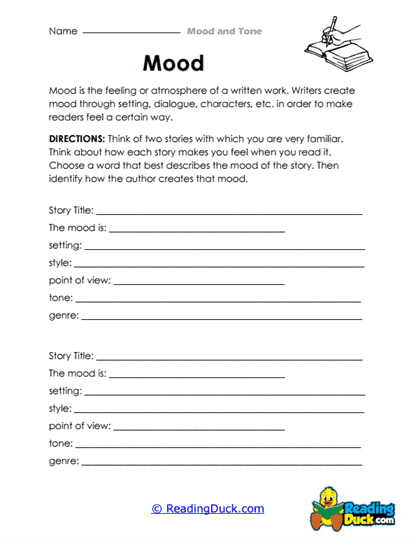
This worksheet focuses on identifying the mood in two familiar stories, asking students to determine mood-related aspects such as setting, style, point of view, tone, and genre. Students are tasked with choosing words that best describe the mood of each story and analyzing how specific literary elements contribute to this mood. This exercise requires students to reflect on their own reactions to the text and consider the author’s techniques in evoking those feelings. It encourages comparative analysis between different texts.
Engaging in mood analysis across multiple stories strengthens students’ ability to compare and contrast literature. This activity also improves textual interpretation skills as students consider how diverse elements work together to create a cohesive mood. By focusing on the details that build atmosphere, students enhance their analytical thinking and learn to observe how authors manipulate reader emotions. Such exercises expand their ability to describe and interpret nuanced feelings in texts.