
Soft Replies
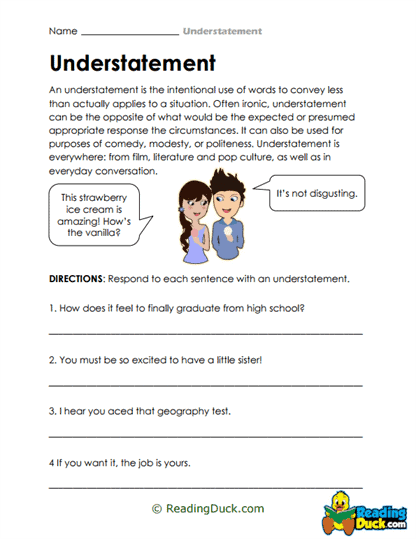
This worksheet introduces understatement in a simple, approachable way by asking students to respond to statements using more restrained language. It’s a great starting point because it helps your child understand that understatement is about saying less than what is truly felt or expected. The examples guide them toward recognizing tone, which can sometimes be tricky for students at this level. Instead of exaggerating, they learn to scale things back in a thoughtful way.
As your child works through the prompts, they begin to see how understatement can sound polite, humorous, or even ironic depending on the situation. This builds awareness of how tone changes meaning in conversation. It also encourages them to think before responding, which is a valuable communication skill. Over time, this kind of practice helps students become more flexible and intentional with their language. It’s a strong foundation for understanding more advanced figurative language later on.