Let's talk grammar-yes, the unsung hero of clear communication! Think of grammar as the traffic lights of language: without it, sentences could crash into each other, creating chaos and confusion. These worksheets tackle everything from the basics like verbs and pronouns to curveballs like subjunctives and parallel structure-with a dash of light humor, because nobody learns while yawning.
Why should students care about grammar? Well, it's kind of like seasoning in your favorite dish-subtle, but missing it, and everything goes bland or confusing. With strong grammar skills, writing becomes sharper, reading more intuitive, and expressing ideas a breeze. Plus, it helps us avoid embarrassing mix-ups like confusing "their," "they're," and "there"-trust me, autocorrect doesn't always catch that.
That's where this worksheet collection steps in like your grammar-ready best friend-PDFs that are easy to print, packed with practice, and always come with an answer key for quick feedback. Whether you're cramming before class, planning lessons, or just craving clarity, these worksheets turn mastering each grammar topic from "ugh" to "aha!"-pretty fun for something that used to be your least favorite subject.
A Look At Each Worksheet
Action Verbs
This worksheet gets your students moving-and not literally! It dives into verbs that show action and helps kids distinguish them from their lazy, non-action-packed friends. Expect lively examples and opportunities to energize sentences with verbs like jump, bake, and zoom.
Adjectives
Think of this as the word painter's workshop-students learn to add color and detail to sentences with descriptive words. With practice, they'll discover how adjectives make writing pop ("the cat" becomes "the mischievous tabby cat"). By the end, your writers won't just describe- they'll dazzle.
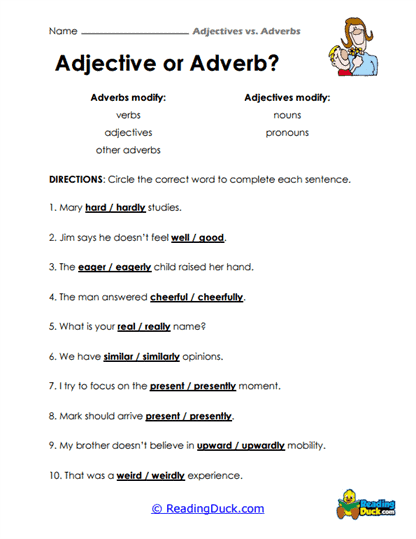
Adjectives vs Adverbs
This one's the classic "Is it 'quick' or 'quickly'?" showdown, neatly laid out. Students get to practice when words modify nouns (adjectives) versus verbs (adverbs), with amusing examples like "She sings loud" vs. "She sings loudly." It's like a grammar duel with a referee holding a red pen.
Adverbs
Here, adverbs shine as the multitaskers they are-modifying verbs, adjectives, and even other adverbs. Students practice enhancing action, degree, and manner-think "run quickly," "very tall," or "incredibly quietly." It's a crash course in the art of being descriptively precise.
Affect vs Effect
The age-old mix-up between affect (verb) and effect (noun) gets demystified with fun sentences. Expect examples like "Lack of sleep can affect your mood" versus "The effect of candy may be too much sugar." It's a clarity boost to end confusion once and for all.
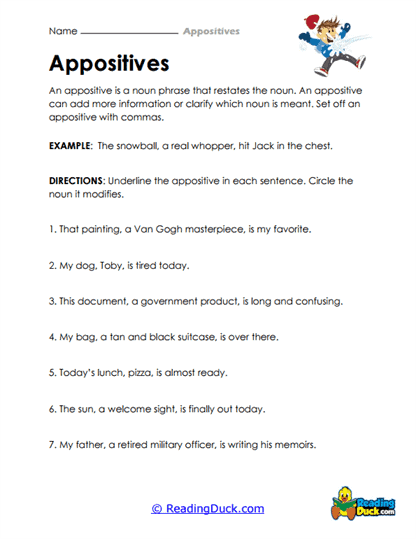
Appositives
This lesson teaches how to insert extra info right beside nouns-like a helpful whisper inside a sentence. Students learn to add details gracefully, such as "My friend, a daring explorer,..." without creating grammatical chaos. It's a smooth way to weave in extra info without losing rhythm.
Articles of English
The tiny words a, an, and the silently wield massive power in English-and this worksheet gives them their spotlight. Students practice choosing correctly based on sound and specificity, e.g., "a unicorn" vs. "an apple." Who knew little words could be this mighty?
Auxiliary Verbs
Meet the grammar sidekicks: am, is, have, will, and their allies. Students explore how these helpers form questions, tenses, and negatives, so sentences like "She has eaten" or "Will they go?" become smooth operators. It's like giving sentences the powers they need to shine.
Collective Nouns
This one is all about group power-nouns like "flock," "team," and "family" that stand for many but act as one. Students practice spotting and using them correctly, especially when matching verbs. Suddenly, language about groups won't feel so lonely.
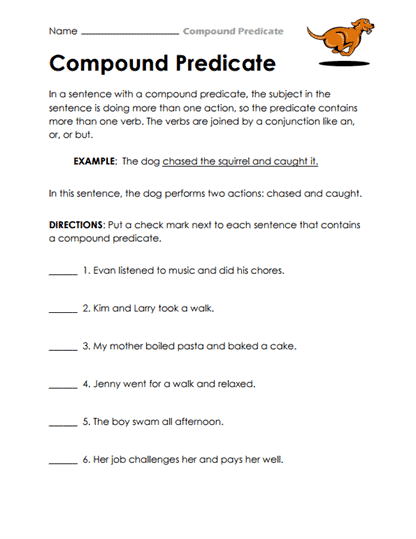
Compound Predicate
This collection helps students learn how a single subject can perform two or more actions within the same sentence. Through engaging practice activities, students strengthen their sentence-writing skills and improve sentence variety.
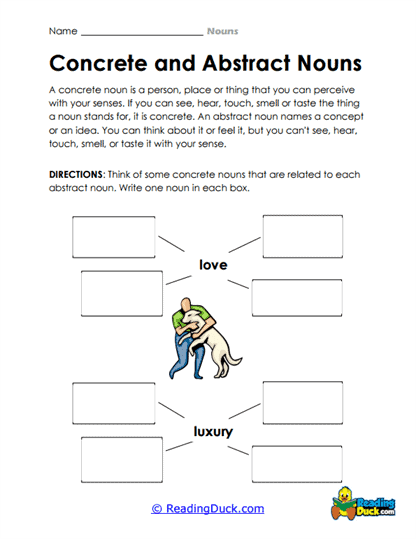
Concrete Nouns
If you can touch it, taste it, or see it, it's likely a concrete noun-and this worksheet is full of them. Students practice naming things they can experience with their senses, making abstract grammar ideas feel more... well, solid. It's a grounding exercise in every sense of the word.
Conjunctions
Conjunctions are the glue of language, holding sentences together. Students learn about coordinating, subordinating, and correlative conjunctions, with plenty of examples to stick in their memory. After this, they'll be masters at connecting ideas without overusing "and."
Contractions
Here's where "do not" becomes "don't" and "cannot" becomes "can't." Students practice merging words with apostrophes to make sentences more casual and efficient. It's a small skill that packs big everyday value.
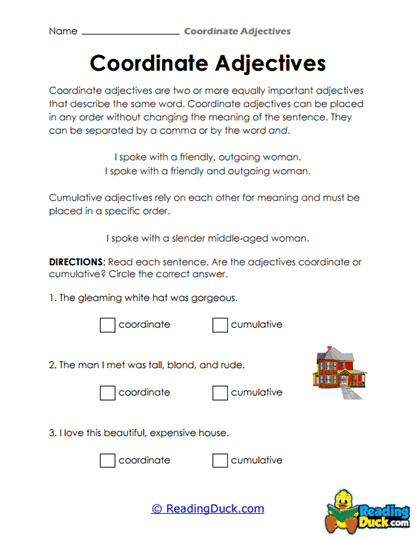
Coordinate Adjectives
These worksheets teach students how to identify and correctly use coordinate adjectives to create clearer, more descriptive writing. Students practice applying punctuation rules while enhancing their ability to add detail to sentences.
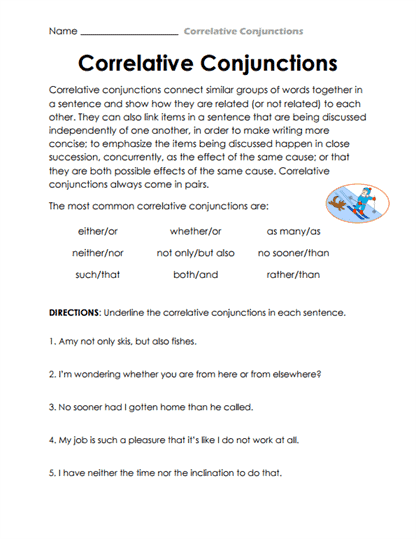
Correlative Conjunctions
This collection helps students understand how paired conjunctions work together to connect words, phrases, and ideas. Through guided practice, students develop stronger grammar skills and learn to write more balanced, effective sentences.
Demonstratives This, that, these, and those finally get their time to shine. Students learn how to point to things near and far in sentences with perfect accuracy. The examples make it easy to stop mixing them up.
Determiners
Determiners introduce and clarify nouns, and this worksheet shows how they frame our sentences. Students work with words like "some," "many," and "each" to give specifics or generalizations. By the end, their writing will be far more precise.
Direct Objects
Who or what receives the action in a sentence? That's the question this worksheet answers. Students practice identifying direct objects and making sure their verbs have someone (or something) to act upon.
Double Negatives
This worksheet is all about avoiding "I don't know nothing"-type mistakes. Students learn how two negatives can accidentally make a positive and how to fix it. The result? Sentences that are clear and correct.
Future Tense
Time travel into the future without leaving your desk! Students practice using "will" and "going to" to talk about things that haven't happened yet. It's a grammar skill that's all about forward thinking.
Gerunds
These clever -ing words act like nouns, and students will learn to spot them in action. From "Swimming is fun" to "I enjoy reading," gerunds pop up everywhere. This worksheet turns recognition into second nature.
Grammar Mechanics
This is the nuts-and-bolts approach to grammar-capitalization, punctuation, and sentence boundaries. Students practice these foundational rules so their writing is polished and professional. It's like tightening all the screws in a wobbly sentence.
Has or Have
Students learn when to choose "has" versus "have" based on subject agreement. The examples keep it clear and memorable. By the end, they'll stop second-guessing themselves in conversation and writing.
Helping Verbs
A close cousin to auxiliary verbs, these helpers ensure sentences are grammatically complete. Students learn how helping verbs change tense and meaning. It's a subtle skill with a big impact.
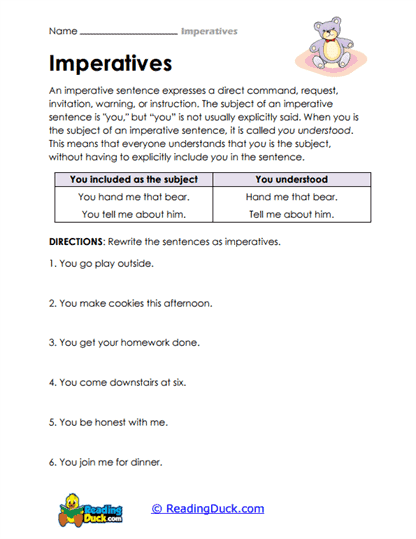
Imperatives
Command sentences take center stage here. Students learn to write instructions, requests, and advice with clarity. After this worksheet, their commands will be clear, polite, and effective.
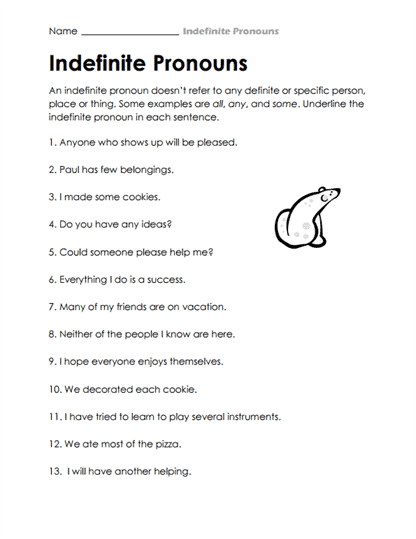
Indefinite Pronouns
Words like "anyone," "everything," and "few" step into focus. Students learn to use them properly and match them with the correct verbs. It's about making vague references sound perfectly clear.
Infinitives
The ever-popular "to" + verb structure gets a full explanation. Students practice recognizing and using infinitives in sentences. This skill helps writing feel smoother and more versatile.
Interjections
Wow! Oh no! Hooray! This worksheet shows how to express emotion and reaction with short, punchy words. Students learn how to use them without overdoing it.
Interrogatives
These are the question words-who, what, when, where, why, and how. Students practice forming questions with precision and style. After this, their questioning game will be top-notch.
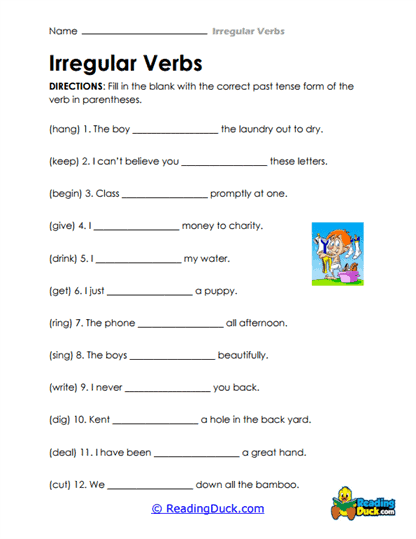
Irregular Verbs
Go, went, gone-it's not always straightforward. Students master tricky verb forms that don't follow normal patterns. This worksheet is pure irregular verb boot camp.
Its or It's
Students learn the crucial difference between possession (its) and contraction (it's). Examples and quick tests make it stick. The goal? Never second-guess again.
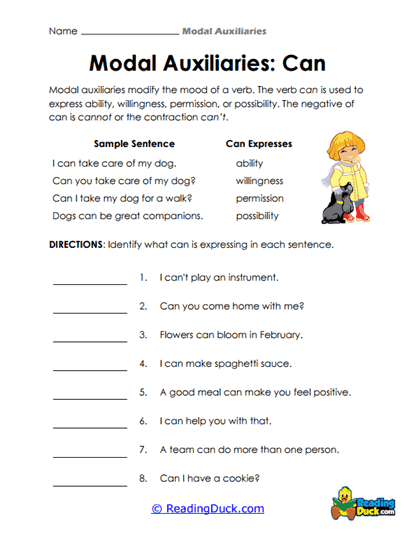
Modal Auxiliaries
Words like "can," "should," and "must" get the spotlight. Students learn how they express ability, possibility, or necessity. Suddenly, sentences will feel more confident and clear.
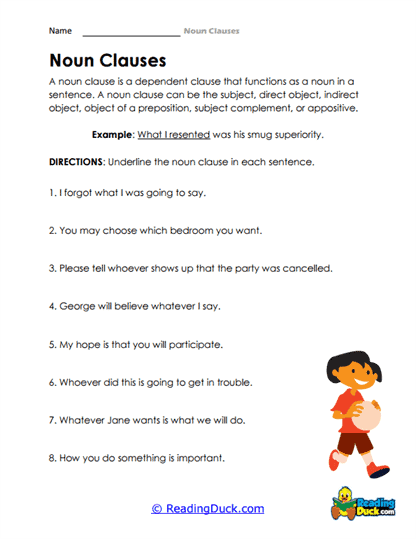
Noun Clauses
These sneaky clauses act like nouns in a sentence. Students learn to identify and use them without confusion. The exercises make complex sentences easy to navigate.
Nouns
People, places, things, and ideas-it all starts here. Students get solid practice in identifying and categorizing nouns. It's the grammar foundation every writer needs.
Object Pronouns
Me, you, him, her-this worksheet covers pronouns that receive action. Students practice swapping nouns for object pronouns with confidence. It's the perfect complement to subject pronoun skills.
Ordering Adjectives
Why do we say "big red balloon" instead of "red big balloon"? This worksheet explains the logic behind adjective order. Students learn the sequence naturally through examples and practice.
Parallel Structure
Smooth, balanced sentences are the focus here. Students learn how to keep items in a list or comparison in the same grammatical form. It's a secret weapon for making writing more rhythmic and clear.
Participles
Verb forms acting like adjectives? Yes, please! Students learn how participles work to describe nouns. The practice examples make it easy to spot and use them.
Parts of Speech
This is the grand tour of grammar: nouns, verbs, adjectives, adverbs, pronouns, prepositions, and conjunctions. Students get an overview of each and see how they fit together. It's the ultimate refresher.
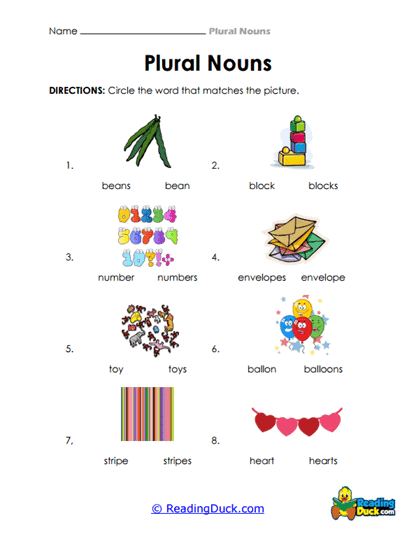
Plural Nouns
From adding -s to changing vowels, plural nouns can be tricky. Students practice forming plurals for both regular and irregular words. The exercises make the rules crystal clear.
Plural Pronouns
They, them, ours-plural pronouns get their time in the spotlight. Students learn to match them with plural verbs and antecedents. Clear, straightforward examples keep things simple.
Possessive Nouns
These worksheets help students show ownership correctly by using singular and plural possessive nouns. Students practice applying apostrophe rules while building confidence in their writing and editing skills.
Possessive Pronouns
This collection teaches students how to use possessive pronouns correctly to show ownership without repetition. The activities help strengthen grammar accuracy and improve sentence fluency.
Prepositional Phrases
Students learn how prepositions link nouns to other words in a sentence. Practice focuses on building and identifying prepositional phrases. This skill is key to richer, more detailed sentences.
Prepositions
This worksheet focuses on the small but mighty words that show relationships in space and time. Students practice using prepositions in context. The goal: no more awkward phrasing like "in the car on the garage."
Prepositions of Places
Here, students zoom in on location-based prepositions like "under," "above," and "between." Exercises help them master these words visually and contextually. It's all about giving directions and descriptions clearly.
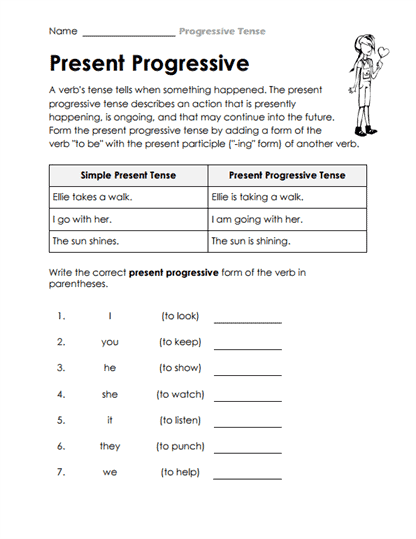
Progressive Tense
These worksheets provide practice with past, present, and future progressive verb tenses. Students learn how to describe actions that are ongoing, helping them write with greater precision and clarity.
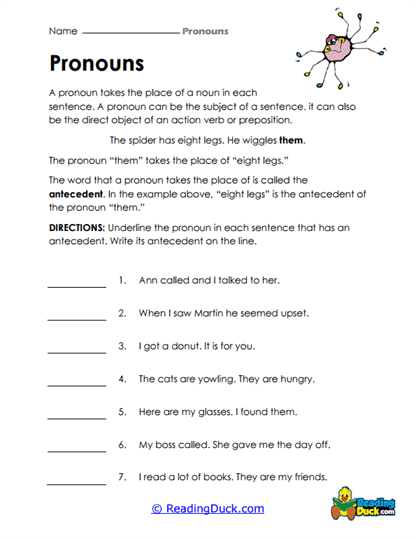
Pronouns
This covers all types-subject, object, possessive, reflexive. Students learn to replace nouns without confusing readers. Pronouns make writing less repetitive and more fluid.
Regular and Irregular Verbs
Students compare verbs that follow rules with those that don't. Plenty of examples and drills make the difference clear. This worksheet makes verb mastery a breeze.
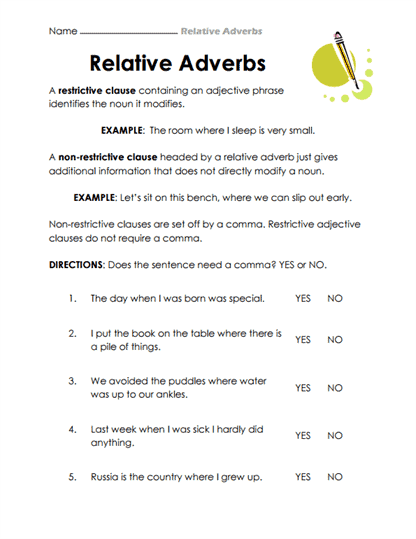
Relative Adverbs
This collection helps students understand how relative adverbs connect ideas and provide additional information about time, place, or reason. Through targeted practice, students improve sentence structure and comprehension.
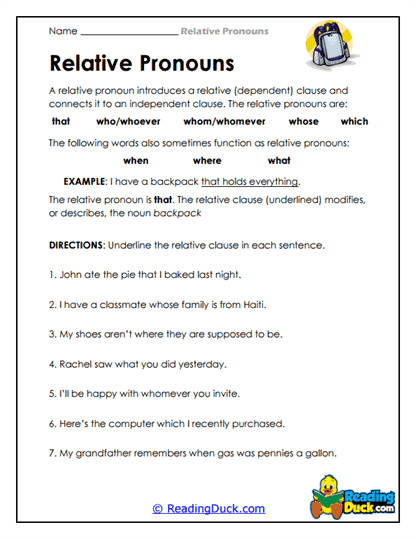
Relative Pronouns
These worksheets teach students how to use relative pronouns to connect clauses and add important details to sentences. Students develop stronger grammar skills while learning to create more complex and effective writing.
Singular Pronouns
He, she, it-these pronouns get the full explanation. Students learn how to match them with singular verbs. This small detail makes a big difference in clarity.
Subject and Predicate
Every complete sentence has them-students learn how to find and build them. Exercises reinforce the structure. By the end, sentence building will feel natural.
Subject Pronouns
I, you, he, she-this worksheet covers the pronouns that do the action. Students practice replacing nouns without breaking sentence flow. It's a small tweak for cleaner writing.
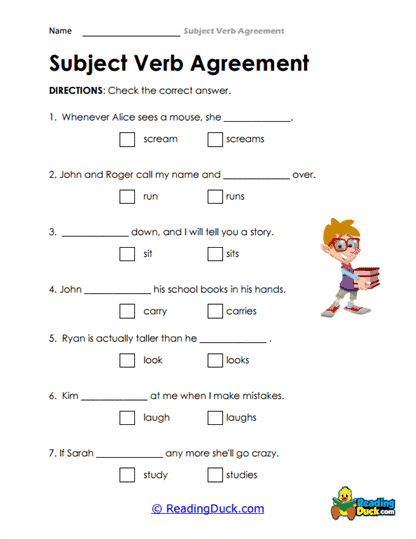
Subject-Verb Agreement
Singular subjects get singular verbs, and plurals get plurals-simple, right? This worksheet reinforces the rule with clear examples. Students learn to spot and fix agreement errors instantly.
Subjunctives
This worksheet dives into the "what if" world of grammar. Students learn how to express hypotheticals and wishes correctly. It's a fascinating twist on verb use.
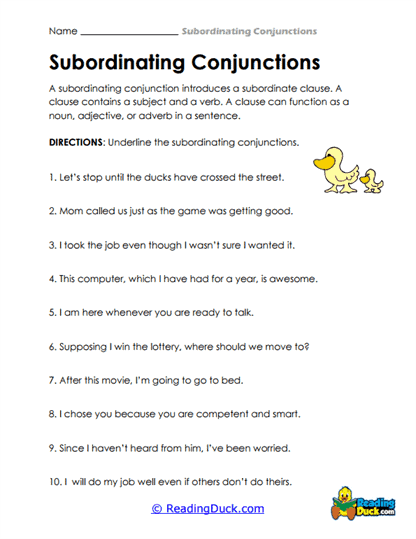
Subordinating Conjunctions
Because, although, if-these connectors link ideas with nuance. Students learn to use them to create complex sentences. The result? Writing that flows with sophistication.
Superlative Adjectives
Big, bigger, biggest-students learn how to form and use superlatives. Fun examples keep it engaging. Soon, they'll be describing the "best" of everything with confidence.
Syntax
The art of sentence arrangement comes to life here. Students learn how word order affects meaning and clarity. It's the architect's blueprint for writing.
Then vs. Than
Students finally settle this common confusion. Examples make the difference between time ("then") and comparison ("than") unforgettable. No more mix-ups in essays or texts.
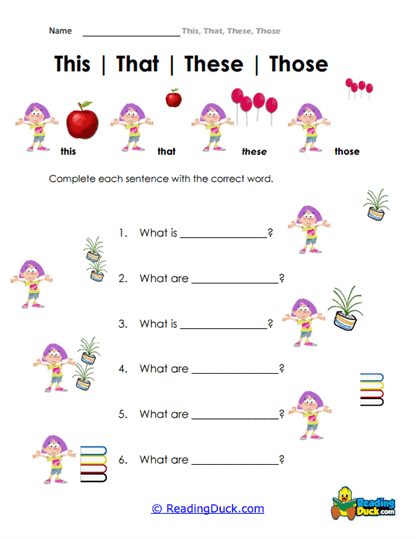
This, That, These, Those
Demonstratives get another close look with practical examples. Students learn how to match them to singular/plural and near/far. By the end, pointing things out in writing will be a breeze.
Transitive and Intransitive Verbs
Students learn how verbs sometimes need an object (transitive) and sometimes stand alone (intransitive). Examples make spotting the difference easy. It's a must-know for clearer sentences.
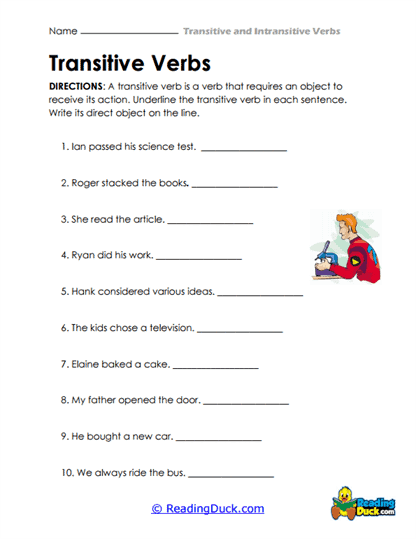
Transitive Verbs
This focused worksheet zooms in on verbs that need an object to complete their meaning. Students practice pairing them with the right nouns. It's all about making sentences feel complete.
Verb Conjugation
Students learn how verbs change form to match subject, tense, and mood. Plenty of practice solidifies these patterns. It's essential for polished writing.
Verbals
Gerunds, infinitives, and participles come together here. Students learn how these verb forms function as other parts of speech. It's a versatile skill set in one worksheet.
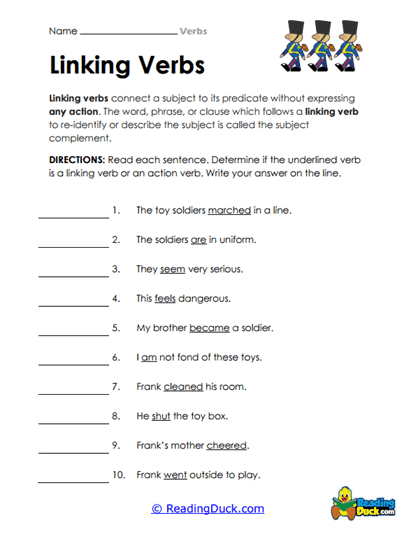
Verbs
The backbone of any sentence gets a full workout. Students identify and use action, linking, and helping verbs. Mastering verbs means mastering sentence movement.
Was vs. Were
This worksheet clears up when to use each past tense form of "to be." Examples and tips make the choice easy. No more guessing.
Word in Statements
Students learn how individual word choice shapes meaning in statements. Practice emphasizes clarity and precision. This worksheet encourages intentional, thoughtful writing.
What Is Grammar?
Let's unpack grammar from its quiet corner into center stage. At its core, grammar is the set of rules and patterns that guide how we build sentences. It's like the blueprint for language-without it, words would float aimlessly, and meaning would get tangled.
What It Is and Why It Should Be Learned
Grammar is the architecture of language-you've got your nouns as walls, verbs as beams, and punctuation as the finishing touches. Learning grammar means understanding how to assemble these parts so your message doesn't collapse or confuse readers. In everyday life, anyone who's ever written a clear text message or asked a boss for a raise has used grammar without even thinking about it.
Application in Everyday Life
From tweeting and texting to writing emails or telling stories, grammar helps get your point across neatly. It's in conversation, where a misplaced verb tense can turn "I had" into "I have," and suddenly it sounds like you're still chewing lunch. It's in media too-think of movie subtitles, menus, or instructions-grammar helps these be clear so nobody accidentally orders something hilarious (like "iced socks" instead of "iced lattes").
Make sure to bookmark our website now.
Enjoy all our free reading worksheets.
Our materials adhere to the principles of the Science of Reading.