Bedroom words are the cozy, everyday terms for the things students see around their room, like a bed, dresser, lamp, and closet. Learning these words helps make vocabulary feel real because kids can see and use them every day. This kind of learning becomes even stronger when paired with worksheets that teach common family member vocabulary, helping students connect what they see at home with the people they live with. That familiarity builds confidence in reading, writing, and speaking while making practice feel natural and fun.
As students explore Bedroom Words, they sharpen spelling, phonics, and meaning all at once. Matching pictures to words strengthens recognition; sorting and categorizing builds deeper understanding; and sentence tasks help them use the words in context. These skills transfer directly to reading comprehension (spotting details in descriptions) and to writing (using precise nouns and strong adjectives). Think of each page as a puzzle piece that clicks into a bigger picture of language confidence. The result is not just memorizing labels, but understanding how those words work in real sentences and real life.
Looking At Each Worksheet
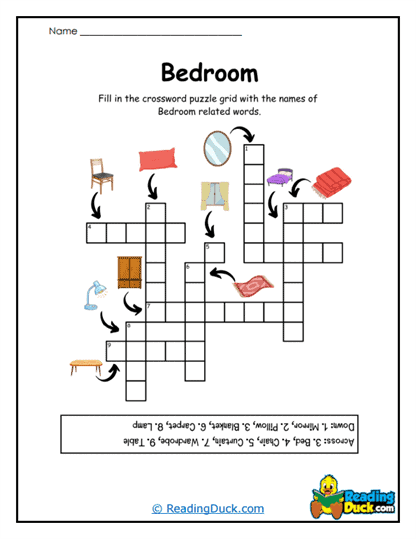
Bedroom Crossword Challenge Students fill a crosswordusing picture clues and short definitions of common bedroom items. This builds precise word recall and reinforces spelling patterns in a fun grid. It's like tidying your vocabulary dresser-every letter in the right drawer. Use as a Friday finisher or partner puzzle. Bonus idea: let students write one new clue for a classmate's blank square.
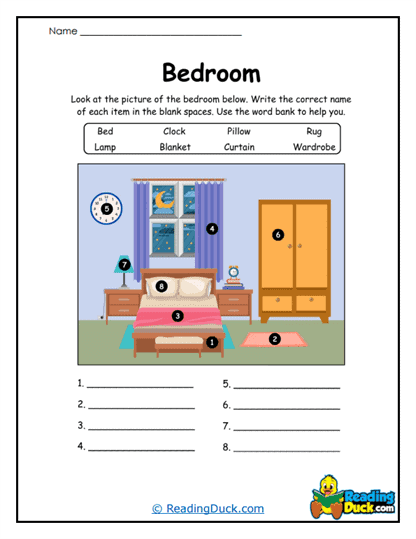
Bedroom Scene
Learners study a detailed room illustration and label specific objects. The visual hunt cements vocabulary because every word is anchored to a real-looking spot in the room. Imagine "I spy" meets interior decorating. Perfect for centers and for multilingual learners who benefit from strong image support. Bonus idea: have students add one new object to the scene and caption it.
Circle Hunt
Students circle named items hidden in a busy bedroom picture. The seek-and-find format makes repetition feel like a game, which boosts attention and memory. Think of it as a scavenger hunt where the prize is sharper vocabulary. Great for warm-ups or early finishers. Bonus idea: time two rounds and see growth in accuracy, not just speed.
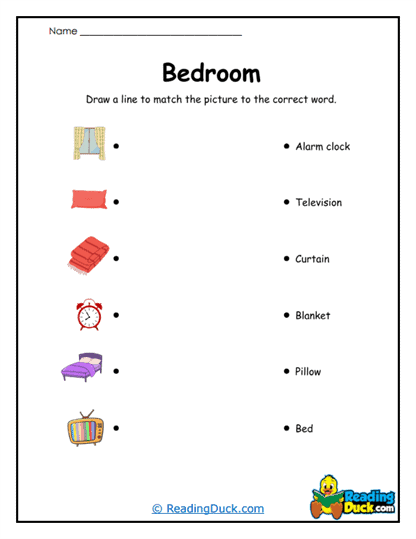
Match-It Up
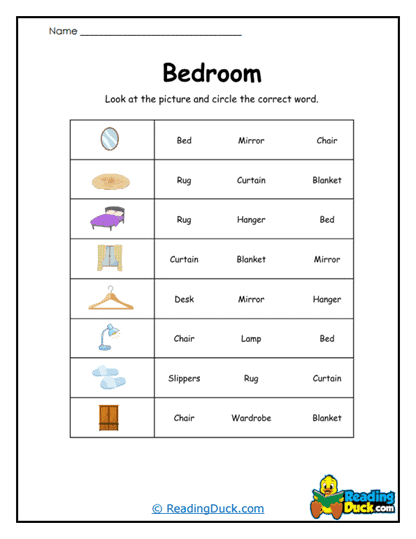
Kids match words to pictures (or definitions) to lock in meaning. That pairing strengthens recognition and supports decoding when the same words appear in stories. It's the vocabulary version of matching socks-satisfying when they line up. Works as independent practice or a quick small-group check. Bonus idea: turn matches into flashcards for a class memory game.
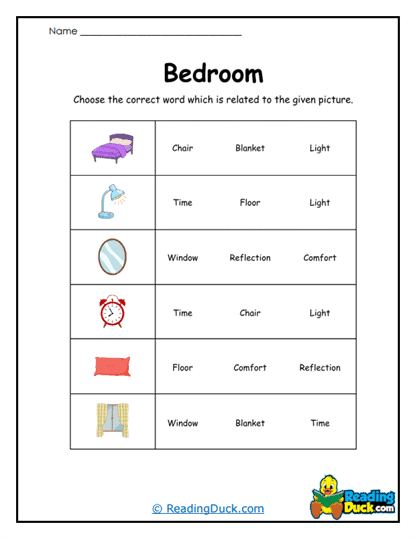
Object Detective
Learners use short clues to identify the correct bedroom item. It builds inference and proves they really know the words beyond just seeing them. Picture a tiny trench coat and magnifying glass for your brain. Use it to model "read, think, verify" strategies. Bonus idea: have students write their own clue cards and swap.
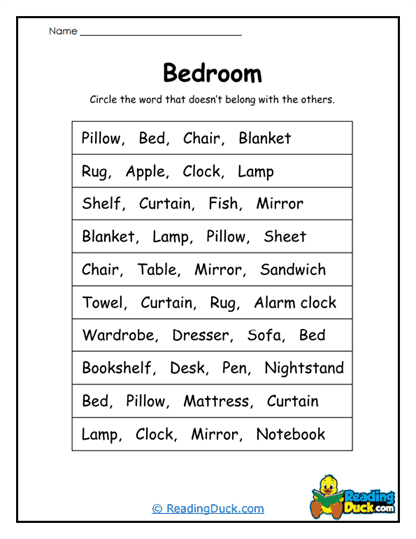
Odd Word-Out
After solving a small set, students pick the item that doesn't belong and explain why. Sorting deepens conceptual understanding and builds category language. It's like organizing a closet and spotting the beach ball on the sweater shelf. Ideal for exit tickets with a quick justification. Bonus idea: challenge them to propose a new category that fits the odd word.
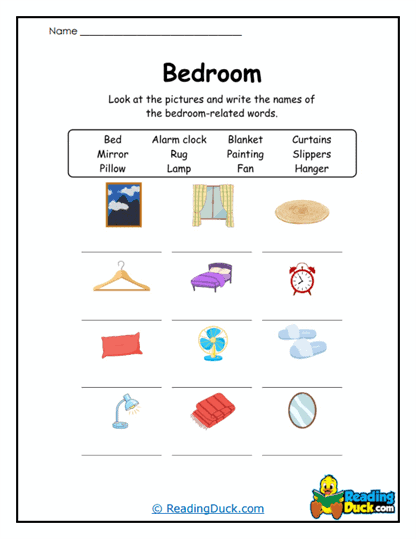
Picture Match
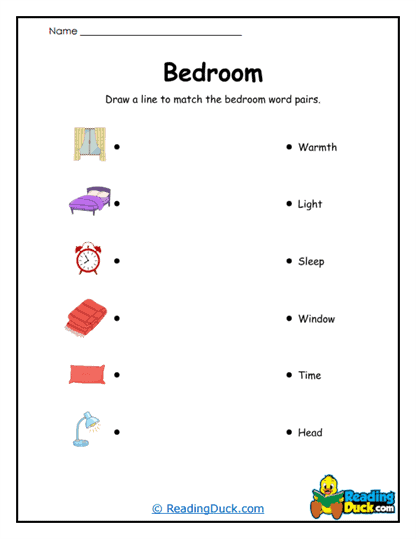
A classic: draw lines from images to their names for fast, confidence-building wins. The repeated pairing accelerates recognition for young readers and ESL students. It's vocabulary speed-dating-find your perfect match and move on. Great for early lesson momentum. Bonus idea: require a tiny sketch beside each word after matching to reinforce memory.
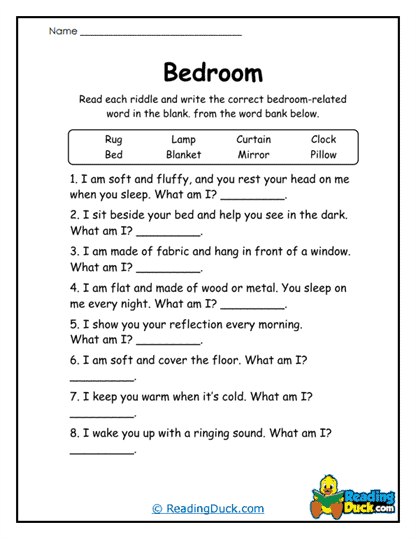
Riddle Me Bedroom
Students solve playful riddles whose answers are bedroom objects. Riddle logic nudges them to think about function and features, not just names. It's a stand-up comedy set where the punchline is "nightstand." Use it to kickstart a discussion on descriptive details. Bonus idea: learners compose a riddle for the class to solve.
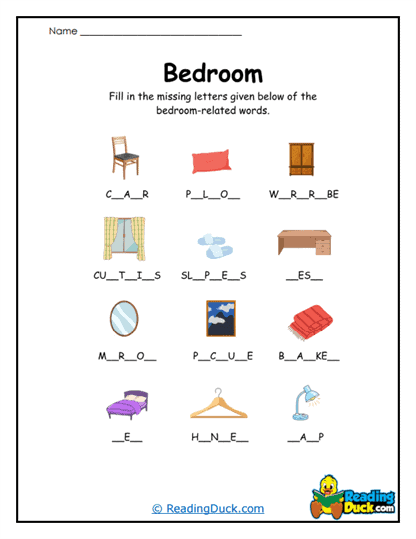
Scramble Fix
Kids unscramble letter mixes to form correct bedroom words. This sharpens phonics and spelling, especially with tricky vowel patterns. Think of it as alphabet yoga: stretch, twist, and land in the right pose. Perfect as a literacy center or homework. Bonus idea: students create one extra scramble for a peer.
Sort It Out
Students sort solved words into categories like furniture, linens, or lighting. Categorizing builds semantic networks and helps new words stick. It's rearranging a room-only with language. Nice as a partner activity with discussion. Bonus idea: invite students to invent a new category and defend it.
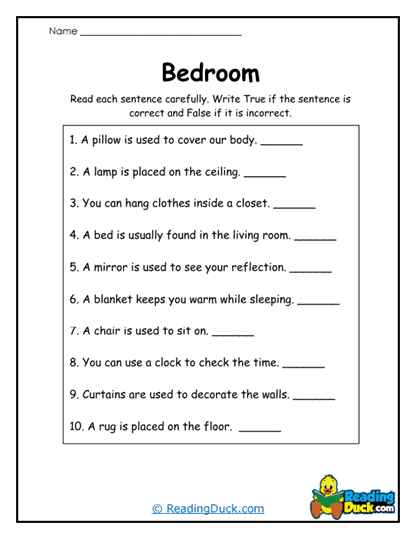
True or False Quest
Learners read quick statements about bedroom items and mark them true or false. This invites careful reading and vocabulary verification. Imagine a lie detector that beeps for "A pillow goes on your feet." Great for formative assessment. Bonus idea: students rewrite one false sentence to make it true.
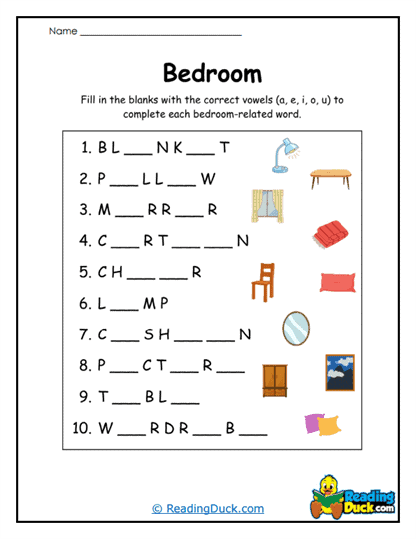
Vowel Power
Focus on vowel teams and short/long sounds inside bedroom words. The phonics spotlight supports accurate decoding and spelling. It's like giving vowels a superhero cape and a theme song. Use during small-group intervention or whole-class review. Bonus idea: collect examples to build a class vowel wall.
Word Builder
From word banks or letter tiles, students construct target terms. Building reinforces syllable awareness and common patterns. Think Scrabble, but your rack is full of bedtime brilliance. Works well with manipulatives for hands-on learners. Bonus idea: challenge kids to add an adjective to upgrade each noun (soft blanket, tall dresser).
Word Choice
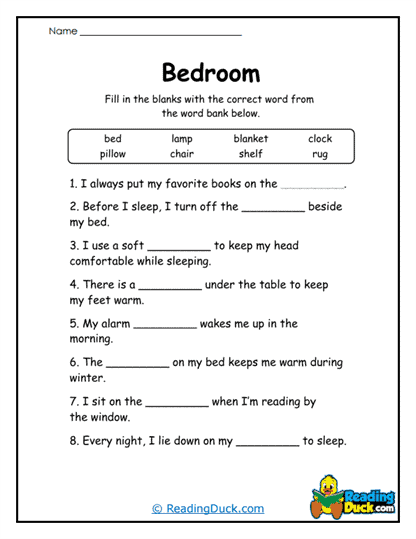
Students choose the best word to complete short sentences about a bedroom. Context practice ties vocabulary to real communication. It's a mini "choose your own adventure," but for precise nouns. Good before writing tasks to seed stronger word use. Bonus idea: have students explain why each incorrect option doesn't fit.
Word Filler
Fill-in-the-blank passages use bedroom vocabulary to tell a tiny story. Cloze reading boosts comprehension and keeps focus on meaning. Picture Mad Libs' responsible cousin who did their homework. Use individually or in pairs for read-aloud fun. Bonus idea: students replace three nouns with new bedroom words and reread the story.
Word Searcher
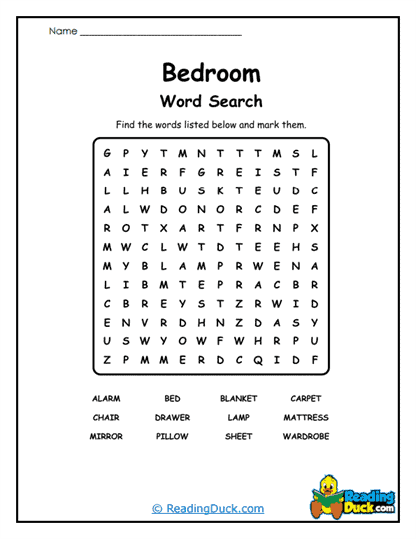
Learners hunt for target words hidden in a grid and then read or write them in a sentence. The search boosts attention to spelling while keeping motivation high. It's the popcorn snack of vocabulary-light, crunchy, and keeps you going. Great for early finishers or family practice. Bonus idea: ask students to circle one tricky letter pattern inside each found word.
Common Bedroom Vocabulary Words
Bed - A bed is a piece of furniture primarily used for sleeping and resting. It usually consists of a frame, mattress, and bedding materials such as sheets, pillows, and blankets. Beds can vary in size (e.g., twin, queen, king) and style, depending on the user's needs and room space.
Wardrobe - A wardrobe is a tall, often freestanding cabinet used for storing clothes and accessories. It typically contains shelves, hanging rods, and sometimes drawers for organizing garments. Wardrobes may be made of wood, metal, or other materials and often serve as a focal point in the bedroom.
Pillow - A pillow is a soft cushion used to support the head, neck, or body during sleep or rest. It is usually covered with a pillowcase and stuffed with materials like feathers, foam, or synthetic fibers. Pillows come in various shapes and sizes to suit different sleeping preferences.
Dresser - A dresser is a low piece of furniture with multiple drawers used to store clothes, accessories, and personal items. It often features a flat surface on top for decorative items, such as lamps, photographs, or mirrors. Dressers are commonly found in bedrooms and provide both storage and aesthetic appeal.
Nightstand - A nightstand is a small table or cabinet placed next to a bed, used for holding items such as lamps, alarm clocks, or books. It often includes one or more drawers or shelves for additional storage. Nightstands are practical for keeping essential items within arm’s reach while in bed.
Blanket - A blanket is a large, soft covering used for warmth while sleeping or resting. Made from materials like wool, cotton, fleece, or synthetics, blankets are versatile for different climates. They are often layered over sheets and provide comfort and insulation during cold nights.
Mirror - A mirror is a reflective surface, usually framed, used for checking one’s appearance or decorating a space. In bedrooms, mirrors can be mounted on walls, dressers, or wardrobes to enhance light and create the illusion of a larger room. Full-length mirrors are particularly popular for outfit checking.
Lamp - A lamp is a lighting fixture used to illuminate a space, commonly placed on nightstands, desks, or dressers. Bedroom lamps often feature soft, warm light to create a relaxing atmosphere. They may include adjustable features to provide focused light for reading or other activities.
Carpet - A carpet is a soft floor covering, usually made from wool, nylon, or polyester, that adds warmth and comfort to a bedroom. It can cover the entire floor (wall-to-wall) or be used as smaller, decorative rugs. Carpets also reduce noise and provide a cozy aesthetic.
Curtains - Curtains are fabric panels hung over windows to block light, enhance privacy, and add decorative flair to a bedroom. They come in various materials, colors, and thicknesses, ranging from sheer to blackout. Curtains can significantly influence a bedroom’s ambiance and functionality.
Closet - A closet is a built-in space within a bedroom designed for storing clothes, shoes, and accessories. Closets often include hanging rods, shelves, and sometimes drawers for better organization. Walk-in closets provide ample storage space and are a sought-after bedroom feature.
Mattress - A mattress is a large, rectangular cushion that supports the body while sleeping. It is usually placed on a bed frame and made from foam, innersprings, or hybrid materials to ensure comfort and spine support. Choosing the right mattress can greatly influence sleep quality.
Headboard - A headboard is a panel attached to the top of a bed frame, positioned behind the mattress. It serves both a functional and decorative purpose, preventing pillows from falling and adding style to the bed. Headboards can be upholstered, wooden, or metal, depending on design preferences.
Alarm Clock - An alarm clock is a timekeeping device designed to wake individuals at a specific time with sound, light, or vibration. It can be analog, digital, or part of a smartphone or smart device. Alarm clocks are essential for maintaining a consistent sleep schedule.
Vanity - A vanity is a small table or desk, often equipped with a mirror, used for grooming and applying makeup. It typically includes drawers or compartments for storing cosmetics, jewelry, and hair accessories. Vanities add a functional and elegant touch to bedroom décor.
Make sure to bookmark our website now.
Enjoy all our free reading worksheets.
Our materials adhere to the principles of the Science of Reading.