Sight words are those super-common words that pop up everywhere in reading-words like the, and, of, or you. Unlike most words, they often can't be sounded out easily, so the best way to master them is by recognizing them instantly. That's why sight words are like VIP guests at the reading party: you want to know them by sight the moment they walk in!
Learning sight words is a big step for young readers because it helps them read smoothly and understand stories without stopping at every word. Imagine trying to pause and sound out "the" each time-it would slow everything down! By recognizing these words quickly, kids can focus more on meaning, including building energy-related vocabulary skills and other subject-based knowledge as they read across different topics.
Our Sight Words worksheets are carefully designed to build confidence step by step. From preschool Dolch lists to advanced Fry word groups, these activities use tracing, puzzles, matching, and sentence practice to make learning engaging and memorable. Whether at home or in the classroom, each sheet is a playful tool that helps turn struggling readers into fluent, confident book lovers.
Looking At Each Worksheet
Preschool Dolch
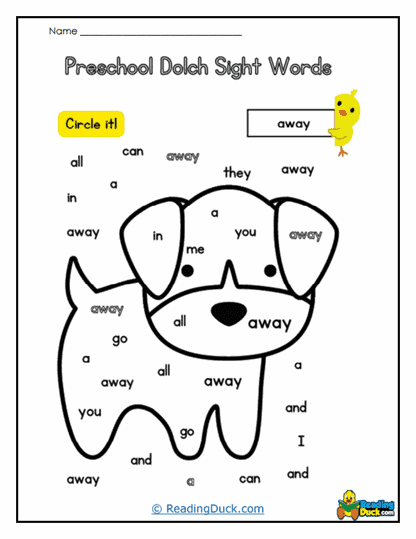
These worksheets introduce the very first sight words that little learners need, such as a, me, and big. Kids often trace, color, and match words to pictures, which makes reading feel like playtime. They build a strong base for reading by recognizing simple but essential words. Perfect for preschool classrooms or home practice with parents by their side. Bonus twist: let kids turn each sight word into a mini artwork by decorating it with colors and patterns.
Kindergarten Dolch
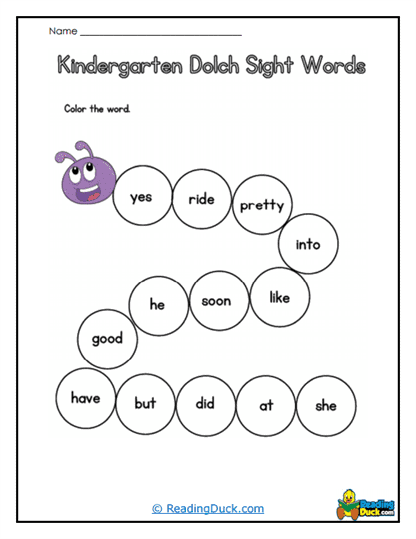
At this level, students tackle words like all, am, and are, expanding their sight word family. The worksheets encourage activities such as fill-in-the-blanks and word hunts that show how these words fit in real sentences. This practice helps kids connect sight words to meaning and not just memorization. It's ideal for daily warm-ups or quiet practice at home. Bonus twist: challenge learners to use three new words in a silly sentence and share it aloud.
1st Grade Dolch
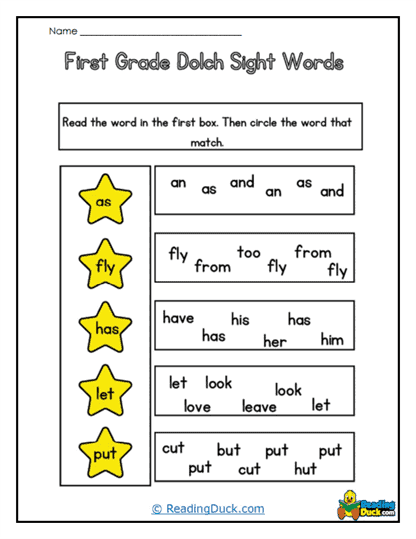
With words like after, again, and walk, these worksheets bring a fresh challenge for growing readers. Students might sort words, complete sentences, or spot them in short reading passages. This practice encourages faster recognition and better fluency. Teachers love using these as small-group activities to boost confidence. Bonus twist: let learners write a mini comic strip using three of their sight words.
2nd Grade Dolch
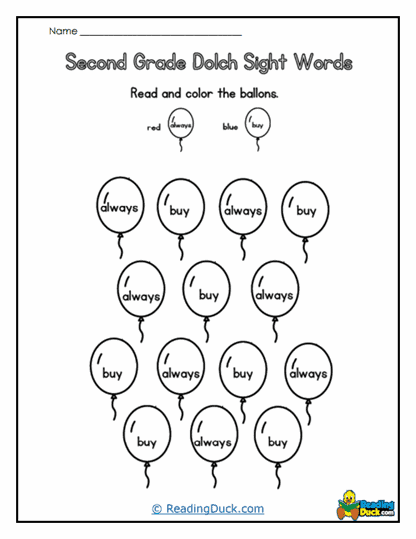
Second graders work with words like always, before, and cold, which are trickier but common. Worksheets mix sentence writing, matching, and reading comprehension to strengthen skills. Kids learn to use these words naturally in their reading and writing. The exercises are just right for literacy centers or homework packets. Bonus twist: have students create a "sight word diary" using one of their new words in a daily sentence.
3rd Grade Dolch
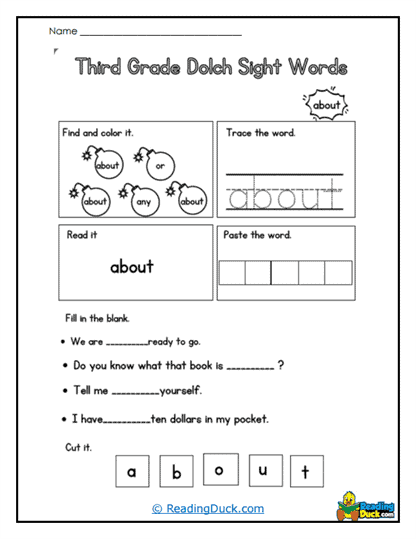
These worksheets round out the Dolch list with words like about, better, and carry. The focus shifts toward applying sight words in context-like longer sentences, paragraphs, and even story prompts. It's all about preparing students for fluent reading in bigger texts. The activities keep learning fresh and engaging while challenging memory and comprehension. Bonus twist: let students play "Sight Word Charades" by acting out a sentence that includes one of the words.
Dolch Noun
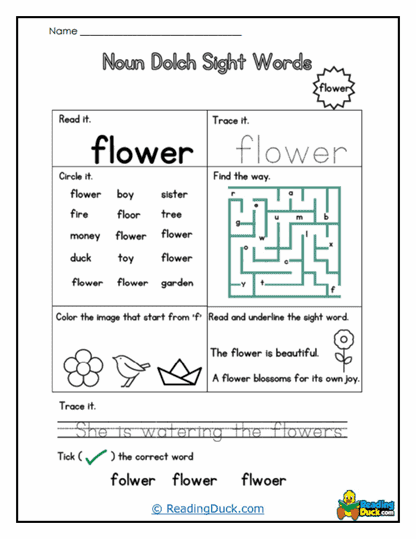
This special set focuses on nouns like apple, ball, and school, which kids see all the time. Worksheets often include labeling pictures, matching words, and simple sentence building. By linking words to familiar objects, learners strengthen both reading and comprehension. It's especially helpful for visual learners and English language learners. Bonus twist: ask kids to draw their favorite noun sight word and write a sentence about it.
Sight Words Mixed Review
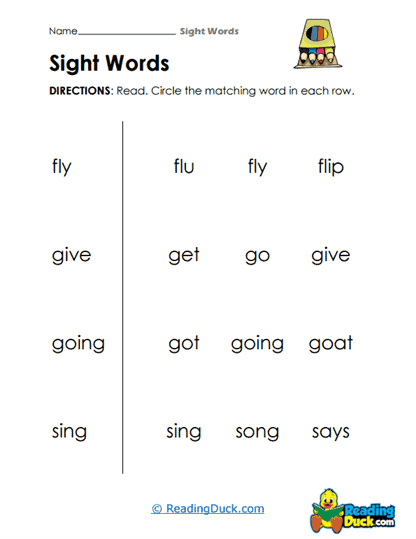
These worksheets mix and match words from across Dolch levels or Fry groups. Activities might include word searches, sentence completion, or quick recognition drills. The variety keeps kids on their toes and ensures they're not just memorizing in order. Great for review sessions, centers, or Friday wrap-ups. Bonus twist: turn review time into a "sight word scavenger hunt" around the classroom.
1st 100 Fry
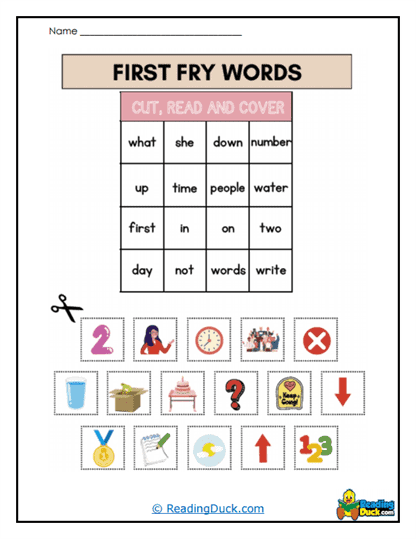
These worksheets focus on the most common words in English, like the, of, to, and in. Activities include cut-and-paste, sentence building, and quick reading drills. They give kids instant confidence since these words appear everywhere in books. Teachers and parents can use them daily for short, effective practice. Bonus twist: play "sight word bingo" using words from the list.
2nd 100 Fry
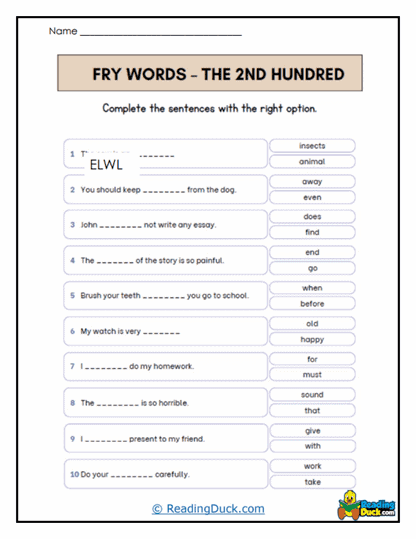
Now learners dive into the next set of high-frequency words, such as over, new, and sound. Worksheets encourage kids to practice recognition in reading passages and through matching activities. These tasks help readers build fluency as sentences grow longer. They also expand vocabulary that shows up often in schoolwork. Bonus twist: ask learners to highlight each Fry word they find in a storybook.
3rd 100 Fry
This group introduces words like kind, together, and light. Students practice by reading short passages, unscrambling words, and filling in blanks. These worksheets support smoother, faster reading and comprehension. Perfect for bridging into chapter books or more advanced texts. Bonus twist: have kids write a three-sentence mini-story that uses at least two of the words.
4th 100 Fry
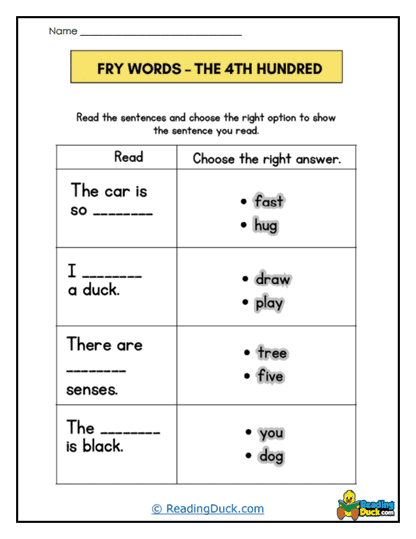
With words like country, father, and school, this set challenges learners to think about context. Worksheets may include crossword puzzles, reading comprehension passages, or matching exercises. They help students feel confident as reading materials get tougher. The words are practical and commonly used, so kids see them often outside of school too. Bonus twist: learners can keep a word journal noting where they find each word in real life.
5th 100 Fry
Here students work with words such as figure, certain, and special. The activities push kids to both recognize and use these words naturally. Practice may include sentence creation, reading, and context challenges. It builds vocabulary needed for middle elementary reading. Bonus twist: let students invent a silly story using five Fry words of their choice.
6th 100 Fry
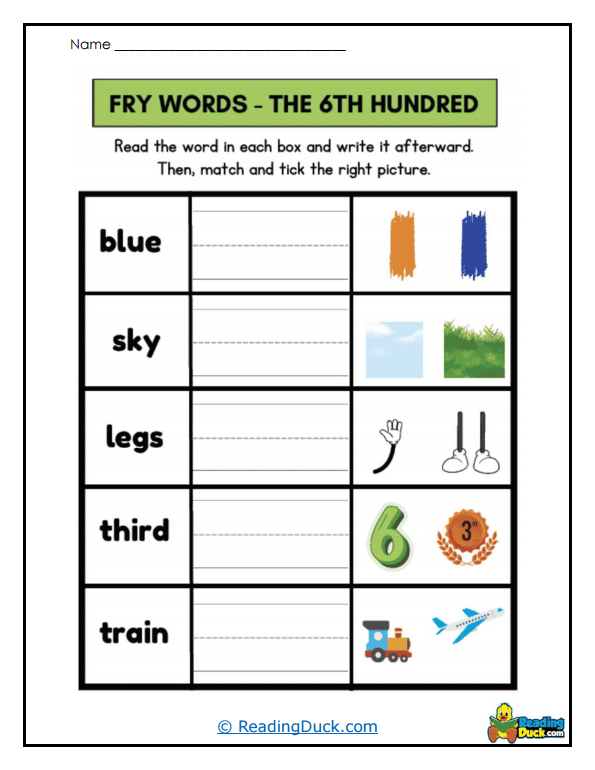
This set introduces slightly more advanced but still common words like machine, check, and remember. Worksheets ask learners to read, identify, and write these words in sentences. They help bridge between high-frequency words and academic vocabulary. These tasks are especially useful for reading comprehension practice. Bonus twist: ask kids to spot Fry words in a magazine or newspaper.
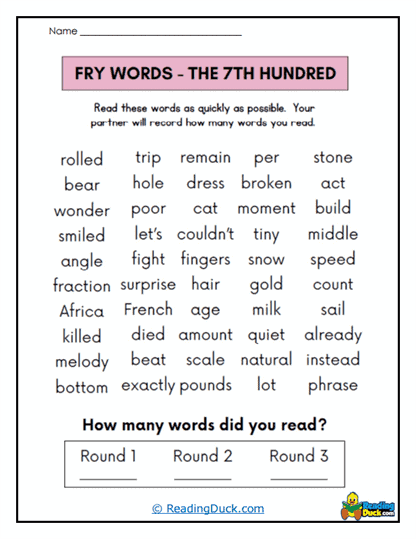
7th 100 Fry
Words like moment, product, and surface appear in this level. Worksheets expand practice with sentence completion, paragraph reading, and writing prompts. Kids learn to recognize these terms quickly and apply them in real reading contexts. This boosts confidence when facing nonfiction texts in school. Bonus twist: learners can create a "word detective notebook" to record where they see these words.
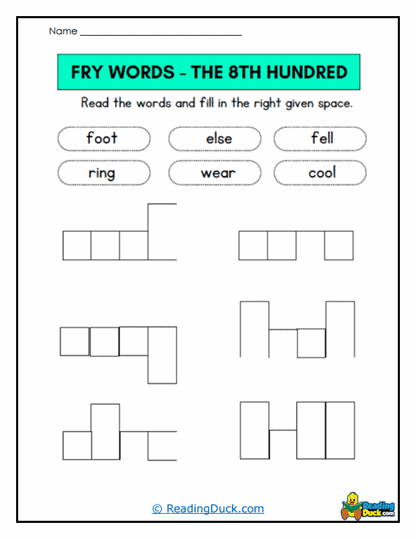
8th 100 Fry
The eighth set includes words like possible, system, and energy. Worksheets mix puzzles, matching, and comprehension exercises to solidify recognition. These words often connect to science and social studies content. By learning them, kids gain smoother reading across subjects. Bonus twist: turn Fry words into a word wall for cross-curricular connections.
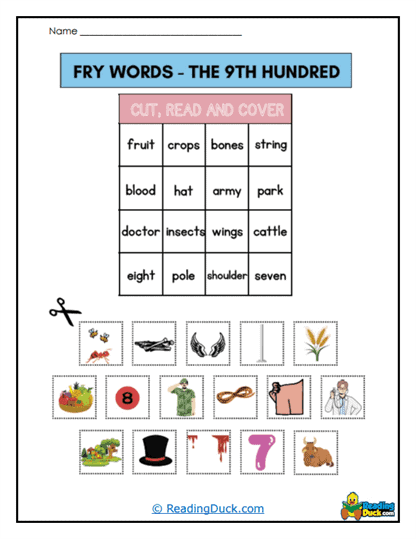
9th 100 Fry
Now students tackle words such as government, century, and knowledge. Worksheets provide reading passages and context-rich exercises. They help learners grow more fluent with challenging, academic vocabulary. This level prepares kids for upper elementary or middle school texts. Bonus twist: ask students to use a Fry word in a "news headline" they create.
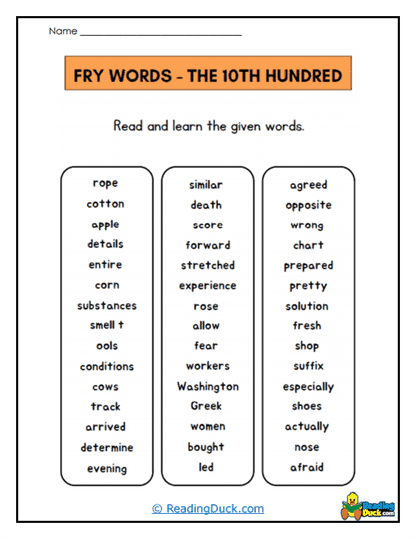
10th 100 Fry
The final Fry set features words like experience, industry, and exercise. Worksheets give practice in context recognition, reading comprehension, and advanced usage. These activities ensure that students not only recognize the words but also know how to apply them in real life. Mastering these gives learners a huge advantage for middle school reading. Bonus twist: encourage students to write a "Fry word diary entry" using three of the new words.
Make sure to bookmark our website now.
Enjoy all our free reading worksheets.
Our materials adhere to the principles of the Science of Reading.