Word finds are like mini treasure hunts made of letters-students scan a grid to spot hidden words tied to a theme. This playful format builds sharp eyes and quick brains, asking learners to notice letter patterns and track words in all directions. As students search, they strengthen recognition of spelling patterns and grow comfortable with new vocabulary. Best of all, the fun feel makes practice time fly by while real skills stack up underneath.
Mastering word finds supports stronger communication and comprehension because students learn to recognize words accurately and rapidly. That automatic recognition frees their minds for meaning: once decoding is smooth, understanding gets center stage. Word finds also reinforce phonics and spelling conventions without feeling like drills. In short, better recognition means clearer reading, clearer writing, and clearer thinking.
Our Word Finds collection is organized around engaging topics so learners build knowledge step-by-step. Each printable focuses on a theme-animals, space, sports, feelings, and more-so vocabulary grows within a familiar context. Answer keys keep things teacher- and parent-friendly for quick checks and confident independent practice. It's a simple routine: choose a theme, search the grid, celebrate the finds, and watch vocabulary confidence rise.
Looking At Each Worksheet
Animal Hunt
Students prowl the grid to track down creature-themed vocabulary, from habitats to habits. As they spot each animal word, they reinforce spelling patterns like double consonants and common suffixes. It's like a safari with a magnifying glass-minus the sunscreen. Use it for science warm-ups or fast-finishers at home. Bonus twist: time a "quiet stalk" round where everyone searches in complete silence like stealthy panthers.
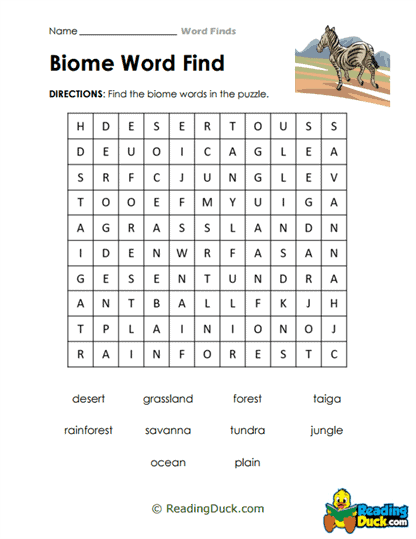
Biome Search
Learners scan for biome words-tundra, desert, rainforest-linking geography to vocabulary. Finding the terms cements recognition of content-area words they'll meet in science texts. Picture it as a world tour squeezed into a word grid, no passport required. Try it before a unit on ecosystems or as a review station. Bonus idea: let students color-code words by biome type after they find them.
Bird Seek
This hunt flutters through avian vocabulary like beak, perch, migrate, and roost. Each find reinforces tricky vowel teams and common prefixes in science words. Think of it as birdwatching for your brain-binoculars swapped for sharp spelling. Use during a life-science unit or as a calming Friday activity. Bonus twist: students draw a quick sketch beside three words to lock in meaning.
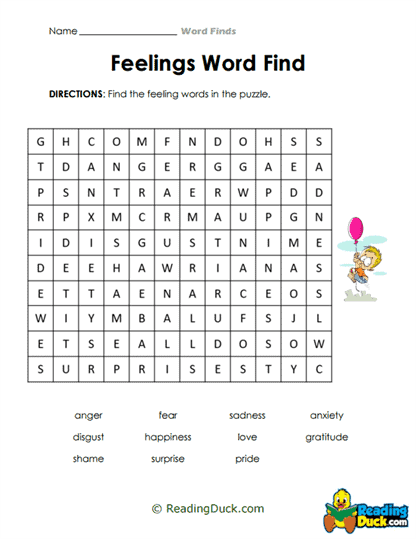
Feelings Finder
Students identify emotion words that help them talk and write about how characters (and humans!) feel. Spotting synonyms like joyful, glad, and elated grows nuanced word choice. It's basically a mood ring in puzzle form. Use for SEL check-ins or during narrative writing. Bonus idea: after the search, students sort words from mild to strong and use one in a journal sentence.
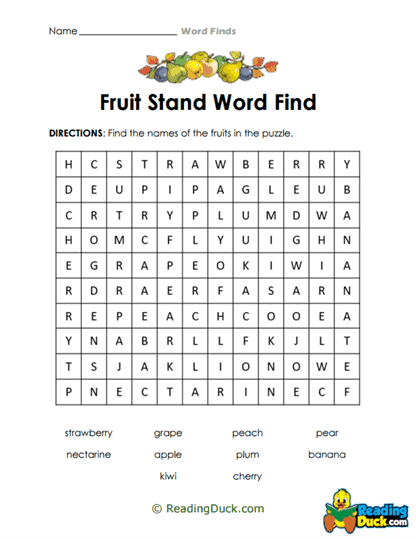
Fruit Frenzy
This juicy grid mixes everyday produce with fun descriptors students may not expect. Recognizing words like citrus, tropical, and orchard strengthens category knowledge and spelling. Imagine a farmers' market where the shopping list hides in the aisles. Great for younger learners, snack-themed days, or health units. Bonus twist: challenge kids to write a "mystery fruit" riddle using three found words.
Galaxy Quest
Learners zoom through space terms-orbit, nebula, comet-while practicing multi-syllabic recognition. Each discovery boosts confidence with science vocabulary that appears in textbooks. It's a cosmic scavenger hunt without the zero-gravity mess. Use as a launchpad for a space unit or a review after viewing a space video. Bonus idea: give "mission badges" for fastest finders or most methodical searchers.
Hobby Hunt
From painting to coding, this grid showcases pastime vocabulary students love to talk about. Recognizing interest-based words builds fluency with real-life topics for conversation and writing. Think of it as a class "show and tell," but with letters playing hide-and-seek. Use for icebreakers or personal narrative prompts. Bonus twist: students circle the hobby they do and write two tips using found words.
Industry Insights
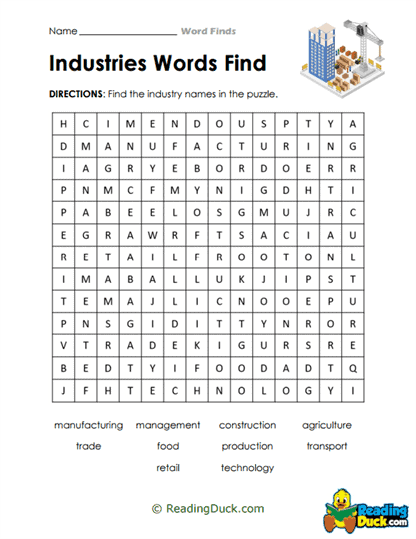
This set nudges learners into career and workplace vocabulary like engineer, design, and product. Searching for these terms builds recognition that will pop up in nonfiction articles. It's like bring-your-future-to-school day in puzzle form. Try it before career day or research projects. Bonus idea: students pair a found word with a short definition they write themselves.
Literary Terms
Students spot words like metaphor, plot, stanza, and theme while reviewing ELA essentials. Recognizing these terms in a quick puzzle makes them easier to recall during class discussions. It's the backstage pass to stories and poems-no velvet rope. Use before a quiz or to preview a new unit. Bonus twist: after finding a term, students jot a tiny example (e.g., their own simile).
Music Mix
This grid riffs on notes, rhythm, tempo, and instrument names. Finding each term reinforces spelling, especially with consonant blends and borrowed words. Consider it a word concert where the only instrument is your pencil. Use before music class or to cross over with poetry rhythm lessons. Bonus idea: have students clap the syllables of three found words.
Park Pursuit
Learners search for outdoor words-trail, picnic, meadow-that invite descriptive writing. Recognizing these terms makes setting details pop in narratives. It's basically a field trip... that fits on a worksheet. Use before a nature walk or to inspire sensory paragraphs. Bonus twist: students highlight words by categories like places, actions, and objects.
Princess Puzzle
Students find royal vocabulary-castle, tiara, kingdom-while practicing common vowel patterns. Recognition grows word confidence that transfers to fairy-tale reading and writing. It's a royal ball where the dress code is "find all the words." Pull it out during a folklore unit or as a themed literacy center. Bonus idea: students write a two-sentence "royal decree" using three found words.
Roman Realm
This hunt explores ancient-world terms like senate, legion, and aqueduct. Finding the words supports content knowledge for social studies. Think time travel by alphabet soup. Use to preview an ancient history unit or as a quick review station. Bonus twist: students match each found word to a one-sentence "what it is" note.
Space Search
Learners uncover more astronomy vocabulary, reinforcing multi-syllabic recognition and prefixes like astro- and tele-. Spotting words here reduces friction when reading science passages later. It's like star-gazing with a dictionary telescope. Use as an early finisher task or homework. Bonus idea: students rank found words from most to least "mysterious" and explain their top pick.
Sports Spot
This grid highlights athletics terms-coach, arena, victory-that connect to PE and team talk. Recognition supports clearer directions and stronger sports writing. Think of it as a pep rally where letters are the cheerleaders. Use before a field day or to energize reluctant readers. Bonus twist: students write a headline using two found words, sports-reporter style.
Make sure to bookmark our website now.
Enjoy all our free reading worksheets.
Our materials adhere to the principles of the Science of Reading.