Word Walls Worksheets bring the power of classroom word walls into your hands-digitally and on paper! These printable pages turn vocabulary into a visual feast, helping learners see and interact with words every day. When words are displayed where you look often, they become part of your brain's environment-not just something you have to memorize.
Why is this so effective?
Frequent Exposure: Seeing the same words repeatedly builds memory and recall.
Visual Learning: Word walls stick-especially for kids who love visuals.
Contextual Engagement: Students are nudged to use vocabulary across reading, writing, and conversation.
Active Use Encouraged: Displayed words invite play, sentence writing, even acting-way more fun than rote lists.
Whether you're teaching in class, assigning homework, or supporting independent study at home, these PDFs with built-in answer keys make vocabulary checking fast, easy, and meaningful.
Looking At Each Worksheet
Alphabet Friends
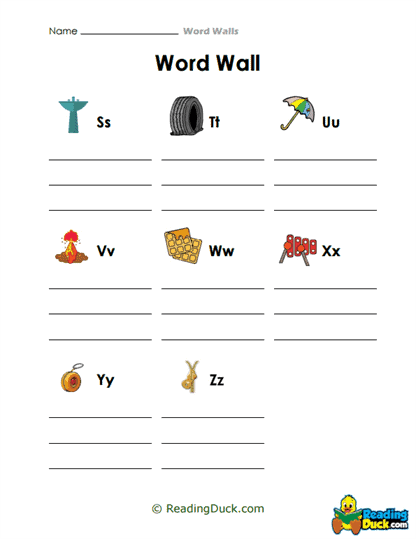
Students match or sort vocabulary words by initial letters-perfect for practicing alphabetical order and letter awareness. It's like word playdate where each word meets its alphabet buddy. Great for reading corners or morning work. Bonus: Turn it into a relay: letters are free, but words must find their "friend."
Colorful Letters
This worksheet combines color names or colorful-word representations with letter recognition-learning letters and words in a burst of bright fun. Think of it as coloring with words. Use it during art integration or literacy zones. Bonus: Have students invent a "rainbow word" and color-code its letters.
Creative Sentences
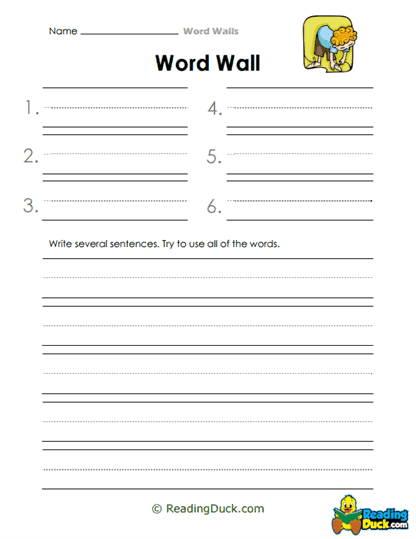
Kids take words from the Word Wall and weave them into their own sentences-flexing their writing muscle while using key vocabulary. It's like making a word sandwich with flavor. Use it as exit tickets or weekend writing challenges. Bonus: Encourage adding silly adjectives for extra flair.
Family Connections
Learners group words based on themes, families, or word clusters-making links between words that "live together." It's like a vocabulary family tree. Great for concept mapping or thematic word study. Bonus: Ask students to connect a new word with a "cousin word" from the wall.
Letter Connection
This activity helps pair uppercase to lowercase letters or words to initial letters-reinforcing letter-word relationships. It's like linking puzzle pieces with letter clues. Use for early literacy centers or special needs reinforcement. Bonus: For extra challenge, mix in lowercase cursive-to-print pairing.
List and Learn
Here, students build and review their own word lists pulled from the word wall-then write definitions or draw quick illustrations. It's like curating a personal vocabulary vault. Perfect for homework or portfolios. Bonus: Challenge them to use each word in a logbook entry by week's end.
Personal Word Bank
Learners keep a running record of new or favorite words they spot on the wall, then revisit and reflect on their choices. It's like a word diary that evolves daily. Great for literacy journals or individualized practice. Bonus: Have learners write a sentence using one banked word each day.
Picture Wall
Students connect words to visual representations-matching target words with images that illustrate meaning. It's a word gallery come to life. Great for dual-language learners or visual thinkers. Bonus: Create a "draw-your-own-word" challenge based on the list.
Repeat & Create
This worksheet encourages repeating target words in different sentence frames or forms-like turning "play" into "played, playful, playing." Word learning with rhythm. Great for grammar integration. Bonus: Make a "creative repeat" where the word appears in two different parts of speech.
Sentence Builders
Learners use word wall terms as building blocks to create or complete sentences-helping structure and context. Think of it as Lego® pieces for sentences. Great during writing mini-lessons. Bonus: Give a "mystery sentence" with blanks to fill using target words.
Sentence Starters
This handout offers sentence beginnings that students complete using word wall vocabulary-scaffolded writing support. It's like giving them a running start. Useful for reluctant writers or journal time. Bonus: Starters can be goofy to spark imagination-"Suddenly, the (word) appeared!"
Sound Match
This links spelling to phonics by matching words that share sounds or rhymes-with phoneme practice built in. It's like tuning into word music. Great for early learners or phonics clusters. Bonus: Add clapping beats for each syllable as students match.
Triple Trouble
Includes three related challenges-perhaps matching, filling, and using words-layered for a triple vocabulary workout. It's like a vocabulary triathlon. Perfect for fast finishers or enrichment. Bonus: Team up in triads: one student writes, one acts, one illustrates each word.
Vowel Sound Search
Learners hunt for vowel patterns (like digraphs or long/short sounds) within the word list-sharpening phonemic awareness. Like a treasure map with vowel clues. Great for phonics reinforcement. Bonus: Pick a vowel sound and create a "vowel spotlight" poster.
Weekly Word Fun
This worksheet spotlights a select set of words each week with themed puzzles or games-making weekly vocabulary practice fresh. Like a mini vocabulary party each week. Use it for word-of-the-week routines. Bonus: Have students design their own weekly word challenge for peers.
What Are Word Walls?
Word walls are visual displays of key vocabulary in a classroom (or home)-think of them as a constant backdrop that's part of the learning scenery. Instead of words hiding in textbooks, they are out in the open, inviting interaction.
In everyday life, word walls help whether you're drafting a story, reading signs, or talking through a project-frequent exposure means words go from "huh, what?" to "aha, I know that!" They subtly nudge students to use richer language in speech and writing.
Developmentally, they reinforce sight word fluency, support phonics and spelling recognition, and inspire expressive use through visible reminders. When combined with interactive practice (like these worksheets), word walls become not just decoration, but dynamic tools for learning that stick.
Make sure to bookmark our website now.
Enjoy all our free reading worksheets.
Our materials adhere to the principles of the Science of Reading.