Consonant clusters are those clever combinations where two or three consonants come together with no vowel between them-like bl, str, or nd-and each still makes its own sound. As students learn to hear and blend these clusters, they also become more aware of middle sounds in words, which helps them decode longer and more complex vocabulary. Our worksheets guide learners step by step, building confidence through fun and effective phonics practice.
Learning consonant clusters gives kids the reading power to tackle longer words with ease, smoothing their path toward fluency. As they practice, words that once seemed too long or tricky suddenly feel manageable-every chunk clicks into place. Plus, mastering these clusters strengthens spelling accuracy, because children begin to see reliable patterns at play in words across their reading.
Our worksheets turn phonics work into an adventure, mixing decoding with creativity. From puzzles and hunts to match-ups and storytelling, every activity invites active participation. Engaging, scaffolded, and purposeful, these cluster materials offer a playful escape that also reinforces essential literacy skills.
Looking At Each Worksheet
Blend and Write
Students spot the cluster in a base word, then use it to create and write a new word of their own. This builds both recognition and creative application, like giving clusters life. The task combines phonics precision with joyful writing. It's perfect for independent centers or small-group instruction. As a bonus, kids can illustrate the word they wrote for added engagement.
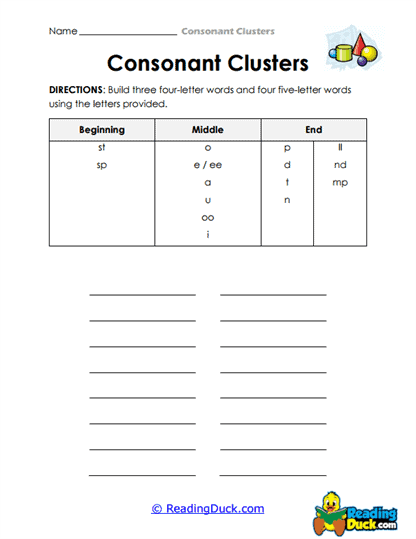
Cluster Builder
This worksheet invites learners to assemble words by placing clusters with different letter parts-like building blocks of sound. It's hands-on and dynamic, turning decoding into building fun. Children see how putting cr or sp in front of letters makes new words click. This works beautifully for tactile learners or literacy stations. For extra flair, kids can "robot-read" each cluster-built word aloud after they build it.
Cluster Cards
Here, students receive cards with clusters and word parts, then match them to form complete words. It's a game-like way to reinforce sound and meaning through play. Matching helps kids see how clusters work in different contexts. It's ideal for partner games or morning routines. As a playful twist, let them use a timer and celebrate every correct match with a "cluster clap."
Cluster Circle
This activity arranges clusters and word fragments in a circle, and kids connect the parts to form words. The circular format makes phonics feel like a puzzle wheel-engaging and different. Children practice recognizing clusters while visually connecting pieces. Great for small-group rotations or literacy centers. Bonus fun: have students swap sections of the circle and rebuild new words.
Cluster Completion
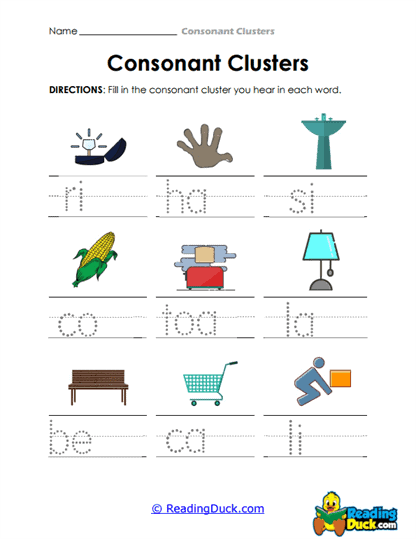
Learners fill in missing clusters to complete words-like finishing a phonics puzzle. It's satisfying to supply the sound that brings the word to life. The repetition builds decoding and attention to detail. Excellent for seatwork or independent practice. As an extra bonus, kids can write the completed word in colorful chalk or bright marker.
Cluster Creator
This worksheet encourages students to invent new words (real or silly) using a given cluster, stretching their phonics imagination. It blends creativity with word structure exploration. Learners love seeing what fun words they can "create" from sounds. It's perfect for enrichment or word-play time. For added play, let them share and act out their made-up words in class.
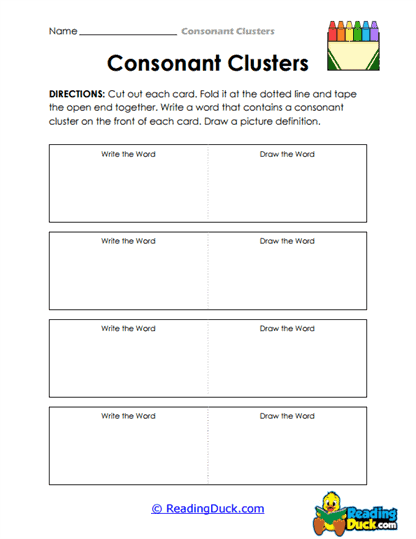
Cluster Cutouts
Students cut out and then build words by gluing cluster parts together. The cutting, moving, and pasting makes phonics multi-sensory. As learners manipulate letter parts, decoding becomes a hands-on experience. This is wonderful for kinesthetic stations or craft-time learning. For added engagement, kids can use patterned scissors or stickers to decorate.
Cluster Hunt
Here, children scan a text or word list to circle words that contain specific clusters. It becomes a phonics detective game that keeps their eyes sharp and minds focused. Each find builds confidence through noticing patterns in real reading. Works well for fast finishers or independent readers. For fun, let them mark finds with little cluster icons or stamps.
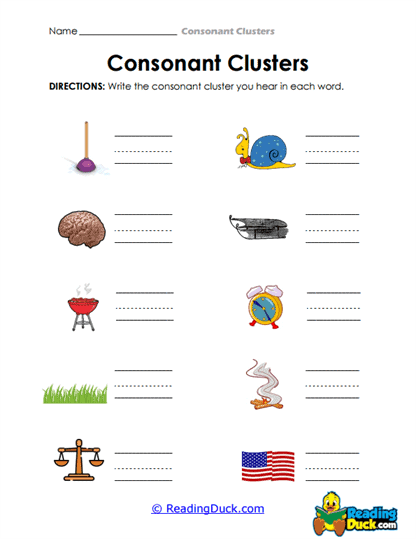
Cluster Match
Kids match clusters to pictures or words that contain them-pairing sound and meaning visually. It's like a memory game but for early phonics patterns. The pairing reinforces recognition in a playful, interactive way. Ideal for partner learning or small-group centers. Bonus idea: let matched sets earn a "cluster buddy" sticker.
Fill the Gap
Words appear with their clusters missing, and children fill in the blank to complete them. It's like restoring a word puzzle step by step. Each successful fill boosts decoding prowess and spelling accuracy. Great for independent practice or literacy tubs. As an extra treat, kids can draw a speech bubble for each completed word saying the cluster aloud.
High Five Clusters
Students high-five clusters as they read or identify them in a grid-making physical movement part of learning. The action gives energy to phonics, and each high-five is a tiny celebration of recognition. It's active, engaging, and boosts memory through movement. Ideal for transitions or active warm-ups. The bonus? Let learners announce the cluster with flair as they high-five it.
The Word Salad
Cluster bits and word parts are put into a "salad bowl," and kids pick and mix to "toss together" real words. It's reading practice served with a twist of imagination. Learners build vocabulary while stirring through clusters and parts. Great for group time or literacy creativity. For extra fun, let them name their "word salad" and serve it aloud.
Triple Words
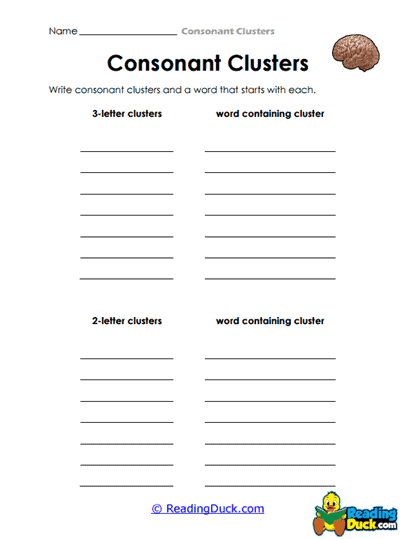
Given one cluster, students must come up with three different words using it. The challenge grows vocabulary and deepens understanding. It's a mini phonics sprint that encourages flexible thinking. Perfect as a quick warm-up or challenge for fast finishers. For a playful bonus, have children use the three words in a silly sentence.
Word Cluster
This worksheet groups words by cluster family, and students read them out loud together. It's a phonics choir that highlights pattern recognition. Speaking similar-cluster words in sequence helps reinforce both sound and structure. Great for fluency practice or whole-class modeling. Bonus: try a tongue-twister twist with each group.
Word Webs
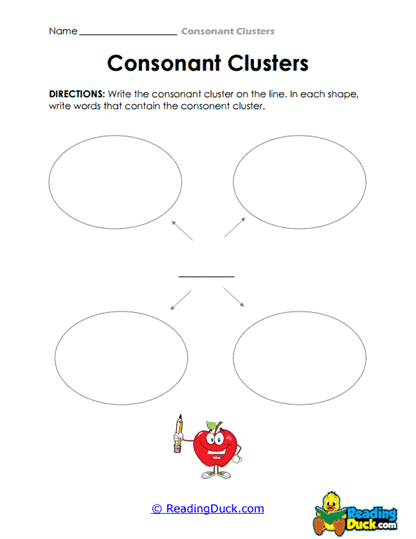
Clusters are placed at the center, and students spin out branches with words that contain it. The visual web helps children see connections and patterns. It's both artistic and phonically insightful-and supports visual learners especially well. Use it for anchor charts or literacy notebooks. As a creative add-on, let learners decorate their webs with color-coded paths for each word branch.
What Are Consonant Clusters?
Consonant clusters are combinations of two or three consonants that appear together in a word without an intervening vowel-each consonant retains its unique sound. Unlike blends like "sh" or "ch," where letters fuse into a single sound, clusters allow every consonant to be heard clearly, giving words texture and rhythm. Learning clusters is an essential step to reading longer and more complex words, empowering kids to approach bigger text with confidence.
In real-world reading, clusters appear everywhere-from str in street to nd in sand-and recognizing them helps students decode these patterns quickly. As learners gain familiarity, they can chunk clusters and read faster, spending less effort on sounding out each letter and more on meaning. This fluency boost fuels reading enjoyment.
Mastering consonant clusters also strengthens spelling, as students internalize how words are built. It smooths their transition from early phonics to more advanced decoding strategies. And with repetition and attention, clusters become second nature-supporting a joyful, strong reading journey.
Make sure to bookmark our website now.
Enjoy all our free reading worksheets.
Our materials adhere to the principles of the Science of Reading.