Grapheme recognition is all about helping young learners see how spoken sounds connect to written letters-or combinations of letters-called graphemes. When kids understand that the sound /f/ can be represented by f in fish or ph in phone, it's like they've unlocked a secret code that makes reading and spelling possible. These worksheets guide students through a colorful and engaging phonics journey, building confidence one letter-sound match at a time. With each activity, children gain the tools to decode new words, spell more accurately, and develop fluency that transforms reading from guessing into sure steps.
By practicing grapheme recognition, children begin to bridge the gap between sounds and symbols-the foundation of decoding and encoding words. This sets the stage for smooth reading, better comprehension, and successful writing. As they recognize graphemes quickly and accurately, learning becomes seamless, joyful, and self-reinforcing. This is more than worksheets-this is sound-to-word mastery in action!
Looking At Each Worksheet
A Grapheme Rainbow
Children practice matching letters or letter combinations to their sounds using a vibrant, rainbow-themed layout. It combines visual fun with phonics precision, helping learners connect color-coded graphemes to sounds. Picture graphemes glowing across a rainbow bridge to their matching sounds! Perfect for morning centers or one-on-one guidance. Bonus: invite kids to draw their own "sound rainbow" with favorite grapheme-sound pairs.
An Oo Adventure
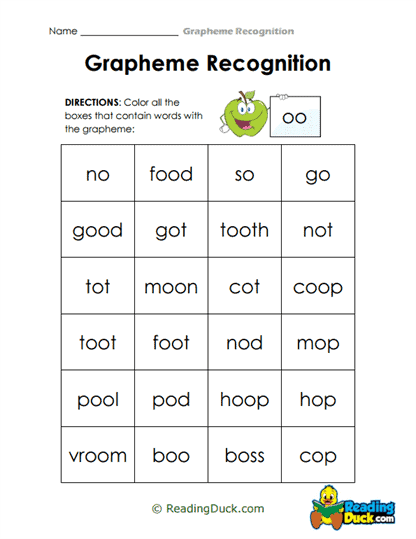
Students explore words containing "oo" and determine which pronunciation matches-such as the long "oo" in moon versus the short "oo" in book. It builds awareness of how the same grapheme can make different sounds. Think of it as a sound safari tracking "oo" wherever it hides! Ideal for small-group phonics lessons. Bonus: have students create short "oo" word stories using both sounds.
Circle Champs
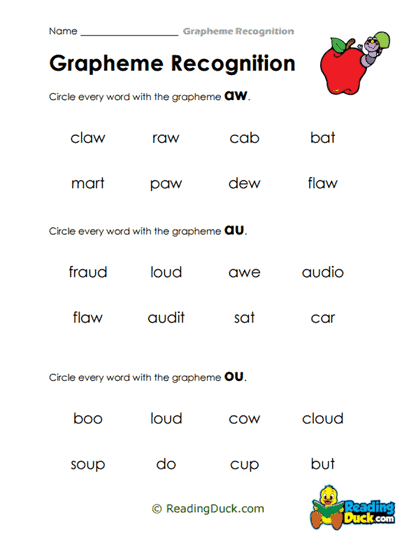
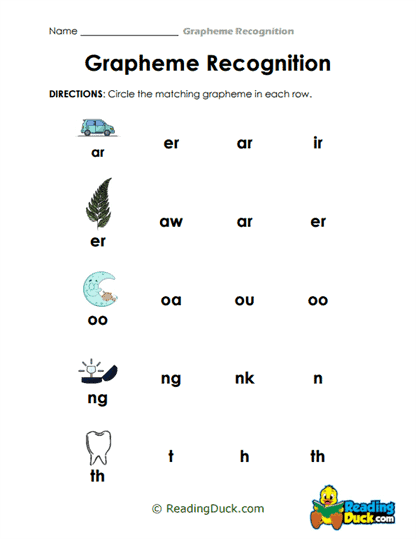
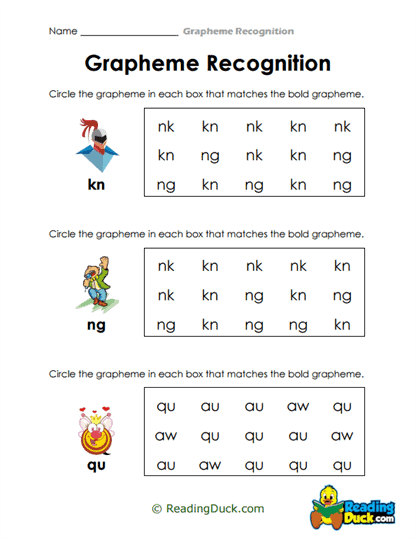
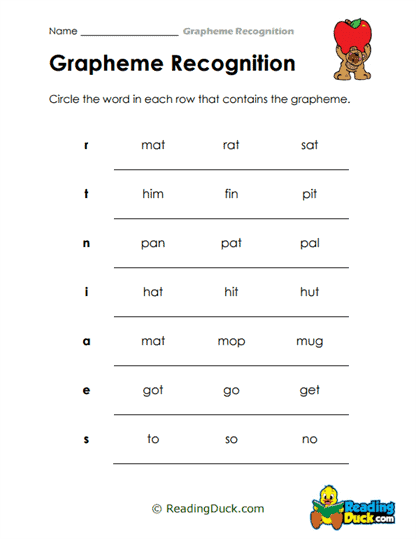
Here, learners circle graphemes that match a given sound within a list of words. It turns grapheme identification into a playful hunt. Imagine a magnifying glass hovering over words, seeking the correct spelling! Great for whole-class warm-ups or rapid review. Bonus: use highlighters to make spotted graphemes shine.
Colorful Sounds
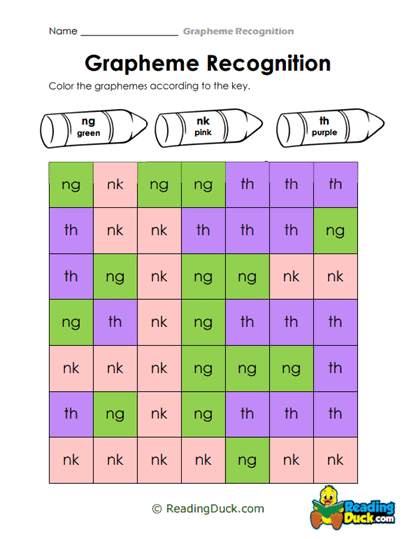
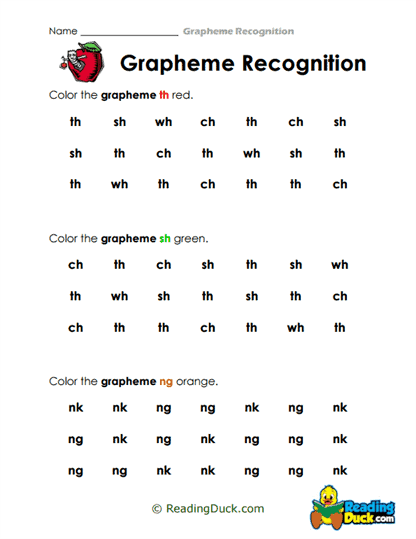
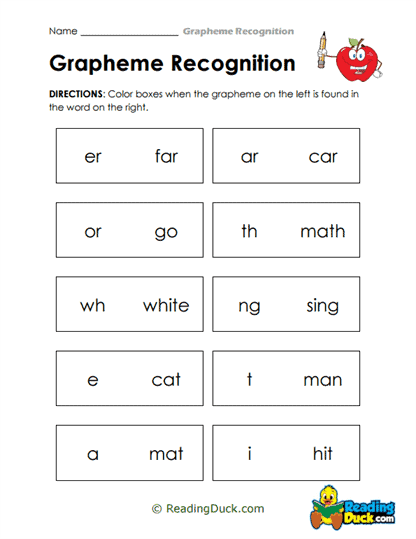
Students color-code graphemes based on the sounds they represent, linking visual cues with phonemic mapping. It's like painting sound shapes with vibrant brushes! Wonderful for visual learners and independent stations. Bonus: let kids create a "sound color chart" to display in class.
Grapheme Detective
Children hunt through words or sentences to find specific graphemes like "ch," "ai," or "sh." It turns phonics into a mystery-solving adventure. Gear up like detectives-with pencils as magnifying glasses-and spot those graphemes in the wild! Excellent for partners or literacy centers. Bonus: present a "case file" with clues for secret graphemes.
Letter Circle
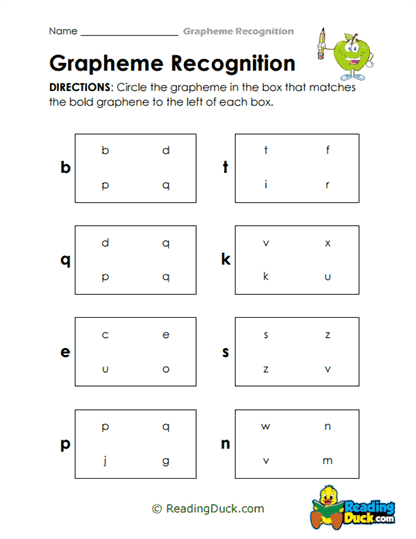
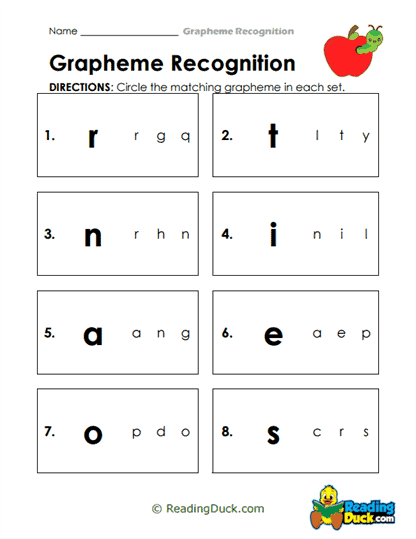
This activity has students circle the correct grapheme from multiple choices for each sound-for instance, choosing "k" or "c" for /k/. It reinforces grapheme-to-phoneme mapping in a focused way. Like picking the right key for a sound-lock! Perfect for quick checks or independent work. Bonus: challenge kids to write their own "sound-lock" items for classmates.
Letter Hunt
Learners search through texts or word lists for words containing target graphemes. It turns reading into a hidden treasure adventure. Each found grapheme is a gem waiting to be discovered! Great for early readers or morning routines. Bonus: create a "grapheme treasure map" with stickers marking each find.
Match It Up
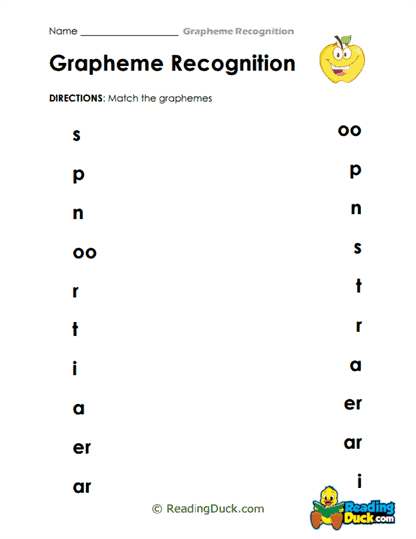
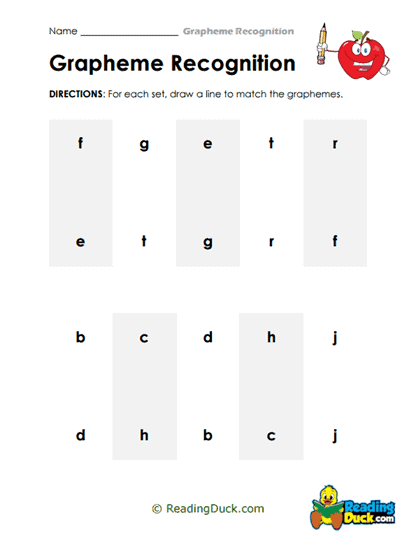
Students connect sounds to their corresponding graphemes-drawing lines between a phoneme (like /sh/) and its spelling (sh). It visually reinforces how sounds map to letters. Picture phonemes and graphemes shaking hands across the page! Ideal for pairing or center work. Bonus: use yarn to link matches for a tactile twist.
Match Makers
Children match words with pictures based on graphemes representing target sounds-for example, matching an image of phone to ph. This reinforces meaning with sound-letter connections. It's like phonics matchmaking-but picture-perfect! Great for vocabulary practice. Bonus: let kids illustrate their own matching pairs.
Sock Sorters
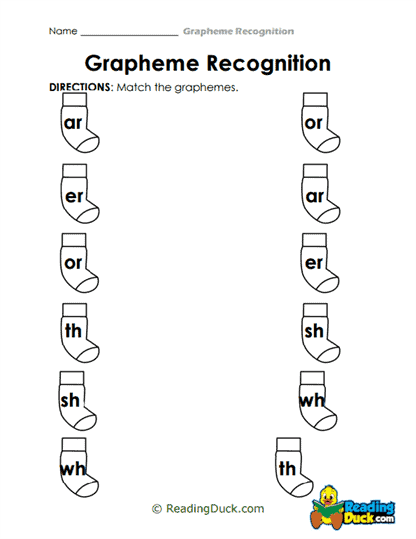
Kids sort graphemes into "socks" or groups based on their sounds-like "ck" and "k" both ending in /k/. It turns sorting into a fun laundry-themed phonics game. Imagine tiny sock puppets wearing grapheme outfits! Perfect for kinesthetic learners. Bonus: have students write mini dialogues for their sock characters.
Sorting Sounds
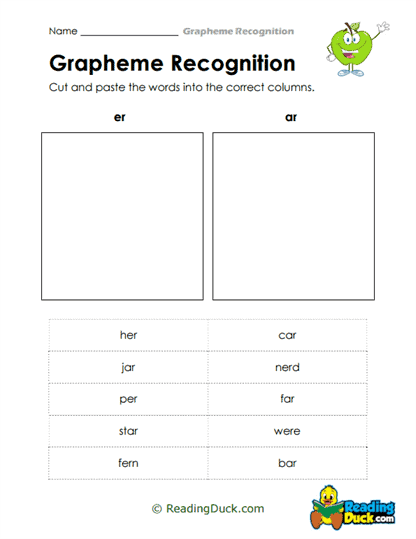
Students organize graphemes into columns by the sounds they represent. It's a clear way to compare alternatives like "c" vs. "k" vs. "ck." Think of sortable filing cabinets for sounds! Excellent for visual reinforcement. Bonus: time the sorting for a phonics showdown.
Sound Match
This activity has learners match sounds to words containing the correct grapheme-helping them generalize from isolated sounds to full words. It's like sound and spelling pairing up in harmony! Great for reading stations. Bonus: use a "phonics karaoke" format, where students sing the sound-word matches.
Sound Search
A hidden-word-style worksheet where students hunt for words that include target graphemes within a grid or list. It makes phonics feel like a puzzle hunt. Spy those graphemes til they pop out! Wonderful for solo or partner challenges. Bonus: offer magnifying glasses for added detective flair.
Sound Seekers
Kids comb through text to spot specific graphemes, recording their finds. It builds both reading and phonics skills. Every grapheme found is another puzzle piece revealed! Ideal for reading groups. Bonus: reward with "Sound Seeker" badges for successful hunts.
Word Hunters
Learners scan for words containing a target grapheme and write them down. It builds vocabulary and grapheme awareness together. It's like going on safari, but the wildlife is words! Perfect for independent work or extension. Bonus: create a classroom "word wall" with their collected finds.
What Is Grapheme Recognition?
Grapheme recognition is the ability to see written symbols-single letters or letter combinations-and understand which sounds they represent, like knowing both f and ph represent /f/. It's the critical connection between print and speech that unlocks spelling and reading.
This skill is foundational: once students can reliably match graphemes to sounds, decoding new text becomes easier, and spelling accuracy improves. Learners move from stumbling over words to confidently reading and making sense of them.
Strong grapheme recognition also supports fluency-reading becomes smoother and more automatic, freeing up cognitive energy for understanding. With consistent practice using these worksheets, children build a lifelong ability to navigate written language with ease and joy.
Make sure to bookmark our website now.
Enjoy all our free reading worksheets.
Our materials adhere to the principles of the Science of Reading.