Initial consonant deletion is when the very first sound in a word goes missing, like saying at instead of cat or og instead of dog. While it can happen in early speech development, children need practice to keep those first sounds in place so their words are clear, easy to understand, and ready for reading. Recognizing and correcting this helps kids connect beginning sounds to the letters they see on a page.
When learners master those starting consonants, their communication grows stronger and their reading makes more sense. They begin to understand that every part of a word matters, especially the front door sound that "opens up" the rest. This boosts confidence in both speaking and spelling, and makes books and stories less of a mystery.
Our worksheets give children fun, structured ways to practice putting those missing sounds back where they belong. With activities that mix games, drawing, writing, and matching, kids discover how much meaning changes when a first sound disappears. This is more than worksheets-this is sound-to-word mastery in action!
Looking At Each Worksheet
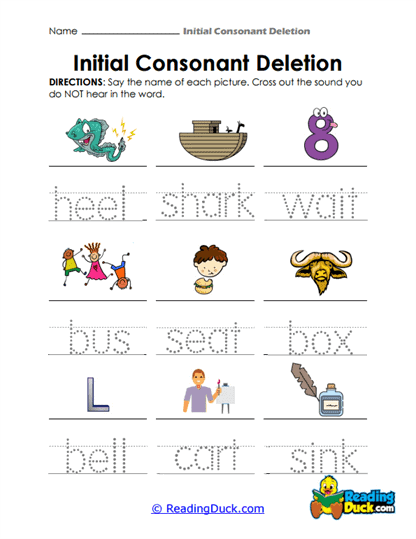
Cross It Out
Kids look at words or pictures and cross out the ones that are missing their first consonant. It's like being a detective who spots the impostors! This activity helps children notice when something is incomplete. Bonus: ask students to add the correct sound back in for extra practice.
Final Words
Students focus on words with their endings intact and compare them to those without beginnings. It shows them how missing the front sound changes the whole word. It's like finishing a puzzle but leaving off the first piece. Bonus: have learners say each word aloud to hear the difference.
Fix the Word
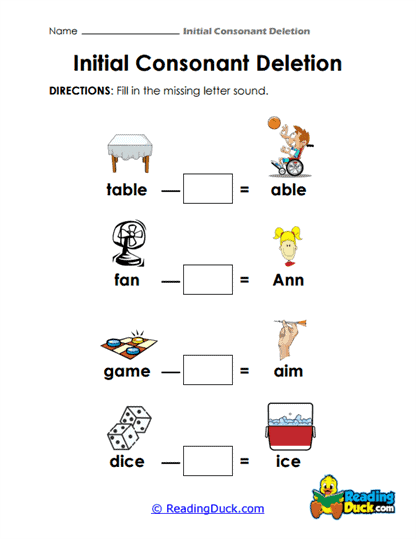
Children repair words missing their initial consonant, turning _at into cat. It's a word-fixing workshop where kids become mechanics for language. They'll love restoring words to their "full power." Bonus: let them invent funny broken words and fix them too.
Letter Gaps
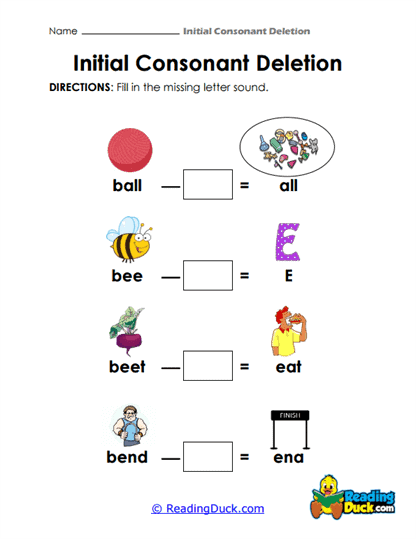
This worksheet leaves a blank at the front of words where the consonant should be. Kids fill in the missing letters to complete them. It feels like filling in the last missing piece of a jigsaw puzzle. Bonus: use magnetic letters or tiles to make it hands-on.
Missing Sounds
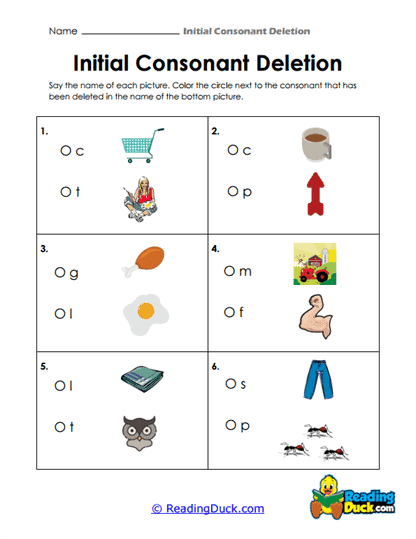
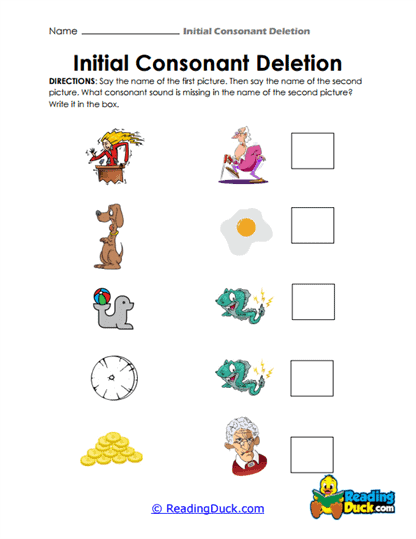
Learners identify which starting sound is missing from words or pictures. It trains both their ears and eyes. It's like playing hide-and-seek with the alphabet. Bonus: challenge them to shout the missing sound before writing it.
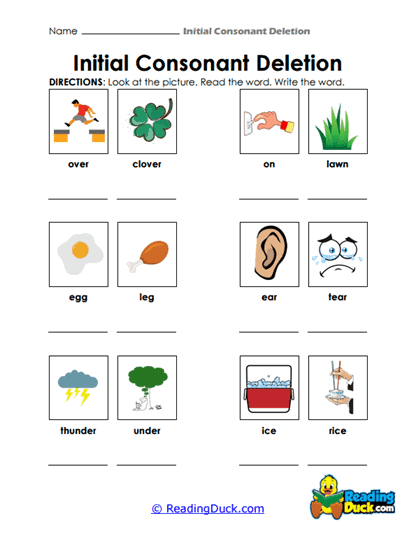
Picture Define
Children look at pictures and supply the full word, making sure to include the starting consonant. It connects images and sounds beautifully. It's like giving the picture its real name tag. Bonus: let kids draw their own pictures and label them.
Picture Pair
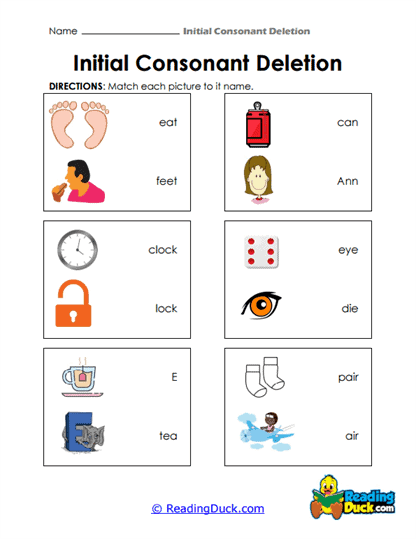
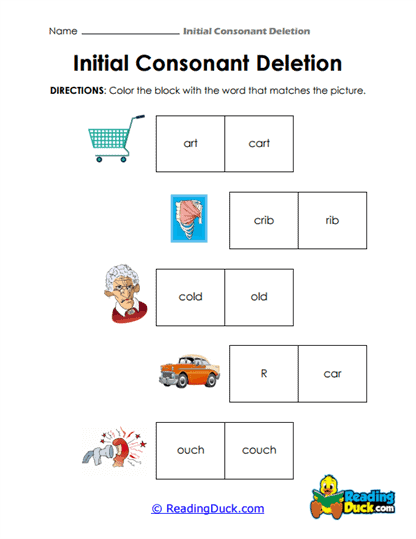
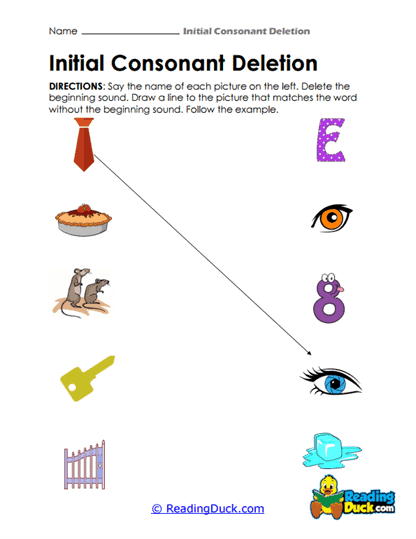
Students match complete pictures or words to their incomplete partners. It highlights the big difference those first sounds make. It's like reuniting lost twins. Bonus: turn it into a memory card game.
Picture Write
Kids draw or see a picture and then write the complete word. It blends creativity with phonics awareness. It's like turning art into spelling practice. Bonus: let them make a mini picture dictionary.
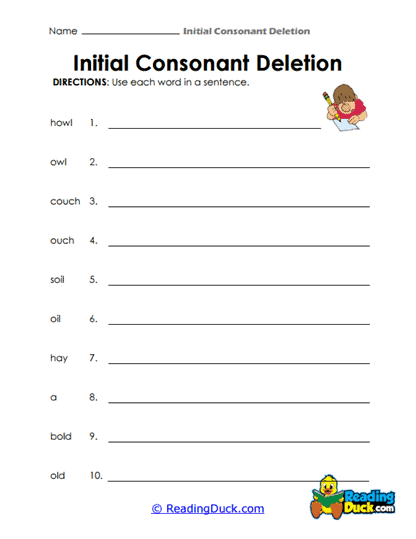
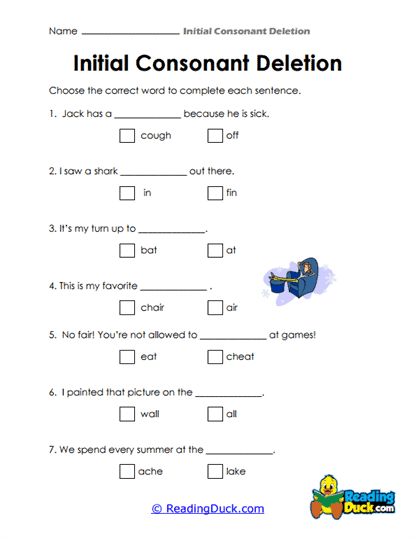
Sentence Builder
Students use words with initial consonants restored to finish sentences. It shows how correct sounds give sentences meaning. It's like rebuilding a story one block at a time. Bonus: have learners make silly sentences with their new words.
Sentence Switch
Here, sentences start with missing sounds-like "_og sat on the mat"-and students fix them. It's a playful swap that reinforces correct speech. It feels like rescuing a story from confusion. Bonus: let kids invent their own broken sentences to trade with friends.
Sound Circles
Children circle words or pictures that begin with the right sound. It's a simple, fast way to spotlight those important openings. Like putting a spotlight on the star of the word! Bonus: use different colors for different sounds.
Sound Cutout
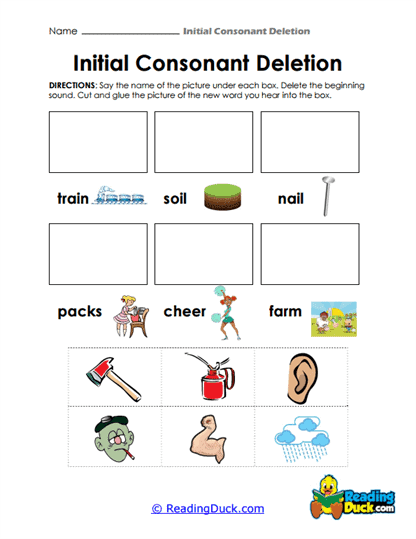
Kids match cutout consonant sounds with the words or pictures missing them. It's a hands-on way to bring words back together. It's like solving a puzzle with moving parts. Bonus: laminate pieces for a reusable center.
Sound Match
Learners match words missing their first sound with those that have it. It builds sound awareness by pairing complete and incomplete forms. Think of it as sound buddies meeting up again. Bonus: mix in nonsense words for extra fun.
Word Match
Students match incomplete words with their proper, full versions. It shows instantly how one sound can change meaning. It's like seeing a before-and-after makeover! Bonus: let kids design extra pairs themselves.
Word Split
This activity separates the beginning sound from the rest of the word, and students have to put it back together. It shows how sounds blend into a whole. Like snapping two Lego bricks together to make something new. Bonus: let students act out the words once built.
What Is Initial Consonant Deletion?
Initial consonant deletion happens when the first sound of a word is left out. Saying at instead of cat or og instead of dog are examples. While this can happen when children are very young, older learners need practice to keep those beginning sounds in place so their words are clear and complete.
In everyday life, those starting sounds matter a lot. Signs, stories, games, and conversations all rely on the first sound to give meaning. Without them, words can sound confusing or turn into something entirely different.
Learning to use and recognize beginning consonants helps children read more fluently, spell with accuracy, and speak with confidence. It's a vital step toward making sure words sound right, look right, and carry the right meaning.
Make sure to bookmark our website now.
Enjoy all our free reading worksheets.
Our materials adhere to the principles of the Science of Reading.