Sound segmentation is the superhero skill of breaking a spoken word into its tiniest sound parts-its phonemes-like turning cat into /k/-/ă/-/t/. It connects directly to reading and spelling because once kids can hear the parts, they can match them to letters and build words with confidence. Segmenting supports rhyming, syllable work, and blending, and it gives children a clear "map" for how words are constructed. When this map is familiar, decoding stops feeling like guessing and starts feeling like solving. It's ear training, brain training, and word-building-rolled into one joyful habit.
Mastering sound segmentation improves communication and comprehension because students learn to listen closely, compare words, and explain what they hear. That careful listening pays off in clearer pronunciation and smoother read-alouds, where kids can track sounds without losing meaning. It also reduces spelling frustration: if you can name the sounds in order, you can choose letters in order. Confidence grows fast when children can say, "I hear three sounds," and prove it.
This collection provides step-by-step practice: first noticing single sounds, then tapping, boxing, and moving tokens, and finally writing the phoneme spellings. Activities are short, visual, and hands-on, so practice feels like a game instead of a grind. Use them for warm-ups, small-group rotations, or quick at-home challenges, and watch segmentation become automatic. This is more than worksheets-this is sound-to-word mastery in action!
Looking At Each Worksheet
A Sound Block
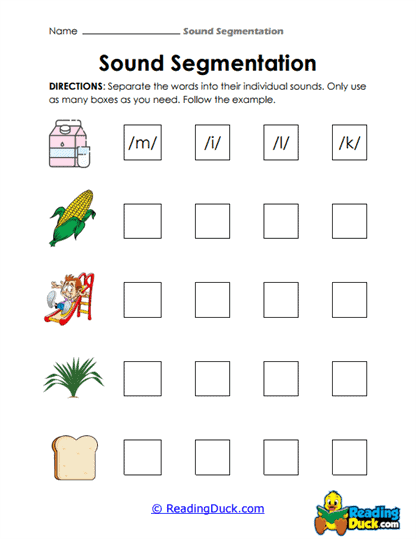
Students push one "block" per sound as they say a word, then slide them together to check the sequence. This makes the parts of a word visible and helps highlight middle sounds in words, which are often the trickiest for learners to hear. It's like building a tiny sound tower that won't wobble. Great for centers or intervention groups with real cubes or counters.
Circle Sounds
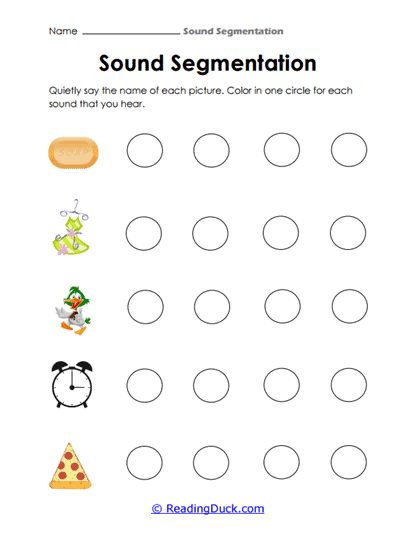
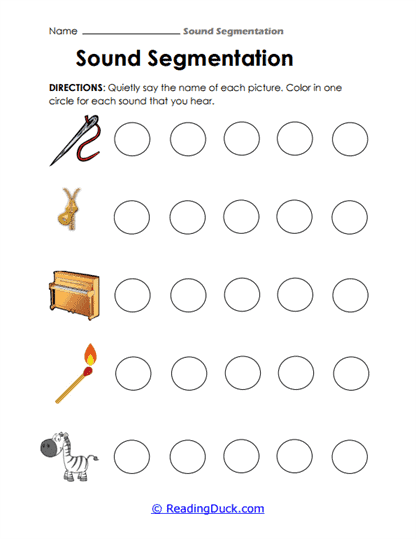
Kids hear a word, then circle one icon for each phoneme they hear-quick, no-writing segmentation. It tightens the link between listening and counting sounds. Think of it as sound "roll call": every phoneme raises its hand. Perfect for warm-ups and exit tickets. Bonus: Add a second pass where students label each circle B-M-E for beginning/middle/ending.
Circle the Sounds
Learners circle the exact letters that match each sound in simple words, proving that hearing parts guides spelling parts. It turns ear work into eye work, reinforcing accurate mapping. Imagine spotlighting each phoneme on stage as it says its line. Works well with word lists or mini-passages. Bonus: Have students color the vowel sound a different shade to highlight the center of the word.
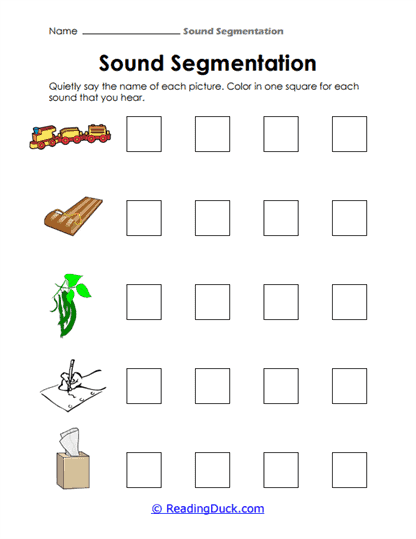
Counting Sounds
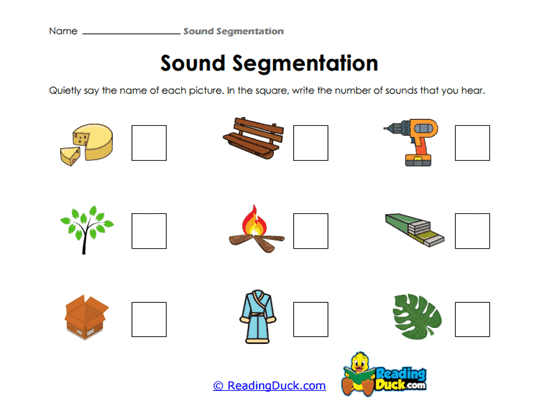
Students tap, clap, or hop once per phoneme in a word, then write the total. This makes segmentation energetic and memorable. It's like a mini workout for ears and feet. Great for whole-class call-and-response. Bonus: Use finger tapping to mark each sound, then show the same number with connecting cubes.
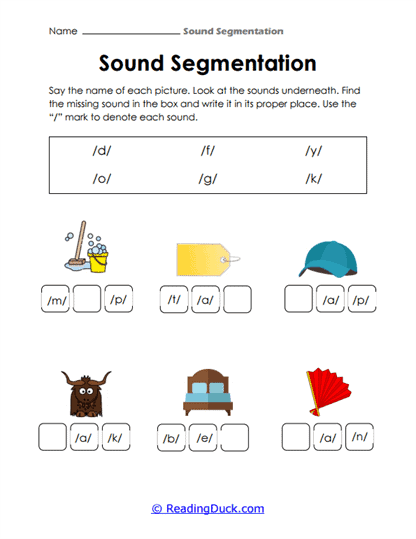
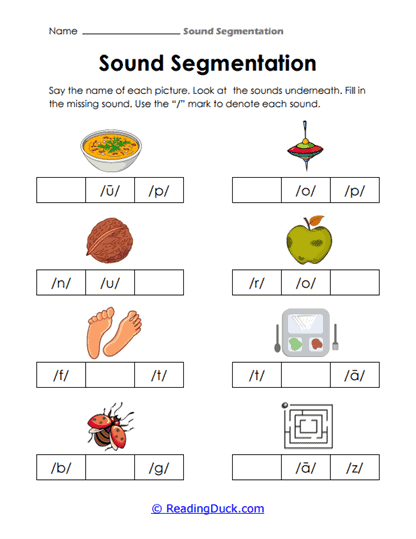
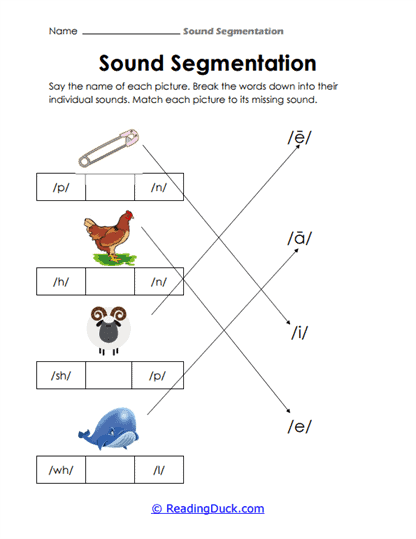
Find the Missing Sound
A word is nearly complete-one sound is missing-and kids supply the absent phoneme. This focuses attention on internal sounds, the trickiest spot for many learners. Picture a puzzle with one sneaky piece hiding under the table. Ideal for small-group coaching or independent practice. Bonus: Let students invent a new "missing sound" example for a partner to solve.
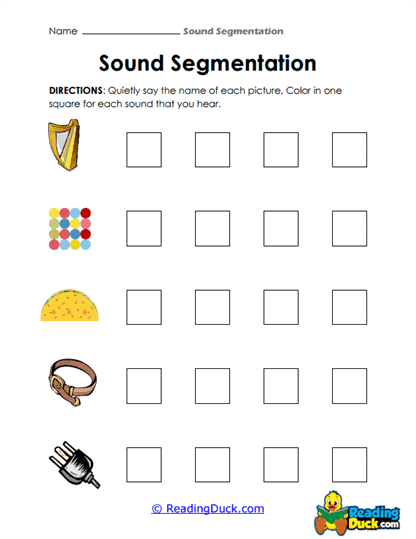
Harp Sounds
Learners "pluck" sounds from left to right-one gentle motion per phoneme-before blending. It slows the process just enough to hear each string (sound) clearly. Like playing a tiny audio harp, the melody becomes the word. Great for pacing and prosody before reading. Bonus: Use yarn "strings" taped to desks so kids can slide a finger for each sound.
Helmet Sounds
Kids "gear up" by segmenting CVC and CCVC words, protecting each phoneme in its own "helmet" space. It builds careful listening and position awareness. Think of a team huddle where every sound gets called out. Perfect for sports-themed centers or PE-style brain breaks. Bonus: Call "audibles" (switch one sound) to compare new words on the fly.
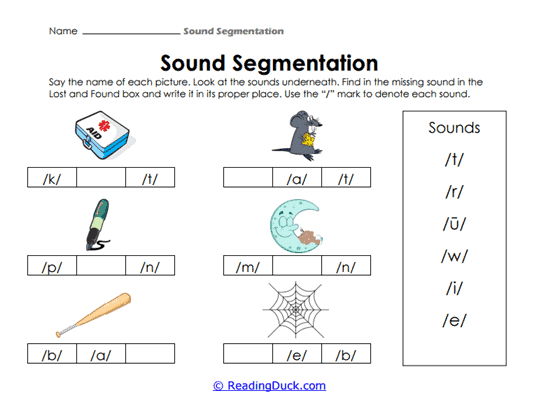
Lost Sounds
Students scan words with one blank phoneme box and determine which sound got "lost." It sharpens internal sound detection and error checking. Like a lost-and-found bin for phonemes, they match what's missing. Great for mixed-ability pairs. Bonus: After finding it, kids read the whole word and circle the sound's letter(s).
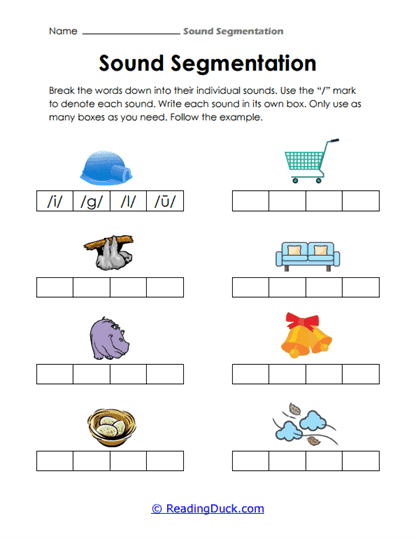
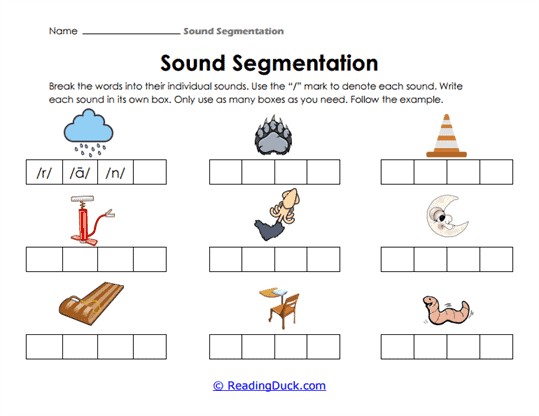
Missing Sounds
Each word has multiple blanks; learners fill every sound in order. This stretches stamina and sequencing, not just guessing. It's the full phoneme puzzle, start to finish. Excellent for independent practice or homework. Bonus: Have students reread their completed line in one smooth blend to celebrate.
Phoneme Connections
Children segment two related words and compare which phoneme changed (cap → cup), proving how one switch makes a new word. It deepens awareness of positions and contrasts. Think "spot the difference," but with sounds. Great for partner talk and minimal pairs. Bonus: Let kids draw quick sketches for each pair to cement meaning plus sound.
Phonics Ladders
Learners climb a ladder by changing just one phoneme per rung (cat → cap → cup → up). It's segmentation, substitution, and blending working together. Like a word gym, each step makes ears stronger. Ideal for small groups and quick fluency boosts. Bonus: Time a gentle race to the top-accuracy first, speed second.
Picture Phonics
Students name a picture, segment the word aloud, then map phonemes to boxes. This keeps the text load low while the sound work stays high. It's the perfect bridge for emerging readers. Use in centers or with paraprofessional support. Bonus: Invite learners to add one new picture from a magazine and segment it for the class.
Sound Bridges
Kids place tokens across "bridge" spaces-one per phoneme-then cross back blending the word. It spotlights order and continuity in sounds. Imagine footsteps over a river that becomes a word. Great for transition times and quick stations. Bonus: Remove a "plank" (token) and ask which sound fell into the river.
Sound Matching
Learners segment two words and decide if they share the same beginning, middle, or ending phoneme. It connects segmentation to comparison and categories. Think of it as sound best-friends matching bracelets. Works for whole-group games or partner sheets. Bonus: Have students make a three-column chart (B/M/E) and sort pairs after matching.
Sound Squares
Each phoneme gets its own square, and students move a counter through the boxes as they say the sounds. This turns abstract parts into a concrete path. It's like a mini board game where every space is a sound. Great for one-on-one or small-group intervention. Bonus: Add a "blend and read" finish line where students say the whole word smoothly.
What Is Sound Segmentation?
Sound segmentation is the ability to take a spoken word and pull it apart into its individual phonemes in the correct order. It's a core piece of phonemic awareness that lets kids hear what they will later spell. Segmenting trains careful listening, supports accurate articulation, and prepares learners to map sounds to letters. When students can name each sound, they stop guessing and start building.
In real-world reading, segmentation shows up when a child slows down on a tricky word, taps the sounds, and then blends to read it. It guides spelling during writing time, too, as students stretch a word like ship into /sh/-/ĭ/-/p/ to choose letters that fit. You'll hear it in songs, word games, and playful chants where sounds are counted and compared.
Developmentally, mastering segmentation boosts fluency, spelling accuracy, and overall reading confidence. It helps children track sounds in longer words and spot where changes happen when words morph. With repetition, the skill becomes automatic-and that automaticity frees the brain to focus on meaning and expression. Every clear segment is a step toward smooth, joyful reading.
Example Uses of Sound Segmentation
Example 1
Sentence: The dog ran.
Explanation: Segmenting dog into /d/-/ŏ/-/g/ and ran into /r/-/ă/-/n/ helps children hear each phoneme in order, making both decoding and spelling more accurate.
Example 2
Sentence: I will pack my bag.
Explanation: Segmenting pack into /p/-/ă/-/k/ and bag into /b/-/ă/-/g/ shows how sounds line up with letters, building the habit of tapping, mapping, and then blending to read the full sentence.
Make sure to bookmark our website now.
Enjoy all our free reading worksheets.
Our materials adhere to the principles of the Science of Reading.