Trigraphs are three-letter spelling teams that work together to make one sound, like tch in match, dge in badge, or igh in light. They're a big step in phonics because kids learn to look past single letters and spot reliable sound patterns hiding in plain sight. When children can recognize trigraphs, reading gets smoother, spelling gets smarter, and those longer words suddenly feel friendlier. It's like discovering a secret handshake inside the word!
Mastering trigraphs also boosts communication and comprehension. Kids who can hear and use these patterns are less likely to stumble on tricky words, so they can focus on meaning and expression instead. They begin to explain why a word sounds a certain way ("I see tch after a short vowel!"), which turns guessing into real strategy. Confidence rises because the code starts to make perfect sense.
This collection moves from noticing and circling, to sorting and matching, to reading and writing with trigraphs in context. Activities are short, playful, and step-by-step so success comes quickly and sticks. Use them for whole-group mini-lessons, small-group rotations, centers, or at-home practice. Bit by bit, pattern power turns into fluent, joyful reading.
Looking At Each Worksheet
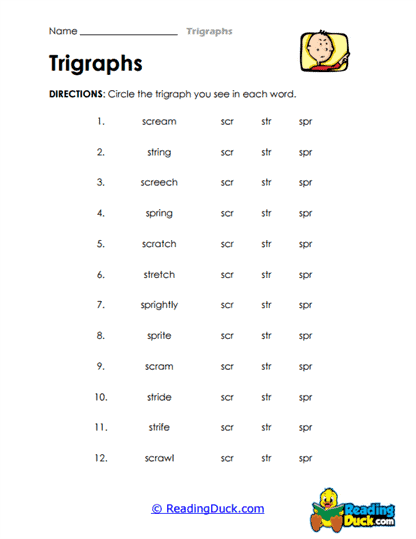
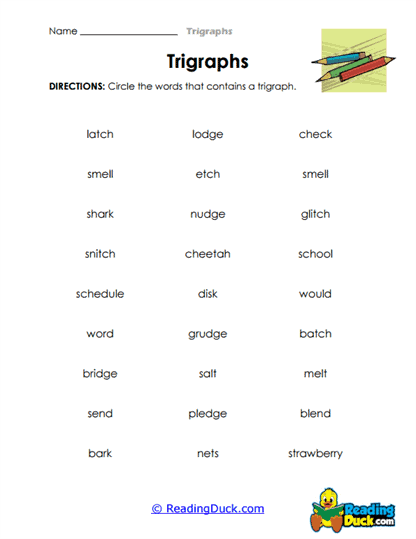
Circle the Trigraphs
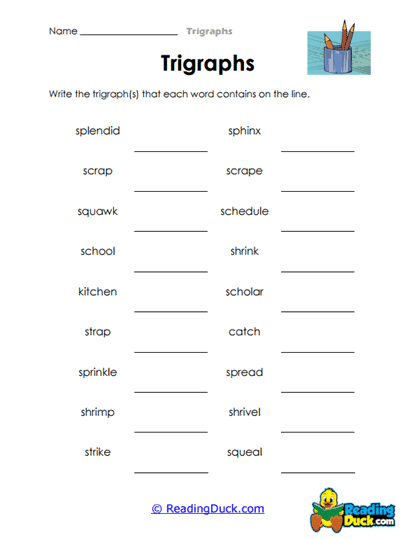
Students scan words and circle the three-letter teams that make one sound-like sound-hunting with a magnifying glass. The main activity is quick identification, which sharpens eyes for patterns such as tch, dge, and igh. It directly strengthens recognition of trigraphs so reading becomes smoother. Great for warm-ups, centers, or exit tickets. Bonus: Let kids give a tiny "detective cheer" each time they spot a trigraph in the wild!
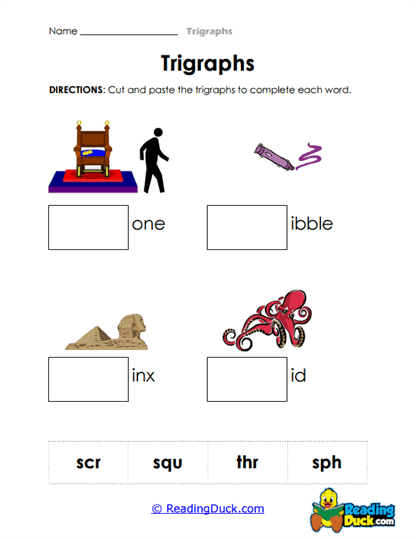
Complete the Word
Children fill in the missing trigraph to finish real words (think "ca___" → catch). This connects listening to accurate spelling and makes the pattern feel inevitable, not mysterious. It's puzzle-solving that turns into proud reading. Perfect for independent practice or homework. Bonus: Challenge learners to use each completed word in a silly five-word sentence.
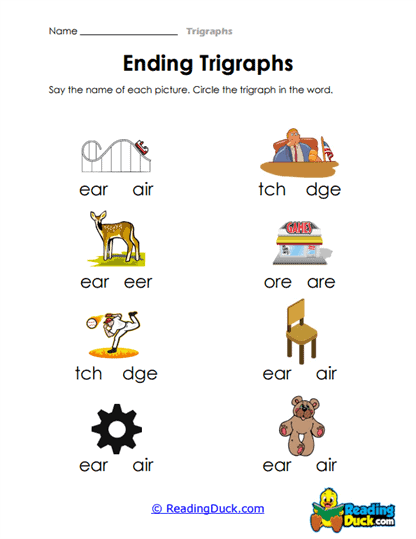
Ending Trigraphs
Learners focus on word endings like -tch and -dge, hearing how one chunk carries a whole sound. The task highlights when and where these teams appear, which makes spelling choices more confident. It's pattern power at the tail end of words! Great for small-group instruction. Bonus: Play "end boss"-read the word dramatically, then power-up the final trigraph.
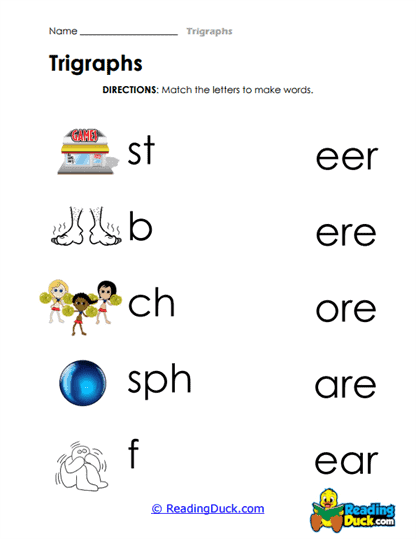
Match the Trigraph
This is a friendly matching game: link each word or picture to the trigraph that completes it. Matching builds instant "these belong together" knowledge for fast decoding. It's memory-meets-phonics with zero fuss and lots of giggles. Ideal for partner stations. Bonus: Players must say the trigraph aloud before claiming a match.
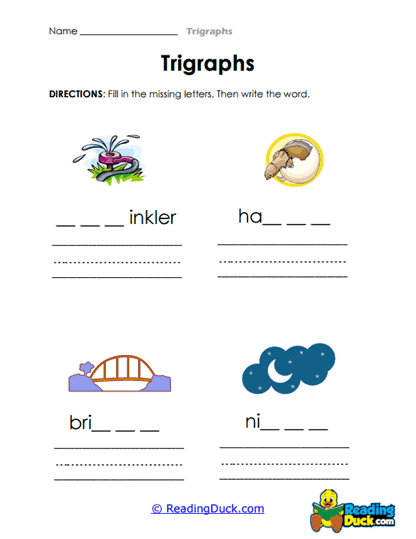
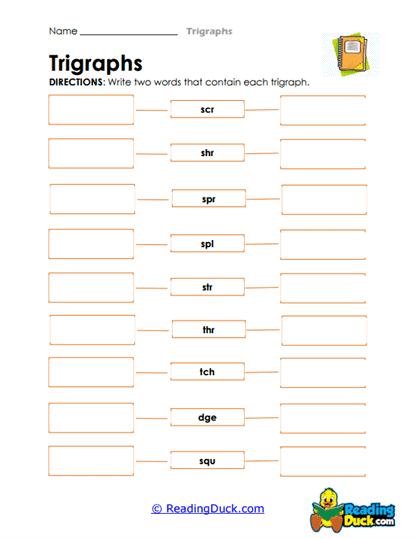
Missing Trigraphs
Words are nearly complete-one three-letter teammate is missing-and kids supply the right one. The format targets accuracy without overload and trains careful listening to the final sound. It's a satisfying "click" when the right piece drops in. Great for intervention or quick checks. Bonus: Let students create one "missing" word for a classmate to solve.
Picture Trigraphs
Pictures lead the way: name it, listen for the sound, and choose the trigraph that spells it. Visuals lower the reading load while keeping the phonics thinking high. It's perfect for emerging readers who learn best with images. Wonderful for mixed-ability groups. Bonus: Invite kids to draw one new picture for the class trigraph wall.
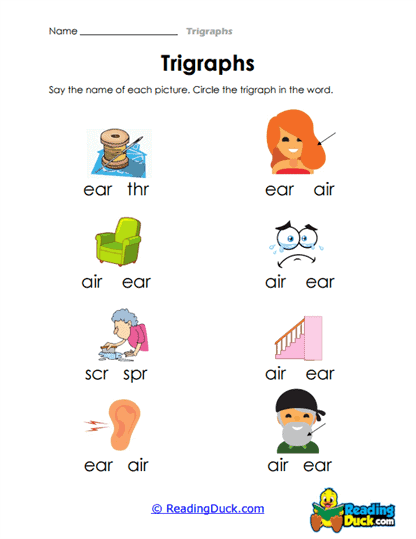
Say and Circle
Kids say each word out loud, then circle the trigraph they hear-ear-first and fast. This turns careful listening into confident marking and prevents letter-guessing. The repetition builds automaticity in minutes. Great as a do-now or exit ticket. Bonus: Read circled words back in a "radio announcer" voice for fun prosody practice.
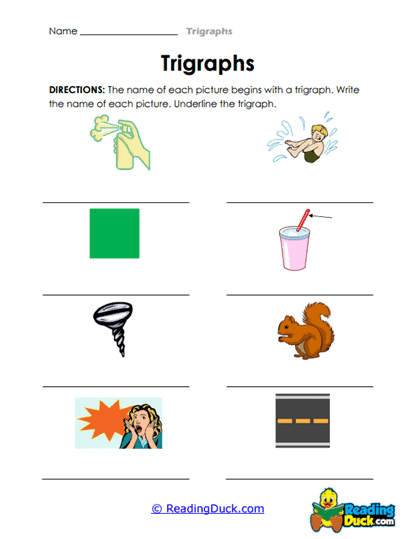
Say and Write
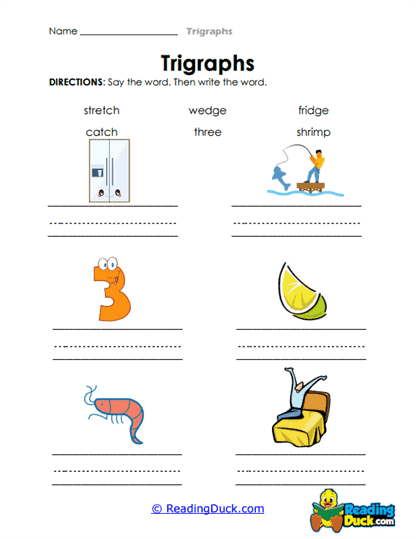
Learners pronounce the word, identify the trigraph, and write it-sound to print in three steps. The quick routine wires the pattern into memory for reading and spelling. It's tidy, powerful practice that feels like a win. Excellent for small groups or centers. Bonus: Add a "victory underline" under each trigraph after writing.
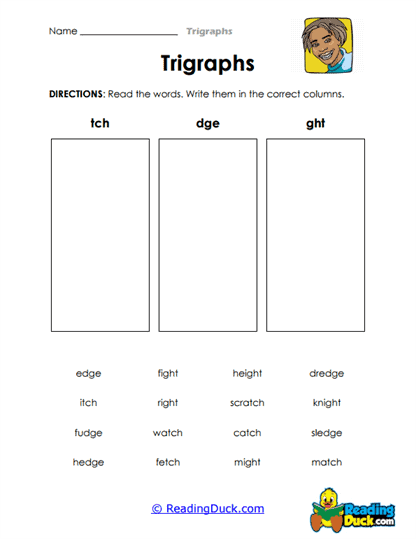
Solid Column Sorting
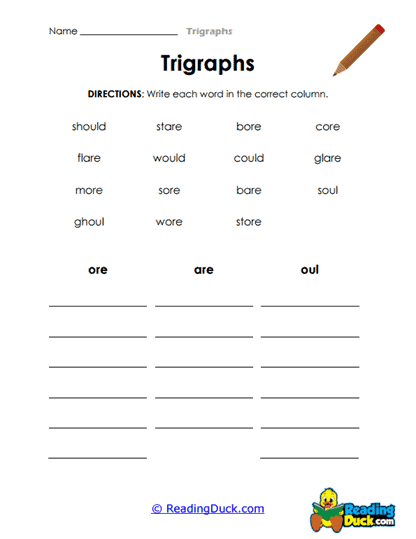
Students sort a word bank into columns by trigraph (tch, dge, igh, etc.). Sorting turns noticing into knowing because choices need reasons. It's a visual snapshot of pattern mastery. Perfect for partner "prove-it" time. Bonus: Have learners highlight the vowel pattern that often pairs with each trigraph.
Trigraph Fill-Ins
A mixed set of sentences and word frames asks kids to supply the correct trigraph in context. Reading meaning + sound pattern makes the learning stick. It's the bridge from isolated drills to real-world reading. Great mid-unit practice. Bonus: On a second pass, read the completed lines smoothly like a storyteller.
Trigraph Flashcards
Quick-flip cards feature words and pictures with target trigraphs for speedy review. Reps build recognition and confidence without pressure. It's perfect for warm-ups, tutoring, or home packs. Smiles guaranteed. Bonus: Play "around the world" and cheer each fast, correct read.
Trigraph Hunt
Learners comb mini-passages to find and highlight trigraphs in context. The hunt transfers skill from word lists to connected text. Kids feel like detectives and teachers see real evidence. Ideal for literacy centers. Bonus: Start a class list of "trigraph trophies" found during read-alouds.
Trigraph Sorting
Another rich sort with trickier look-alikes pushes precision and pattern talk. Students defend their choices, which deepens understanding and keeps focus high. It's classic, revealing practice. Great near the end of the unit. Bonus: Add a "not sure yet" pile and revisit together.
Trigraph Word Bank
A printable bank of trigraph words becomes the go-to reference for reading, spelling, and writing tasks. Kids highlight, read, and use favorites in sentences. It's vocabulary building with a pattern twist. Perfect for folders or notebooks. Bonus: Invite students to star their top five "power words."
Trigraph Word Bank
A second set expands the list for extra practice and varied examples. More exposure means stronger automaticity and faster decoding. It's the same friendly tool with fresh choices. Great for differentiation. Bonus: Turn it into a "word of the day" routine with a quick read-and-use challenge.
What Are Trigraphs?
Trigraphs are three letters that come together to represent one sound-a compact spelling team that appears in lots of everyday words. Common examples include tch for /ch/ at the end of words like match, dge for /j/ in badge, and igh for the long /ī/ in light. Because trigraphs compress multiple letters into a single sound, readers must learn to spot them as a unit. That little look-ahead move keeps decoding smooth and accurate.
You'll hear and see trigraphs everywhere-in storybooks, signs, poems, and content vocabulary. Once children start noticing them, they stop sounding out letter-by-letter and start reading in meaningful chunks. That shift unlocks fluency because the eyes and ears can track patterns instead of wrestling with each character. Spelling improves, too, since kids begin to choose the right chunk for the right sound.
Developmentally, mastering trigraphs builds confidence and frees brainpower for comprehension. Students become pattern-seekers who explain their choices, compare similar words, and read with expression. With practice, trigraphs go from "tricky" to "trusty," and longer words no longer feel long. It's a small pattern with a big payoff.
Make sure to bookmark our website now.
Enjoy all our free reading worksheets.
Our materials adhere to the principles of the Science of Reading.