Inflectional endings are the little endings we add to words-like -s, -ed, -ing, -er, and -est-to change their form without changing their root meaning. They show us if something is happening now, happened before, if it's one or many, or if it's being compared. Understanding these endings is key for children to read smoothly, write correctly, and understand how words work in sentences.
When kids learn to use inflectional endings, their reading and writing become richer and more flexible. They can tell when a verb is in the past, when a noun is plural, or when one thing is bigger than another. This helps them make sense of stories, instructions, and conversations in everyday life. It's like giving them the tools to unlock the "how" and "when" of language.
Our inflectional endings worksheets take this important concept and make it fun to practice. With sorts, hunts, games, and puzzles, kids get repeated exposure to these endings in playful and memorable ways. They aren't just memorizing rules-they're using endings in real contexts that stick. This is more than worksheets-this is sound-to-word mastery in action!
Looking At Each Worksheet
A Suffix Challenge
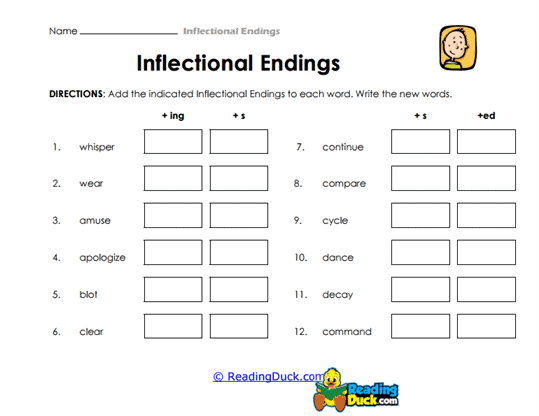
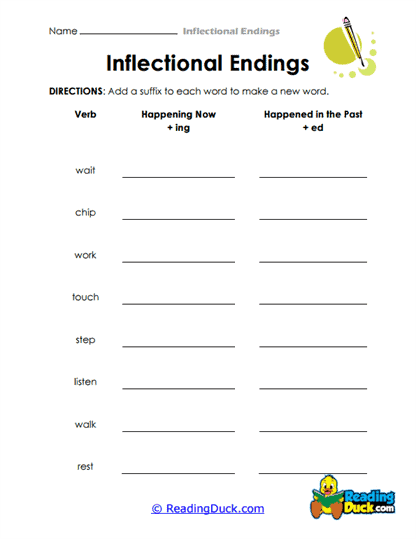
Students complete words by adding the right endings, like turning play into played or playing. It's like a suffix contest where every correct ending wins a cheer. Great for group review or quick practice. Bonus: let kids invent silly new words with endings.
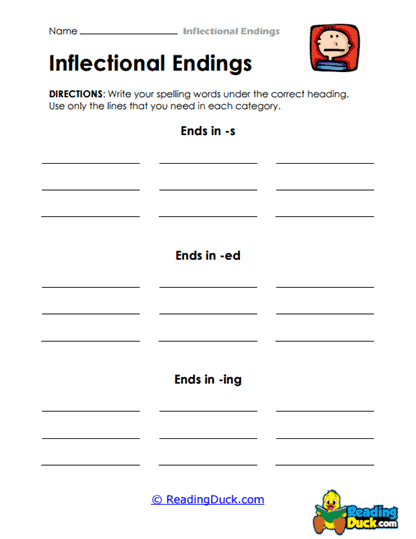
A Suffixes Sorter
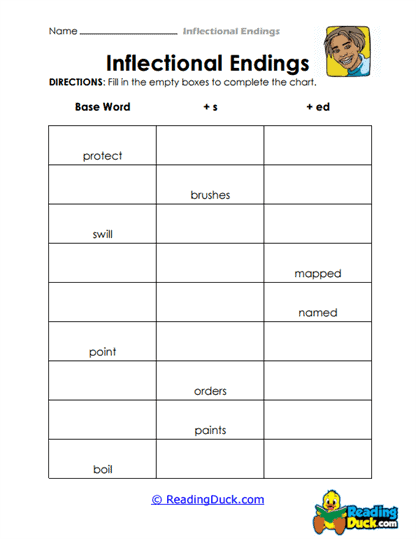
Children sort words by their endings--s, -ed, or -ing. It's like putting words into families based on their outfits. Perfect for center work. Bonus: challenge students to add their own new words to each group.
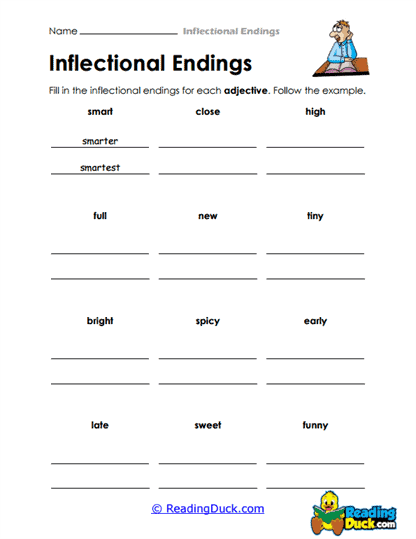
Adjective Adventure
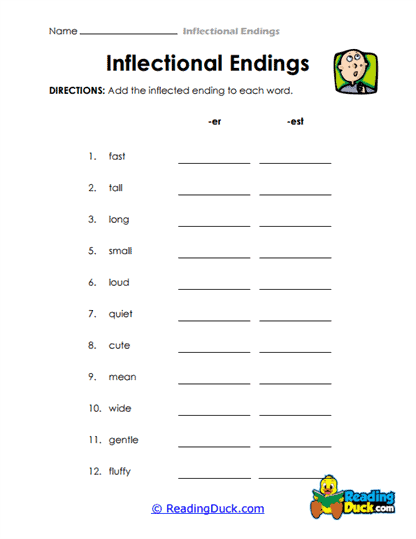
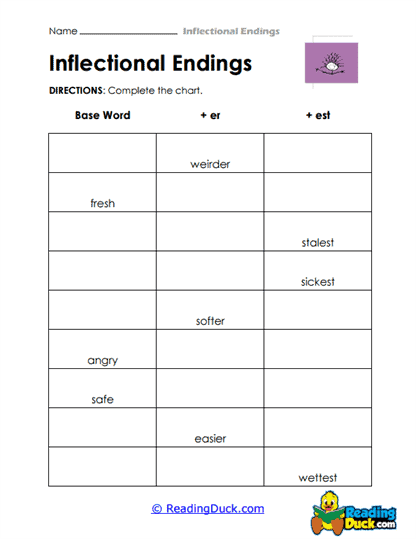
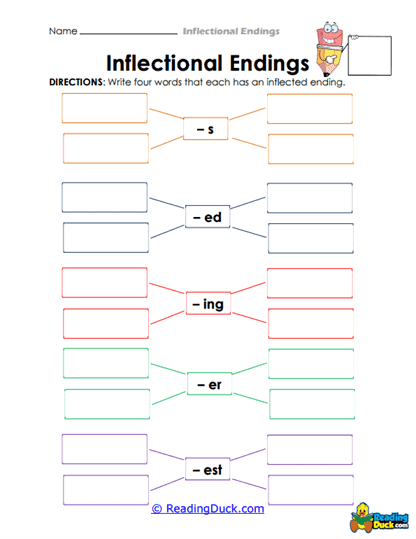
Kids practice comparing adjectives with -er and -est, like fast, faster, fastest. It turns grammar into a mini quest. Wonderful for writing activities. Bonus: let them act out being the "fastest" or "tallest" in the room.
Adjective Comparisons
Learners look at adjective pairs and figure out which form to use. It helps them master comparison endings. It's like holding a race where words compete to be taller, shorter, or bigger! Bonus: ask them to draw a comic showing the comparisons.
Adjective Explorer
Students go on a discovery mission with adjectives and endings. It feels like exploring a new land where words grow longer with endings. Great for practice in small groups. Bonus: award "explorer badges" for new discoveries.
Dice and Verbs
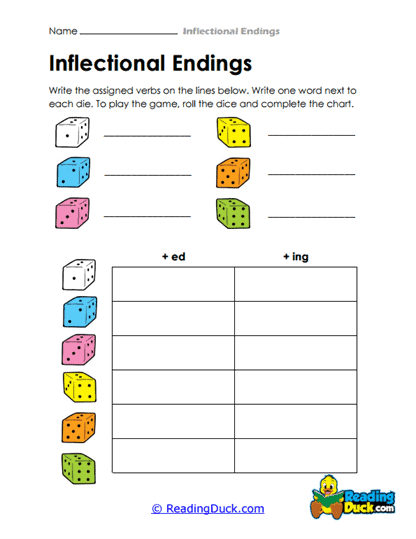
Kids roll dice and add endings to base verbs for a surprise result. It turns verb practice into a game of chance. Imagine rolling "jump" and turning it into jumped! Bonus: let them make a funny story using their dice results.
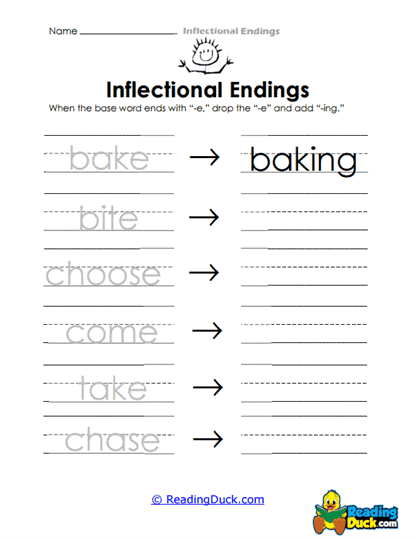
Drop the 'E'
This worksheet teaches when to drop the silent 'e', like make becoming making. It's like solving a secret spelling riddle. Perfect for spelling lessons. Bonus: kids can draw the "vanishing e" disappearing like magic.
Inflectional Mix-Up
Students unscramble or sort mixed-up word forms with endings. It's like putting a puzzle back together. Fun for literacy centers. Bonus: let them create their own mix-ups for classmates to solve.
Root Finder Fun
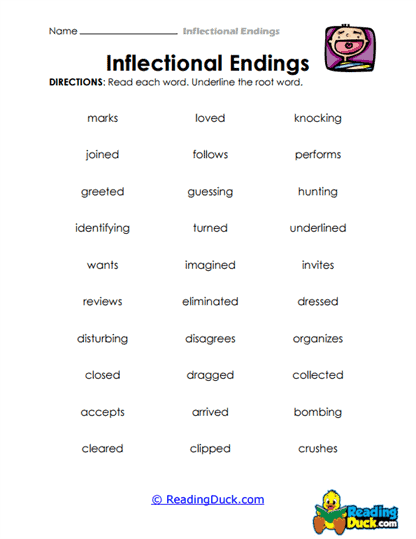
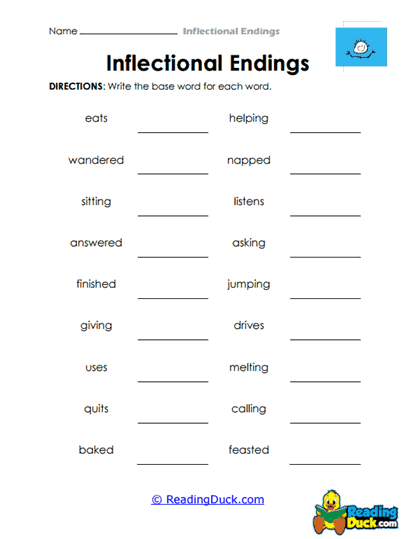
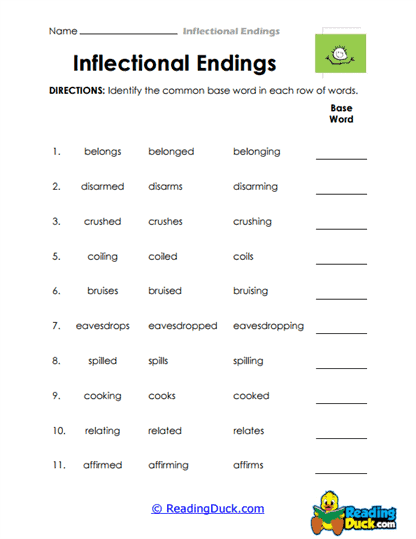
Kids peel off endings to find the base word. It's a word detective activity that makes them look closely at structure. Great for spelling and reading practice. Bonus: create a "root word wall" with their findings.
Root Word Hunt
Students search for root words in text before endings are added. It feels like a treasure hunt for the base inside the word. Perfect for guided reading. Bonus: let them highlight roots with different colors.
Spin-a-Suffix
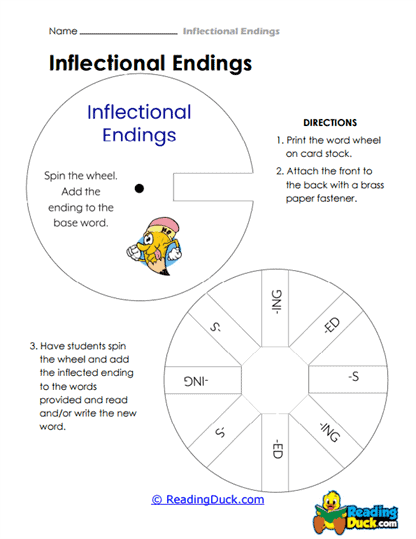
Learners spin a wheel to add endings to words. It's like letting chance decide your next word form! Ideal for games and review. Bonus: students can design their own suffix spinner.
Suffix Fun
Children practice endings in funny sentences or silly combinations. It makes suffixes memorable and entertaining. Perfect for quick warm-ups. Bonus: challenge them to write the silliest -ing sentence they can think of.
Suffix Match-Up
Students match root words to the correct endings. It's like pairing socks that only fit the right foot. Great for partner work. Bonus: play it as a memory flip game.
Verb Builders
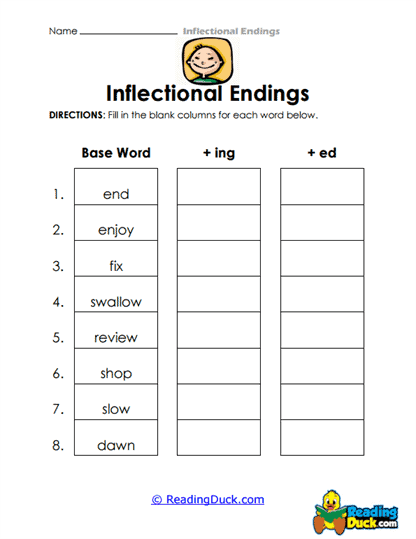
Kids build verbs into different tenses by adding endings. It's like constructing word houses with new rooms. Perfect for grammar lessons. Bonus: use color cards to show the base vs. the endings.
Word Transformations
This worksheet shows how words can change forms-like big, bigger, biggest or run, running, ran. It makes language feel alive and moving. Great for advanced practice. Bonus: ask students to create transformation chains of their own.
What Are Inflectional Endings?
Inflectional endings are suffixes we add to words to show changes like tense, number, or comparison. They don't change the root meaning, but they change how the word works in a sentence. For example, walk becomes walked to show past tense, and dog becomes dogs to show more than one.
We see inflectional endings everywhere-on signs, in books, in conversations. They help us know when something happened, whether it's one or many, or how things compare. Without them, sentences would sound unfinished or confusing.
Mastering inflectional endings helps kids read with accuracy, spell with confidence, and write sentences that make sense. It's a core skill for building fluency and understanding grammar naturally.
Make sure to bookmark our website now.
Enjoy all our free reading worksheets.
Our materials adhere to the principles of the Science of Reading.