If you've never heard of Ellis Island, think of it as the original "Welcome to America" checkpoint - minus the neon signs and airport lounges. Between 1892 and 1954, this tiny speck in New York Harbor became the doorway to a new life for over 12 million immigrants. Imagine a mix of nerves, hope, paperwork, and the Statue of Liberty photobombing in the background. That was Ellis Island: the ultimate entry ticket to the American Dream.
So, why does Ellis Island still matter? Because the stories of those who passed through shaped the country we know today. It's about more than immigration stamps and medical checkups - it's about resilience, culture, and identity. As students explore these ideas, they also strengthen their understanding of using articles in sentences, learning how small words like a, an, and the help clarify meaning and make writing more precise. In an age when debates about borders and belonging still fill the news, Ellis Island gives us a mirror to reflect on how we got here.
That's where these worksheets come in. They turn the big ideas of immigration history into bite-sized lessons filled with stories, vocabulary, and thought-provoking questions. Whether you're a teacher making history come alive, a parent supporting curious kids, or a student eager to connect with the past, these resources make Ellis Island not just a chapter in history - but a journey you can experience from your desk.
Meet the Worksheets
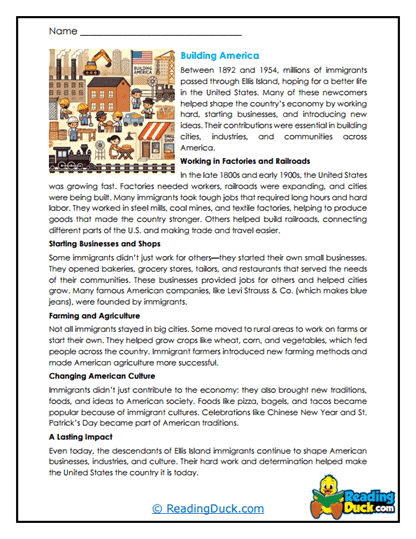
America Builders - This worksheet explores how immigrants arriving through Ellis Island shaped America's growth between 1892 and 1954. Students learn about tough jobs in factories, railroads, and farms, as well as the traditions and foods immigrants brought with them. It connects economic progress to cultural richness, showing that hard work and determination built the foundations of modern America. Fun fact: pizza and bagels were once considered "exotic" immigrant foods before becoming American staples.
Immigration Shifts - Here, students follow the changing story of U.S. immigration policies - from open doors to exclusion acts. They'll see why Ellis Island became necessary and how it transformed the immigration process. The passage makes history personal by showing both opportunities and obstacles. Did you know the Chinese Exclusion Act of 1882 was the first U.S. law to ban immigration based on nationality?
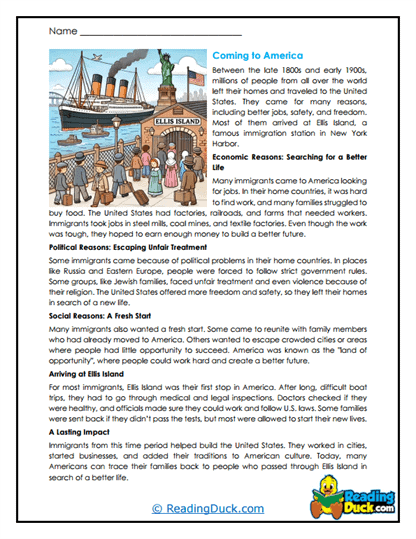
Journey Dreams - This worksheet highlights why millions left their homelands for America: jobs, freedom, and family connections. Students will read about the struggles of factory work alongside the hope of new beginnings. Ellis Island serves as the gateway where hardship met opportunity. A curious note: some immigrants changed their names at Ellis Island to fit in - though contrary to myth, officials didn't force the changes!
Journey Paths - Students dive into the unequal experiences of immigrants based on their class of travel and country of origin. The passage shows how first-class passengers often breezed through while others endured long lines, language struggles, and tougher inspections. It sparks empathy and questions about fairness in history. Ever heard the term "steerage"? It referred to the cheapest tickets - and the most crowded, uncomfortable conditions on ships.
Culture Blend - This worksheet explores Ellis Island as the birthplace of America's "melting pot." Students discover how immigrant traditions, foods, and festivals reshaped American culture. From pizza parlors to parades, diversity became part of daily life. Fun twist: the term "melting pot" was popularized by a 1908 play about immigration!
War Shifts - Students learn how World Wars I and II changed Ellis Island's role from a busy immigration hub to a hospital and detention center. The passage connects global conflicts to personal immigrant experiences. It's a powerful look at how war altered lives and slowed immigration. Did you know Ellis Island once housed "enemy aliens" - immigrants from countries the U.S. was fighting?
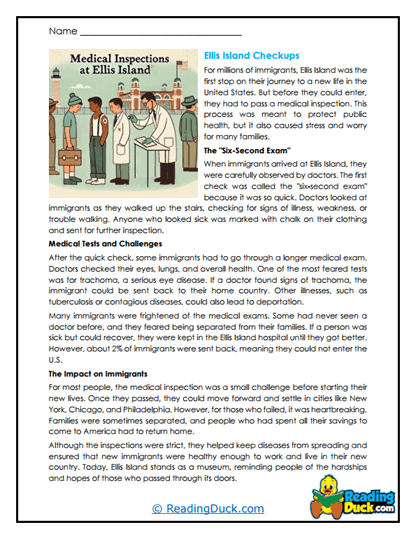
Health Checks - This worksheet brings students into the nerve-wracking six-second medical exams every immigrant faced. They'll read about quick glances, dreaded chalk marks, and the fear of being sent back. It's both fascinating and empathetic, as students imagine what it felt like to be inspected so closely. Odd fact: doctors sometimes used buttonhooks to check for eye diseases - talk about multitasking with fashion tools!
Gateway Stop - Students explore why Ellis Island was chosen as the main immigration station and how it replaced Castle Garden. The passage shows how location and planning made Ellis Island the perfect processing hub. It reveals how geography and organization shaped millions of lives. Imagine arriving in New York Harbor and seeing the Statue of Liberty - talk about an unforgettable first impression!
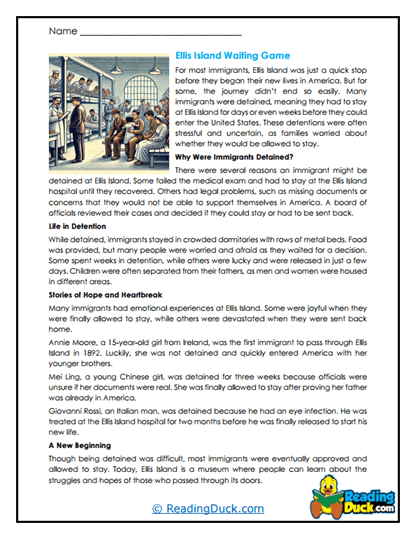
Waiting Trials - This worksheet tells the emotional stories of families waiting in crowded dormitories while officials decided their fates. Students read about both joyful reunions and heartbreaking separations. It sparks deep questions about fairness and empathy in immigration history. Picture being detained for weeks, unsure if you'd ever step onto American soil - talk about suspense.
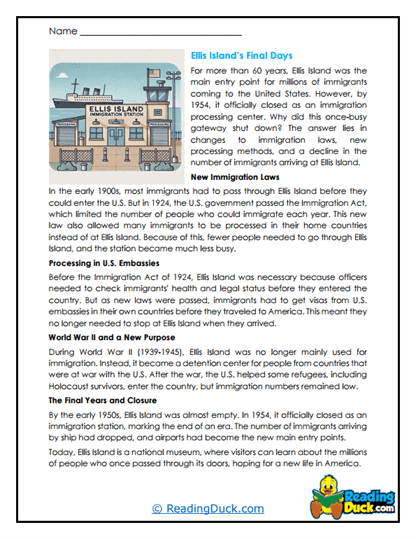
Final Chapter - Students learn about Ellis Island's decline as laws and overseas embassies changed immigration processing. The passage explains how wartime use and legal shifts sealed its fate, leading to closure in 1954. It ends by connecting Ellis Island's past role to its present as a museum. Today, it welcomes millions again - not as immigrants, but as curious visitors retracing history.
Legacy Stories - This worksheet highlights Ellis Island's lasting mark on America's identity. Students read about the millions who passed through, the modern museum, and today's immigration debates. It ties past struggles to present questions about diversity and opportunity. Did you know about 40% of Americans can trace at least one ancestor through Ellis Island?
New Beginnings - Here, students explore the tough realities of life after Ellis Island - crowded housing, discrimination, and learning English. The passage shows how immigrants adapted, built communities, and worked for better lives. It emphasizes resilience, determination, and the enduring dream of opportunity. Imagine juggling work, night school, and raising a family - that was the immigrant grind that helped build America.
About Ellis Island
Ellis Island was America's busiest immigration station, processing millions of newcomers between 1892 and 1954. Located in New York Harbor beside the Statue of Liberty, it served as the nation's official welcome mat. Its purpose was simple but life-changing: to check health, documents, and dreams before granting entry to the United States. In short, Ellis Island was where hope met reality.
The idea of Ellis Island didn't appear out of thin air. Before it, Castle Garden in Manhattan handled arrivals, but the growing flood of immigrants demanded more space and organization. Ellis Island became the solution, built on both literal land and symbolic promise. Over time, it witnessed shifts in policy, world wars, and the changing face of America itself. Think of it as a front-row seat to the drama of modern immigration.
Students studying Ellis Island encounter terms like "steerage," "inspection," "melting pot," and "detention." These aren't just fancy words - they're keys to unlocking what life was really like for immigrants. Vocabulary here isn't just about definitions; it's about stories. Each term points to a real human experience, from crowded ships to anxious medical checks.
Ellis Island matters because it captures the essence of the American experiment: diversity, struggle, and resilience. The stories of those who passed through reveal how ordinary people shaped extraordinary change. They remind us that immigration isn't just a policy debate - it's a lived reality that built cities, fueled economies, and flavored our food. Without Ellis Island's waves of arrivals, America would look, sound, and taste very different today.
Today, Ellis Island remains a symbol - and a debate. Some see it as proof that immigration builds nations, while others worry about the challenges newcomers bring. Museums preserve its legacy, but modern headlines remind us the story is still unfolding. What if Ellis Island never existed? Would the U.S. have become the same "nation of immigrants" it's known as today? Those are the kinds of questions that keep Ellis Island alive in both classrooms and conversations.
Make sure to bookmark our website now.
Enjoy all our free reading worksheets.
Our materials adhere to the principles of the Science of Reading.