About Our Grade 1 Reading Comprehension Worksheets
This Grade 1 Reading Comprehension Worksheets collection is a meticulously crafted resource designed to meet the educational needs of first-grade students. Each worksheet in this collection features engaging stories that are perfectly suited for their reading level. These stories are selected for their age-appropriateness, readability, and ability to captivate the interest of first graders, ensuring that learning to read becomes an enjoyable and enriching experience.
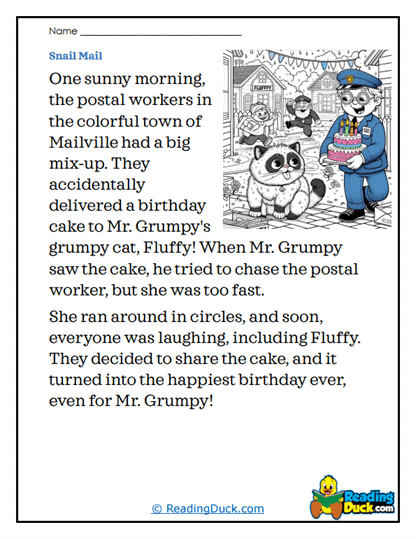
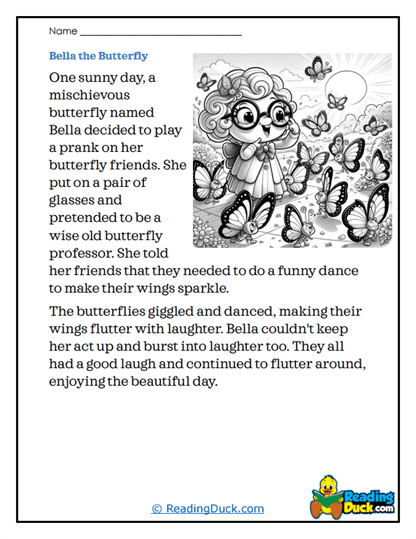
Whether your young readers are deciphering why a Birthday Mix-Up caused chaos or wondering why there's Marshmallow Rain falling from the sky (we promise it's not sticky), each worksheet encourages students to flex their inference and prediction muscles. As students draw conclusions from clues and anticipate what might happen next, they're not just reading-they're becoming detectives of delight. With stories like Squirrel Shenanigans and Butterfly Prank, your classroom transforms into a guessing game with every giggle-worthy turn.
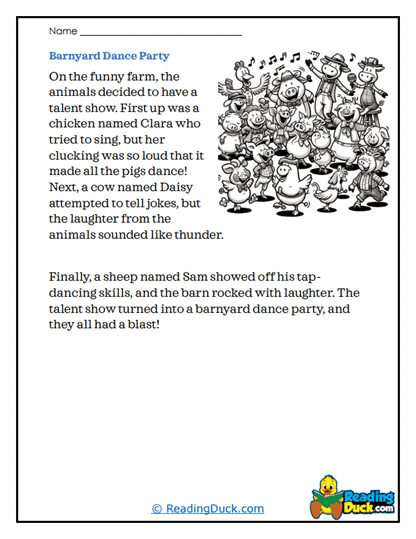
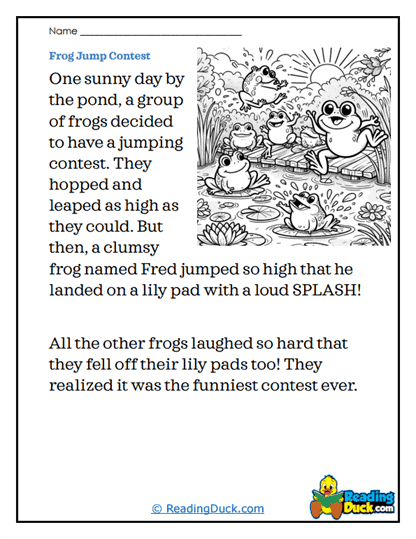
Let's talk main ideas and details-because, let's face it, even first graders can learn to tell the forest from the trees. Worksheets like Frog Jump Frenzy, Rainy Day Splash, and Farmyard Talent offer a chance for students to practice distilling key information from engaging narratives. Whether it's figuring out the central talent of a particularly gifted goat or identifying the main event in an amphibian competition, learners start to understand how to pick out what truly matters in a story. These passages teach that yes, the details matter-but knowing the big picture? That's where the reading magic begins.
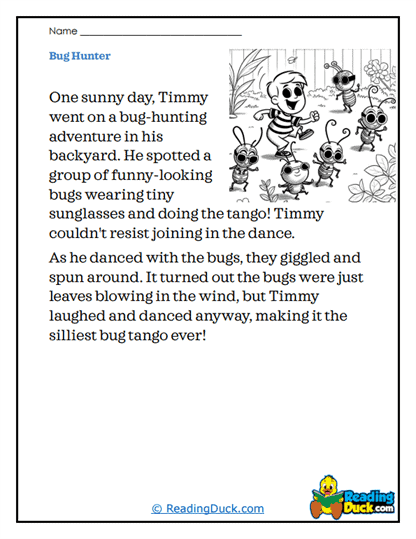
Vocabulary building isn't just about memorizing long words-it's about context, creativity, and maybe even a few confused critters. In worksheets like Dancing Bugs, Veggie Comedy, and Whale Serenade, students encounter rich, playful language that encourages them to use context clues to uncover meanings. Why is that beet so funny? And what exactly does a whale sing about, anyway? These aren't just comprehension tasks; they're linguistic playgrounds where young readers tumble into new words and leave with more expressive toolkits-and maybe a few belly laughs.
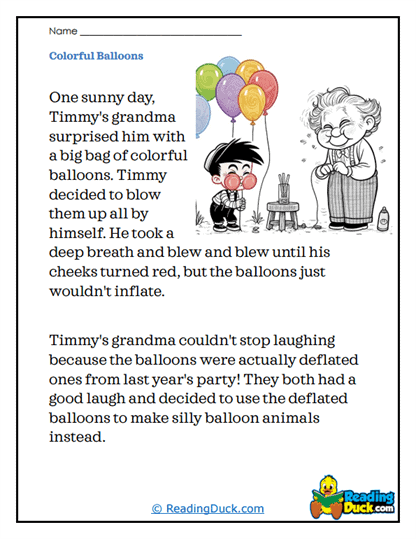
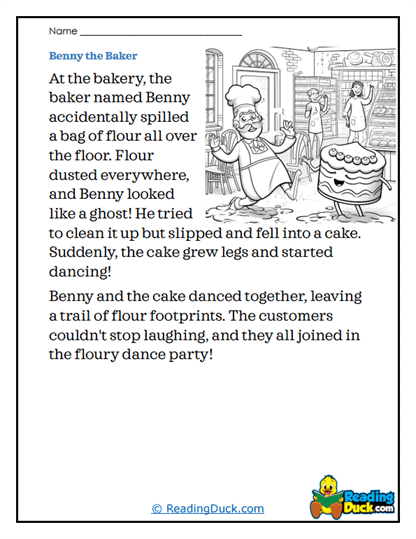
Sequencing and logical order come into focus with stories like Floury Fun, Balloon Blowout, and Nutty Race-worksheets that help students track events from start to delightfully chaotic finish. Did the flour spill before or after the sneeze? Was the balloon popped by accident or on purpose? As readers practice ordering events and recognizing cause-and-effect, they gain a clearer sense of narrative flow and storytelling structure. And in the process, they come to see that every good story has its own beat-sometimes with a little powdered sugar on top.
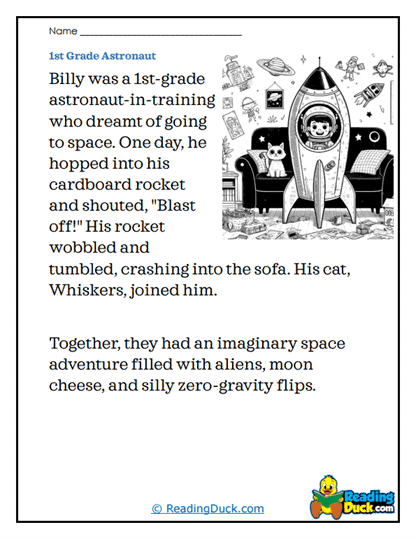
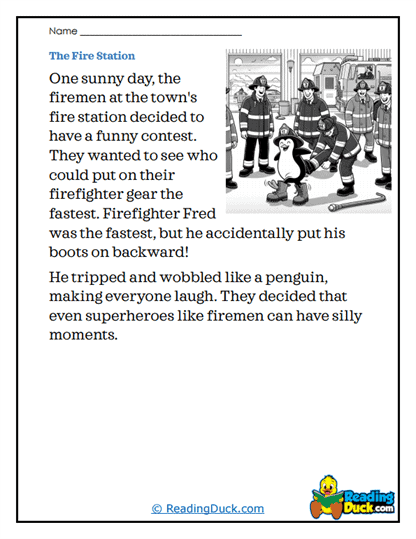
When it's time to look at character traits and motivations, the worksheets get a little deeper-emotionally and intellectually. In passages like Astronaut Adventures, Firehouse Fumbles, and Polar Bear Skater, readers meet characters who take risks, solve problems, and learn from their quirky mistakes. Through careful questioning and thoughtful reflection, students begin to understand not just what characters do, but why they do it. These worksheets spark empathy and insight, encouraging students to see beyond the words into the hearts of the characters themselves.
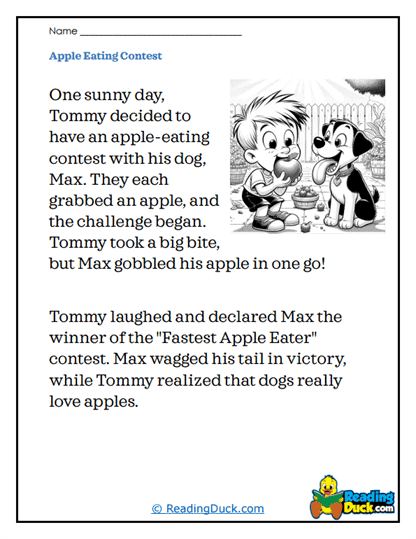
And for those wonderful wildcards that don't fit neatly into a box-hello, Apple-Eating Contest, Snail Race, Lollipop Laughter, Silly Motorbikes, and Xylophone Fun-we say: embrace the delightful randomness! These passages support general comprehension skills while tickling funny bones and keeping readers engaged with imaginative scenarios and joyful twists. Whether it's a slow-and-steady snail showdown or a musical mishap involving xylophones, students are developing fluency, focus, and a genuine love of reading. And really, isn't that the sweetest prize of all?
Accompanying each story are visually stimulating illustrations that not only capture the students' imaginations but also aid in their understanding of the narrative. These pictures provide context and support the text, making it easier for young readers to follow along and comprehend the story. The illustrations are carefully chosen to complement the storyline, offering visual cues that help students decode and understand the written words.
Why Reading Comprehension Skills Are Important to 1st Grade Students
The Grade 1 Reading Comprehension Worksheets offer numerous benefits to young learners, making them an indispensable resource in early childhood education. One of the primary advantages is the enhancement of reading comprehension skills, which are critical for academic success and lifelong learning.
Reading comprehension is essential for first graders as it enables them to understand and interpret the text they read. It goes beyond simply decoding words and involves grasping the meaning, context, and nuances of the text.
1. Development of Cognitive Abilities
By engaging with the comprehension questions, students learn to process information, make connections, and recall details from the stories. This practice sharpens their cognitive abilities and lays a strong foundation for more advanced reading and academic skills in the future.
2. Critical Thinking Skills
The multiple-choice questions help develop critical thinking and decision-making skills. Students learn to analyze the text, consider different options, and choose the most appropriate answer. This process encourages them to think logically and improves their ability to make informed choices, which are valuable skills both inside and outside the classroom.
3. Enhancing Writing Skills
The short answer questions promote deeper engagement with the text. By writing their own responses, students practice articulating their thoughts and ideas clearly and coherently. This format encourages them to think more critically about what they have read and express their understanding in their own words, fostering a deeper connection with the text and enhancing their writing skills.
4. Fine Motor Skills Practice
Moreover, the worksheets support the development of fine motor skills through activities such as writing answers to the short answer questions. These tasks involve hand-eye coordination and the ability to control writing instruments, which are essential skills for young children.
5. Improving Learning Abilities
Reading comprehension is a vital skill for first graders as it promotes critical thinking and enhances their ability to learn across all subjects. It encourages children to think about the text, ask questions, and seek answers, fostering a deeper understanding of the material. Additionally, the worksheets help improve focus and attention to detail, as students must pay close attention to the content to answer the questions accurately.
Make sure to bookmark our website now.
Enjoy all our free reading worksheets.
Our materials adhere to the principles of the Science of Reading.