About Our Grade 4 Reading Comprehension Worksheets
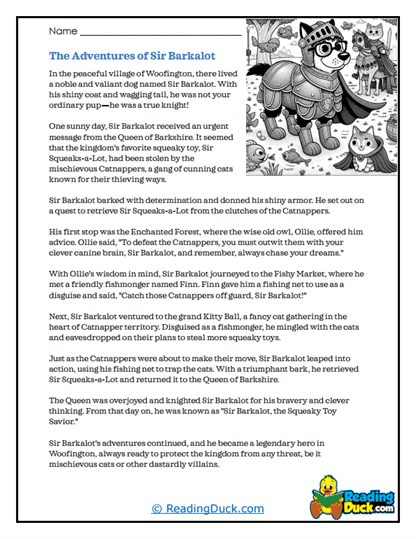
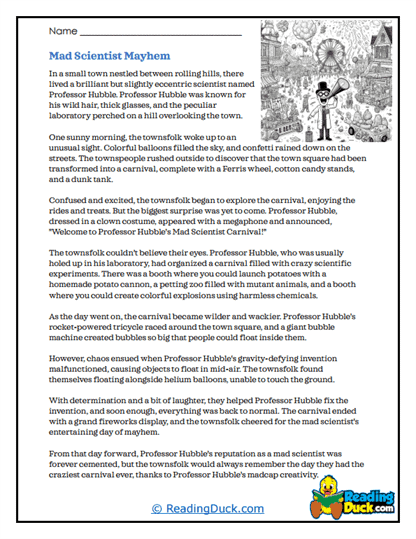
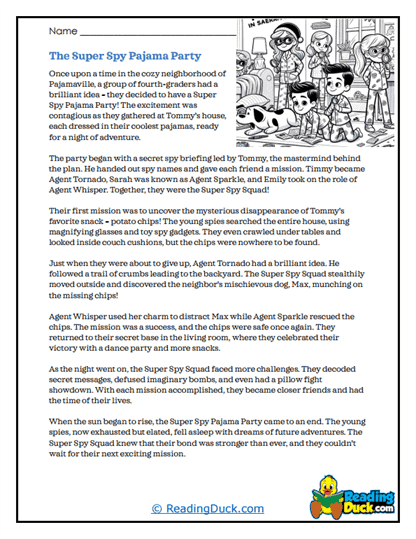
At the heart of every great story is a reader asking, "What happens next?" That curiosity is exactly what our Grade 4 Reading Comprehension Worksheets are built to nurture-while sneakily sharpening those all-important inference and prediction skills. Whether students are tailing a mythical beast in Barkalot's Brave Quest, peering behind lab doors in Mad Scientist's Carnival, or whispering codewords in Spy Pajama Mission, each narrative invites them to step into the unknown, gather textual clues, and make smart guesses about character motives, story outcomes, and mysterious plot twists. Reading becomes a treasure hunt-and fourth graders, it turns out, make rather brilliant detectives.
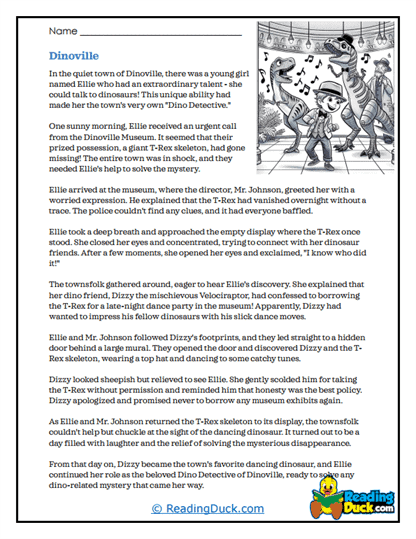
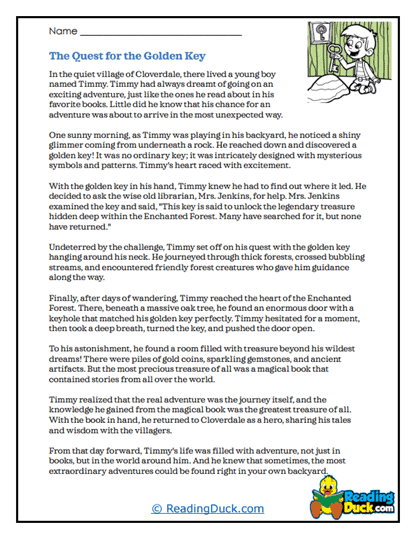
Speaking of hidden gems, discerning main ideas and supporting details takes center stage in thrilling adventures like Dino Detective, Golden Key Quest, and Hidden Waterfall Quest. These passages are more than page-turners-they're comprehension clinics in disguise. As students plunge into ancient ruins, search shimmering forests, and crack century-old codes, they're asked to pause, distill, and organize the heart of each story. This skill-separating the essential from the extra-is key for readers ready to move from decoding text to truly owning it.
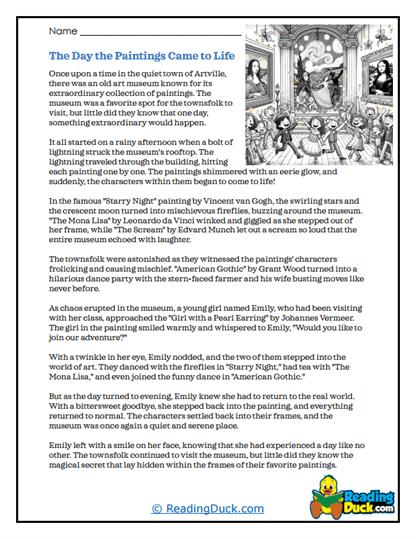
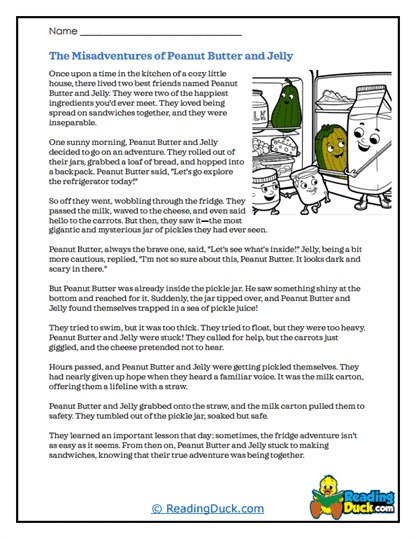
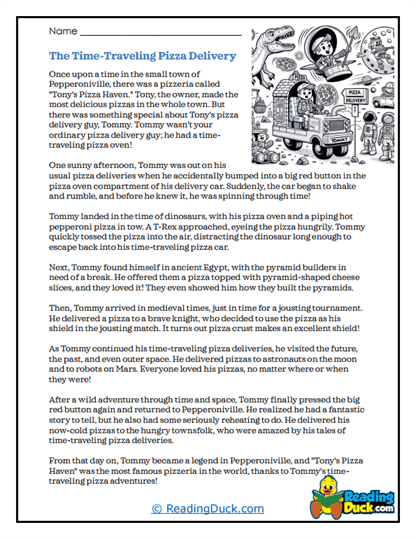
Of course, not every passage is steeped in mystery-some serve up slices of life with a side of semantic spice. In lively stories such as Peanut Butter Chaos, Pizza Time Traveler, and Painting Adventures, students flex their understanding of vocabulary and context clues. Unfamiliar words pop up like popcorn in a microwave, but thanks to clever textual hints and rich narrative scaffolding, readers are never left in the dark. Instead, they get to "play detective" with language-guessing meanings, affirming synonyms, and basking in that "aha!" moment when it all clicks.
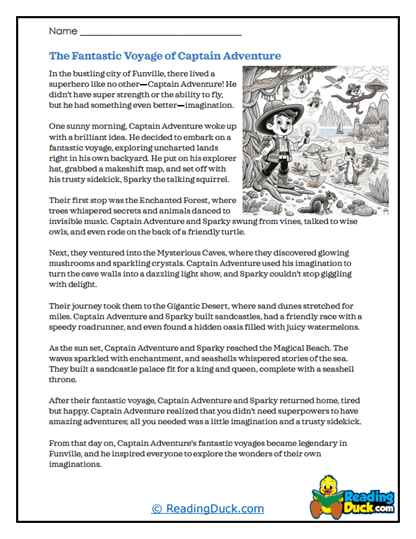
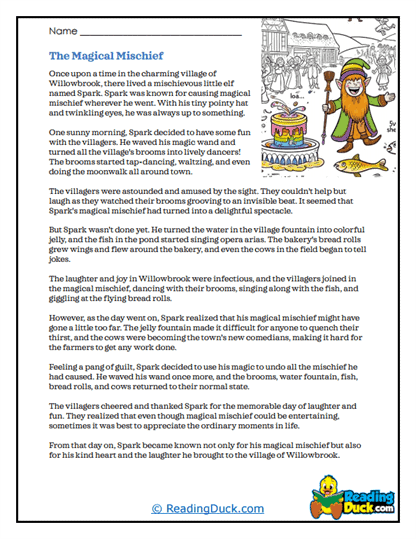
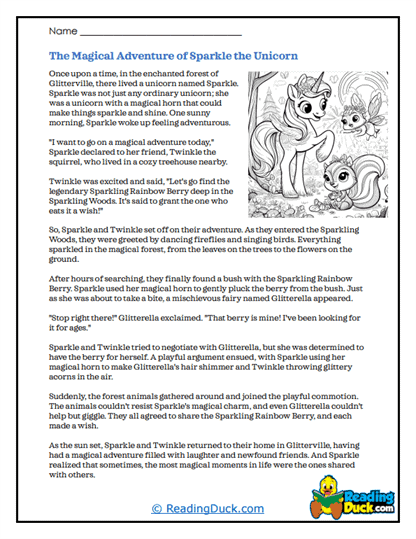
Then there's the author's purpose: the "why" behind the words. Worksheets like Captain's Imagination, Unicorn's Magical Journey, and Magical Mischief tug at students' hearts and imaginations while inviting them to analyze intent. Is the author trying to entertain, inform, or gently inspire some deeper thinking? These stories do all three-and they offer rich opportunities for kids to discuss tone, perspective, and how a sprinkle of humor or a flash of fantasy can change the entire flavor of a piece.
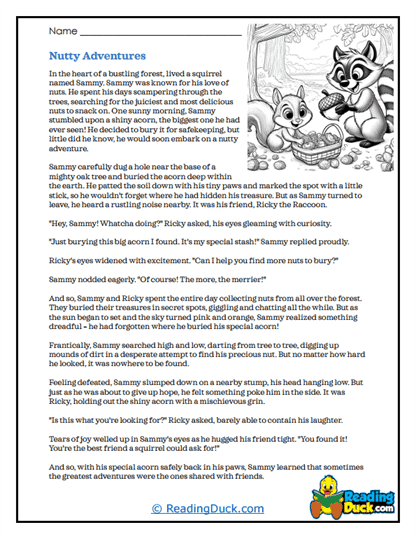
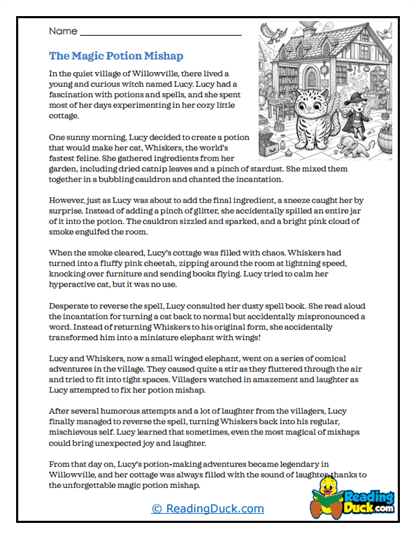
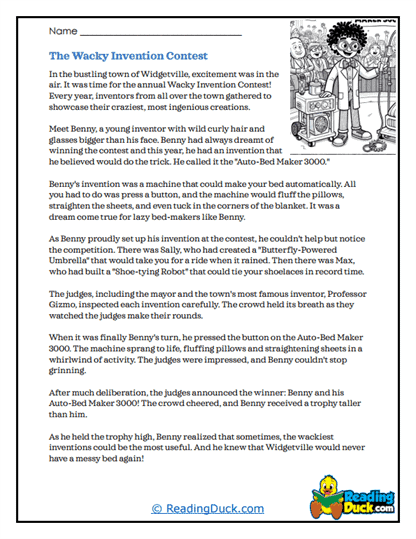
Text structure and sequencing also get their time to shine with whimsical challenges like Wacky Invention Contest, Potion Mishap Mayhem, and Nutty Treasure Hunt. These are the kinds of stories where things go delightfully wrong-and readers must piece together cause and effect, identify problem-solution patterns, and track narrative arcs from beginning to end. It's a joyful way to strengthen organizational thinking and story-mapping skills-critical tools for readers transitioning from simple texts to richer, more layered literature.
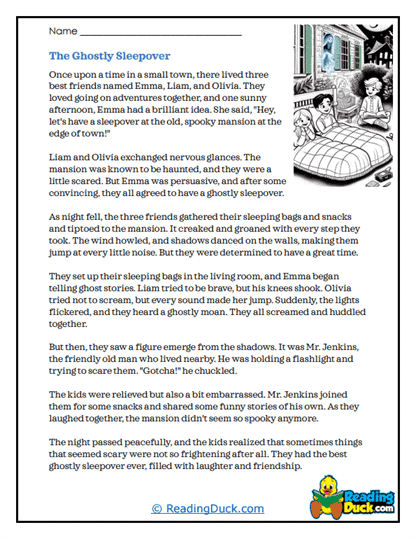
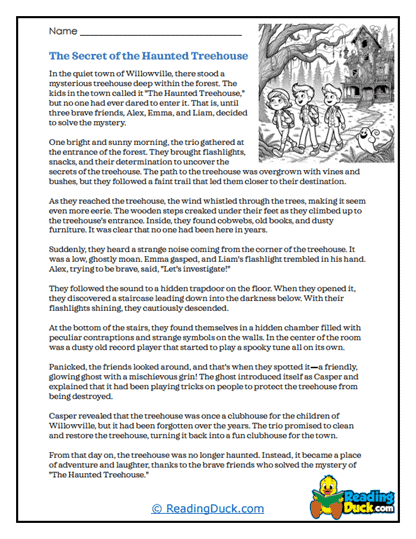
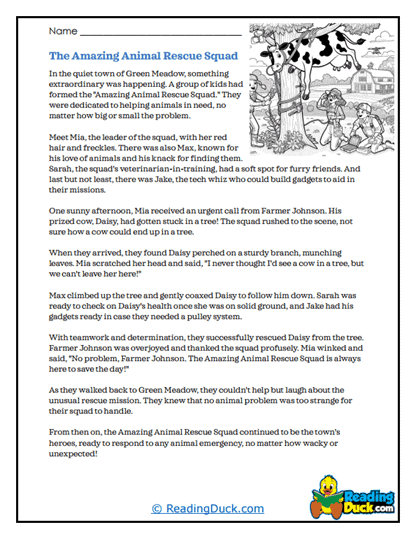
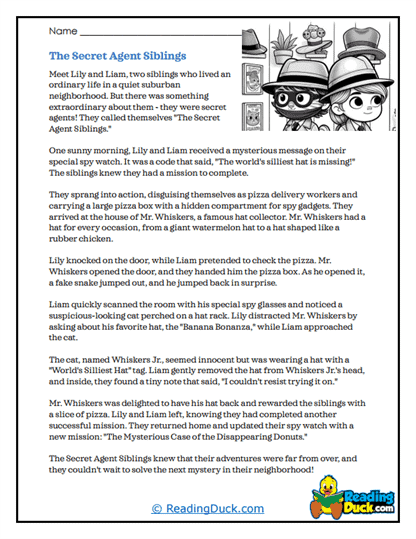
And let's not forget the power of point of view and character analysis-beautifully woven into tales like Secret Agent Siblings, Haunted Treehouse Mystery, Rescue Squad Heroes, and Ghostly Sleepover Fun. Through vivid internal monologues, shifting perspectives, and dynamic character interactions, students explore how narrators shape the story and how relationships drive the plot. It's empathy-building in action-and a subtle masterclass in perspective-taking that lingers long after the last paragraph.
By fourth grade, students are expected to dive deeper than ever into text-not just reading fluently, but reading wisely. According to the U.S. Common Core Standards for Grade 4, learners should be able to quote accurately from a text, explain what the text says explicitly and implicitly, and compare themes, settings, and characters across genres. This collection of comprehension worksheets aligns beautifully with those goals, offering rigorous, engaging practice that meets kids where they are and nudges them forward. With original, high-interest stories and thoughtfully crafted questions, these resources make the leap from learning to loving reading feel like an adventure-and honestly, what more could we ask for?
What Is The Typical Reading Curriculum For 4th Grade?
The typical fourth-grade reading curriculum is a bridge between learning to read and reading to learn. At this stage, students are expected to move beyond basic decoding and begin navigating texts with greater independence and purpose. Stories become more layered, vocabulary more nuanced, and themes more complex. This shift requires students to engage in deeper thinking-questioning characters' motives, making inferences about cause and effect, and drawing connections between ideas. Reading becomes less about simply following a narrative and more about understanding its structure, purpose, and meaning. Students are also introduced to a broader range of genres, including realistic fiction, historical fiction, biographies, myths, poetry, and informational texts-each one offering new opportunities to apply and expand comprehension strategies.
As readers mature in fourth grade, so does the sophistication of the curriculum's focus on critical thinking. Instruction often centers on helping students identify main ideas and supporting details, determine the meaning of unfamiliar words using context, and analyze how individual sentences or paragraphs contribute to the overall structure of a text. Discussions in class might include comparing points of view, analyzing the role of dialogue in character development, or evaluating the use of figurative language. At this level, students are encouraged not just to answer questions, but to justify their answers with evidence from the text. Reading becomes a conversation between the student and the page-an ongoing process of interpretation, reflection, and refinement.
Equally important is the emotional and social dimension of reading in fourth grade. Literature becomes a mirror and a window-reflecting students' own experiences while exposing them to perspectives different from their own. Through stories that explore friendship, bravery, curiosity, and moral dilemmas, students are invited to think about the world beyond their immediate environment. In many classrooms, reading is paired with writing, discussion, and collaboration, creating a dynamic, multi-sensory learning environment. The typical curriculum balances structure with freedom, fostering not only skilled readers but thoughtful ones-children who are learning to think for themselves, ask questions that matter, and find joy in the written word.
Make sure to bookmark our website now.
Enjoy all our free reading worksheets.
Our materials adhere to the principles of the Science of Reading.