About Our Grade 5 Reading Comprehension Worksheets
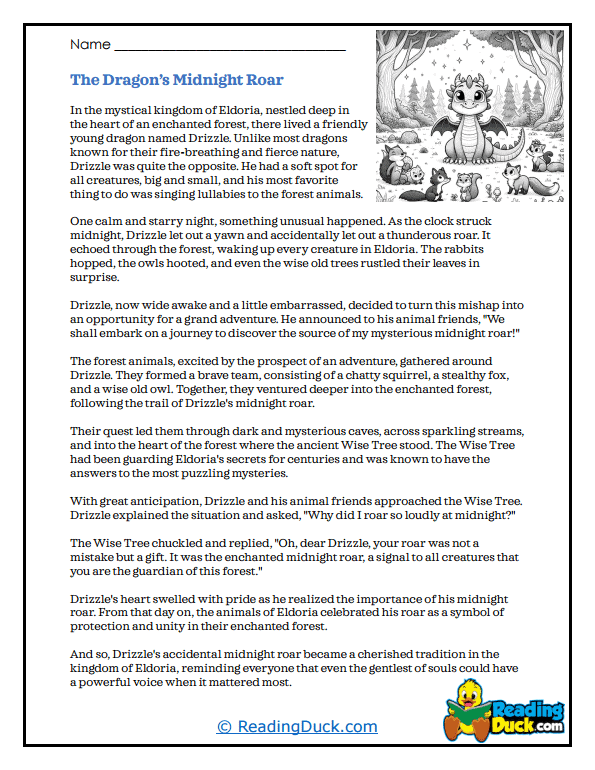
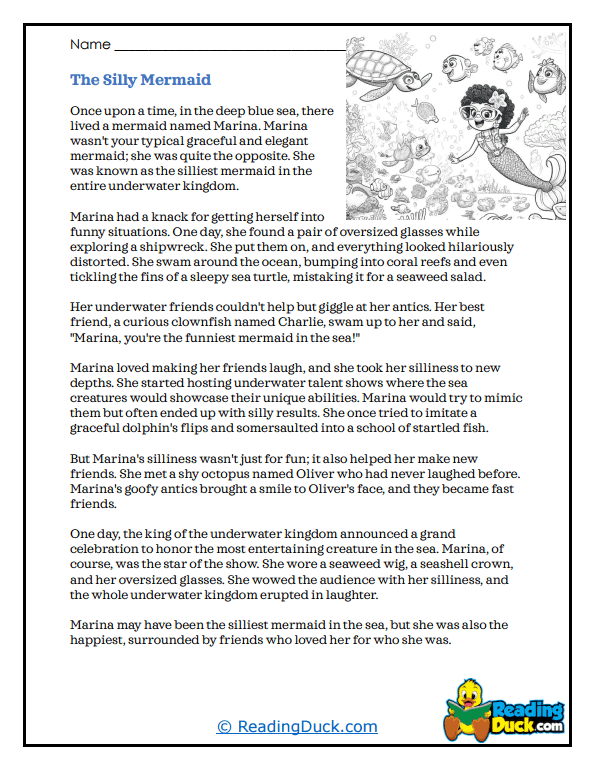
Step into the whimsical, mysterious, and utterly enchanting world of our 5th Grade Reading Comprehension Worksheets, where dragons roar at midnight, squirrels join the circus, and ninjas sneak across the moonlit rooftops-yes, it's reading instruction, but with a magical twist. These passages aren't just crafted to improve test scores (though they'll certainly help with that); they're designed to spark joy, ignite imagination, and nurture the kind of critical thinking that outlasts any standardized assessment. With titles like "Midnight Dragon Roar" and "The Silly Mermaid," these stories don't whisper at reluctant readers-they roar, laugh, and leap off the page.
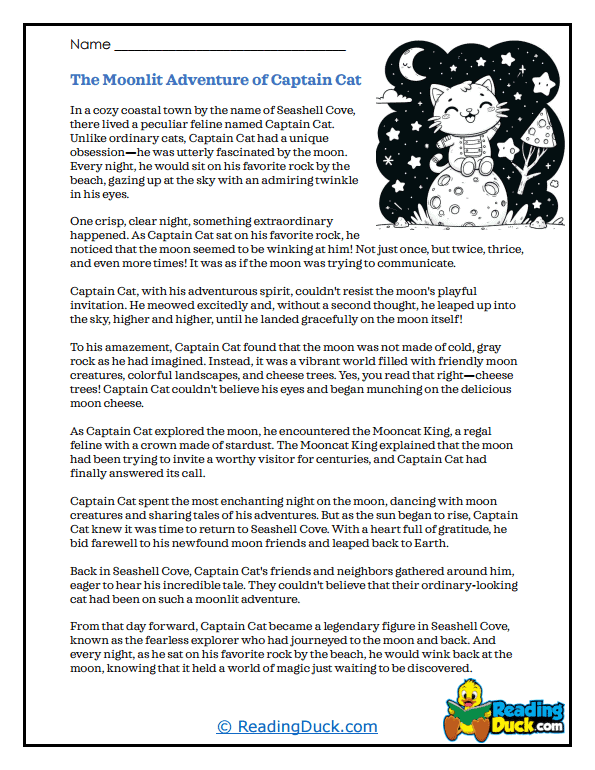
Let's talk inference and prediction, those glorious mental gymnastics that ask our students to connect dots, detect the unspoken, and finish a narrative thread before it's neatly tied in a bow. Worksheets like "Whispering Shadows Mystery", "Mooncat Quest", and "The Lost Key to Wonderland" wrap students in riddles and mysteries that demand close reading and sharper-than-ever reasoning. Whether it's solving the mystery of a disappearing artifact or following a feline on a nighttime quest, readers are nudged to predict outcomes, read between lines, and become literary detectives in their own right.
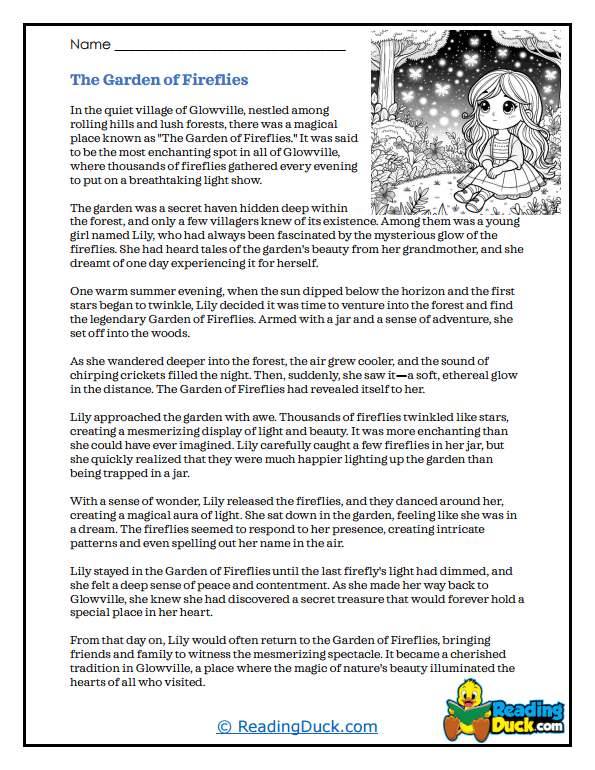
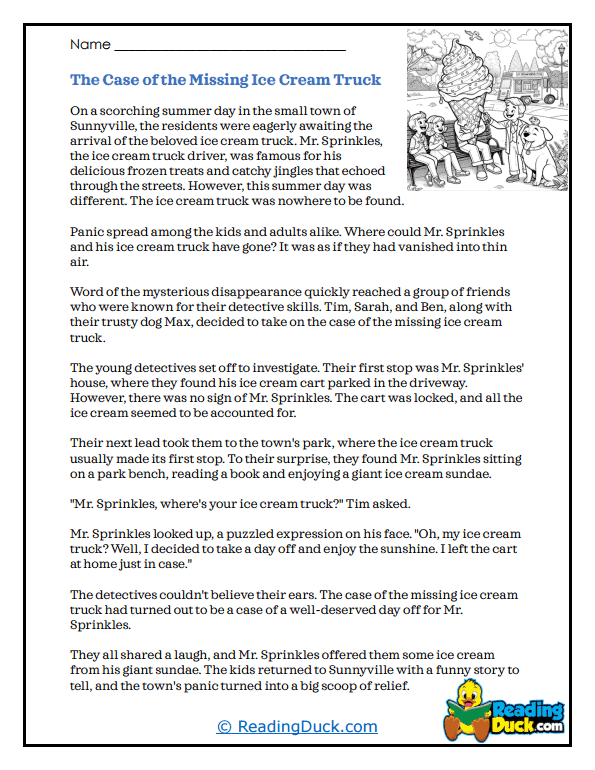
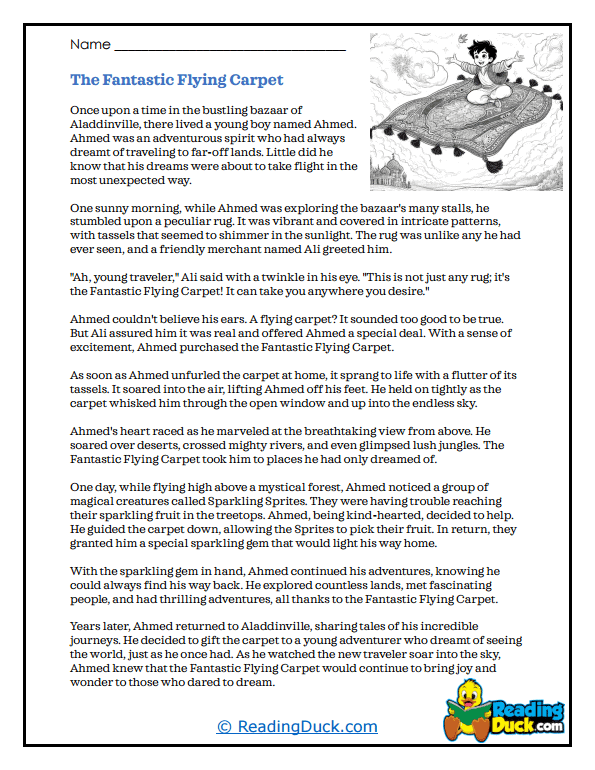
For those practicing main idea and supporting details (that oh-so-satisfying a-ha moment when everything clicks into place), titles like "Garden of Fireflies", "Missing Ice Cream Truck", and "The Fantastic Flying Carpet" offer passages rich with layered meaning. These aren't simple stories; they're kaleidoscopic moments of wonder that challenge students to distill what really matters-whether it's the importance of community, the thrill of adventure, or the simple beauty of a warm summer night and glowing insects. Readers learn to zoom out, identify central messages, and hold onto essential details like breadcrumbs through an enchanted forest.
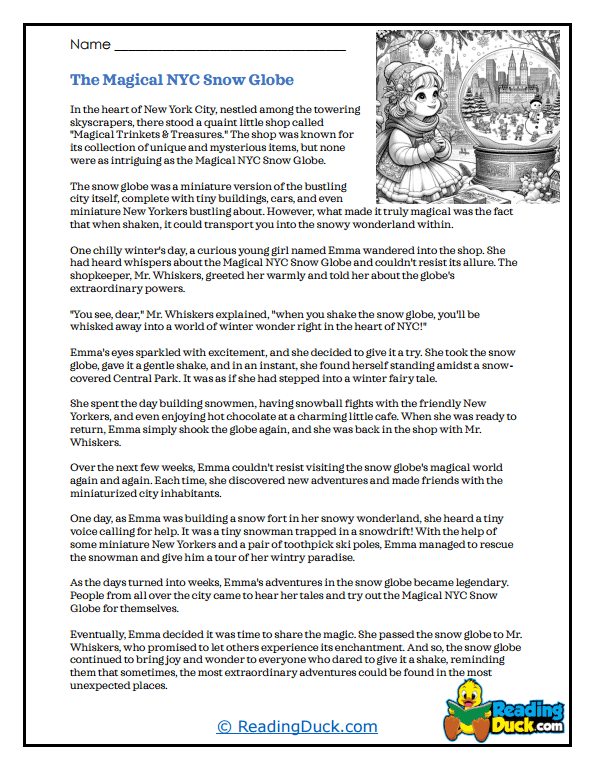
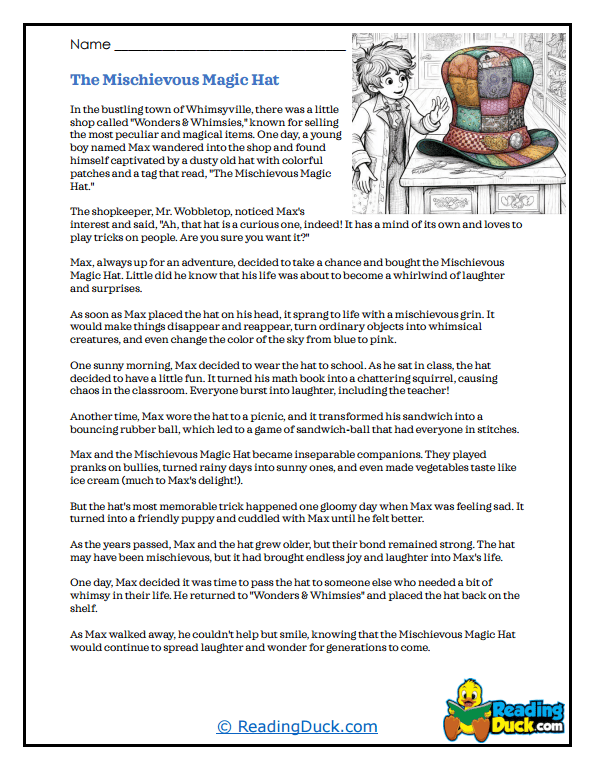
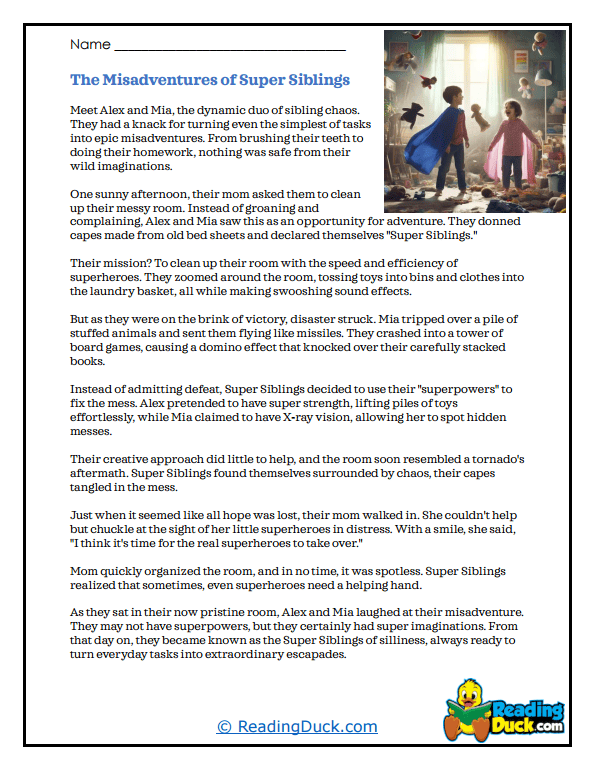
Vocabulary acquisition gets a spark of magic through worksheets such as "Mischievous Magic Hat", "Magical NYC Snow Globe", and "Super Sibling Chaos"-each brimming with playful, vivid language just begging to be unpacked. These worksheets are like treasure hunts where students encounter new words in bold, fantastical contexts, then decode, interpret, and even embody them. It's context clue practice with a side of giggles and gasps, and yes, sometimes a sibling or two turned superhero.
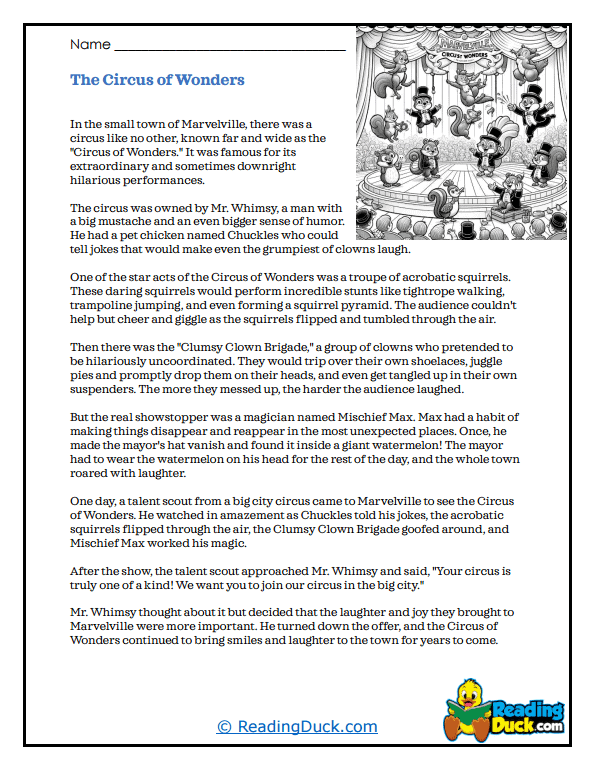
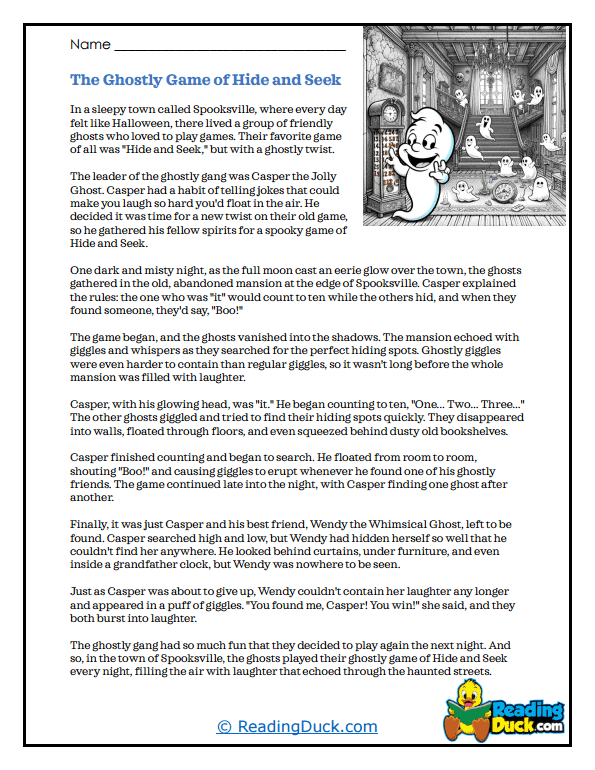
Author's purpose and point of view find a home in stories like "Principal for a Day", "The Ghostly Game of Hide and Seek", and "Squirrel Circus"-each one crafted to stretch young minds in how stories are told, why they're told, and how perspective changes everything. Students begin to consider the narrator's voice, the mood, the underlying tone. Is the ghost really as spooky as they sound? Would you run a school differently if given the principal's keys? These stories train students to question, evaluate, and empathize through text.
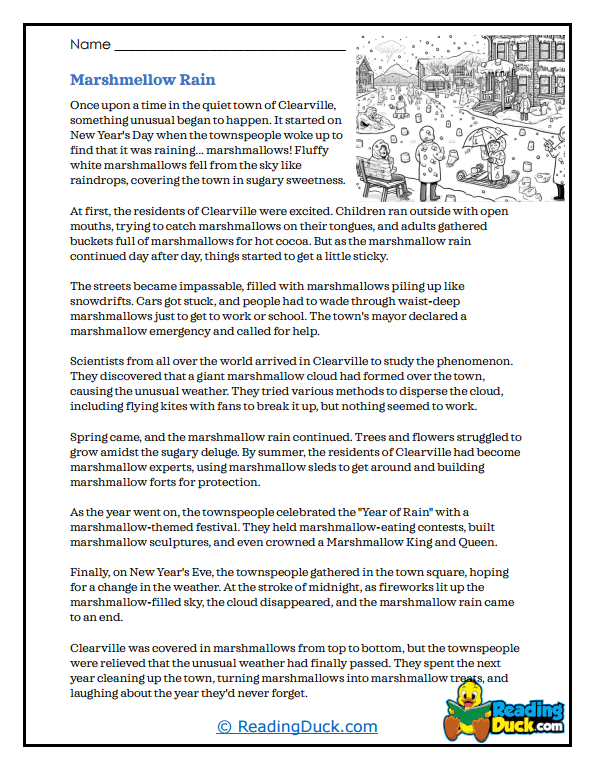
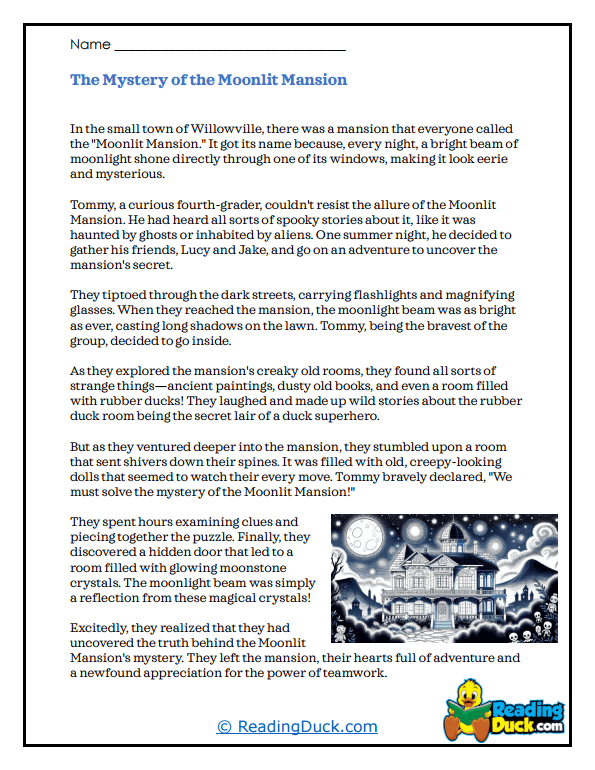
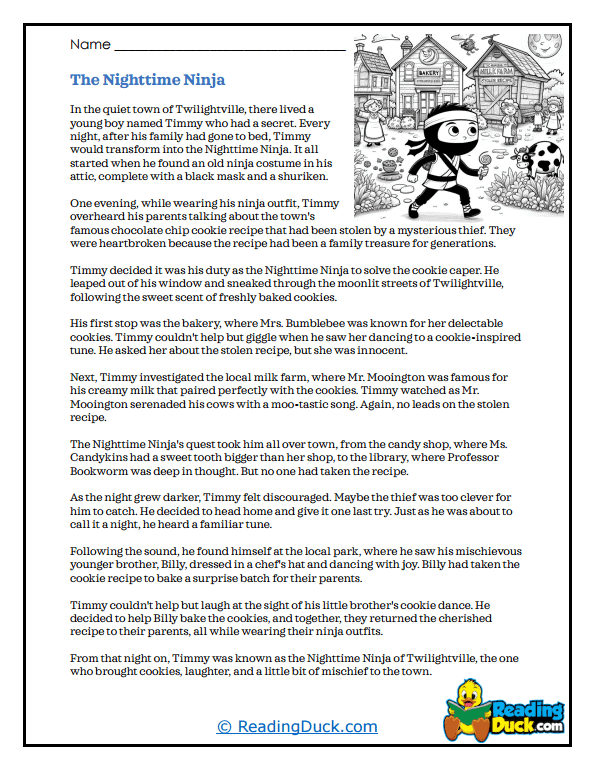
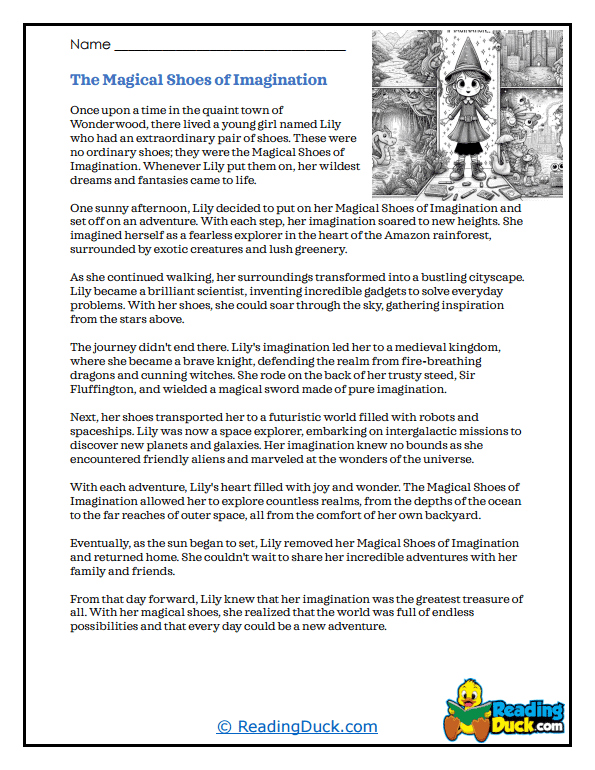
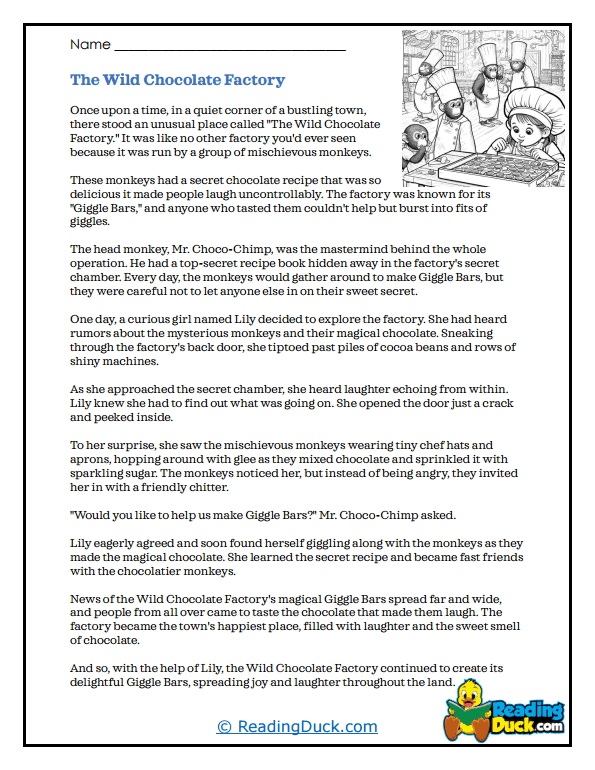
And then there are those gems that defy one category and instead teach comprehension through sheer literary charm-like "Moonlit Mansion Mystery", "Shoes of Imagination", "Wild Chocolate Factory", "Nighttime Ninja", and "Marshmallow Rain". These passages dip into multiple skills-structure, tone, figurative language-inviting students to enjoy the story while flexing their comprehension muscles in every direction. They're the kind of texts that make even the most skeptical reader pause and say, "Okay, that was actually pretty cool."
At the 5th grade level, reading comprehension takes a bold leap from the what to the why and how. According to U.S. Common Core State Standards (CCSS.ELA-LITERACY.RL.5.1 through RL.5.10), students are expected to quote accurately from a text, determine themes, compare characters and settings, and integrate information across genres. In this crucial bridge year before middle school, fluency is paired with deep comprehension-students aren't just reading more complex texts, they're expected to analyze them. Our worksheet collection aligns seamlessly with these goals, building capacity in everything from inferencing and theme identification to vocabulary analysis and critical response. But beyond standards, these worksheets celebrate what reading is meant to be: a portal, a playground, and, perhaps most importantly, a powerful way to see the world-and oneself-more clearly.
What Is The Typical Reading Curriculum For 5th Grade?
The typical reading curriculum for 5th grade is designed to guide students through the crucial transition from "learning to read" to "reading to learn." At this stage, children are expected to read with greater fluency, accuracy, and purpose, diving into texts that are richer in content and more layered in structure. The focus shifts toward deeper comprehension-analyzing characters' motivations, identifying themes, drawing inferences, and citing textual evidence to support interpretations. Students engage with a wide range of genres, from historical fiction and fantasy to biographies and persuasive texts, developing the ability to navigate different forms of literature and nonfiction with both curiosity and critical thought.
Fifth-grade readers are also encouraged to interact with texts on a more personal and analytical level. This means not only understanding what happens in a story, but why it happens, and how the author's choices-whether it's a specific word, tone, or structure-shape the reader's experience. They learn to summarize complex ideas, compare texts with similar themes or topics, and consider multiple perspectives within and across stories. Reading discussions become more nuanced and evidence-based, often leading to written responses that require synthesis of ideas rather than simple recall. It's a year that demands more-but also one that rewards readers with deeper insight and a growing sense of intellectual independence.
Equally important is the emotional and imaginative space that reading in 5th grade offers. Students begin to see books not only as academic tools but as mirrors, windows, and doors-mirrors reflecting their own lives, windows into others' experiences, and doors to imaginative realms beyond their own. A thoughtfully structured reading curriculum honors this dual purpose: to develop strong, capable readers and to nurture thoughtful, empathetic individuals. When instruction balances skill-building with wonder, students don't just learn to comprehend texts-they begin to comprehend the world.
Make sure to bookmark our website now.
Enjoy all our free reading worksheets.
Our materials adhere to the principles of the Science of Reading.