About Our Grade 7 Reading Comprehension Worksheets
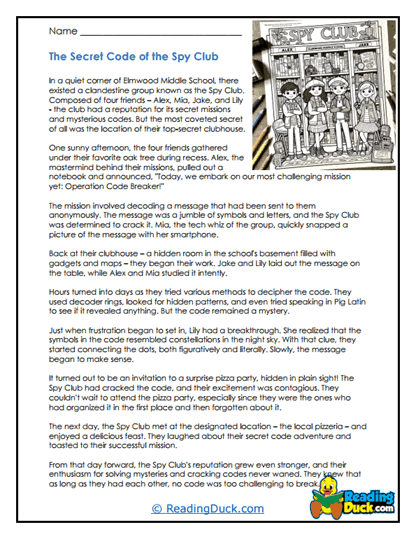
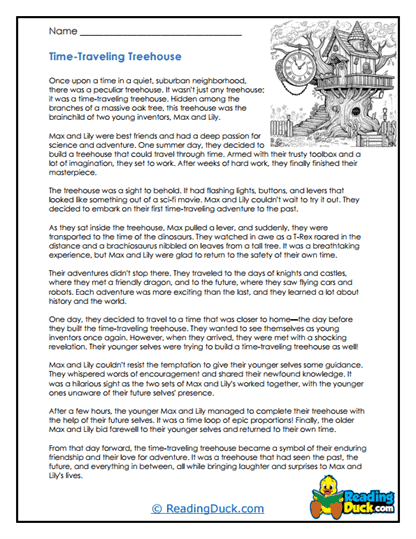
If seventh grade readers love anything, it's a good mystery, a twist ending, and maybe-just maybe-a sneaky vocabulary word that turns up wearing a disguise. The Grade 7 Reading Comprehension Worksheets from Reading Duck bring just that: suspense, sass, and seriously strong skill-building. With titles like Detective X, Spy Secrets, and the delightfully disorienting Temporal Treehouse, students are pulled into gripping narratives where clues must be pieced together and predictions sharpened. These stories do more than entertain-they cultivate inference-making, pattern recognition, and that all-important skill: reading between the lines (because we all know that's where the drama lives).
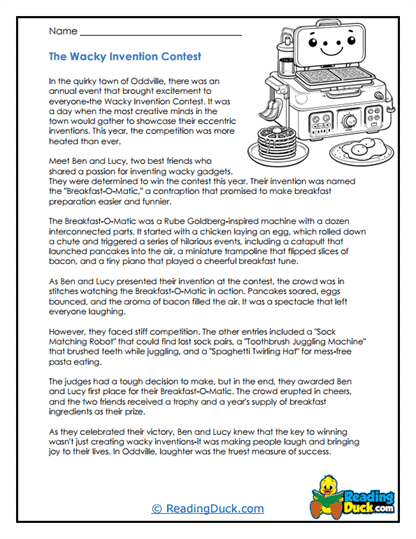
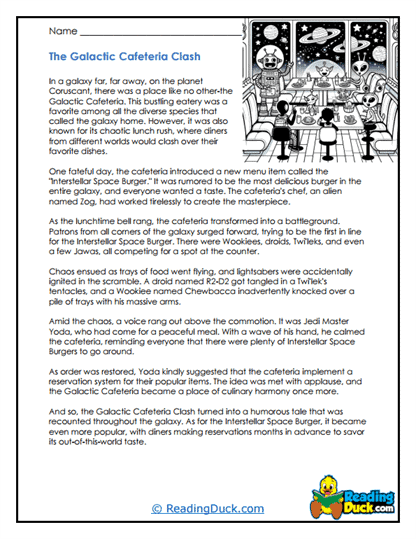
But not every quest is about solving crimes-some are about solving breakfast. In reading passages like Breakfast Battle, Space Food Fight, and Candy Quest, students are invited to explore conflict and resolution through a culinary lens (with just a pinch of absurdity). These humor-infused tales reinforce students' ability to identify main ideas and supporting details, guiding them to uncover what really matters-even when chaos is served with a side of syrup. Bonus: teachers might find themselves chuckling as they grade.
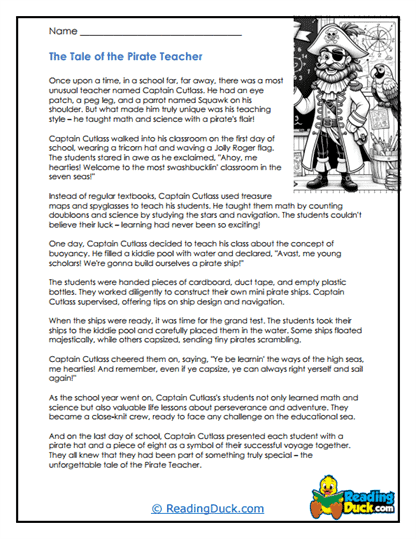
Of course, authors don't just tell stories-they make choices. And our young readers are learning to spot them. Worksheets like Author's Purpose (disguised cleverly in Virtual Victory, Swashbuckling School, and Chatty Critter) help students analyze why a story was told the way it was. Are we being informed, entertained, persuaded... or just lovingly trolled by a talking animal? These passages push students to consider tone, point of view, and narrative technique, all while keeping their interest piqued with quirky scenarios and sly humor.
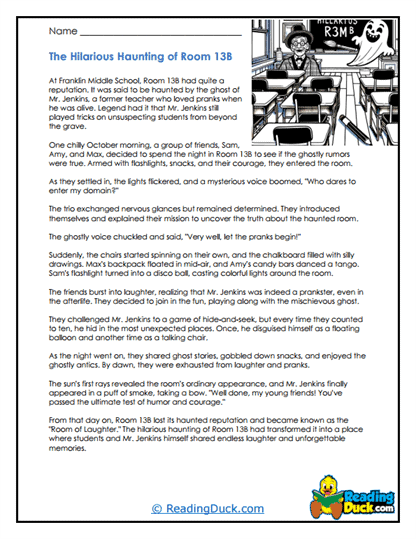
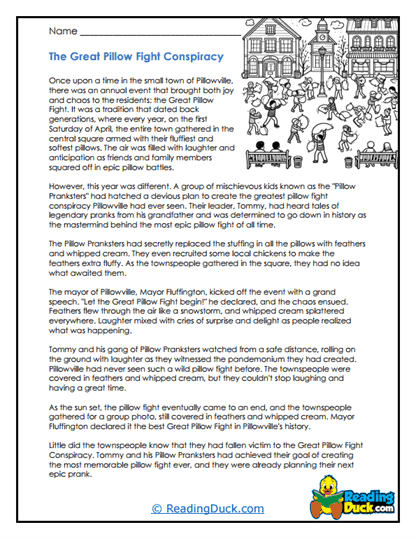
Context clues take center stage in richly descriptive tales like Pillow Plot, Ghostly Pranks, and School Spook, where students decode unfamiliar words using surrounding hints. These stories are dripping with figurative language, character nuance, and playful misdirection-perfect training grounds for vocabulary acquisition that feels more like decoding treasure maps than memorizing definitions. Because in middle school, new words land better when they come wrapped in mischief and mystery.
Meanwhile, higher-order thinking comes alive in passages like Victory Valley, Observatory Treasure, and Galactic Quest, which encourage students to synthesize information, compare texts, and draw conclusions that go far beyond surface comprehension. The themes here-triumph, discovery, curiosity-mirror what's happening cognitively: students moving from concrete thinkers to analytical readers who evaluate texts and challenge assumptions. It's like a mental workout, but with aliens and hidden vaults.
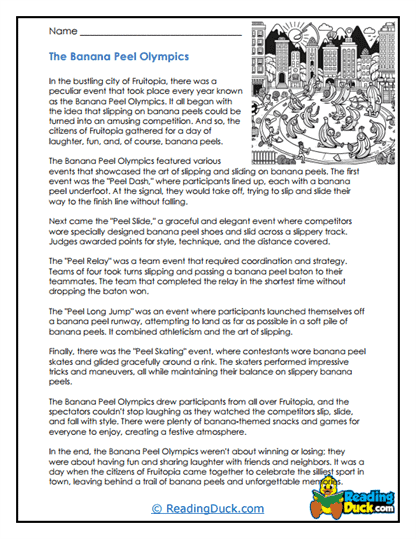
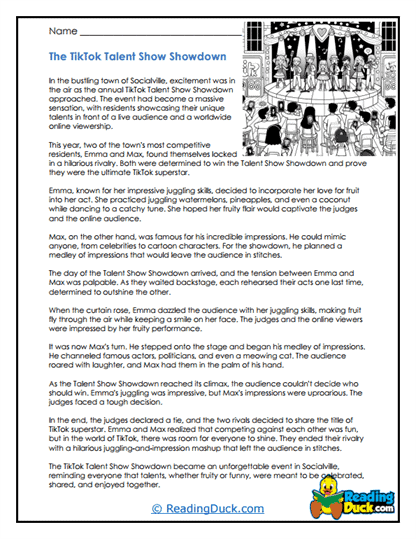
Even the most reluctant readers are lured in with tech-driven tales like Console Quest, TikTok Talent, and Slippery Games. These passages aren't just relatable-they're built for analyzing media, evaluating bias, and considering the impact of digital spaces on identity and communication. As students engage with these topics, they refine comprehension skills through modern dilemmas, learning that reading deeply applies to both fiction and the digital world swirling around them-a skill that becomes even more vital as they transition into the high-stakes digital nuances of Grade 8 reading comprehension.
At the heart of Grade 7 reading instruction lies a beautiful balancing act: students must refine fluency while diving deeper into complex texts, building stamina, critical thinking, and a more mature grasp of literary devices. According to Common Core State Standards, seventh graders should be able to cite textual evidence, determine themes, analyze character development, and trace argument structure-all while navigating more abstract, multi-layered narratives. These worksheets support that progression with scaffolded, high-interest stories that sneak rigorous practice into delightfully odd plots. By weaving together literal and inferential questions, vocabulary in context, and a diverse array of genres, this collection doesn't just teach comprehension-it teaches confidence.
What Is The Typical Reading Curriculum For 7th Grade?
By seventh grade, students are expected to move beyond the mechanics of reading and into a space of deeper understanding, reflection, and critique. The typical reading curriculum at this level introduces increasingly complex texts-both fiction and nonfiction-that demand analytical thinking, emotional awareness, and a growing command of literary and informational structures. Instead of simply identifying what happened in a story, seventh graders explore why it happened, how the author constructed the experience, and what themes are being communicated beneath the surface. This is a time when students begin to recognize that reading is not just decoding language-it's deciphering perspective, purpose, and layers of meaning.
Literary exploration in seventh grade often includes a range of genres: contemporary realistic fiction, historical fiction, fantasy, poetry, and drama. Alongside these narratives, students are also introduced to rich nonfiction materials such as memoirs, biographies, essays, editorials, and articles. The goal is to expose them to a spectrum of voices and styles so they learn to compare viewpoints, evaluate sources, and distinguish fact from opinion. In this way, the curriculum fosters not only comprehension but also curiosity-inviting students to make connections across texts, time periods, and cultures. Reading becomes a dynamic act of engagement rather than a passive intake of information.
At this stage, vocabulary development becomes more nuanced. Students learn to interpret unfamiliar words using context, morphology, and tone, while also appreciating the power of diction and connotation in shaping meaning. They're taught to identify figurative language, rhetorical devices, and structural techniques, all of which deepen their understanding of how texts are crafted to influence readers. Just as importantly, the curriculum encourages students to become independent thinkers-readers who ask questions, wrestle with ambiguity, and support their interpretations with evidence. In essence, seventh grade reading isn't just about understanding what a text says-it's about discovering how it works, why it matters, and what it sparks in the mind of a thoughtful reader.
Make sure to bookmark our website now.
Enjoy all our free reading worksheets.
Our materials adhere to the principles of the Science of Reading.