About Our Grade 6 Reading Comprehension Worksheets
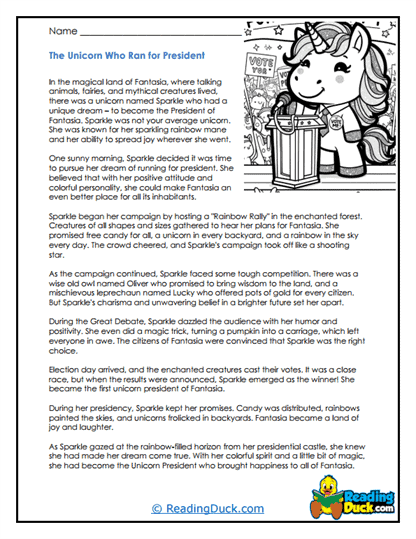
At Grade 6, students begin to peek behind the curtain of the narrative-to question motives, to spot foreshadowing, and, yes, to deeply regret underestimating the sentient toilet. In this lively, logic-tickling collection of Grade 6 Reading Comprehension Worksheets, students are invited to do more than just read-they are called to investigate. Whether they're decoding the chaos of a birthday party gone airborne in Bouncy House Chaos or trying to figure out why The Unicorn Who Ran for President has a surprisingly convincing platform on glitter reform, these passages are packed with opportunities to practice inference and prediction. Readers must use textual clues, connect the dots, and take intellectual risks-perfect training for future literary detectives.
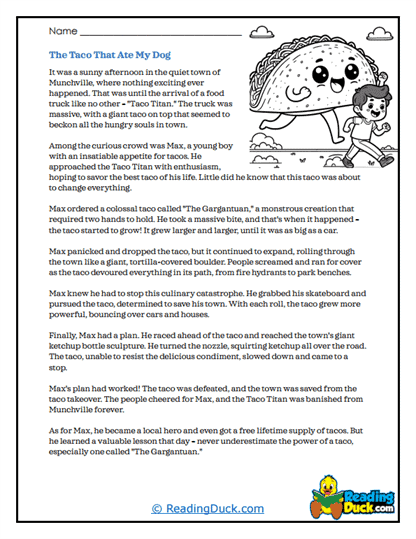
Main idea and supporting detail take center stage in a series of delightfully absurd yet insightfully structured tales. In Cafeteria Showdown, the classic food fight gets a strategic twist, prompting students to tease apart the story's central conflict and trace its culinary consequences. With The Taco That Ate My Dog, students learn that absurdity doesn't preclude structure-every wild event in the passage serves a narrative purpose. Similarly, Monster Showdown challenges readers to determine the core message behind layers of monster mayhem. These stories demand not just comprehension but organization, helping students categorize events, understand plot arcs, and distinguish essential information from fun, flavorful fluff.
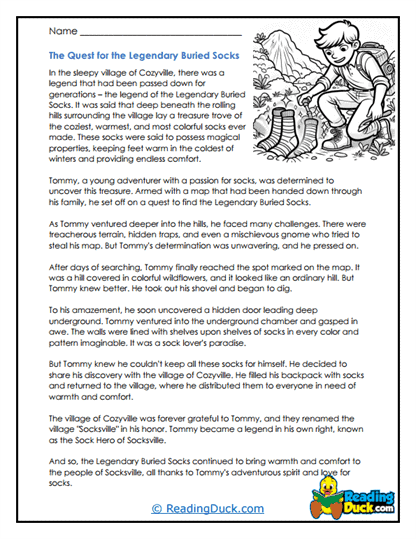
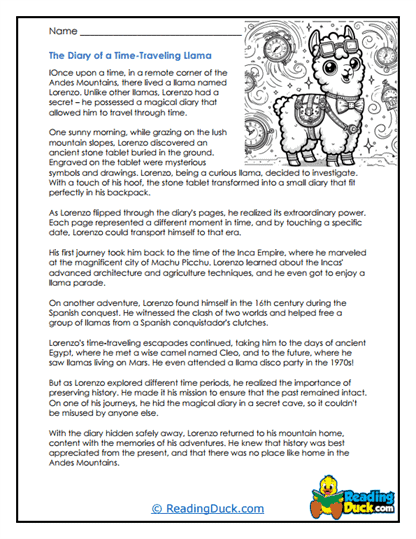
Character motivation and perspective step into the spotlight with worksheets like Captain Underwear's Silly Mission and The Diary of a Time-Traveling Llama. Here, students must ask: What drives these peculiar protagonists? Why does a llama time-travel, and is that a healthy coping mechanism? In Sock Search, emotional nuance comes wrapped in a seemingly mundane mystery, while Homework Havoc reveals deeper truths about procrastination and panic. These worksheets invite students to consider character development, internal conflict, and how point of view shapes our understanding of events-skills critical to both reading and empathy.
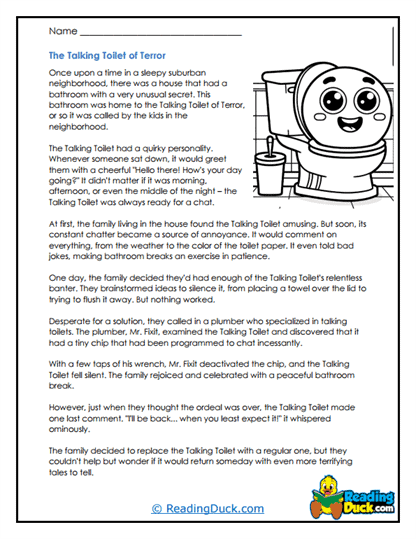
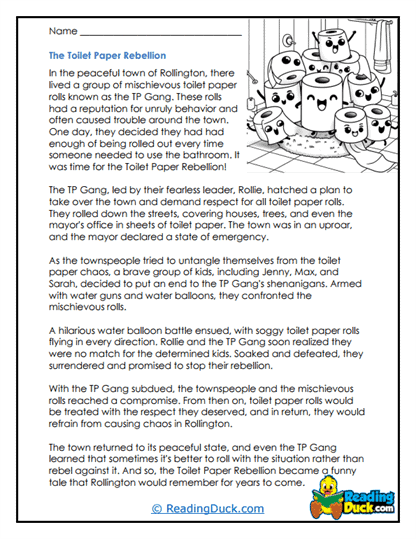
For those ready to wrestle with vocabulary and context clues, there's plenty to unpack. Chocolate Fountain Quest delivers a rich blend of descriptive language and delectable mayhem, encouraging students to derive meaning from deliciously unfamiliar words. In Milkshake Mayhem, the stakes are high and the adjectives are higher, making it the perfect passage for sharpening decoding skills. The tongue-in-cheek terror of The Talking Toilet of Terror and The Toilet Paper Rebellion ensures that learning new words feels more like a comic adventure than a chore, while also reinforcing morphological patterns and figurative language.
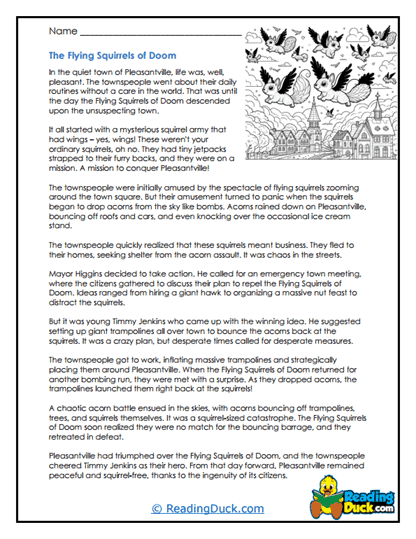
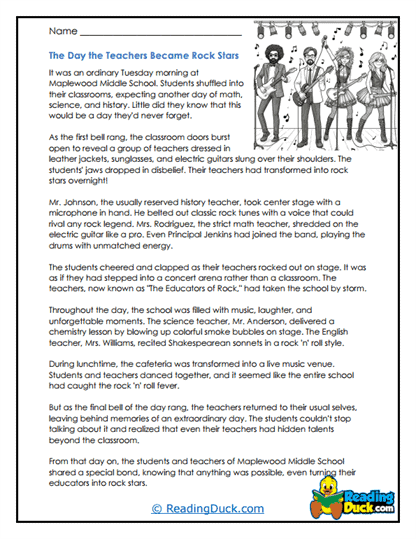
Author's purpose and text structure get their moment of glory in narrative masterpieces like The Day the Teachers Became Rock Stars and Wacky World of Waffle Wizards. These stories, while lighthearted on the surface, invite critical thinking about why stories are told the way they are. Is the author trying to entertain, inform, persuade-or all three while juggling metaphors and marshmallows? In Inflated Sneakers Adventure and Squirrel Invasion, students learn to analyze tone, structure, and pacing, developing a more nuanced eye for the craft behind the storytelling. They'll come to understand that writing is a series of choices-and reading is the art of noticing them.
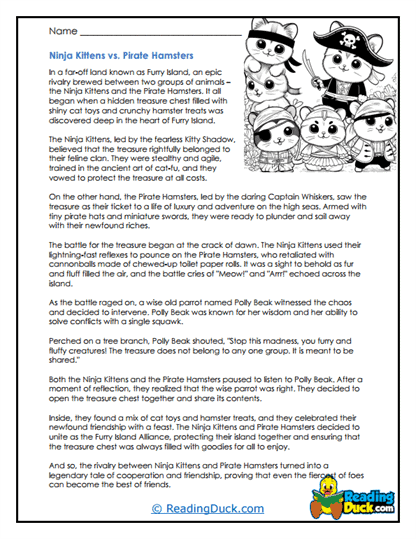
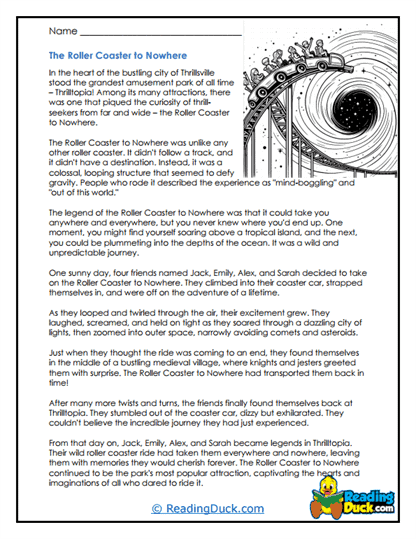
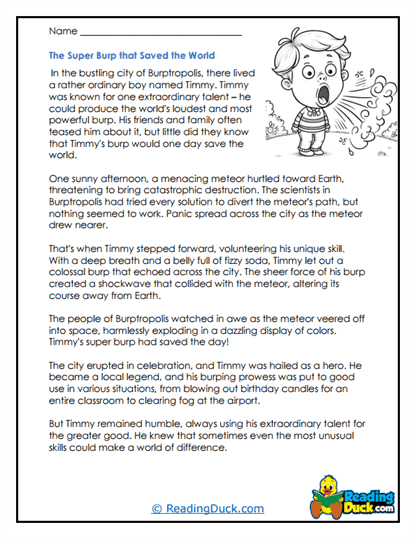
Some worksheets serve up a multi-skill feast. The Roller Coaster to Nowhere and The Super Burp That Saved the World blend humor with tension, metaphor with literal mishap, all while demanding fluency, synthesis, and reflection. Ninja Kittens vs. Pirate Hamsters offers a wild ride that stretches imagination and comprehension simultaneously, reinforcing how humor, conflict, and creativity coexist in strong writing. These passages embody complex text interactions and push students to consider theme, tone, and deeper meaning, all beneath a glorious layer of narrative sparkle.
By Grade 6, reading instruction pivots from "learning to read" to "reading to learn"-but let's not pretend the fun ends there. This is the year students refine their ability to interpret complex texts, identify abstract themes, draw connections across genres, and defend their interpretations with textual evidence. Aligned with Common Core standards for literature and informational texts (RI.6 and RL.6 series), these worksheets provide structured, scaffolded practice that strengthens analytical reasoning, reading stamina, and expressive vocabulary. They're more than just quirky stories; they're purpose-built pathways to literary maturity-disguised, of course, as a llama's travel diary or a sentient snack's rise to power. Because in sixth grade, comprehension isn't just academic-it's magical.
What Is The Typical Reading Curriculum For 6th Grade?
The typical 6th grade reading curriculum is designed to bridge the gap between elementary reading foundations and the more analytical demands of middle school. At this level, students are expected to move beyond surface-level understanding and begin engaging with texts in deeper, more meaningful ways. This includes identifying themes that evolve over a story, analyzing how characters change in response to conflict, and tracking how an author builds tension or conveys a message through tone and structure. Literature becomes a playground for interpretation, as students learn to support their opinions with direct evidence and begin to explore the subtlety of figurative language, point of view, and symbolism.
Equally important is the growing emphasis on nonfiction. Sixth graders are introduced to a wide variety of informational texts-from science articles to historical essays-and are taught how to identify main ideas, distinguish between fact and opinion, and evaluate the reliability of sources. Reading instruction includes strategies for understanding cause and effect, comparing multiple accounts of the same event, and synthesizing information from different formats such as charts, graphs, and written prose. These skills prepare students not only for academic success but also for the critical reading required in everyday life as informed citizens.
At the heart of all this instruction is a deepening love for language and ideas. The 6th grade reading experience is as much about curiosity and exploration as it is about technical skills. Teachers often encourage wide reading across genres-mythology, fantasy, historical fiction, biography-to help students discover what resonates with them. Book discussions, creative responses, and reflective journaling give space for personal connection and voice. In this way, the curriculum supports not only comprehension and analysis but also the formation of independent thinkers who read to understand the world and their place in it.
Make sure to bookmark our website now.
Enjoy all our free reading worksheets.
Our materials adhere to the principles of the Science of Reading.