About Our Grade 2 Reading Comprehension Worksheets
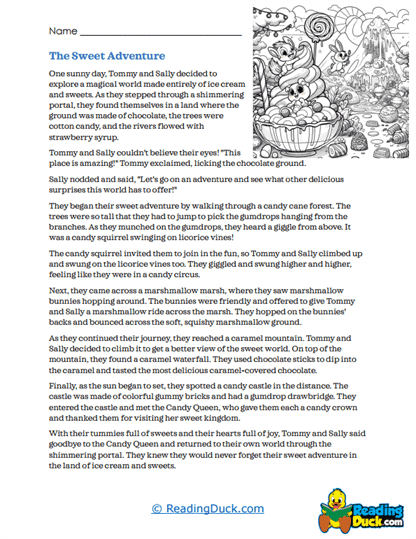
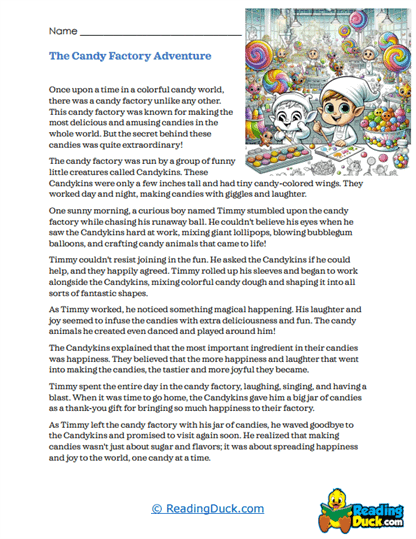
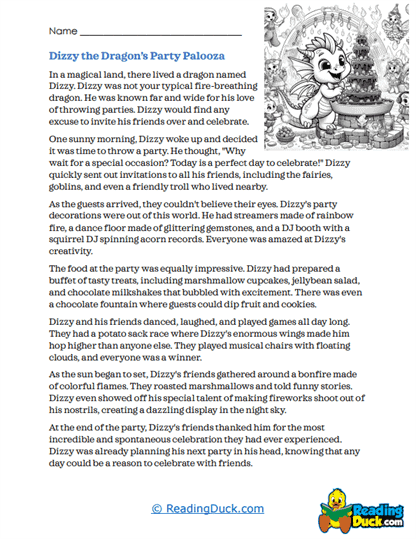
In the vivid world of second-grade imaginations, comprehension is not just a skill-it's a superpower. The Grade 2 Reading Comprehension Worksheets on Reading Duck invite students into whimsical adventures where they decode meaning, make predictions, and practice empathy-all while giggling at magic turtles and mistaken cafeteria identities. Stories like A Portal, Candyland Adventure, and Dragon Party challenge students to infer what might happen next, sharpening those all-important prediction skills. These worksheets sneak in higher-order thinking under the guise of fun, pulling students into twists, turns, and time-bending surprises that make every inference a thrill ride.
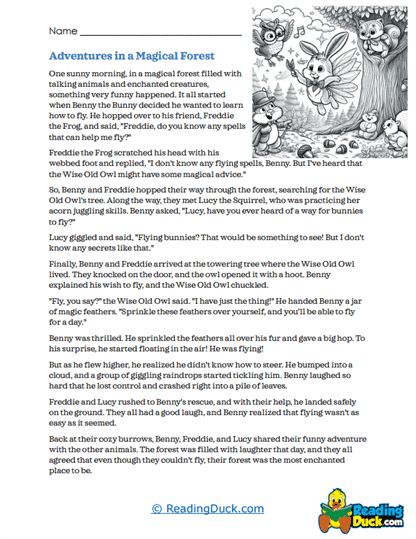
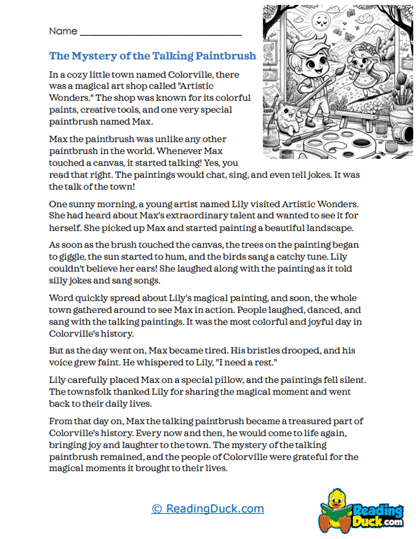
Supporting students in identifying the main idea and key details, titles such as A Cookie Giant, Forest Flight, and Magical Paintbrush help young readers zoom out from the glitter and gumdrops to grasp the core of each story. They learn to anchor their understanding by distinguishing what's central from what's just a colorful detail. The narratives may be filled with flying turtles and magic nuts, but the teaching is grounded in comprehension fundamentals. Teachers will appreciate how easily these engaging tales translate into deep discussion about what really matters in a text-and what's just there for sparkle.
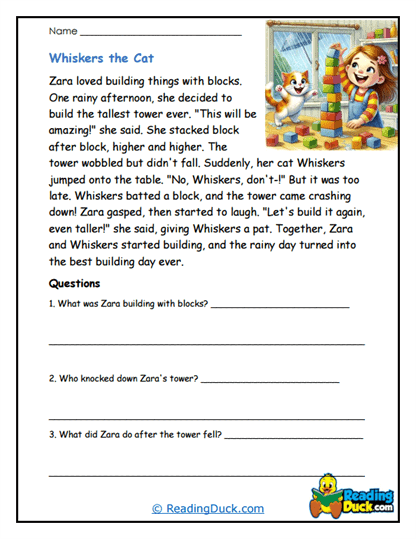
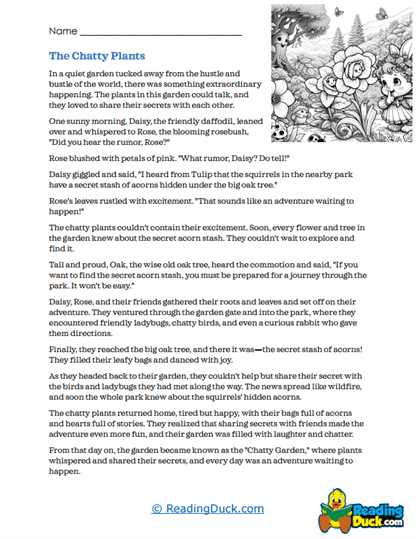
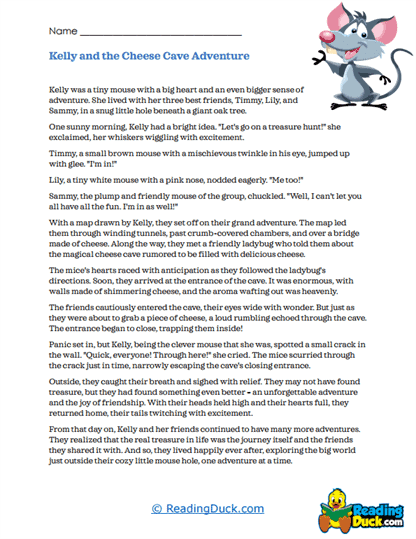
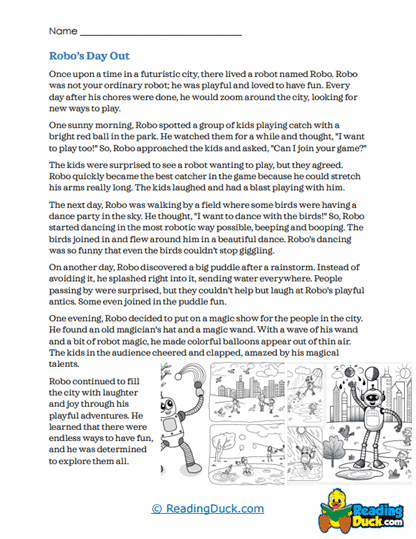
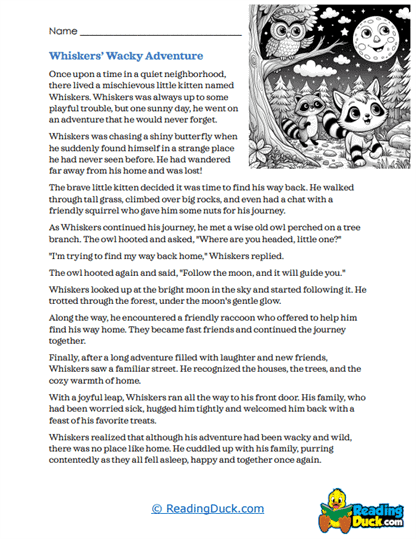
For vocabulary growth and context clue mastery, enter the enchanting realms of Cheesy Quest, Robot's Fun Day, and Whiskers' Wacky Journey. These passages are rich with playful and unusual word choices that require students to pause, think, and flex their linguistic muscles. Each worksheet is an opportunity to unlock new language in meaningful, memorable ways-turning unfamiliar words into treasures unearthed on their literacy journey. When students encounter "a glowing nut" or "a chatty garden," they're not just reading-they're reasoning, decoding, and delighting in discovery.
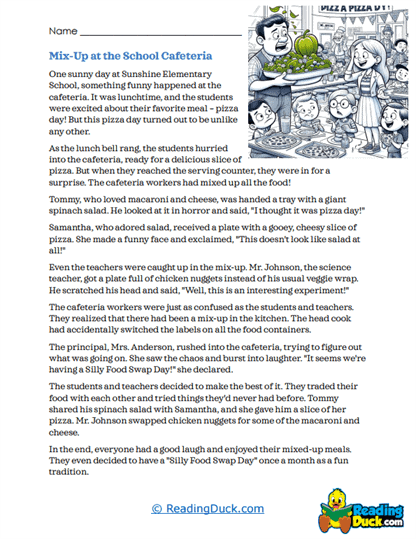
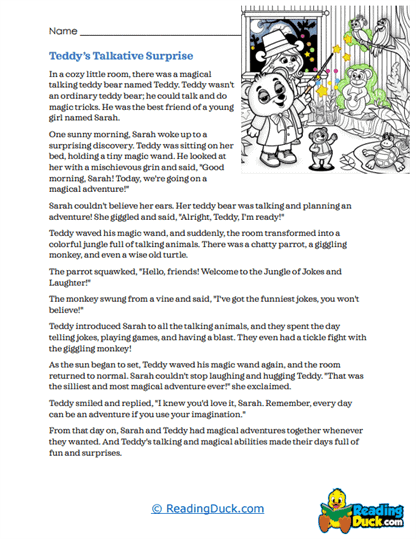
Author's purpose and text structure come to the forefront in worksheets like Cafeteria Mix-Up, Ocean Treasures, and Teddy's Magic Surprise, where readers must consider why the author wrote the story and how its parts fit together. Was this written to entertain, inform, or maybe teach a sneaky little lesson about teamwork or patience? Students begin to peel back the curtain of storytelling, developing an eye for intention and construction-not just content. These activities sow the seeds for literary analysis in its earliest (and most magical) form.
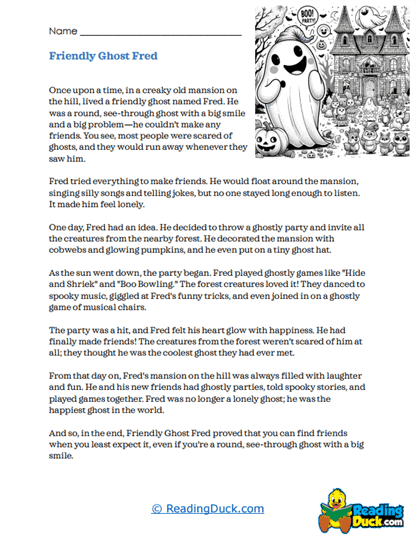
Character understanding and emotional insight find their playground in titles such as Friendly Ghost, A Grandma Treasure, and Alien Helper, where readers are gently nudged to think beyond the words on the page. What does a character feel? Why did they act that way? Would I have done the same? These stories stir the social-emotional side of comprehension, helping young readers connect not just to plotlines but to personalities. It's empathy-building in disguise-and an essential leap in cognitive and emotional maturity.
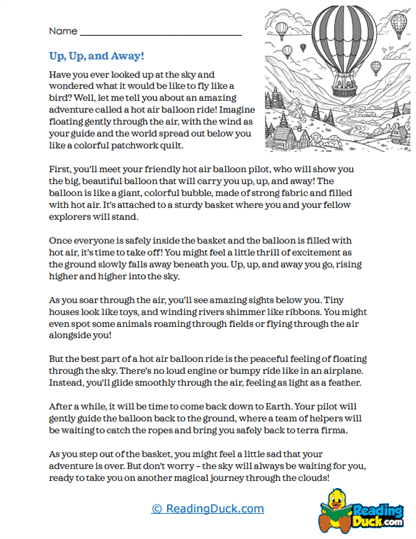
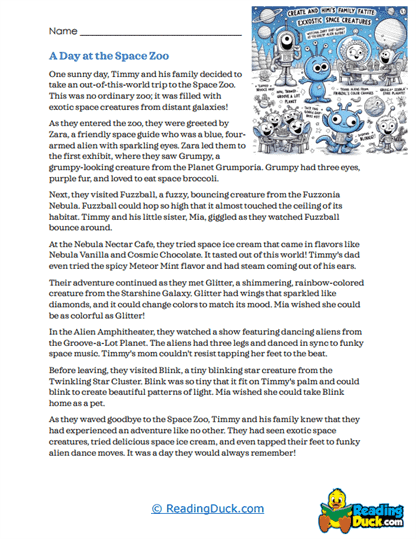
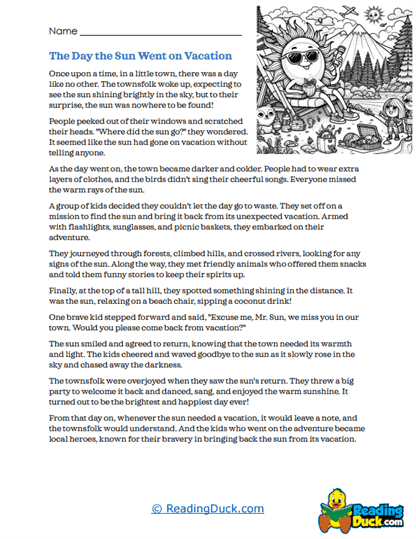
To round it all out, the collection also offers practice in sequencing, summarizing, and comparing through wild, hilarious, and occasionally heartwarming adventures like Sun's Day Off, Space Zoo Escape, and Balloon Journey. Whether tracking a turtle's shortcut or a super cape's surprise, students learn to retell stories clearly, understand cause and effect, and reflect on the journey as a whole. And yes, sometimes that journey includes a squirrel with a pencil that may or may not be magical. The point is: learning sticks when it's wrapped in wonder.
Grade 2 is a transformative year for readers. At this stage, students move from simply decoding words to engaging deeply with meaning-a shift recognized in the Common Core State Standards through goals like identifying the central message (RL.2.2), describing how characters respond to events (RL.2.3), and using text features to locate information (RI.2.5). These worksheets are meticulously designed to support those benchmarks, weaving rigorous skill-building into enchanting tales that hold students' attention. With an emphasis on fluency, comprehension, vocabulary development, and textual analysis, this collection is more than just worksheets-it's a scaffold toward lifelong literacy, lovingly disguised as a Candyland of creativity.
What Is the Typical Reading Curriculum For 2nd Grade?
The typical reading curriculum for second grade is designed as a bridge between learning to read and reading to learn. At this stage, students have largely acquired basic decoding skills and are now expected to expand their fluency and comprehension. Fluency becomes a major focus-not just in terms of speed, but with expression, accuracy, and understanding. Instruction encourages students to read independently, aloud, and in small groups, with increasing complexity in sentence structures and vocabulary. Teachers support this development by modeling fluent reading, guiding repeated readings, and helping students self-monitor for understanding, thus laying the foundation for lifelong reading habits.
Comprehension instruction in second grade grows more sophisticated, moving beyond simple recall to interpreting character motivation, identifying the main idea and supporting details, and making inferences based on textual evidence. Students are taught to ask and answer who, what, when, where, why, and how questions (aligned with Common Core RL.2.1), as well as to compare and contrast story elements (RL.2.9). There's a strong push toward identifying text structures and understanding the author's purpose across genres, including fiction, informational texts, and poetry. Vocabulary is also a central pillar of the curriculum, with emphasis placed on using context clues, understanding word relationships, and exploring shades of meaning-all of which support deeper comprehension and verbal expression.
The curriculum is also infused with social-emotional learning and cross-curricular content. Reading becomes a tool for understanding the world, not just stories. Informational texts on science, history, and the arts expand students' knowledge base while developing skills such as identifying key facts and explaining connections between ideas (RI.2.3, RI.2.8). Second-grade reading instruction is not one-dimensional-it integrates thinking, feeling, and discovery. The best programs balance guided reading, shared texts, independent practice, and targeted interventions to ensure all students are growing. By the end of second grade, the goal is for students to approach reading with confidence, curiosity, and the comprehension strategies they need to thrive in higher grades.
Make sure to bookmark our website now.
Enjoy all our free reading worksheets.
Our materials adhere to the principles of the Science of Reading.