About Our Grade 10 Reading Comprehension Worksheets
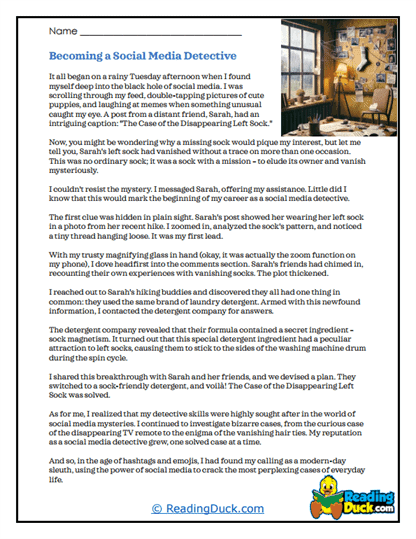
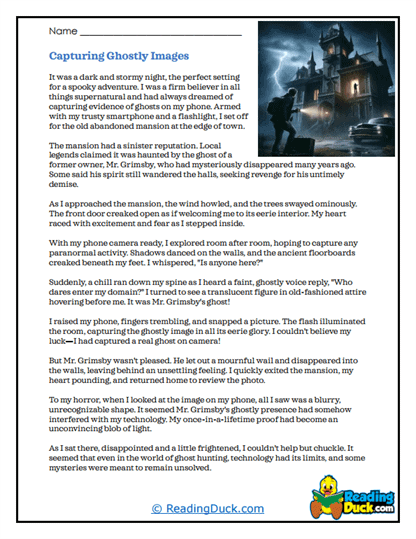
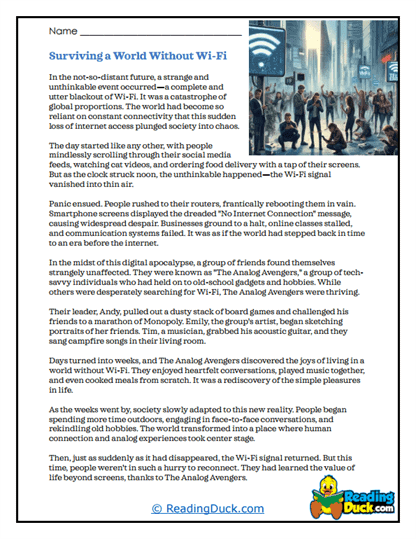
Get ready to meet a batch of reading comprehension worksheets that aren't just standards-aligned-they're secretly planning a party in your curriculum binder. This Grade 10 collection is equal parts imaginative adventure, skillful textual analysis, and pedagogical precision. Students will sharpen inferencing skills as they unravel the twisty truths hidden in Detective Online, Haunted Snapshot, and Wi-Fi Apocalypse-each passage a cleverly masked training ground for drawing conclusions, reading between the lines, and questioning what they think they know. These stories don't just develop inference-they encourage students to become literary detectives with a knack for catching subtle cues and suspicious details lurking in plain sight.
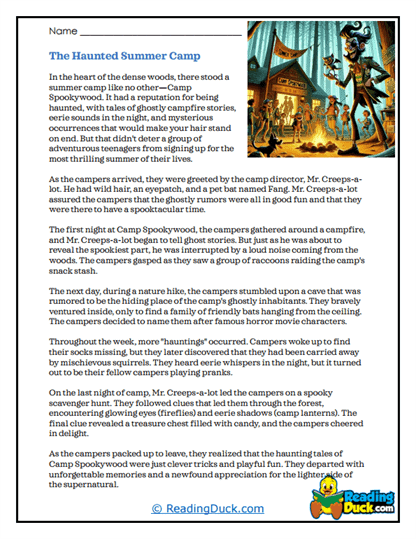
Understanding theme and author's purpose gets a front-row seat in engaging, layered narratives like Ghostly Campfire Tales, Potion Chaos, and Wishing Mirror. These stories coax students to ask: Why was this written? What is this really about?-but in a way that's far more exciting than any textbook could hope for. As students navigate eerie tales and magical mayhem, they're also learning to identify tone, mood, and deeper themes-those vital undercurrents that make reading rich and sticky in all the right ways.
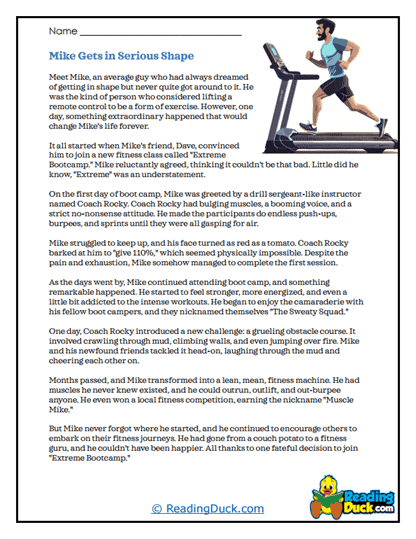
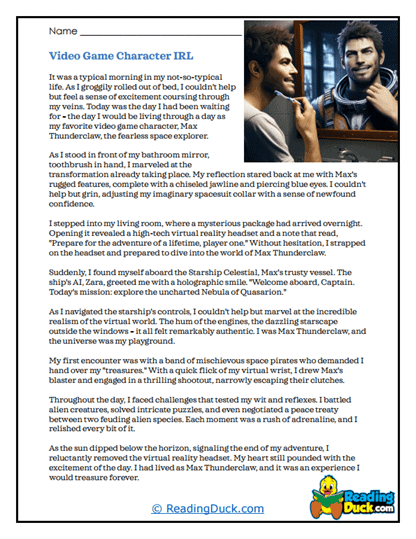
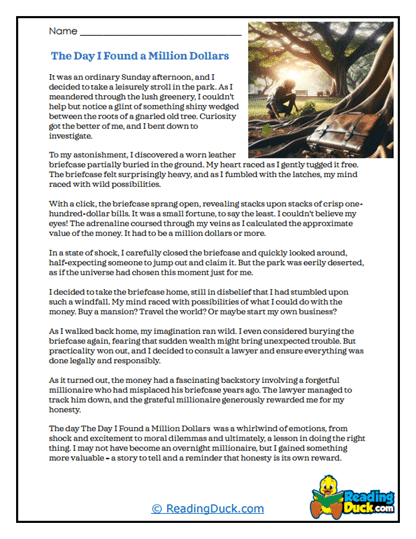
Main idea and supporting detail take the spotlight in selections like Fit Mike, Game Character Reality, and Million Dollar Dilemma, where students must not only grasp the central argument but also prove they can track the thread of logic as it winds through examples, metaphors, and narrative shifts. Whether it's a satirical riff on influencer culture or a dilemma involving absurd amounts of money, these stories train students to distinguish the core message from the bells and whistles-and yes, there are some truly delightful bells and extremely shiny whistles involved.
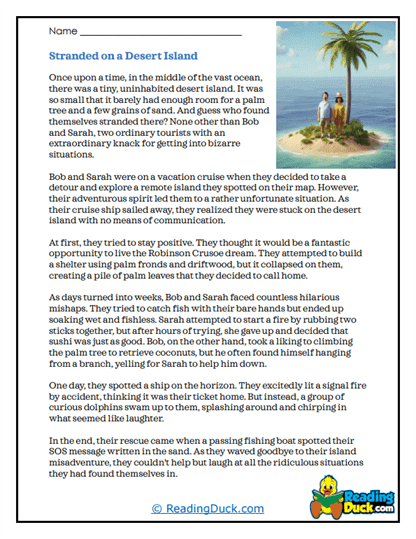
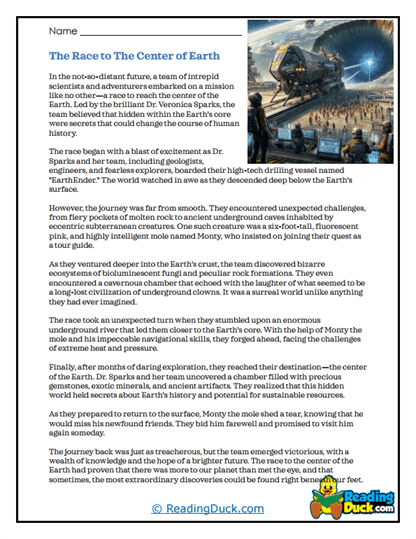
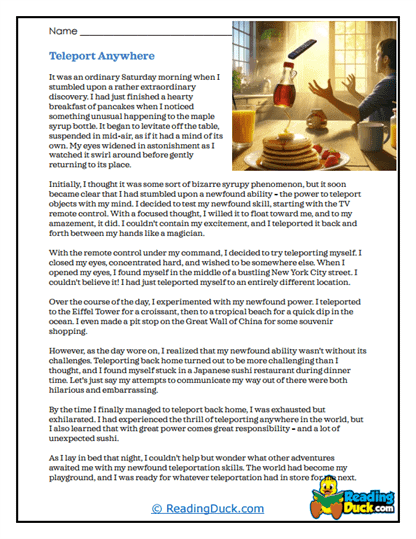
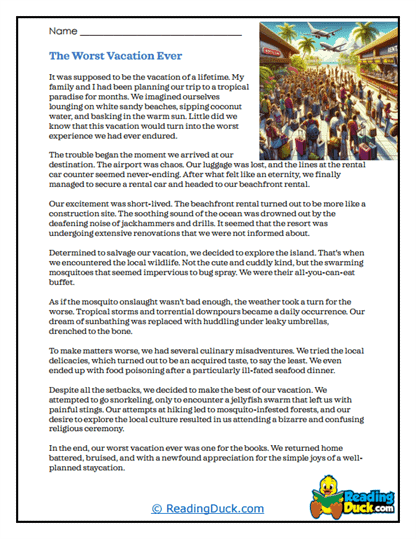
When it comes to vocabulary and context clues, the worksheets like Teleportation Fun, Tropical Disaster, and Journey to the Core stretch student lexicons with precision. These passages are designed to subtly introduce challenging language while embedding rich, inferable context-because we know that real vocabulary growth doesn't come from rote memorization, but from meaningful encounters with words in action. Think of them as word workouts in disguise, with just enough chaos (volcanoes! teleportation mishaps!) to keep even reluctant readers turning the page.
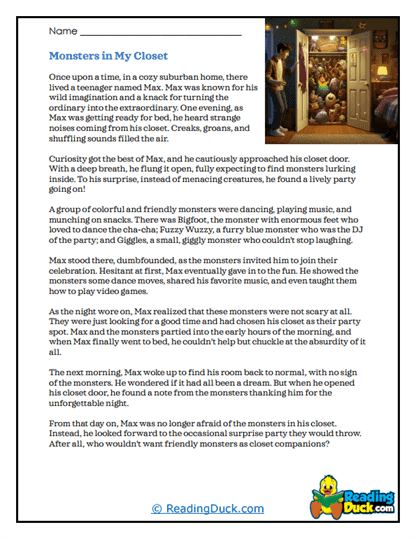
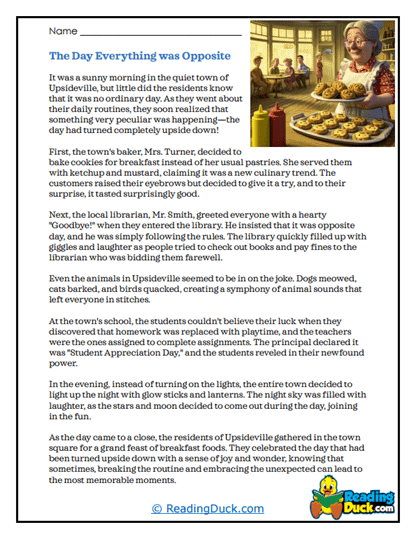
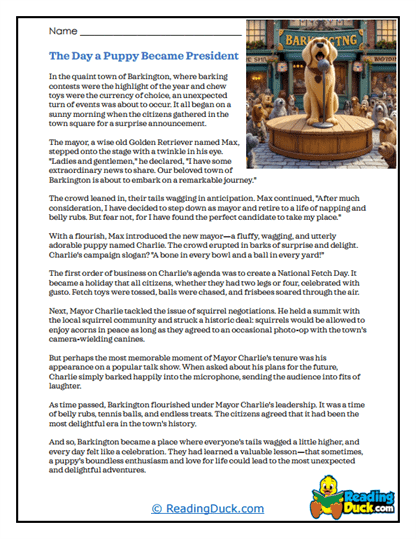
Critical thinking and comparing perspectives come into play in quirky, high-engagement entries like Opposite Day, Puppy President, and Closet Party. These passages challenge students to identify bias, detect satire, and question point of view-all while chuckling at the absurdity of puppies running for office or fashion closets spiraling out of control. It's analytical reading with a twist of absurdist lemon, proving that even complex skills can grow best in curious soil. Students can find the roots of this social commentary in our 9th grade satire and media literacy collection, where they first learn to decode the bias behind viral trends and digital fame.
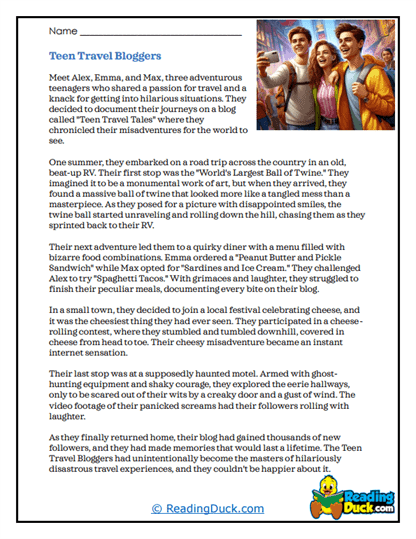
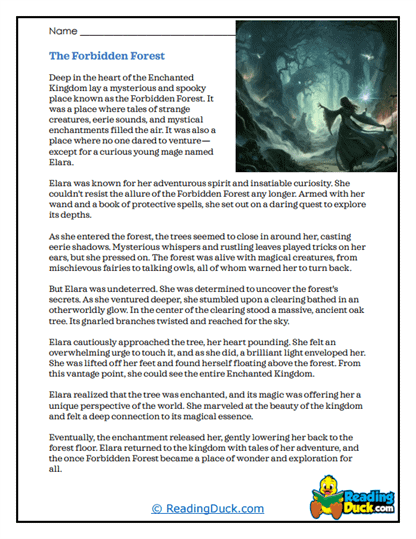
And of course, let's not forget those narrative-driven pieces that mix emotional resonance with complex structure, like Blogging Road Trip, Gifted Hero, and Magical Forest. These stories call for synthesis-of character development, sequence, and transformation. Students are asked not just what happens, but why it matters-how a character grows, how a setting shifts tone, how the ending folds back on the beginning. These worksheets tap into empathy and deep comprehension, reminding us that great readers are also great humans.
By Grade 10, students are expected to not only comprehend complex texts independently but also analyze them with a level of nuance that hints at their budding readiness for post-secondary demands. The Common Core State Standards emphasize skills like determining central ideas, analyzing interactions between individuals and ideas, interpreting figurative and connotative meanings, and evaluating arguments and claims. These worksheets answer that call with style and substance, offering differentiated, fiction-rich materials that feel as lively as they are rigorous. Whether used for warm-ups, assessments, or literary exploration, this collection is more than a reading tool-it's a bridge between engagement and mastery.
What Is The Typical Reading Curriculum For 10th Grade?
The typical reading curriculum for 10th grade is a thoughtful blend of literary depth, analytical skill-building, and exposure to a broad range of texts that challenge students both intellectually and emotionally. At this stage, students are expected to move beyond literal comprehension into more nuanced interpretation, often engaging with complex themes like identity, justice, resilience, and power. The curriculum usually includes a balanced mix of classic and contemporary literature-novels, short stories, poetry, and drama-that encourages students to think critically about the human experience. Through close reading, students begin to recognize how authors use structure, tone, and language to craft meaning, and they learn to respond with clarity and insight.
Equally important is the emphasis on informational texts-essays, historical documents, editorials, and articles-which are incorporated to develop students' skills in analyzing argument, evidence, and rhetorical strategies. Reading instruction in 10th grade doesn't simply aim to produce literary critics, but rather thoughtful, literate individuals who can evaluate a claim, distinguish bias, and synthesize perspectives. These texts are chosen not just for their content, but for the way they invite students to engage with current events, historical context, and global issues. Reading becomes an exercise in perspective-taking-where comprehension is not just about understanding what is said, but why it's said and how it resonates across contexts.
Ultimately, the 10th grade reading curriculum is a bridge. It links foundational literacy developed in earlier years to the sophisticated reasoning, empathy, and fluency required in later academic and real-world contexts. Students are encouraged to annotate, question, discuss, and reflect-skills that are as much about cultivating voice as they are about analyzing text. This year is less about "getting the right answer" and more about learning to ask the right questions, to see multiple interpretations, and to appreciate ambiguity when clarity isn't easily found. In that way, reading becomes more than a classroom requirement-it becomes a tool for personal and intellectual discovery.
Make sure to bookmark our website now.
Enjoy all our free reading worksheets.
Our materials adhere to the principles of the Science of Reading.