
Tea Catalyst Multiple Choices
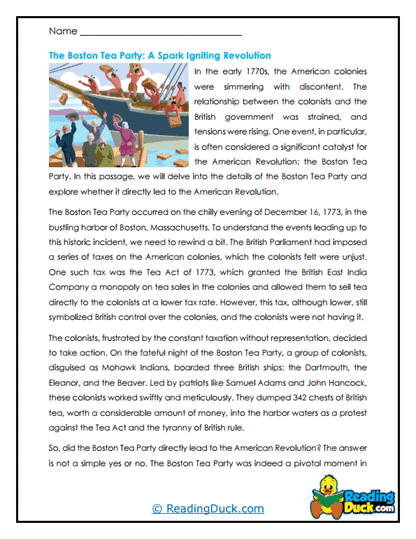
This passage provides a detailed look at the events that led up to the Boston Tea Party, describing how it acted as a catalyst for the American Revolution. It explains the taxes imposed by the British and the colonial frustration that grew as a result. The passage describes the colonists’ response on December 16, 1773, where they destroyed British tea in protest. It also questions the direct link between the Boston Tea Party and the American Revolution, prompting readers to think critically.
Engaging with texts like this enhances students’ skills in historical analysis and critical interpretation. By examining how events are interconnected, students improve their ability to identify themes and evaluate cause-and-effect relationships. The passage encourages critical questioning, fostering deeper engagement and discussion. Exposure to contextual vocabulary and historical narratives helps students improve their reading comprehension and expands their knowledge base.