About Our Beginning or Ending of a Story Worksheets
Beginning or ending a story are two of the most critical moments in creative writing: the beginning grabs readers, sets the tone, and establishes characters and setting, while the ending resolves the narrative and leaves a strong impression. These worksheets guide students through the foundational techniques needed to craft engaging story openings and satisfying conclusions-building narrative structure, pacing, voice, and coherence. Whether students are new to creative writing or looking to refine their storytelling, these activities offer focused, easy-to-use practice through printable PDFs with answer keys. Ideal for classroom use, homeschooling, or independent writing practice, the resources are flexible, engaging, and aligned with writing standards. This collection helps learners build both the creative and technical aspects of strong narrative writing, empowering them to craft stories that captivate and resonate.
Looking At Each Worksheet
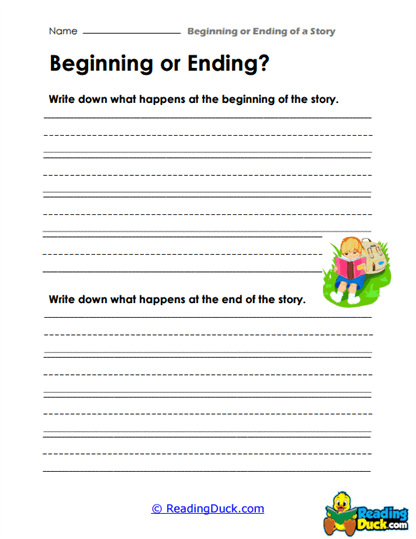
Beginning and Beyond
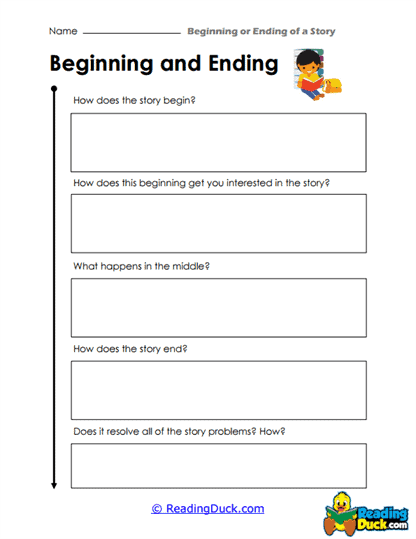
Students craft both a story's beginning and its possible ending, examining how each shapes tone, suspense, and reader engagement. This activity emphasizes planning and creative balance-knowing where a story starts and where it could lead. It supports narrative coherence and structure. In writing and reading, students practice broader thinking about plot arcs. Tip: Encourage students to write one sentence that mirrors a key phrase from beginning to ending to create unity.
Beginning or Ending Match
Learners match beginnings with endings that feel tone- or theme-appropriate, reinforcing understanding of narrative tone and plot resolution. This fosters sensitivity to emotional consistency and story logic. Students internalize how endings reflect and echo openings. They can apply this to their own stories and literary analysis. Tip: After matching, have students write a short note explaining why each ending fits.
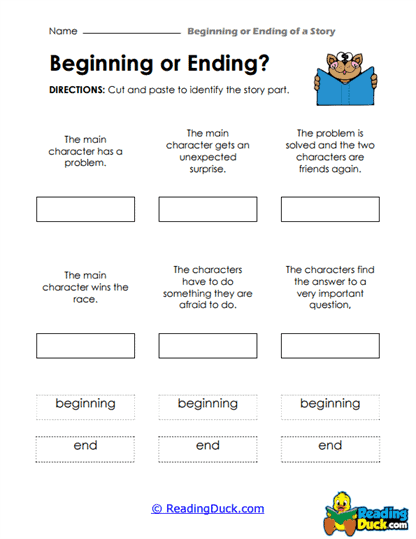
Cut and Place
Students cut out story beginnings and endings and physically pair them to create coherent, compelling narrative fragments. This hands-on approach encourages experimentation with story structure and conclusion effects. By rearranging pieces, learners learn how sequencing affects meaning and mood. This transfers to drafting and revision strategies. Tip: Have students test at least two different matches and discuss which works best and why.
Ending Insights
Learners write multiple endings for a single story prompt-such as happy, suspenseful, or open-ended-then reflect on how each affects tone and reader impact. This underlines the power of ending choices. Students gain flexibility in crafting resolutions and deepens their understanding of tone. The practice helps in writing varied story genres. Tip: Ask students to underline the emotional shift each ending creates.
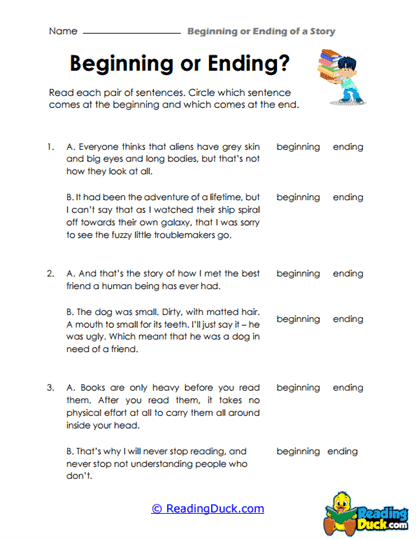
Event Placement
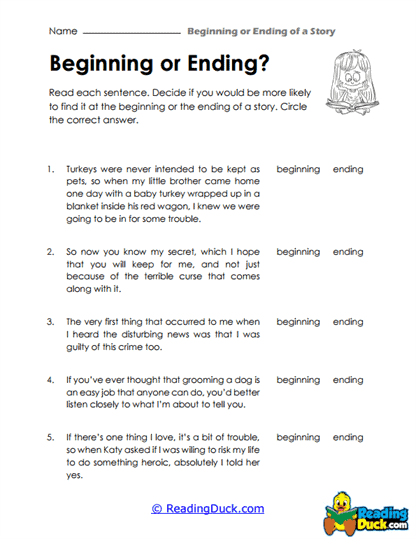
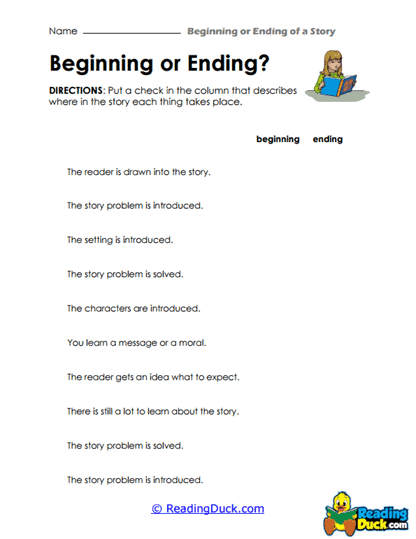
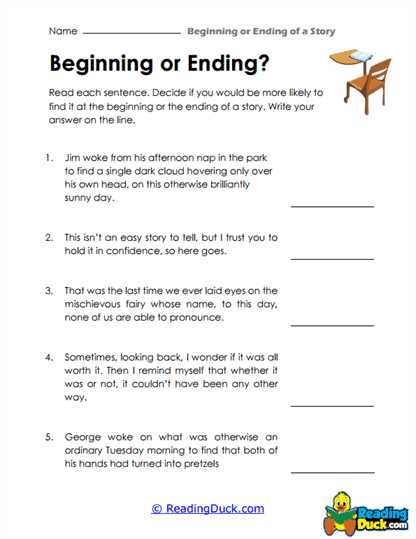
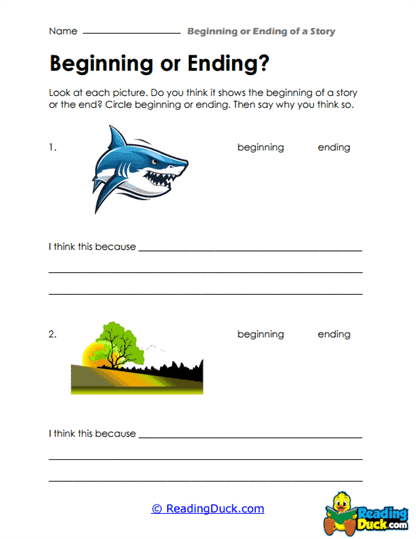
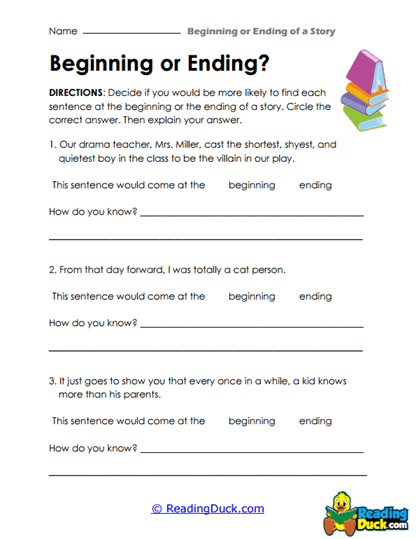
Students analyze story snippets and decide whether they belong at the beginning or ending, often based on context or pacing cues. This sharpens awareness of narrative function and placement. It builds recognition of where introductions and conclusions naturally occur. This skill enhances both comprehension and writing revision. Tip: Have them write one sentence explaining their placement choice using a clue from the snippet.
Fairy Tale Endings
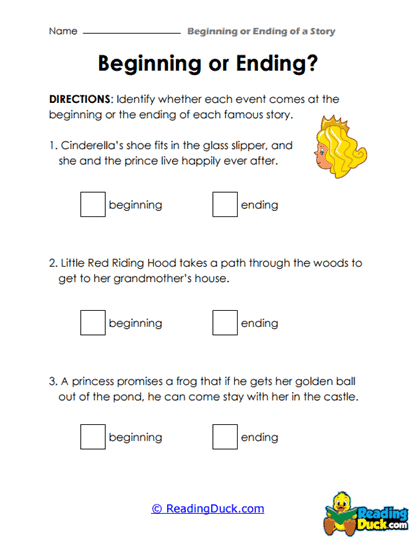
Learners rewrite or craft a new ending for a classic fairy tale, exploring how word choice and structure affect resolution. This builds creative adaptation skills while reinforcing narrative conventions. Students practice combining tradition with innovation. They learn how endings can update tone or message. Tip: Encourage them to preserve key themes but change the conclusion to reflect a different mood or lesson.
Mysterious Beginnings
Students write or select a mysterious-or intriguing-story beginning, aiming to hook readers by introducing suspense, questions, or unusual scenes. This builds skill in crafting curiosity-driven openers. It reinforces setting mood and raising questions. Students apply this to their own fiction and reading strategies. Tip: Ask them to identify the one detail they think will prompt readers to "keep reading."
Picture Clues
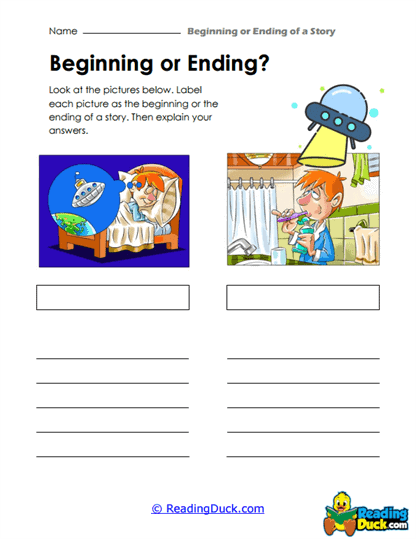
Learners examine images and create a story's beginning or ending based on visual cues-focusing on details like characters, setting, or mood. This links observation with narrative planning. It deepens the connection between visual literacy and creative writing. Students enhance their descriptive and inferential skills. Tip: Encourage use of at least two specific visual details in their narrative.
Picture Start
Students view a picture and write a story opening that introduces setting, tone, and characters-building narrative from the image's context. This blends visual prompts with story crafting. It enhances creativity and descriptive skill. Students can use this strategy in creative writing and reading analysis. Tip: Have students draft two versions-one focusing on atmosphere, the other on action.
Plot Placement Practice
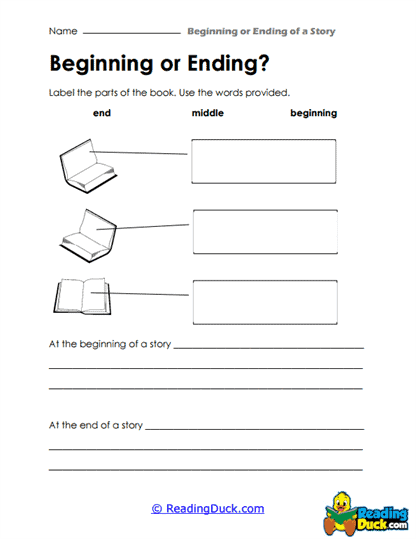
Learners identify whether a brief storyline snippet is best suited as a beginning, middle, or ending-not just sticking to the first or last part, but understanding narrative flow. This deepens structural awareness beyond binary choices. It reinforces understanding of narrative arcs and pacing. These skills transfer to revisions and organizing multi-part narratives. Tip: Ask students to suggest where the snippet could be improved if it's placed incorrectly and why.
Understanding the Beginning or Ending of a Stories
These worksheets focus on developing students' abilities to write compelling story openings and satisfying endings-two essential components of narrative structure. A strong beginning hooks readers and sets key story elements like tone, characters, and setting. A strong ending resolves tension, reflects tone, and offers closure or reflection. Recognizing and crafting these parts help students develop coherence, pacing, and narrative impact in their writing.
Understanding these elements matters because beginnings and endings frame a story-they guide reader engagement and emotional response. Learning how to hook an audience and finish with resonance builds storytelling craftsmanship. These skills support not only creative writing but also reading comprehension, especially when analyzing how authors open and close their narratives.
Beginnings often include scene-setting, character hooks, or intriguing questions-while endings may echo themes, resolve conflict, or leave lingering thoughts. Students can recognize these by looking for transitions, emotional tone shifts, and clues of closure. Training in spotting these indicators supports both reading and writing.
Common challenges include crafting openings that are too bland or endings that feel abrupt or clichéd. Some students may struggle to maintain tone or link resolution to the setup. These can be addressed through targeted practice-like writing parallel versions, matching beginnings and endings, and revising based on tone consistency. Reflection and comparison help build awareness.
Mastering beginnings and endings benefits long-term narrative skills: writing stories that feel complete, engaging, and emotionally satisfying. Students build confidence in structuring texts and making stylistic choices. These skills support creative expression across genres-from fiction and memoirs to persuasive and informational writing.
Example
Picture a prompt showing a moonlit forest. A student begins: "The wind whispered through the pine trees as Luna stepped onto the clearing, her heart pounding with a secret." Later, she concludes: "Luna turned back toward the shadows, knowing she carried that secret into the night-and beyond." The opening introduces setting, tension, and a character; the ending circles back with emotional closure and mystery-demonstrating effective beginnings and endings working together.
Make sure to bookmark our website now.
Enjoy all our free reading worksheets.
Our materials adhere to the principles of the Science of Reading.