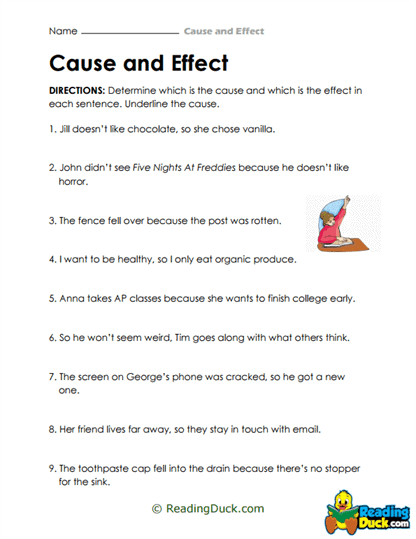
Cause and effect skills help students understand how one event leads to another-key for reading comprehension, logical thinking, and coherent writing. These worksheets guide learners to identify and analyze why things happen (causes) and what happens as a result (effects), fostering clarity and reasoning in both reading and writing. They're perfect for building skills across genres-from stories to essays to informational texts.
Available as downloadable PDFs with answer keys, these worksheets offer structured practice suitable for classroom, one-on-one instruction, or homeschooling. They progress from simple recognition tasks to more complex analysis, helping students build fluency in cause-and-effect thinking step by step. Each activity strengthens their ability to organize ideas and support explanations clearly.
As students work through these worksheets, they learn to connect events, analyze how actions unfold, and explain sequences with confidence. These habits support not only reading comprehension but also persuasive and explanatory writing. Becoming adept at cause-and-effect reasoning equips students to construct logical arguments and navigate complex content across subjects.
Looking At Each Worksheet
Best Choice
Students select the most logical effect from given options based on a described cause. The prompt trains quick, focused reasoning skills needed in both reading and writing analysis. This sharpens their ability to pick the most plausible consequence in a real passage. It's a handy exercise for timed comprehension tasks. Tip: After selecting, ask students to explain in one sentence why the other options don't fit as well.
Cause Match
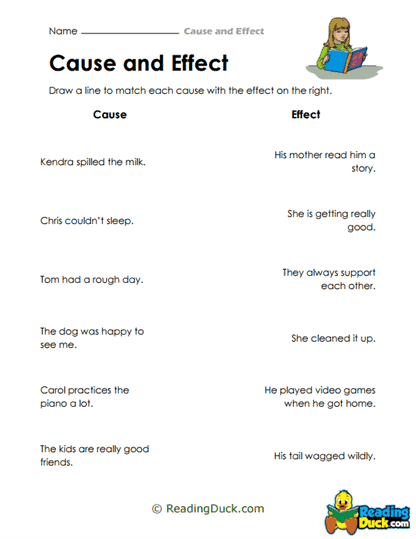
Learners match a list of causes to the correct effects in two columns. This reinforces pairing and clarity in cause-effect mapping. It builds precision in aligning event relationships in narrative or informational contexts. Transferable to organizing paragraphs and outlining arguments. Tip: Encourage labeling with arrows and short notes explaining the connection.
Cause-Effect Lines
Students draw lines between causes and effects across a spread of statements. The visual linking strengthens associative memory regarding pairs. It helps learners visualize chains of events. This supports both reading summary and planning sequences in writing. Tip: Use different colors for correct vs. tricky pairs to reinforce concepts.
Circle Connect
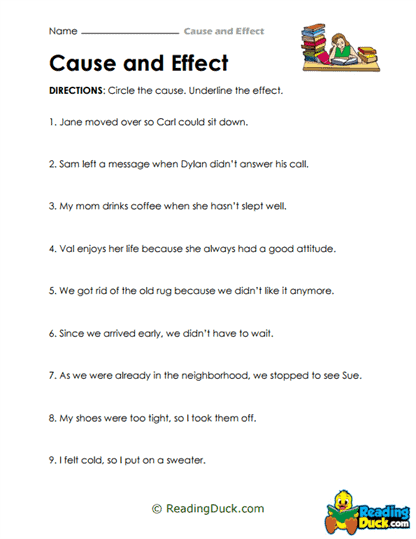
Learners circle pairs of cause and effect within a collection of sentences. It's a fun, engaging twist that adds visual scanning practice. This quick identification hones attention to signal words and logical indicators. Helpful in test prep contexts where fast recognition matters. Tip: Ask students to underline the clue word(s) that helped them connect each pair.
Define Cause
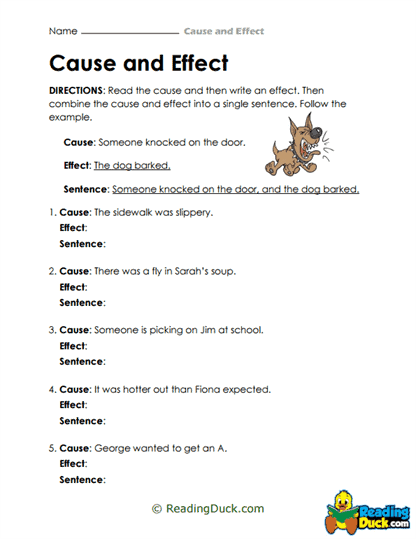
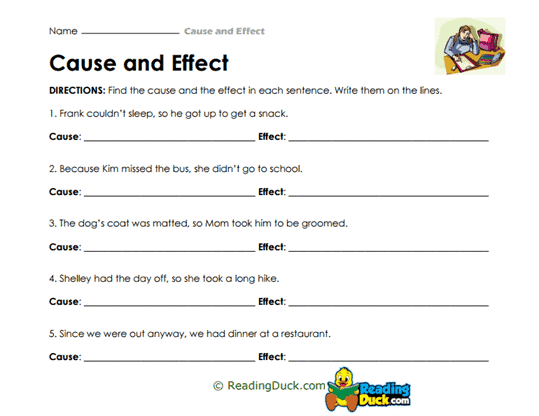
Students are given effects and must define the causes in their own words. This encourages deeper thinking beyond recognition-students must articulate logical reasoning themselves. It builds explanatory writing and analytical depth. The exercise bridges reading understanding and writing precision. Tip: Prompt students to include "because" to model cause-effect phrasing.
Draw Effects
Learners read a cause and create a drawing showing the resulting effect. The visual-to-text connection supports multi-modal learning and deepens comprehension. It's especially helpful for visual learners or early learners. Drawing solidifies the concept before students translate it into words. Tip: After drawing, ask students to caption their picture in one sentence with both cause and effect.
Event Impact
Students explore a scenario and analyze the short- and long-term effects. This activity deepens temporal awareness of cause-and-effect relationships. It trains multi-step reasoning and predicts outcomes over time. Useful in writing explanations, scientific reasoning, and historical analysis. Tip: Use a two-column chart labeled "Immediate Effect" and "Later Effect" to structure thinking.
Fill the Gap
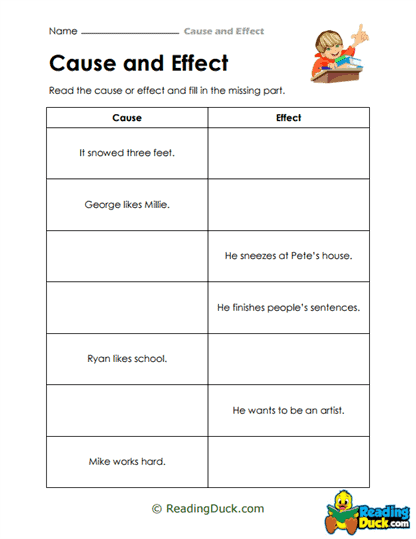
Learners complete sentences by filling in missing cause or effect phrases. The cloze-style engages deduction and phrasing skills. It enforces compound thinking about what precedes or follows-critical for coherent writing. It's great for working with sentence structure and context. Tip: Encourage trying different options, then choose the most logical and justify the choice.
Line Connect
Students link expanded sentences that represent causal chains. This supports understanding of sequences across multiple steps. It reinforces narrative sequencing and logical flow. Useful when planning multi-part responses or stories. Tip: After linking, ask students to write one summary sentence that captures the overall chain.
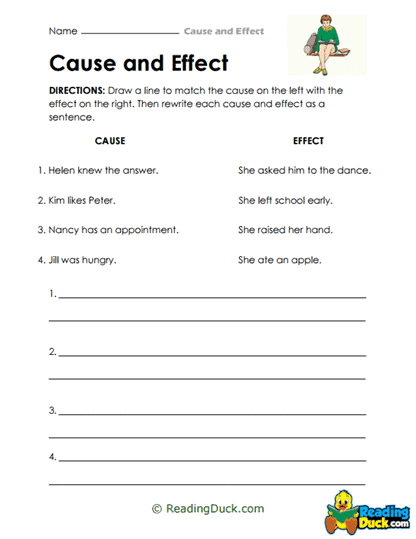
Match & Write
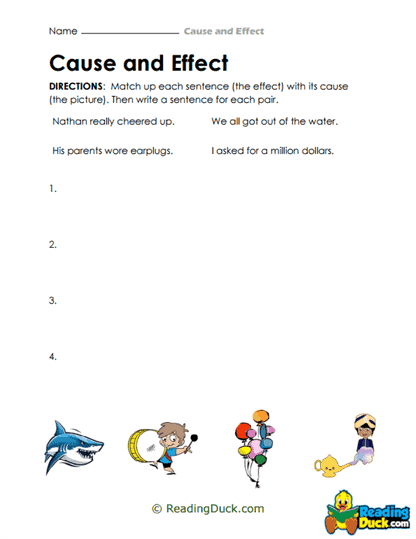
Learners match cause-effect pairs, then write a new sentence connecting each pair. This moves them from recognition to creative synthesis. It builds sentence-level writing that mirrors reading comprehension. Perfect for reinforcing cause-and-effect phrasing ("When **, then **"). Tip: Provide a starter like "Because ___, ___ happened" to scaffold the writing.
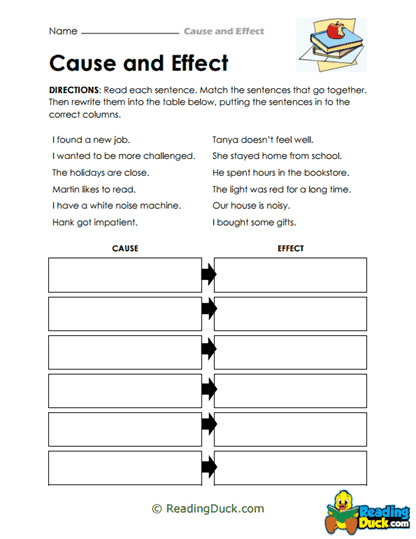
Match-Up Table
Students fill in a table listing causes in one column and effects in the other-matching them up. This organizes thinking visually and clarifies the pairing. It's a useful organizer for essays, notes, and study guides. Tip: Have students swap columns and try to reconstruct pairs from the effect side first for extra challenge.
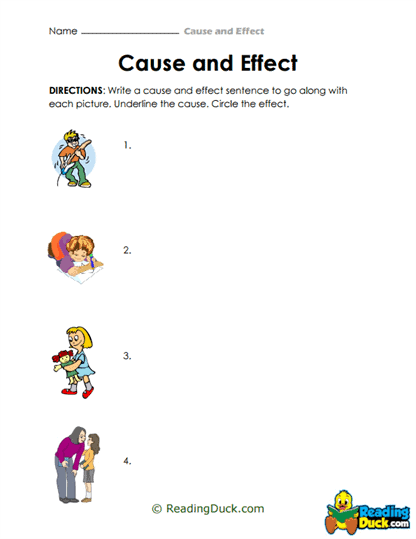
Picture Links
Learners examine images and describe the cause-effect relationship they depict. This connects visual literacy with reasoning. It's great for tests where diagrams or charts appear. Students learn to infer relationships from context. Tip: Ask students to label the image with both cause and effect and write one sentence explaining it.
Sentence Builder
Students construct full cause-and-effect sentences by combining given phrases or ideas. This teaches smooth writing of logical relationships. It reinforces structure and word choice in explanatory writing. Very useful in science, social studies, and responses. Tip: Vary the starters ("Therefore," "As a result," "Because") to build fluency.
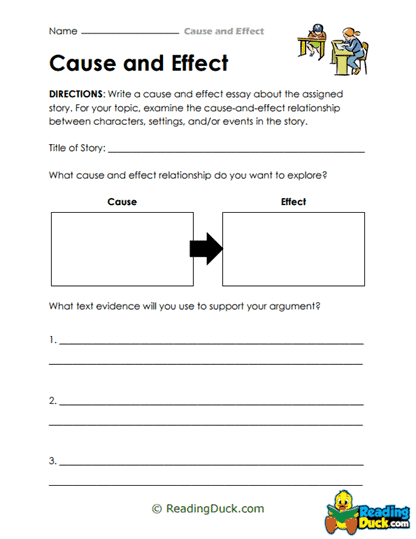
Story Link
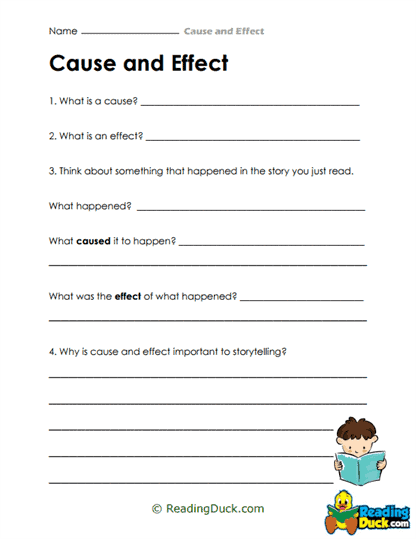
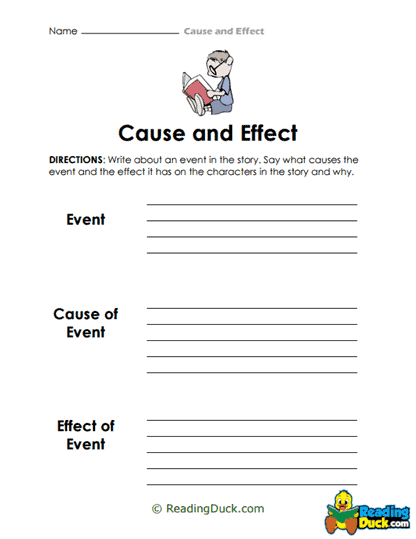
Learners read a short story or excerpt and outline its cause-effect chain. This pushes narrative understanding and analytical thinking. It connects comprehension to plotting and summary skills needed in essay writing. Tip: Have students number events in sequence, then write a paragraph summarizing the causal flow.
Why It Happens
Students read or observe an effect and explain why it occurred, addressing purpose and mechanism. It deepens causal analysis and encourages thinking about deeper reasons-not just surface outcomes. This supports argumentative and explanatory writing and rich discussion. Tip: Prompt with "This happened because..." and encourage two or more layered explanations.
What Are Cause and Effect Worksheets?
Cause and Effect worksheets are designed to help students understand how actions lead to outcomes-one of the most fundamental relationships in both reading and writing. They take students through identifying causes, recognizing effects, and explaining links in logical, structured ways. The worksheets use varied formats-from matching and drawing to writing and analysis-to build both recognition and articulation skills.
This skill matters because it underpins clear thinking and writing. Understanding cause and effect helps students make sense of stories, arguments, scientific processes, and historical events. It supports comprehension and strengthens students' abilities to organize their writing in persuasive or explanatory essays across disciplines.
You'll recognize cause-and-effect worksheets by prompts that require connecting "why" to "what happened," matching events, or completing paired sentences. Worksheets often include signal words like because, so, as a result to guide connections. They train the mind to see patterns of logic and sequence-vital for reading fluency and strong writing.
A common challenge is oversimplifying or reversing the relationship-calling effects causes or treating unrelated events as linked. These issues can be addressed through worksheets that require both recognition and explanation (e.g., defining causes, writing sentences, analyzing stories). Encouraging "Because..." or "Therefore..." phrasing supports clarity and precision.
Mastering cause-and-effect reasoning lays a strong foundation for everything from essay writing to problem-solving. Students who can connect actions and outcomes clearly will write more coherently, analyze more deeply, and communicate more effectively-skills that serve them across school and life.
Example
Cause -The ground was dry and cracked after weeks without rain.
Effect - Therefore, small plants struggled to grow, and animals searched farther for water.
This connection shows how environmental conditions (cause) trigger a chain of visible effects-not just one outcome but multiple sequenced consequences.
Make sure to bookmark our website now.
Enjoy all our free reading worksheets.
Our materials adhere to the principles of the Science of Reading.