Biographies explore the lives, experiences, and impacts of real people, allowing students to step beyond facts and into the heart of someone's journey. These worksheets guide learners through essential biography-writing skills: researching, organizing chronologically or thematically, and presenting a compelling narrative. Whether writing about historical figures, famous personalities, or crafting personal autobiography pieces, each activity supports structured thinking and creative storytelling.
The Biographies collection offers a range of structured, printable PDF activities-each with downloadable answer keys-designed to make teaching and learning biography writing both effective and flexible. Educators and parents can integrate them seamlessly across writing classes, history lessons, or reading comprehension units. The exercises are crafted to scaffold students from gathering facts to writing engaging, coherent narratives that highlight achievements, struggles, and impacts.
By working through these worksheets, students refine key writing skills such as logical organization, descriptive writing, critical thinking, and understanding cause-and-effect in life stories. They learn to juggle research with narrative flow, ensuring factual accuracy while maintaining reader interest. Over time, this builds student confidence in writing informative, reflective, and story-driven biographies-skills that enhance their work across subjects and grade levels.
Looking At Each Worksheet
Activist Journey
Students research and write about an activist's life, emphasizing actions taken to create change. This task encourages them to structure a narrative around timeline, motivations, and impact-tying biography writing to themes of social significance. It fosters both factual storytelling and empathy. Students can apply this framework to writing about historical leaders or community heroes. Tip: Encourage use of at least two quotes or direct references to the activist's work for authenticity.
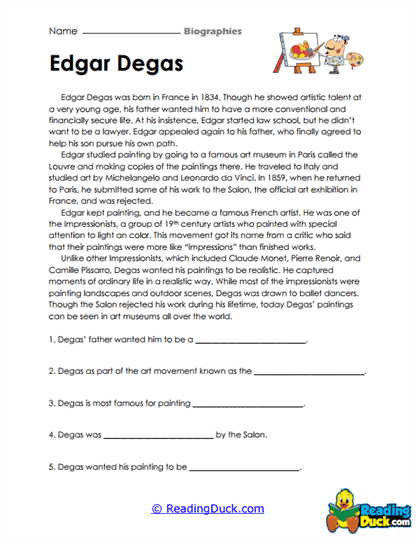
Artful Vision
Learners explore an artist's life by detailing formative experiences and creative milestones. This builds narrative organization around thematic rather than chronological storytelling. It strengthens linking biographical facts to influences and creative output. Applying this skill helps students connect background with contributions in any biography. Tip: Have students note the connection between an early life event and a defining work.
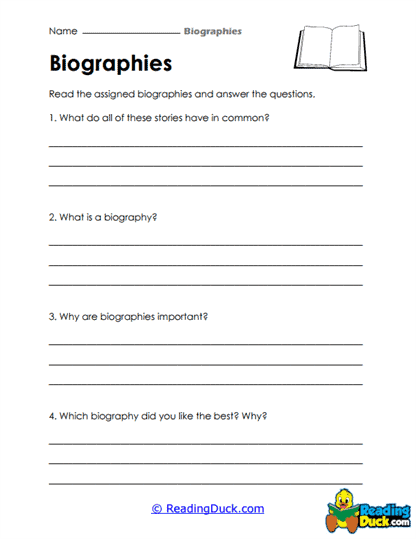
Biography Basics
Students review key features of effective biographies-such as introduction, body, and conclusion-and practice identifying them in sample texts. This foundational worksheet teaches structural awareness and genre conventions. It builds recognition of biography components, useful in both writing and analysis. Readers learn to map narratives, and writers reinforce planning habits. Tip: Ask learners to rewrite a sample intro using a different narrative hook to compare impact.
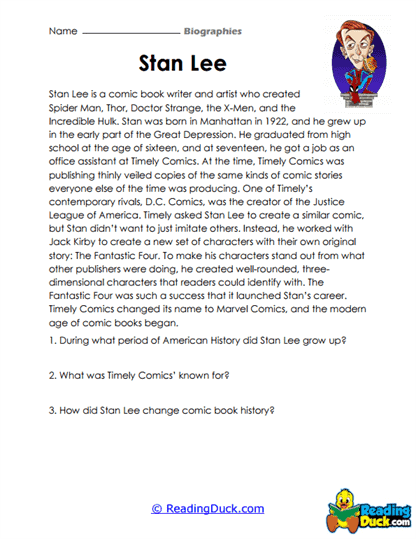
Comic Legend
Students craft a short biography of a comic or entertainer, focusing on their journey and unique traits. This playful approach highlights tone and voice, as well as factual detail. It reinforces the link between personality and biography tone. Students build flexibility in voice and audience engagement. Tip: Encourage inclusion of a humorous anecdote to reflect the subject's personality.
Dark Poet
Learners delve into the biography of a poet known for darker or introspective themes-capturing mood, influences, and stylistic traits. This sharpens analytic and descriptive writing, blending factual information with tonal resonance. It reinforces connecting life events to creative style. Students gain tools for writing about literary figures or personal essayists. Tip: Ask students to trace how a biographical event might have shaped the poet's themes.
Diary Witness
Students imagine a historical figure writing a diary entry at a pivotal life moment, then expand into a third-person biography entry. This bridges creative empathy with factual narration. It builds deep understanding of perspective and voice. Learners practice shifting between narrative forms and tones. Tip: Encourage students to keep the tone authentic to the era or subject.
Explorer Essentials
Learners outline an explorer's key journeys and milestones, emphasizing motivations and discoveries. This teaches organizing information through both chronological events and thematic motivations. It builds mapping life paths visually and contextually. Students gain structure skills applicable to various nonfiction forms. Tip: Ask students to draw a quick map of one of the explorer's routes alongside their writing.
First President
Students write a mini-biography of a country's first president, with focus on leadership traits and historical impact. This blends factual reporting with reflective insight. It builds connection between biography and civic understanding. Students practice summarizing a life's significance concisely. Tip: Suggest including a defining quote to capture leadership style.
Founding Wisdom
Learners explore lessons from a notable founding figure-historical or modern-and relay their biographical arc around key philosophies or decisions. This blends thematic narrative with factual structure. It strengthens connecting beliefs to life events. Students can apply this for writing about innovators or community leaders. Tip: Encourage connecting two life events to the subject's guiding principles.
Game Changer
Students craft a biography of a trailblazer who changed their field or industry-highlighting innovation, challenges, and outcomes. This supports narrative arcs centered on struggle and breakthrough. It builds engagement through storytelling around impact. Students reinforce cause-effect thinking and storytelling craft. Tip: Ask students to anchor the biography around one milestone and reflect how it shifted the subject's trajectory.
Life Snapshot
Learners create a quick portrait of a person at a particular moment in their life-using descriptive and factual details to convey context and significance. This builds concise yet vivid biography writing skills. It is ideal for short-form assignments or journalistic tasks. Students practice focused writing that still conveys a story. Tip: Have learners include sensory detail and an emotional reflection in under 100 words.
Peaceful Dreamer
Students explore a peacemaker or idealist's life-focusing on motivations, ideology, and outcomes. This fosters reflective and cause-driven narrative construction. It builds connecting ideals to actions in biography writing. Students gain empathy-based writing tools. Tip: Encourage students to highlight one turning point that defined the subject's mission.
Sci-Fi Scribe
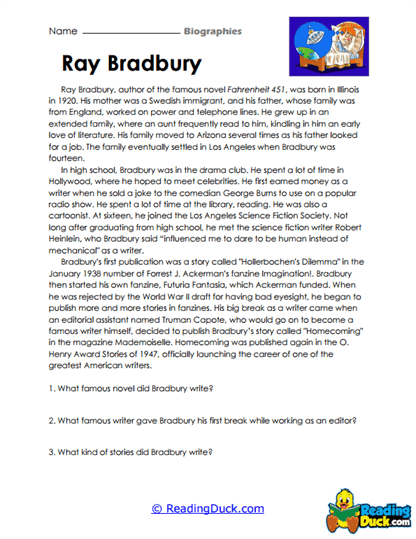
Learners look into a science fiction writer's life-linking personal history, cultural influences, and major works. This merges genre context with biographical detail. It helps students write with both factual grounding and imaginative flair. Studying this builds contextual awareness of author and text. Tip: Ask students to speculate what event might have inspired their fictional world, and explain why.
Space Pioneer
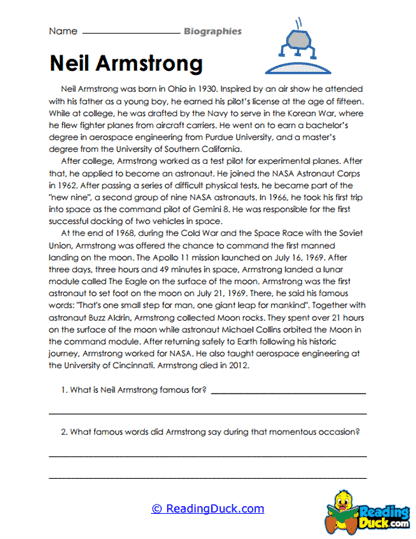
Students detail the life of a space explorer-whether engineer, astronaut, or visionary-focusing on missions, obstacles, and legacy. This builds narrative arcs around challenge, discovery, and impact. Students learn to structure biography as a story of exploration. The skill extends to writing about scientific or adventurous careers. Tip: Include a brief timeline highlighting major milestones.
Timeline Trek
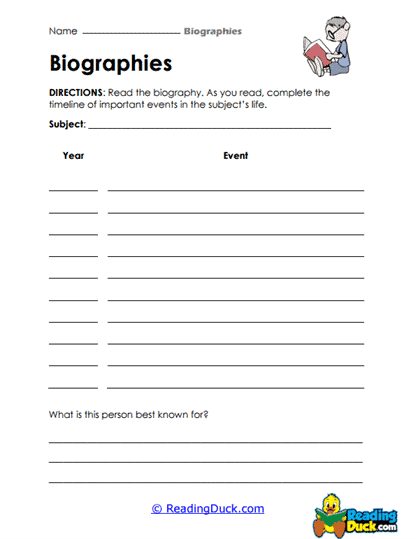
Learners organize life events on a timeline-then write biographical narrative using that structure. This reinforces chronological organization and narrative planning. It builds blending visuals and text for clear structure. Students can apply this to longer projects and historical essay planning. Tip: Have students color-code personal, professional, and societal events for clarity.
What Are Biography Worksheets?
Biography worksheets help students learn how to research, structure, and write about a person's life in a narrative, engaging way. They go beyond fact lists, asking students to consider motivations, impacts, and themes in someone's life. The format encourages both accurate reporting and storytelling-organizing life events either chronologically or thematically, and highlighting personal traits, achievements, and context.
This matters because biography writing hones many academic and communicative skills-critical thinking, organization, descriptive detail, and cause-effect reasoning. It also helps students connect personally with history and human experiences, fostering empathy and deeper understanding. Engaging with biographies builds both content knowledge and genre awareness, applicable across subjects.
You can often spot biography attributes when a text presents a person's life in narrative form-highlighting key moments, exploring character and motivation, and linking actions to outcomes or wider contexts. Narrative hooks and reflections also signal biography. Recognizing these traits supports both reading comprehension and writing planning.
Challenges include organizing large amounts of information without losing focus, remaining engaging while factual, and selecting the most essential details. Worksheets that scaffold timelines, template structures, and thematic focuses help students manage complexity. Encouraging revisions and asking students to reflect on cause and impact also builds depth.
Mastering biography writing lays a foundation for academic success-from writing research-based essays to crafting reflective personal narratives. It equips students with skills in synthesis, structure, and storytelling. Whether writing about a famous figure or someone in their community, they'll write with clarity, cohesion, and insight.
Example
A student studying the life of civil rights leader Rosa Parks might plot her early life, the Montgomery Bus Incident, and later influence on civil rights. Writing with both facts and narrative, the student may say: "When Rosa Parks refused to give up her seat, she didn't just sit down-she stood up for a generation. Her quiet courage triggered a movement." This combines factual context with emotional insight to bring biography to life.
Make sure to bookmark our website now.
Enjoy all our free reading worksheets.
Our materials adhere to the principles of the Science of Reading.