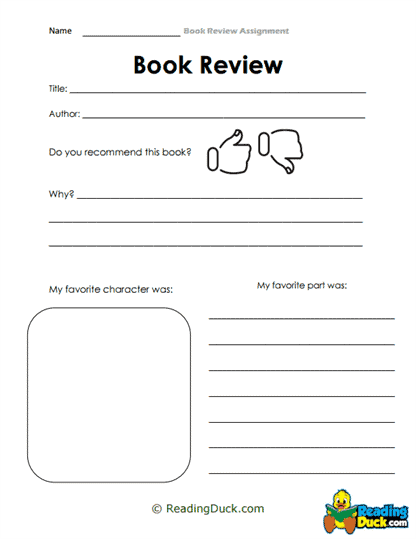
Book review assignments help students move beyond summary to write concise, thoughtful evaluations of the books they read. A strong review blends what happened (plot), who it happened to (characters), what it means (themes), and what the reader thinks (opinion supported by evidence). These tasks build habits of careful noticing, clear organization, and purposeful word choice. Over time, students learn to read like writers and write like readers, which strengthens both comprehension and composition.
This collection offers printable PDFs with a mix of analytic, creative, and visual prompts so every learner can find an entry point. Some sheets scaffold structure with organizers; others invite concise formats, rating systems, or quick, audience‑aware recommendations. Together, they encourage students to cite text, compare examples, and make specific claims rather than vague reactions. Each worksheet can stand alone or be combined into a complete review routine.
Students can use these worksheets before, during, and after reading: plan while reading, gather evidence as they go, and shape a clear opinion at the end. The activities scale easily-from quick warm‑ups to full review drafts-and they work across genres and levels. As students practice, they learn to adapt tone and detail for different audiences, from classmates to family or online readers. The result is confident, well‑supported writing that makes others want to read.
Looking At Each Worksheet
Author Highlights
Students research or notice distinctive choices the author makes-such as style, tone, or recurring techniques-and explain how those choices shape the reading experience. This pushes reviewers to connect specific craft moves to their overall opinion, a core skill in any book review assignment. It builds the habit of citing lines or moments as evidence rather than offering general praise or criticism. In everyday reading, students can use this lens to compare authors across genres-a skill that serves as the foundation for our 9th grade mystery and heist narratives, where students must act as literary detectives to uncover hidden motives.
Character Plotter
Students map a main character's goals, obstacles, decisions, and growth across the story. By tying character change to key plot beats, they practice linking evidence to claims about effectiveness-central to book review writing. This organizer clarifies why a character arc feels satisfying (or not) and how that influences the reviewer's rating. In class discussions and writing, the same structure supports clear, text‑based analysis. Tip: Have students circle the single decision that most changes the character's path and explain why.
Character Spotlight
Learners compose a focused mini‑profile of one character, selecting traits, pivotal scenes, and a representative quote. The tight frame trains students to be selective and specific-exactly what strong book reviews require. It also models how to balance description with evaluation ("This choice made the character believable"). The approach transfers to speeches, recommendation blurbs, and comparative essays. Tip: Limit to three traits and tie each to one piece of evidence.
Emoji Reviewer
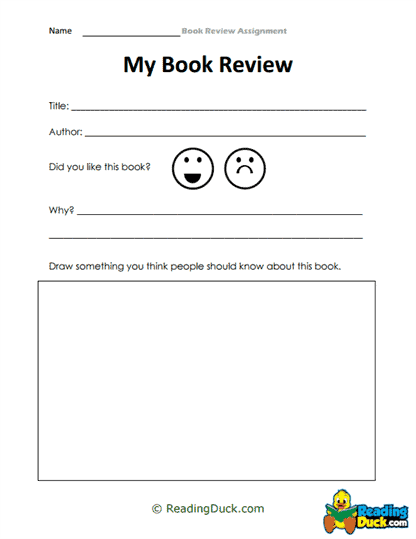
Students rate elements like plot, pace, or mood with simple icons, then justify each rating in a sentence or two. The visual hook lowers the barrier to entry while the explanation keeps the rigor tied to book review goals. It teaches concise evaluation and audience‑friendly presentation. This format adapts well to bulletin boards, newsletters, or digital posts. Tip: Require a "because..." statement after each emoji to keep opinions evidence‑based.
Favorite Parts
Learners select two or three standout moments and explain why they mattered for enjoyment, theme, or character insight. Choosing specifics trains students to anchor reviews in scenes rather than generalities. It highlights how personal connection and textual evidence can work together in a review. This habit supports richer conversations and more convincing recommendations. Tip: Ask students to connect each favorite moment to one review sentence that would convince a friend to read the book.
Opinion Expressor
Students draft a clear thesis statement for their review and support it with two to three reasons from the text. This sheet turns scattered reactions into a coherent stance-the heart of any book review assignment. It strengthens organization, transitions, and claim‑evidence structure. The same framework works for letters, speeches, and persuasive paragraphs in other subjects. Tip: Use the template "I recommend/do not recommend this book because..." to keep focus tight.
Picture This
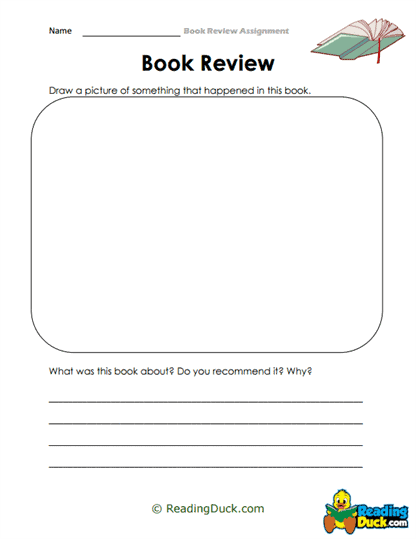
Learners create a single image (diagram, collage, or scene sketch) that captures the book's mood or central idea, then write a caption explaining the connection. Visual synthesis helps students distill theme and tone, which they can then describe succinctly in a review. It supports learners who think best through images while still demanding text evidence. The result is an eye‑catching review element fit for displays or class blogs. Tip: Require two labeled details in the image that tie directly to moments in the book.
Plot and Portrait
Students pair a brief plot summary with a "portrait" of the protagonist's arc, showing how events drive change. This keeps summary lean while elevating analysis-exactly the balance reviewers need. By aligning what happens with who changes, students avoid retell and move toward evaluation. The structure supports test prep and literature circle roles as well. Tip: Cap the plot section at 5-6 sentences to save space for commentary.
Recommendation Box
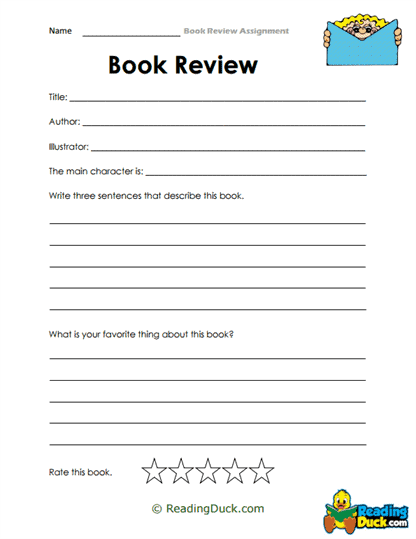
Learners craft a short pitch that names the ideal audience, gives a star rating, and cites one compelling reason to read. This focuses attention on purpose and reader needs, key considerations in review writing. It teaches voice, concision, and audience awareness. Students can reuse this as a shelf‑talker, slide, or sticky note recommendation. Tip: Include a "If you liked ___, you'll like this" comparison to sharpen targeting.
Scene Setter
Students analyze one key scene for setting, conflict, and tone, then explain how it represents the book as a whole. This trains close reading and the move from part to whole that strong reviews demonstrate. It also gives concrete evidence for claims about pacing or atmosphere. In essays and presentations, the selected scene becomes a powerful anchor. Tip: Ask for one sensory detail from the scene to enrich the explanation.
Six‑Word Summary
Learners compress the book's essence into six words, then unpack how those words capture plot and theme. The constraint forces precision and points students toward the main idea they'll argue in a review. It becomes a memorable headline for the finished write‑up. This tool also works as a hook in speeches or slideshows. Tip: Draft three versions and pick the one that best fits the review's thesis.
Starry Review
Students assign a star rating to multiple elements (e.g., characters, world‑building, writing style) and justify each score. Breaking the judgment into parts leads to a more balanced, credible review. It prevents overreliance on overall enjoyment and invites nuance. The rubric‑like layout supports peer conferences and revisions. Tip: Set a rule that any 5‑star or 1‑star rating must include two pieces of evidence.
Story Explorer
Learners investigate theme, message, or big questions raised by the book and connect them to specific chapters. This deepens analysis and helps reviewers explain a book's lasting value. It encourages moving from "I liked it" to "It matters because...". The same strategy powers thoughtful discussion prompts and essay outlines. Tip: Use a T‑chart: "Text Evidence" on the left, "Big Idea" on the right.
Story Sequencer
Students arrange major events in order and mark the turning point, then comment on pacing and structure. By seeing how the plot is built, they can evaluate whether it flows well-an important part of review writing. It also clarifies what to include (and exclude) in a brief summary. This organizer supports clarity in timed responses and presentations. Tip: Limit to six events to keep the summary tight and focused.
Thumbs Up‑Down
Learners list two strengths and two weaknesses of the book, each supported with a line of evidence. Balanced evaluation is the hallmark of credible book reviews, and this sheet makes it explicit. It encourages fairness, specificity, and revision toward a nuanced final verdict. The format adapts easily to debate or panel discussions. Tip: End with one sentence explaining which readers will enjoy the book despite its flaws.
What Are Book Review Assignment Worksheets?
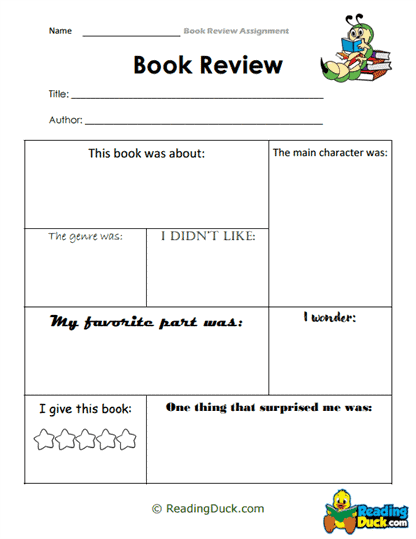
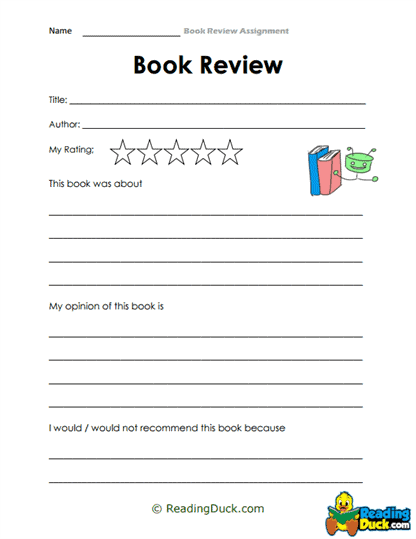
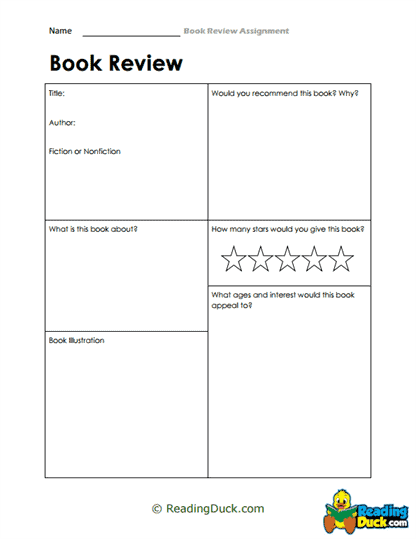
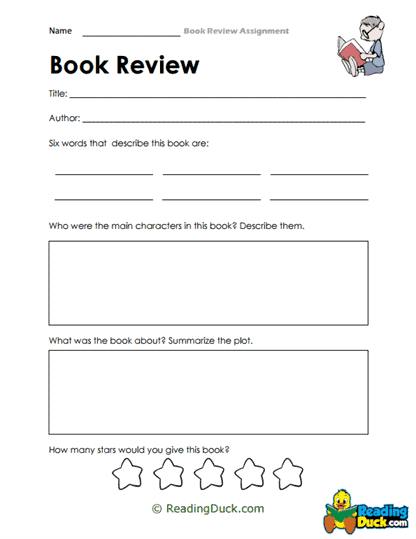
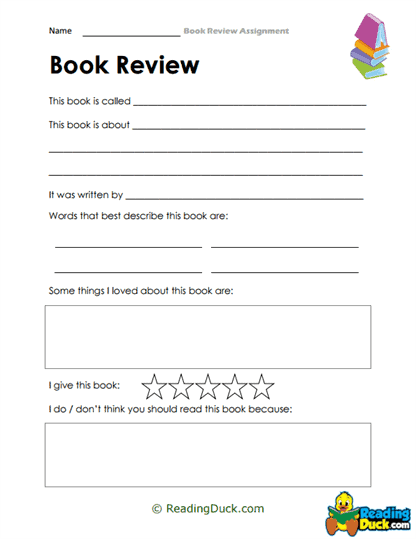
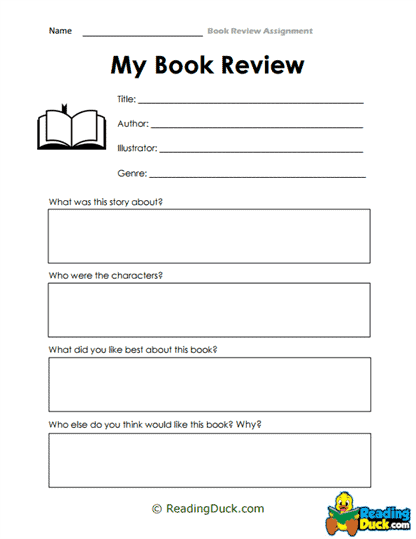
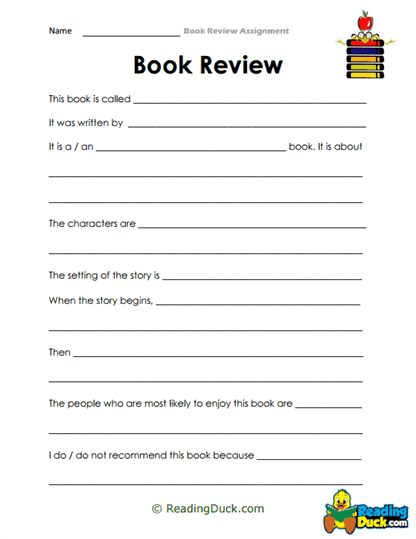
Book review assignment worksheets are structured guides that help students craft clear, evidence‑based opinions about books. They combine summary, analysis, and personal response so that readers can explain both what a book is about and how well it works. The prompts scaffold decisions about audience, tone, and structure, turning scattered thoughts into a polished review. In short, they teach students to evaluate literature with precision and voice.
These worksheets matter because they promote active, purposeful reading and audience‑aware writing. When students know they'll argue a position, they annotate more carefully, notice patterns, and collect examples while reading. Writing the review then becomes an exercise in organizing claims and evidence-skills that carry across subjects. The process builds confidence and critical thinking.
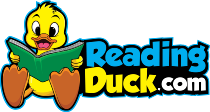
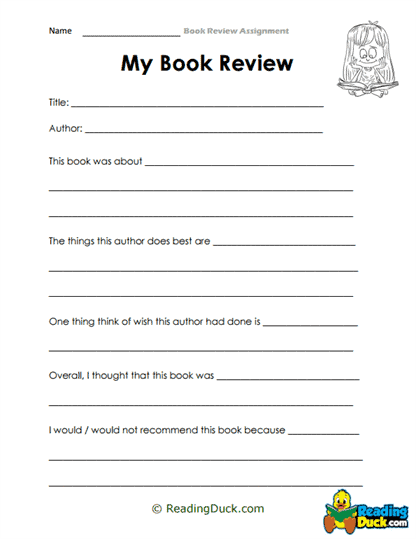
You can recognize book review assignments by features like ratings, thesis statements, targeted recommendations, and scene‑based evidence. Many include organizers for character arcs, theme tracking, or plot sequencing that funnel into a clear verdict. Others use concise formats-like six‑word summaries or emoji cues-to push clarity and brevity. All keep the focus on supported opinion rather than retell.
Common challenges include over‑summarizing, vague praise or criticism, and forgetting the intended audience. To overcome these, students benefit from tight limits on summary, sentence frames for claims, and checklists that demand evidence. Peer review helps writers hear how their tone lands and whether their reasons persuade. With practice, students learn to revise toward clarity and impact.
Mastering review writing pays off well beyond language arts. Students learn to judge sources, write recommendations, and present arguments in a way that respects readers' time and needs. These are the same habits used in professional reviews, college writing, and everyday decision‑making. Strong reviewers become strong communicators.
Example
Six‑Word Summary:"Found family outshines fear and fate."
Claim:I recommend this book for readers who enjoy fast‑paced fantasy with heart.
Evidence:The festival scene in chapter 9 shows how the friends risk their safety for one another, and the final choice proves the theme of loyalty.
Audience Note:If you liked The Girl Who Drank the Moon*, this fits your shelf.*
Make sure to bookmark our website now.
Enjoy all our free reading worksheets.
Our materials adhere to the principles of the Science of Reading.