If the natural world had tiny caped superheroes, they'd be bees-buzzing from flower to flower, saving ecosystems one pollen grain at a time. With fuzzy bodies, beating wings, and a work ethic that puts even the busiest humans to shame, bees keep entire landscapes alive. They fly thousands of miles, dance to share directions, and build perfect hexagon homes that would make any architect jealous. Small? Yes. Mighty? Absolutely.
Learning about bees opens a door into a world powered by teamwork and perfect precision. These insects pollinate most of the foods we eat, keep wild plants thriving, and maintain ecosystems with every buzz. Their lives are full of secrets: coded dances, carefully organized colonies, and superpowered senses. Understanding bees helps students understand nature's delicate-and astonishing-balance.
Our Bee Worksheets bring this buzzing brilliance to life through vibrant informational texts. Students explore everything from life cycles to communication, movement, and relationships with the environment. Each worksheet blends reading comprehension with cool science facts, helping learners connect literacy to the living world. It's sweet, smart, and sticky with discovery-just like honey.
Meet the Worksheets
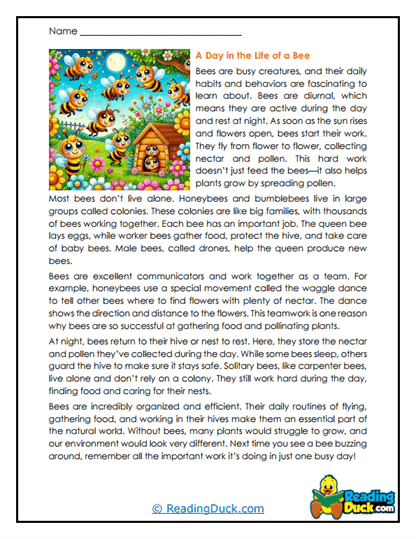
Busy Buzz
Students meet bees as hardworking heroes of the natural world, learning about colonies, communication, and pollination. The passage highlights how hive roles work together to keep ecosystems healthy. It reinforces reading comprehension through clear, structured nonfiction. Fun fact: a single bee can visit up to 5,000 flowers in a day-talk about a busy work schedule!
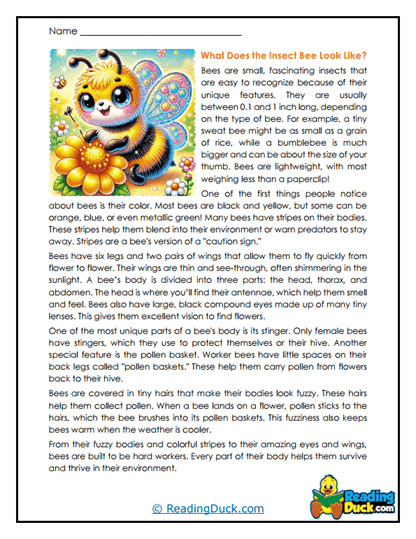
Fuzzy Features
This worksheet explores bee anatomy from fuzzy hairs to pollen baskets and powerful wings. Students learn how each trait helps bees survive and succeed in their jobs. It strengthens scientific vocabulary and observation-based thinking. Buzz-worthy detail: bees have five eyes-great for spotting flowers and avoiding trouble!
Honey Home
Students explore where bees live, from tree hollows to backyard hives. The passage links habitat needs to environmental threats and conservation. It builds geographic and ecological literacy. Sweet twist: wild bees sometimes build hives in old shoes or mailboxes-nature is creative!
Nectar Quest
Readers follow bees on their never-ending search for nectar and pollen, learning how honey is made along the way. The text breaks down feeding behaviors and flower-finding skills. It supports comprehension of biological processes and vocabulary. Fun fact: a bee's tongue is like a tiny straw-perfect for sipping nectar milkshakes.
Daily Drifter
This worksheet follows a bee's daily routine of flying, foraging, cleaning, and helping the hive. Students practice sequencing and understanding animal behavior. It builds vocabulary and environmental awareness. Surprising truth: bees take power naps-just a few seconds at a time-to recharge between flights!
Baby Buzz
Students learn how queens, drones, and workers create and care for the next generation of bees. The text walks through egg-laying, larva feeding, and growing new members of the hive. It builds comprehension of life cycles and scientific terms. Amazing fact: royal jelly can turn an ordinary larva into a queen-talk about a glow-up.
Growth Journey
This passage follows bees from egg to larva to pupa to adult, explaining metamorphosis along the way. Students practice reading sequences and understanding how each stage supports colony life. It strengthens vocabulary and STEM comprehension. Cool detail: during metamorphosis, bees reorganize their entire bodies inside wax cocoons-nature's ultimate makeover.
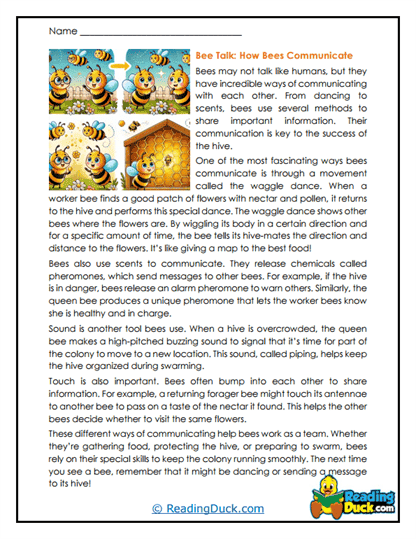
Dance Signals
Students decode the famous waggle dance and other communication tools bees use. The passage builds understanding of movement, scent, and sound-based messaging. It improves inference and analytical thinking. Delightful bonus: bees can "map" the location of flowers using dance moves that rival any TikTok routine.
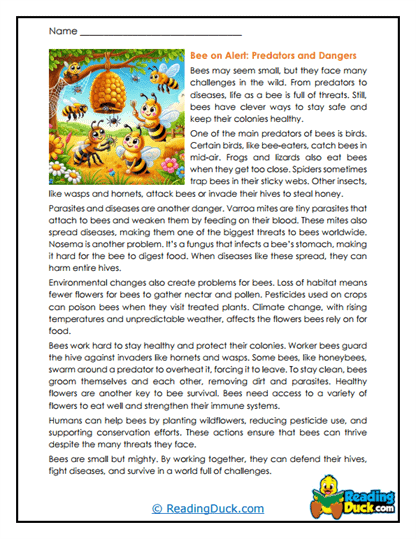
Danger Detectives
This worksheet spotlights threats bees face-from predators to pesticides. Students connect causes and effects while learning how bees protect their colonies. It builds environmental vocabulary and critical-thinking skills. Sobering fact: bees can sense pollution particles on flowers-and avoid them when possible.
Hero Helpers
Students discover why bees are essential pollinators and ecosystem defenders. The passage strengthens understanding of biodiversity and interdependence. It encourages big-picture thinking about environmental impact. Sweet note: one out of every three bites of food we eat exists because a bee visited a flower!
Motion Magic
This worksheet explores how bees fly, hover, crawl, and navigate impressive distances. Students connect anatomy to movement and adaptation. It enhances descriptive science reading. Fun flight fact: bee wings beat about 230 times per second-fast enough to make their signature buzz.
Harmony Helpers
Readers examine bees' relationships with flowers, mites, bears, and more through mutualism, commensalism, and parasitism. The worksheet strengthens classification and ecological reasoning. It grows vocabulary and deepens understanding of interdependence. Honey-sweet twist: flowers "call out" to bees with UV patterns only bees can see, nature's secret neon signs.
All About the Bee
Where It Lives
Bees can be found almost everywhere, from forests and deserts to gardens and city rooftops. They build homes in hives, hollows, and underground burrows depending on their species. Flowers guide them, water nourishes them, and warm weather helps them thrive. Wherever plants bloom, bees follow.
What It Eats
Bees feast on nectar and pollen, two ingredients that fuel the hive and support honey-making. Nectar becomes honey through evaporation and enzyme magic, while pollen provides protein for growing bees. Their diets keep plants reproducing and ecosystems flourishing. A bee's meal is the beginning of countless food chains.
How It Acts
Bees are diurnal, disciplined, and delightfully industrious. They communicate with dances, care for young, and divide jobs with precision. Every movement serves the hive, from cleaning cells to guarding the entrance. Buzzing with purpose, bees turn teamwork into survival.
How It Survives
Bees survive through cooperation, adaptation, and remarkable senses. Their fuzzy bodies collect pollen, their wings power long flights, and their stingers defend the hive. They read sunlight, flower scents, and magnetic fields to navigate. Every ability they have is a tiny miracle of evolution.
How It Raises Babies
Inside the hive, queens lay eggs while workers nurture the next generation. Larvae are fed royal jelly, honey, and pollen before spinning cocoons for metamorphosis. Each new adult joins the hive's workforce with perfect instinct. It's a family system built on care, collaboration, and constant growth.
Is It in Danger?
Yes, bees face threats from pesticides, climate change, parasites, and habitat loss. Their decline endangers entire ecosystems and global food production. But conservation efforts, pollinator gardens, and responsible farming can help. Protecting bees means protecting the heartbeat of nature itself.
Make sure to bookmark our website now.
Enjoy all our free reading worksheets.
Our materials adhere to the principles of the Science of Reading.