Lions are the rockstars of the savanna - bold, social, and armed with a roar that can shake the grass for miles. They're the only cats that live in family groups called prides, where cooperation and teamwork rule the day (and night). With golden coats, mighty muscles, and manes that double as natural crowns, lions have earned their title as "King of the Beasts." But despite their royal image, lions spend most of their time doing what they do best - napping in the shade, grooming each other, and waiting for dinner to walk by.
Studying lions gives us an incredible look into animal cooperation, hierarchy, and balance in the wild. They show us how teamwork and communication can mean the difference between feast and famine, survival and struggle. Lions also play a vital role in maintaining healthy ecosystems, keeping herbivore populations in check and feeding scavengers that depend on their leftovers. Learning about them teaches not just biology, but leadership, strategy, and resilience. They're nature's reminder that strength and community go hand in paw.
That's exactly what these lion worksheets capture - the science, the story, and the soul of the savanna. Each passage blends literacy and life science, encouraging students to read, think, and imagine like naturalists. Whether they're exploring pride life, hunting strategy, or conservation, these readings turn the king of beasts into the king of comprehension practice. Because every roar tells a story worth studying.
Meet the Worksheets
Pride Life
This worksheet introduces students to the daily routines of lions - resting, hunting, and socializing within the pride. They'll learn about the roles of males, females, and cubs, and how communication keeps the group organized. The passage builds vocabulary and comprehension around cooperation and structure. Fun fact: lions sleep up to 20 hours a day - which makes them both fierce hunters and professional nappers.
Roaring Talk
Students explore the many ways lions "speak" - from roars that travel miles to affectionate nuzzles that strengthen family bonds. The text highlights vocal and nonverbal communication, including scent marking and body language. It supports vocabulary and inference skills while teaching about teamwork and emotion in animals. A lion's roar can be heard up to five miles away - that's louder than a rock concert!
Meat Masters
This passage takes readers into the thrilling world of lion hunting. Students learn how lionesses coordinate ambushes while males defend the pride's feast. The text strengthens cause-effect reasoning and comprehension of food chains. One meal can fill a lion so completely that it won't eat again for several days - talk about meal prep efficiency.
Ecosystem Kings
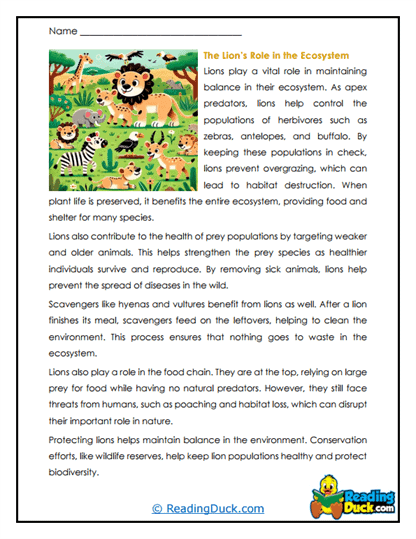
Here, students discover how lions maintain balance in the wild as apex predators. The reading explains food webs, scavenger support, and biodiversity. It builds scientific reasoning and encourages ecological awareness. When lions thrive, the savanna thrives - even their leftovers keep the circle of life spinning.
Savanna Homes
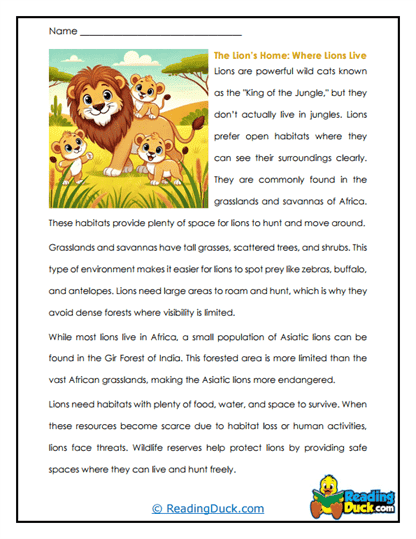
This passage takes readers to the grasslands and savannas where lions reign supreme. Students learn about African and Asiatic lion habitats, environmental needs, and conservation challenges. It strengthens geography and science vocabulary while encouraging critical thinking. Despite being called "Kings of the Jungle," lions actually prefer open plains - they just rule them like royalty.
Golden Royals
Students learn all about lions' striking physical features - from golden fur to the iconic mane that signals maturity and power. The passage connects anatomy to function and introduces conservation themes. It strengthens descriptive comprehension and scientific vocabulary. A lion's mane darkens with age - the older and darker it is, the more impressive the lion appears to rivals.
Growing Cubs
This worksheet follows a lion's life cycle from blind, wobbly cub to fierce adult. Students explore how cubs learn to hunt, socialize, and survive under their mother's watchful eye. The passage builds sequencing and life science skills. Lion cubs practice hunting by play-fighting - basically turning tag into survival school.
Majestic Hunters
Readers dive into the lion's power, speed, and social hunting strategy. The passage emphasizes cooperation, energy conservation, and ecological importance. Students expand vocabulary and understanding of behavioral adaptation. Lions may rest most of the day, but when they move - they move with purpose.
Swift Predators
Students study the physics of lion movement, exploring how muscles, bones, and teamwork make them efficient hunters. The passage promotes inferencing and understanding of anatomy's link to performance. It reinforces descriptive and scientific comprehension. Lions can leap as far as 36 feet - about the length of a classroom - in a single pounce!
Pride Partners
This reading explores the relationships lions share with other species in their ecosystem. Students learn about mutualism, commensalism, and parasitism through vivid examples. It develops ecological reasoning and vocabulary about interdependence. Even kings rely on allies - sometimes tiny birds and scavengers lend a helping beak.
Pride Parents
Students learn how lions reproduce and raise their cubs, exploring mating rituals, gestation, and maternal care. The passage develops sequencing and biological understanding with clear text organization. It promotes empathy and comprehension of social behaviors. Female lions team up to nurse and protect cubs together - it's true: it takes a pride to raise a cub.
Wild Dangers
This worksheet dives into the threats lions face, from natural enemies to human encroachment. Students explore problem-solution structures and conservation vocabulary. The text fosters awareness and analytical thinking about ecosystems. Despite all their strength, lions' greatest challenge is surviving alongside us - the new predators of the plains.
All About the Lion
Where They Live
Lions live in the grasslands, savannas, and open woodlands of Africa, with a small population of Asiatic lions in India's Gir Forest. They thrive in areas rich with prey and open space for hunting. Trees provide shade, while rivers offer water and resting spots. Each pride rules a territory that can stretch for miles. If the savanna had a monarchy, lions would wear the crown - and the throne would be made of tall grass.
What They Eat
Lions are carnivores through and through, dining on antelope, zebras, and buffalo. Lionesses do most of the hunting, using stealth, teamwork, and patience to bring down prey. Males protect the meal and defend the pride's territory. When food is scarce, lions scavenge or share kills with other predators. In nature's food court, lions are always at the top of the menu.
How They Act
Lions are social animals - a rarity among big cats. They live in prides, hunt together, and share food, affection, and responsibility. Roaring, grooming, and playful behavior keep the pride bonded and strong. Their nocturnal lifestyle lets them hunt efficiently in the cool night air. You could call them family-oriented night owls with serious teamwork skills.
How They Survive
Lions survive through a mix of strength, speed, and smarts. Their golden coats blend into the savanna, and their muscular builds help them tackle prey much larger than themselves. They rely on communication, cooperation, and careful rest to conserve energy. Their sharp senses keep them alert to threats and opportunities alike. Evolution gave them power - but their unity gives them dominance.
How They Raise Babies
Lionesses handle most of the parenting, from birth to teaching cubs to hunt. Females often synchronize births and form a nursery group, caring for each other's cubs. Cubs spend their early weeks hidden, protected by mothers who nurse and guard them fiercely. By two years old, young lions can fend for themselves. Mother lions are both gentle caretakers and fierce defenders - the queens behind the king.
Are They In Danger?
Yes - the lion's roar is growing quieter across the world. Habitat loss, poaching, and human conflict have reduced their populations by over half in the past century. Disease, drought, and declining prey add to the challenge. Conservation groups are working to protect prides through education, anti-poaching laws, and protected reserves. Saving lions means saving the heartbeat of the African savanna itself.
Make sure to bookmark our website now.
Enjoy all our free reading worksheets.
Our materials adhere to the principles of the Science of Reading.