If the jungle had its own comedy club, monkeys would run the show. These agile, intelligent primates swing through forests, chatter nonstop, and never miss a chance to turn curiosity into chaos. With over 260 species worldwide, monkeys come in all shapes and sizes - from the palm-sized pygmy marmoset to the blue-faced mandrill who looks like it belongs in a carnival. They're the masters of movement, mischief, and monkey business.
Learning about monkeys is like peeking into the blueprint for human behavior - teamwork, communication, problem-solving, and, yes, a fondness for snacks. Monkeys teach us about ecosystems, intelligence, and the incredible diversity of life on Earth. They remind students that science isn't just about reading facts - it's about wondering why and sometimes laughing at how much animals act like us.
Our Monkey Worksheets turn that wild energy into learning gold. Each activity mixes nonfiction comprehension with jungle excitement, teaching vocabulary, sequencing, and scientific observation in a fun, story-driven way. Students don't just read about monkeys - they explore their world, learn from their cleverness, and maybe even discover their inner primate. Let's climb right in!
Meet the Worksheets
Marvelous Monkeys
This worksheet introduces students to monkeys as amazing primates who swing, climb, and care for their forests. It builds comprehension and scientific literacy by exploring monkey habitats, diets, and group living. Learners strengthen vocabulary and main-idea recognition through vivid nonfiction details. Fun twist: some monkeys floss their teeth with twigs - talk about healthy habits!
Busy Troops
Students learn about the daily hustle of monkeys - from grooming and foraging to social play. The activity improves sequencing and cause-and-effect understanding while expanding communication vocabulary. It highlights the importance of imitation and cooperation in animal societies. Did you know monkeys can recognize each other by facial expressions, just like humans can?
Chatter Calls
This worksheet dives into the language of the jungle, where monkeys use sounds, gestures, and grooming to communicate. Students enhance inference skills and contextual comprehension as they decode these messages. It builds scientific vocabulary and understanding of nonverbal behavior. Incredibly, some monkey calls are so specific they can identify the type of predator nearby!
Jungle Menu
Learners explore what monkeys eat and how they use tools to access their favorite foods. The worksheet promotes detail-oriented reading and understanding of food chains and ecosystems. Students practice classification and analysis while building nutrition-related vocabulary. Monkeys sometimes wash their fruit before eating - talk about fine dining in the treetops.
Eco Helpers
Students discover how monkeys act as forest gardeners, dispersing seeds and balancing ecosystems. The worksheet boosts environmental literacy and teaches cause-and-effect comprehension. It encourages readers to think critically about conservation and biodiversity. Here's a cool fact: some trees rely entirely on monkeys to spread their seeds - teamwork at its greenest!
Clever Minds
This activity explores monkey intelligence through tool use, memory, and emotional learning. Students build critical thinking and comparative reasoning as they examine examples of problem-solving. It supports advanced vocabulary growth and reading of complex informational text. One capuchin monkey was observed using stones to crack nuts - nature's original inventor.
Monkey Stages
This worksheet outlines the monkey life cycle from newborn to adult, connecting science with reading structure. Students practice sequencing and vocabulary tied to growth and reproduction. It reinforces biological literacy while showing how learning and play shape maturity. Some baby monkeys hold onto their moms' bellies for months - the ultimate baby carrier.
Habitat Hunters
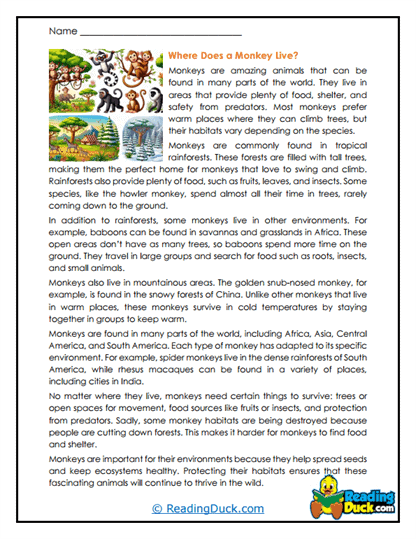
Learners explore where monkeys live, from tropical rainforests to chilly mountains. The worksheet builds geographical knowledge and ecosystem vocabulary while promoting text evidence identification. It strengthens comprehension through environmental examples. Fun fact: Japan's snow monkeys soak in hot springs during winter - nature's spa day.
Colorful Creatures
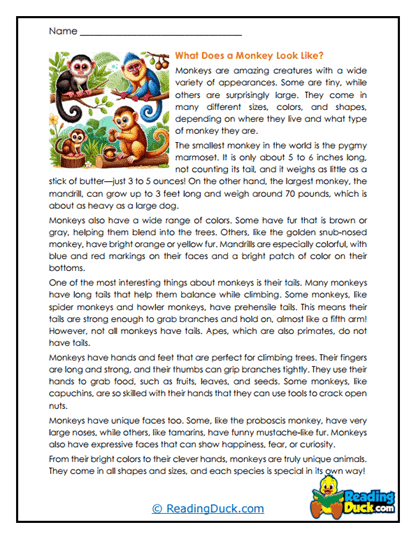
This activity examines the physical variety among monkeys, from size and color to tails and hands. Students enhance visualization and descriptive comprehension while linking anatomy to adaptation. It promotes observational vocabulary and conceptual understanding. Ever seen a mandrill? Its rainbow-colored face could give a paint palette an inferiority complex.
Agile Movers
Students learn how monkeys travel - leaping, swinging, climbing, and even swimming. The worksheet develops action-based vocabulary and visualization skills. Learners interpret movement as adaptation and survival. Believe it or not, some langurs can leap over 30 feet between trees - Olympic gold material if trees were allowed at the games.
Caring Kin
This worksheet explores family life and parenting among monkeys, from attentive mothers to cooperative fathers. It enhances comprehension of biological processes and event sequencing. Students expand their vocabulary around reproduction and social behavior. Tamarins often carry twins - double the cuteness, double the chaos.
Wild Dangers
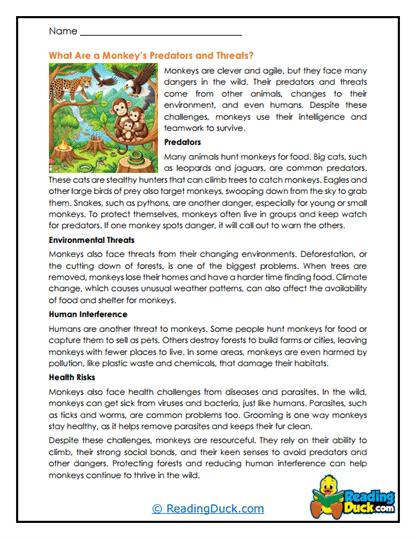
Students learn about the predators, diseases, and human threats monkeys face daily. The worksheet strengthens cause-and-effect and problem-solution reasoning. It supports science vocabulary growth and critical reading about environmental challenges. True story: some monkeys throw sticks at predators - it's like nature's version of dodgeball defense.
All About the Monkey
Where They Live
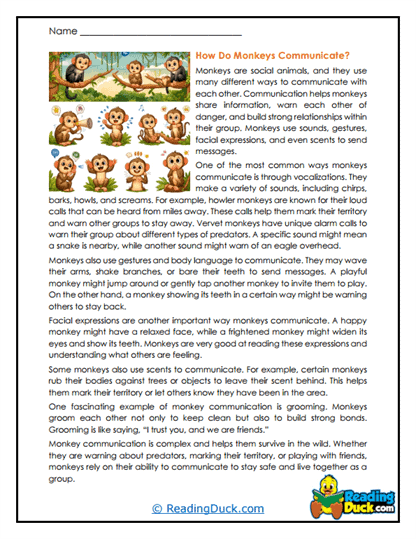
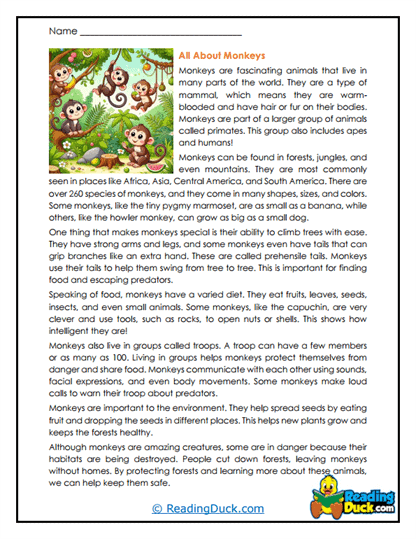
Monkeys are globe-trotting primates found across Africa, Asia, and Central and South America. They thrive in rainforests, savannas, mountains, and even snowy landscapes. Wherever there are trees - or snacks - you'll likely find a troop. Their homes are as varied as their personalities, from the humid Amazon to the misty Himalayas.
What They Eat
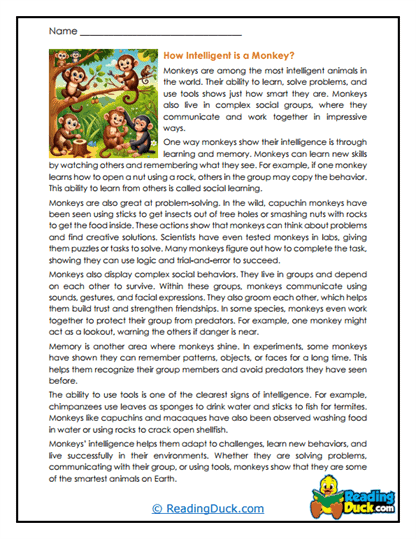
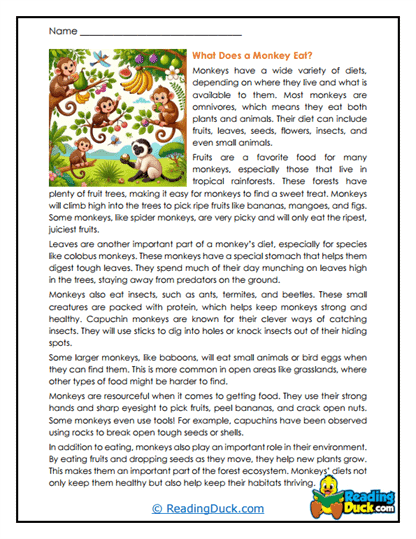
Monkeys are the ultimate omnivores, snacking on fruits, leaves, insects, flowers, and the occasional egg. They play a vital role in nature by spreading seeds and pruning plants through their diets. Some use sticks to fish for termites or crack open nuts with rocks. They prove that intelligence and appetite make an unbeatable combo in the jungle.
How They Act
Monkeys live in social groups called troops, full of chatter, grooming, and play. They communicate with facial expressions, calls, and even body posture. Social bonds keep the group strong and safe, while play helps young monkeys learn survival skills. Think of them as the jungle's liveliest neighborhood watch - with better jumping skills.
How They Survive
Life in the wild isn't easy, but monkeys come prepared. Their agility, intelligence, and teamwork help them outsmart predators and find food. Tails balance them mid-swing, and keen eyes spot danger before it strikes. Adaptation is their middle name - and mischief is probably their nickname.
How They Raise Babies
Monkey parenting is a full-time job - and often a team effort. Mothers carry their babies close for protection, while older siblings and fathers sometimes help. Young monkeys learn through imitation, play, and plenty of cuddles. It's survival through snuggles and social learning.
Are They in Danger?
Sadly, many monkey species are threatened by deforestation, hunting, and the pet trade. Habitat loss is their biggest enemy, shrinking their forests and food sources. Conservationists work hard to protect these primates through education and reforestation. The best way to help? Save the trees - because where the jungle lives, the monkeys thrive.
Make sure to bookmark our website now.
Enjoy all our free reading worksheets.
Our materials adhere to the principles of the Science of Reading.