Leopards are the ninjas of the animal kingdom - quiet, graceful, and capable of vanishing into thin air (well, tall grass). With golden coats covered in rosettes and muscles built for stealth, these big cats can climb trees while carrying dinner twice their weight. Found across Africa and Asia, leopards thrive in habitats that range from jungles to deserts to snow-covered mountains. They're solitary, secretive, and stylish - basically the introverts of the cat world, rocking a wardrobe of natural camouflage. You might not see one in the wild, but chances are, it's already seen you.
Studying leopards is like studying nature's art of adaptability. They teach us how species evolve to fit their environments perfectly - from their sharp night vision to their silent hunting techniques. As apex predators, leopards help control populations of prey animals, keeping ecosystems balanced and healthy. They're also masters of innovation, adjusting their diet, hunting style, and sleeping spots depending on where they live. Learning about them gives students a fascinating look into biology, behavior, and the delicate web of life that depends on top predators.
That's why these worksheets aren't just about reading - they're about discovery. Each one blends rich vocabulary with engaging storytelling and scientific insight. Students practice comprehension, critical thinking, and even empathy as they explore the leopard's world - from playful cubs to prowling adults. Whether they're learning about habitats, communication, or conservation, these leopard worksheets make science feel like a safari for the mind.
Meet the Worksheets
Spotted Signals
This worksheet explores how leopards "speak" without words using growls, roars, scent marks, and tail flicks. Students learn how these cats express emotion, claim territory, and care for cubs through clever communication. It builds understanding of behavior and emotional intelligence in the animal world. Fun fact: a leopard's purr is so deep it can vibrate through your feet if you're close enough to hear it!
Stealthy Suppers
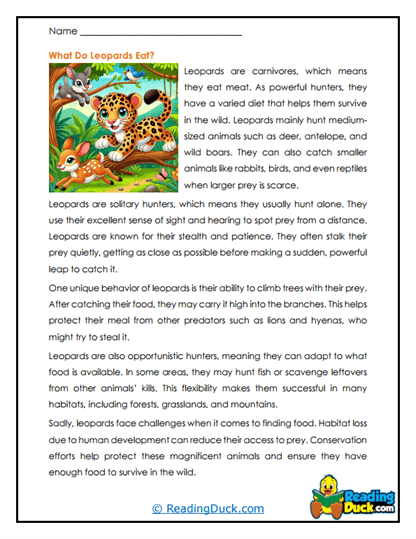
Students learn how leopards use patience, camouflage, and power to catch their prey. The passage covers diet, hunting strategies, and how leopards carry food into trees to avoid competition. It builds cause-and-effect reasoning and sharpens analytical reading. A single leopard can hoist an antelope higher than your living room ceiling - talk about upper body strength.
Ecosystem Guardians
This reading highlights the leopard's role as an apex predator and ecosystem stabilizer. Students discover how leopards prevent overgrazing and support scavengers through leftovers. The text reinforces vocabulary like "biodiversity" and "food chain." When a leopard eats, the whole ecosystem benefits - from insects to vultures.
Nighttime Hunters
Students follow a leopard's moonlit adventures as it hunts, patrols, and rests among branches. The passage explains nocturnal habits and maternal care in clear, descriptive detail. It strengthens sequencing and vocabulary through vivid imagery. Leopards' eyes shine gold at night - nature's own night-vision goggles.
Growing Spots
This worksheet traces a leopard's journey from helpless cub to master hunter. Students learn about birth, development, independence, and lifespan while practicing life cycle comprehension. It models clear expository writing and scientific reasoning. Leopard cubs are born with faint spots that darken as they grow - fashion that matures with age!
Wild Homes
Students explore where leopards live, from African savannas to Asian rainforests and even Himalayan slopes. The passage highlights habitat adaptation and conservation issues. It promotes environmental awareness and critical thinking about ecosystems. Leopards are so adaptable, they've been spotted near big cities - urban stealth mode: activated.
Regal Rovers
This reading introduces leopards' impressive strength, elegance, and worldwide range. Students connect anatomy, hunting, and environmental adaptability. It enhances comprehension of scientific structures and factual summaries. With a leap reaching 20 feet, leopards could easily clear your entire classroom in one bound.
Agile Stalkers
Students learn how leopards move - running, climbing, and swimming with surprising speed and grace. The passage links form to function, promoting inferential thinking about survival. It builds vocabulary around movement and adaptation. A leopard's tail can be nearly as long as its body, acting like a built-in balance beam.
Secret Spotted Cats
This worksheet celebrates the mystery of the leopard's beauty and stealth. Students analyze how physical traits and behaviors make them masters of disguise. It supports comprehension and environmental empathy through descriptive detail. Leopards' spots aren't just decoration - no two patterns are exactly alike, like fingerprints in fur.
Ecosystem Allies
This passage introduces relationships between leopards and other species, from scavengers to parasites. Students learn about mutualism, commensalism, and parasitism in dynamic ecosystems. It builds scientific vocabulary and expository comprehension. Even the fiercest predator shares the dinner table - just not by choice.
Parenting Panthers
Students discover how leopards reproduce, nurture, and teach their young. The passage follows the journey from birth to independence, emphasizing maternal care and learning behavior. It reinforces sequencing, biological vocabulary, and text organization. Leopard moms move their cubs to new hiding spots every few days - the ultimate game of "hide and sleep."
Survival Stripes
This reading explores the dangers leopards face, from predators to human threats. Students identify causes, effects, and conservation solutions in structured nonfiction writing. It builds vocabulary and empathy through environmental themes. Ironically, humans are the leopard's biggest threat - and also its greatest hope.
All About the Leopard
Where They Live
Leopards roam across Africa and Asia, from dense jungles to dry savannas and snowy mountains. They're the most widespread of all big cats, thriving wherever prey and cover exist. Trees are their favorite hideouts, serving as both shade and storage shelves for leftovers. Adaptability is their secret superpower - they can even survive near villages and farms. If survival were a contest, the leopard would win gold for flexibility.
What They Eat
Leopards are opportunistic carnivores with a varied menu: antelope, monkeys, birds, fish, and even insects if times get tough. Their stealth and strength make them elite ambush hunters. They often drag their kills high into trees to keep them safe from lions or hyenas. Nothing goes to waste - even scavengers feast on what's left. When it comes to efficiency, leopards are nature's original meal preppers.
How They Act
Solitary and secretive, leopards lead lives of quiet confidence. They mark territories with scent and scratches and communicate through roars, growls, and tail flicks. Mothers raise cubs alone, teaching them to hunt through play and patience. They're mostly nocturnal, spending daylight hours lounging in trees. Think of them as introverts with excellent climbing skills and impeccable fashion sense.
How They Survive
Leopards survive by being both strong and sneaky. Their spotted coats provide camouflage, while sharp claws and powerful jaws handle the heavy lifting. They can run up to 36 miles per hour, swim across rivers, and climb to avoid danger. When threatened, they vanish into shadows like liquid gold. Evolution didn't make them the biggest or fastest - just the smartest at staying alive.
How They Raise Babies
Leopard mothers are some of nature's most devoted single parents. After a three-month pregnancy, they give birth to one to three cubs, hiding them in dens or thick vegetation. Cubs stay with their mothers for about two years, learning hunting and survival skills. Every lesson - from stalking to climbing - is taught through careful observation. Raising a leopard cub is basically homeschooling with extra teeth.
Are They in Danger?
Sadly, leopards face growing threats from habitat loss, poaching, and human conflict. Their range has shrunk dramatically, and many subspecies - like the Amur and Sri Lankan leopards - are endangered. Conservationists are protecting forests, preventing poaching, and promoting coexistence to save these stealthy cats. Leopards play a vital role in maintaining ecosystem balance. Protecting them ensures that future generations can still find wild beauty beneath the trees.
Make sure to bookmark our website now.
Enjoy all our free reading worksheets.
Our materials adhere to the principles of the Science of Reading.