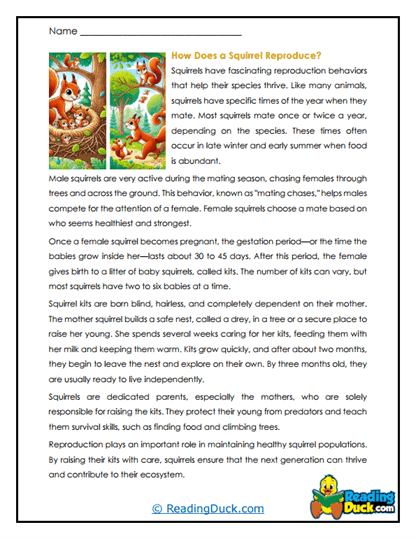
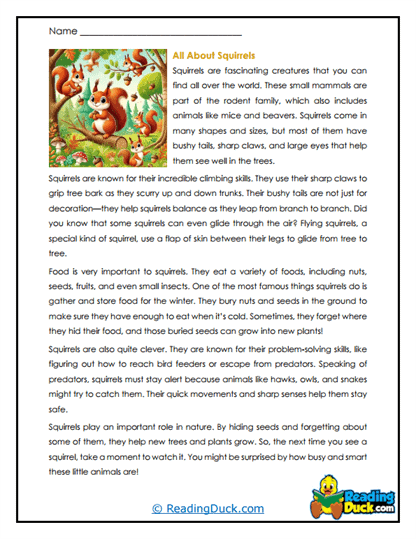
If the forest had a built-in comedy act, it would star the squirrel-half athlete, half acrobat, and full-time nut enthusiast. With tails like fluffy parachutes and nerves of steel, squirrels leap between branches, stash food in the oddest places, and somehow remember where they buried most of it. (Well, some of it.) Their forgetfulness is actually genius-each misplaced nut can grow into a new tree, turning snack time into forest expansion.
Learning about squirrels means uncovering the science of speed, smarts, and survival. These tiny powerhouses are expert engineers of the ecosystem, from planting seeds to feeding predators. Their sharp claws and sharper instincts make them masters of adaptation across cities, forests, and parks. Studying squirrels isn't just about animals-it's about teamwork between nature, instinct, and a whole lot of nut storage.
Our Squirrel Worksheets turn that lively forest chaos into learning gold. Each passage helps students explore how squirrels live, leap, and build the future of forests-one buried acorn at a time. The mix of reading comprehension and natural science builds curiosity while sharpening observation and analytical skills. It's the perfect blend of academic rigor and tail-twitching fun.
Meet the Worksheets
Nutty Climbers
Students meet the world's most energetic tree-huggers-squirrels! The passage covers their habitats, diets, and how their clever caching habits help forests grow. Learners practice main-idea comprehension and cause-and-effect reasoning. Fun fact: squirrels sometimes pretend to bury nuts just to trick other squirrels into leaving them alone!
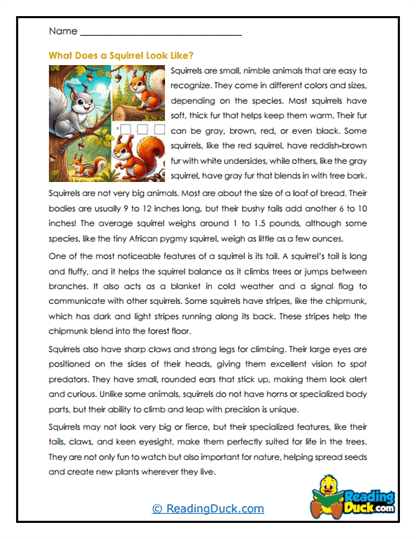
Fluffy Acrobat
This worksheet paints a vivid picture of squirrels' sleek shapes and furry grace. Students explore how camouflage, color, and agility help them stay safe and soar through the trees. It boosts visualization skills and descriptive vocabulary. Did you know? A squirrel's tail acts as both a steering rudder and an umbrella-handy in all weather!
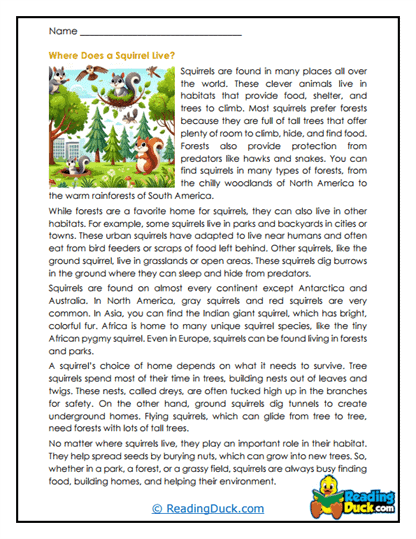
Forest Homes
Students explore the cozy, creative homes of squirrels, from leafy nests called dreys to underground burrows. They learn how different species adapt to life in cities, forests, and beyond. The passage strengthens comprehension of habitats and classification. Bonus twist: squirrels sometimes move into abandoned bird nests-they're thrifty tenants of the treetops!
Clever Foragers
This passage dives into the art of food collection, showing how squirrels gather and hide their meals for winter. Students analyze omnivore diets and learn how caching supports ecosystems. It reinforces sequencing and vocabulary development. Fun tidbit: squirrels forget up to 70% of their buried nuts-accidental gardeners at work!
Busy Builders
Students follow a squirrel's jam-packed day of running, storing, and acorn aerobics. They learn about daily routines, social habits, and nest-building instincts. The text strengthens time-sequence comprehension and observation of behavior. Extra fun: baby squirrels "play chase" as practice for future food hunts!
Nesting Mothers
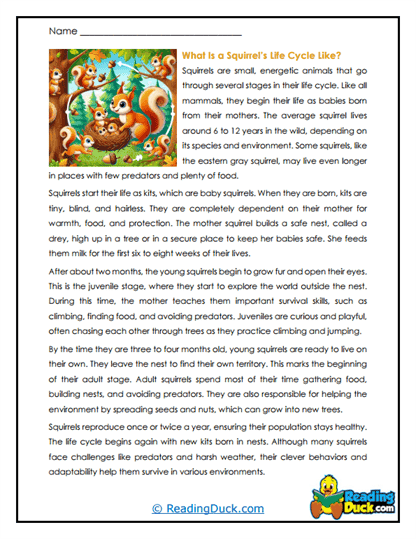
This worksheet introduces caring squirrel moms and their energetic babies, called kits. Students trace the family journey from gestation to independence. It builds sequencing and empathy through real-world animal examples. Heartwarming fact: mother squirrels build multiple backup nests-because even wildlife moms love a good safety plan.
Treebound Life
Readers follow a squirrel's full life cycle, from helpless newborn to agile adult. The passage explores growth, learning, and the role squirrels play in replanting forests. It strengthens chronological and transitional understanding. Unexpectedly, some squirrels live over 10 years-especially if they avoid cars and cats!
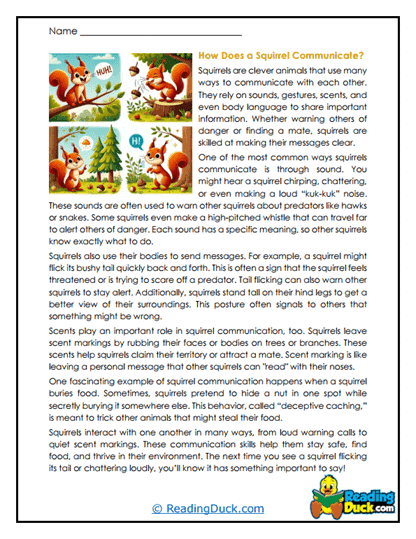
Chatter Signals
This passage cracks the code of squirrel communication-tail flicks, chirps, and even scent-based messages. Students practice inferential reading and behavioral interpretation. It boosts vocabulary around signals and territory. Secret revealed: squirrels actually scold predators with rapid-fire "chirps"-tiny but fierce defenders!
Hidden Hazards
Students explore the dangers squirrels face, from hawks to highways. The passage connects threats to adaptations and human impact. It promotes problem-solution comprehension and environmental empathy. Positive note: planting trees near urban parks gives squirrels safe bridges across city "jungles."
Forest Helper
This worksheet highlights squirrels as eco-superheroes who spread seeds and recycle nutrients. Students learn how their forgotten nuts literally grow forests. It builds comprehension of interconnected systems and cause-effect relationships. Fun twist: squirrels even help fungi spread-forest teamwork at its finest!
Quick Leaper
Students study the physics of squirrel motion, from vertical sprints to daring midair flips. The passage ties movement to survival and balance. It strengthens descriptive reading and science vocabulary. Believe it or not, squirrels can survive falls from 100 feet-landing on their feet every time!
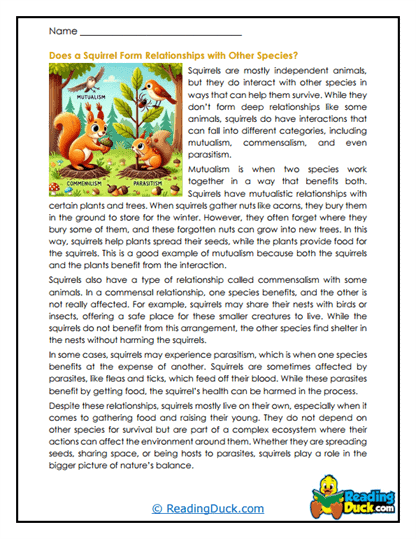
Nature's Neighbors
This passage explores squirrels' relationships with trees, birds, and even parasites. Students practice classifying mutualism, commensalism, and parasitism. It strengthens analytical reading and understanding of ecosystems. Quirky fact: squirrels often share food spots with chipmunks-but only if no one's watching.
All About the Squirrel
Where It Lives
Squirrels thrive wherever trees grow-from dense forests to city parks and suburban gardens. They're masters of adaptation, turning rooftops into playgrounds and power lines into highways. Tree squirrels build leafy dreys, while ground squirrels dig cozy burrows. No matter the setting, if there's a snack nearby, a squirrel's already claimed the lease.
What It Eats
Mostly herbivores, squirrels adore nuts, seeds, fruits, and the occasional bug or bird egg. They gather more food than they can eat, burying treasures across their territory. Forgotten snacks sprout into new trees, making squirrels accidental foresters. Their diet may seem simple, but every bite helps shape the landscape.
How It Acts
Squirrels are fast, clever, and a little dramatic. They spend their days leaping, chattering, and keeping an eye on every rustling leaf. Their alertness keeps predators guessing and their communities lively. Watching a squirrel in action is like watching parkour with a tail.
How It Survives
Speed and smarts are a squirrel's best defense. They outmaneuver hawks, dodge traffic, and stash enough food to outlast harsh winters. Their sharp claws, springy legs, and lightning reflexes make them ultimate survivors. And when things get tough? They simply dig up a snack and carry on.
How It Raises Babies
Squirrel families may be small, but they're fiercely dedicated. Mothers raise litters of kits in hidden nests, feeding and grooming them until they're ready to explore. Baby squirrels learn climbing, jumping, and caching by imitation-and a few tumbles. It's motherhood with a side of mayhem and lots of leafy hugs.
Is It in Danger?
While squirrels are abundant, their forests aren't always safe. Habitat loss, cars, and climate changes can threaten local populations. Conservation groups encourage planting trees and preserving green corridors. After all, a healthy forest full of squirrels is a forest that's still growing strong.
Make sure to bookmark our website now.
Enjoy all our free reading worksheets.
Our materials adhere to the principles of the Science of Reading.