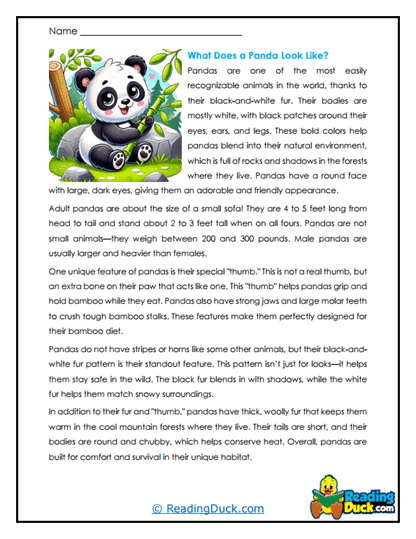
If cuddles could climb trees and chew bamboo, they'd probably be pandas. These black-and-white icons of calm are technically bears, but they prefer peaceful snacking to growling and hunting. Native to China's misty mountain forests, pandas spend most of their lives eating, sleeping, and occasionally rolling downhill like fluffy boulders of joy. They're living proof that being adorable can also be an ecological superpower.
Learning about pandas is like learning how balance works in nature - and in life. They may seem lazy, but every bite of bamboo they take helps shape entire forest ecosystems. Pandas teach us about adaptation, conservation, and the power of protecting even the gentlest giants. And let's face it: any lesson that involves a bear doing yoga stretches for bamboo is automatically engaging.
Our Panda Worksheets turn these peaceful eaters into teachers of science, reading, and environmental awareness. Each activity blends nonfiction reading with wonder - from exploring habitats to analyzing food webs and understanding conservation. Students won't just learn about pandas; they'll understand why saving one species can help save the world. So grab your bamboo and let's begin!
Meet the Worksheets
Precious Pandas
This worksheet introduces students to the world's most beloved bear, exploring their bamboo diet, anatomy, and conservation story. Learners practice identifying main ideas and details while expanding environmental vocabulary. It connects reading comprehension with global awareness and empathy for endangered species. Fun fact: a panda spends up to 14 hours a day eating - talk about commitment to carbs.
Gentle Giants
Students follow a day in the life of a panda - eating, resting, and lumbering through mountain forests. The worksheet strengthens sequencing and cause-and-effect reasoning through real-world biology. Learners explore how pandas communicate, climb, and conserve energy. Believe it or not, these sleepy snackers are excellent swimmers!
Panda Talk
This activity reveals the secret language of pandas - from bleats and honks to scent marks on trees. Students develop inference skills and learn how animals express meaning beyond words. It builds scientific vocabulary and boosts context comprehension. Fun twist: baby pandas sound like squeaky rubber ducks when they cry!
Bamboo Feast
Students explore how pandas' specialized diet and "thumb" adaptation help them thrive. The worksheet builds comprehension around ecosystems and dietary dependence while strengthening analytical reasoning. Learners make connections between food sources and environmental balance. A single panda can eat over 30 pounds of bamboo a day - basically nature's slowest wood chipper.
Forest Guardians
This worksheet shows how pandas act as forest caretakers by spreading bamboo seeds and supporting other species. Students analyze cause-and-effect relationships and learn about interdependence in ecosystems. It encourages critical thinking about conservation and biodiversity. By saving pandas, we save countless other creatures hiding in their bamboo neighborhoods.
Cuddly Cubs
Students follow the panda life cycle from tiny pink newborns to majestic adults. The activity develops sequencing and biological vocabulary while improving chronological comprehension. Learners connect animal growth to survival and adaptation. Newborn pandas are so small they could fit in your hand - but they grow fast into the fluffiest eating machines alive.
Mountain Homes
This worksheet explores pandas' habitats - cool, misty forests filled with bamboo and fresh mountain streams. Students practice identifying main ideas and supporting evidence while building environmental vocabulary. It deepens geographical awareness and connects reading to conservation. Some panda reserves are so high up, clouds literally roll through their bamboo forests.
Playful Patterns
Students analyze the panda's iconic black-and-white coat and how it helps with camouflage and communication. The worksheet builds descriptive comprehension and vocabulary precision. Learners connect anatomy to survival and adaptation. Their "eyepatches" may look cute, but they actually help pandas recognize each other - nature's built-in ID badge.
Careful Climbers
This activity explains how pandas move - climbing, walking, and swimming with surprising agility. Students enhance process comprehension and cause-and-effect reasoning while improving scientific vocabulary. It connects behavior and anatomy to energy conservation. Pandas may look clumsy, but they can scale trees faster than most gym-goers tackle stair machines.
Forest Friends
Students learn how pandas influence and depend on other species in their ecosystem. The worksheet develops classification and analysis skills while strengthening ecological vocabulary. It helps learners see symbiosis in action through relatable examples. Even fallen bamboo chewed by pandas becomes compost for future forests - talk about recycling done right!
Caring Cubs
This worksheet explores panda reproduction and parental care, showing how mothers raise and protect their cubs. Students build scientific literacy and comprehension of life cycles. The activity promotes awareness of conservation programs and species survival. Panda moms care for their cubs so tenderly, they cradle them like human babies - heart officially melted.
Perilous Peaks
Students examine the threats pandas face, from predators and habitat loss to human encroachment. The worksheet strengthens cause-and-effect and problem-solution comprehension. It encourages analytical reading about conservation and environmental change. Thankfully, thanks to global efforts, pandas have moved from "endangered" to "vulnerable" - a small but hopeful victory for fluff and forests alike.
All About the Panda
Where They Live
Pandas live high in the misty mountain forests of central China, where bamboo grows in thick, peaceful groves. They prefer cool climates and dense vegetation, using caves and hollow trees for shelter. These forests provide the perfect blend of food and solitude. It's like their own bamboo buffet tucked inside the clouds.
What They Eat
Despite being classified as carnivores, pandas eat mostly bamboo - and a lot of it. Their strong jaws and special "thumb" help them grasp and strip stalks with precision. Occasionally, they snack on fruits or small animals for variety. Pandas are the ultimate example of commitment to a plant-based diet (minus the smoothies).
How They Act
Pandas are famously calm and solitary, spending most of their time eating or napping between meals. They use scent marks and sounds to communicate, especially during mating season. Their slow pace matches their low-energy bamboo diet, but they can still climb or swim when needed. Essentially, they're introverted athletes with gourmet tastes.
How They Survive
Adaptation is everything for pandas. Their thick fur keeps them warm in mountain chill, and their large molars crush bamboo like natural grinders. Their camouflage helps them blend into snowy rocks and shady forests. And when food is scarce, pandas migrate up or down the mountain - it's all about following the bamboo buffet.
How They Raise Babies
Panda moms are devoted and patient, raising their tiny, pink cubs with intense care. Cubs rely completely on their mothers for warmth, milk, and protection for many months. As they grow, moms teach them how to eat bamboo and climb trees safely. It's motherhood powered by bamboo and boundless tenderness.
Are They in Danger?
Once critically endangered, pandas have made a remarkable comeback thanks to conservation efforts. Still, habitat loss and climate change remain major threats. Protecting bamboo forests ensures not only panda survival but also the wellbeing of countless forest species. Every tree saved is a step toward keeping these gentle giants munching peacefully for generations.
Make sure to bookmark our website now.
Enjoy all our free reading worksheets.
Our materials adhere to the principles of the Science of Reading.