If teamwork had fur and fangs, it would look a lot like a wolf pack. These powerful predators are the ultimate blend of intelligence, loyalty, and leadership-moving through forests and tundras like a finely tuned orchestra of howls and paws. With golden eyes and fur thick enough to shrug off a blizzard, wolves are both fierce hunters and devoted family members. They're not just survivors-they're the heartbeat of the wild.
Learning about wolves means studying strategy, structure, and symphony in nature. Every pack is a masterpiece of communication and cooperation, balancing instinct with intellect. Wolves keep ecosystems healthy, prey populations steady, and myths alive in cultures worldwide. Through their story, students explore biology, ecology, and even lessons in teamwork and resilience.
Our Wolf Worksheets transform that wild energy into learning adventures. Students will analyze life cycles, study habitats, and interpret howls like wildlife detectives. Each passage mixes reading comprehension with scientific curiosity. It's literacy with bite-and plenty of pack spirit.
Meet the Worksheets
Wild Bonds
Students meet wolves as social masterminds of the wilderness, working together to hunt, raise young, and protect their pack. The text explores their intelligence, cooperation, and importance in balancing ecosystems. It builds vocabulary and comprehension around real-world science. Fun fact: when wolves reunite, they wag their tails, whine, and nuzzle-basically the wild version of a group hug.
Fierce Features
This passage dives into the design of a predator-sharp eyes, keen ears, and muscles built for endurance. Students connect each physical trait to a survival purpose, reinforcing adaptation concepts. It strengthens descriptive reading and observation skills. Did you know? A wolf's sense of smell is over 100 times stronger than a human's-no need for Google Maps in the wild!
Global Homes
Students explore how wolves thrive from snowy tundras to grassy plains and mountain peaks. The passage highlights adaptation, conservation, and global habitats. It builds geographic and contextual comprehension. Cool note: Arctic wolves can handle -40°F temperatures without flinching-a built-in winter jacket nature would envy.
Hunting Habits
This worksheet breaks down the pack's dining strategy-coordination, speed, and smart teamwork. Students examine how wolves' carnivorous diets affect prey populations and ecosystems. It supports classification and cause-effect reasoning. Bonus: wolves often test herds to find the weak or sick-nature's way of keeping balance and health in check.
Pack Life
Students peek into the social order of wolf packs, from alpha leaders to playful pups. They'll learn about howling, cooperation, and dawn-to-dusk routines. The passage develops sequencing and analytical reading skills. Howling detail: a single wolf's call can travel up to 10 miles through the open night!
Family Bonds
This passage follows the story of wolf parents-dedicated, protective, and endlessly patient. Students trace the process from courtship to raising pups and pack support. It strengthens chronological comprehension and empathy through science. Sweet twist: wolf pups are born blind and deaf, relying entirely on touch and scent for their first two weeks.
Life Stages
Readers follow wolves from helpless pups to proud adults leading the hunt. The passage maps growth and learning milestones with clear sequencing. It enhances summarization and text organization. Interesting fact: by six months old, young wolves can already run with the pack-call it the wilderness version of "driver's ed."
Wild Voices
This worksheet explores the language of the pack-howls, growls, and tail signals galore. Students interpret vocal and body communication, building inference and behavioral vocabulary. It's perfect for reading between the (fur) lines. Fun extra: wolves don't just howl to scare-they also sing duets and choruses to keep in touch over long distances!
Survival Struggles
Students study the challenges wolves face-from human conflict to habitat loss and disease. The passage encourages cause-and-effect comprehension and problem-solving. It connects environmental issues to science literacy. Hopeful fact: reintroduced wolves in Yellowstone restored entire ecosystems-proof that balance can be rebuilt.
Ecosystem Guardians
This worksheet turns wolves into heroes of ecology. Students learn about the "trophic cascade" effect-how wolves influence everything from deer to trees. It builds synthesis and environmental comprehension. Wild truth: when wolves returned to Yellowstone, rivers changed course-because forests regrew, beavers came back, and erosion slowed. Now that's power.
Swift Movers
Students learn how wolves travel, sprint, and coordinate across long distances. The passage connects anatomy to endurance and precision. It builds vocabulary and sequencing through physical descriptions. Fun note: wolves can cover 30 miles a day without breaking a sweat-and still find time to howl about it.
Nature Partners
This reading explores how wolves interact with other species through mutualism, commensalism, and parasitism. Students classify ecological relationships and connect animal actions to ecosystem balance. It strengthens critical thinking and vocabulary. Quirky twist: ravens often follow wolf packs for free meals-and wolves don't mind sharing. Friendship goals, forest edition!
All About the Wolf
Where It Lives
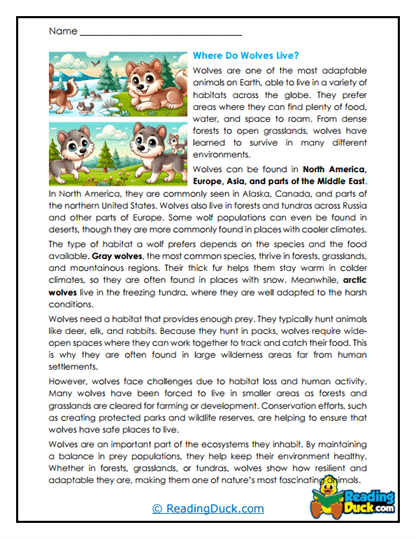
Wolves roam across forests, tundras, mountains, and grasslands across North America, Europe, and Asia. They follow food, water, and safety through the seasons, often covering hundreds of miles. Packs claim large territories and mark them with scent to warn rivals. Wherever wilderness still whispers, wolves are listening.
What It Eats
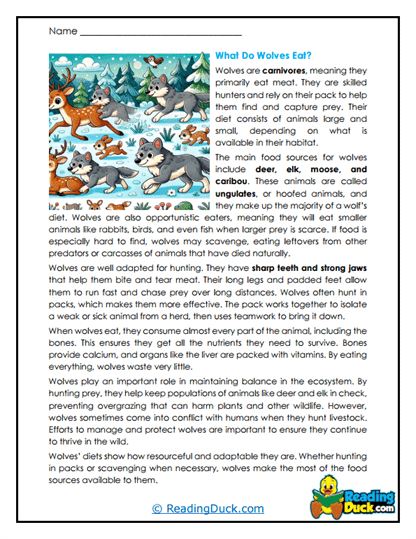
As carnivores, wolves prefer deer, elk, and moose-but won't say no to a rabbit or two. They hunt in coordinated teams, each member knowing their role. This teamwork keeps herds healthy and ecosystems balanced. In nature's restaurant, wolves are the quality-control department.
How It Acts
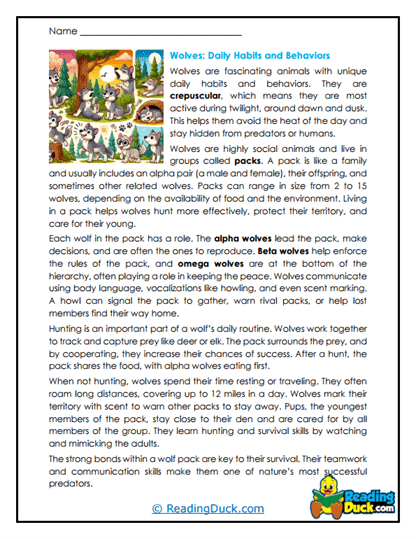
Wolves are social animals with personalities as vivid as their howls. They play, groom, and teach younger members like a family of fur-covered professors. Each pack has leaders, helpers, and jokesters-all vital to success. Watching them interact is like seeing loyalty written in motion.
How It Survives
Adaptability is the wolf's secret weapon. Thick coats shield from cold, sharp senses detect prey from miles away, and teamwork ensures no one hunts alone. Wolves can thrive from deserts to snowdrifts-true masters of adjustment. They're not just survivors; they're strategists.
How It Raises Babies
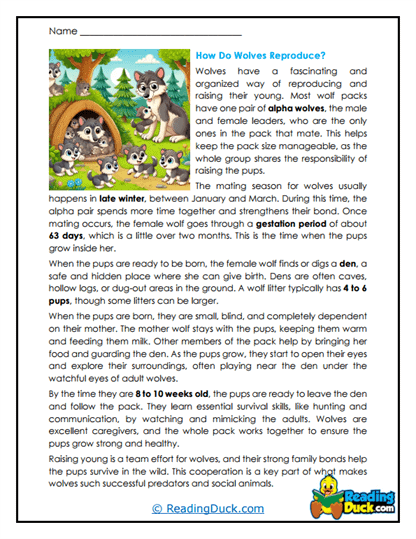
Wolf parents are devoted caregivers. Alpha pairs raise pups with help from the entire pack, feeding, guarding, and teaching survival. Pups learn through play, imitation, and patient mentorship. Every howl they master is a lesson in both voice and unity.
Is It in Danger?
Yes, but there's hope. Wolves face challenges from habitat loss, hunting, and myths that paint them as villains. Conservation and education are helping rewrite that story. When wolves return to the wild, nature itself heals-and the chorus of howls grows stronger.
Make sure to bookmark our website now.
Enjoy all our free reading worksheets.
Our materials adhere to the principles of the Science of Reading.