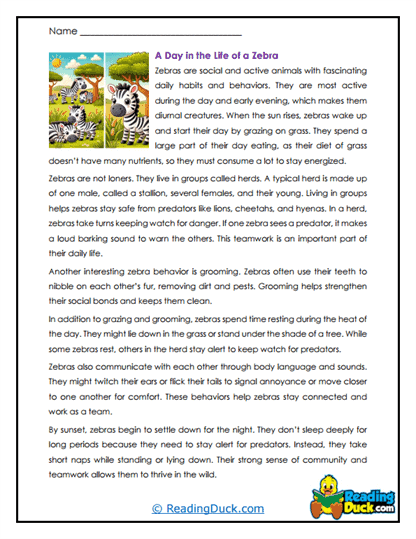
If the African savanna had a fashion show, zebras would be the stars of the runway. With their striking black-and-white coats and confident herds, these equine adventurers combine beauty, brains, and balance in perfect measure. Each zebra's stripes are as unique as fingerprints, helping them stay hidden in tall grass while dazzling predators into confusion. They're nature's optical illusionists-and possibly the most stylish grazers alive.
Learning about zebras means exploring a world where cooperation meets camouflage. These herd heroes work together to protect each other, migrate for miles, and shape ecosystems with every bite of grass. From their galloping grace to their family bonds, zebras show that even the wildest lives run on teamwork and rhythm. They're not just horse relatives-they're ecological architects in monochrome.
Our Zebra Worksheets turn science into storytelling, leading students through stripes, herds, and habitats with vivid detail and humor. Each passage mixes literacy and life science, helping learners connect animal behavior to environmental systems. It's reading that runs wild-fast, fun, and full of discovery.
Meet the Worksheets
Wild Stripes
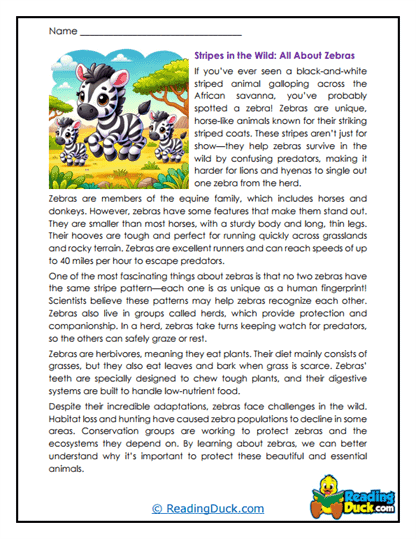
Students meet zebras in all their striped glory, learning how camouflage, herd life, and speed help them survive. The text connects adaptation and biodiversity through descriptive detail. It builds vocabulary and analytical reading skills. Fun fact: if you shaved a zebra (please don't), its skin would still be striped underneath!
Unique Patterns
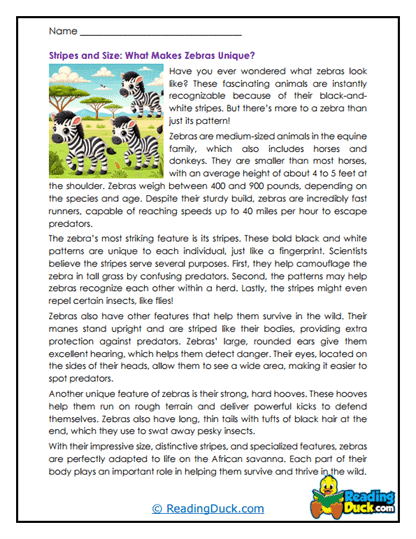
This worksheet explains why no two zebras have the same stripe pattern and how stripes repel insects, disguise movement, and aid recognition. Students practice compare-and-contrast reading between zebras, horses, and donkeys. It strengthens observation and critical thinking. Quirky twist: zebra stripes may actually keep them cool by creating tiny air currents-built-in AC!
African Homes
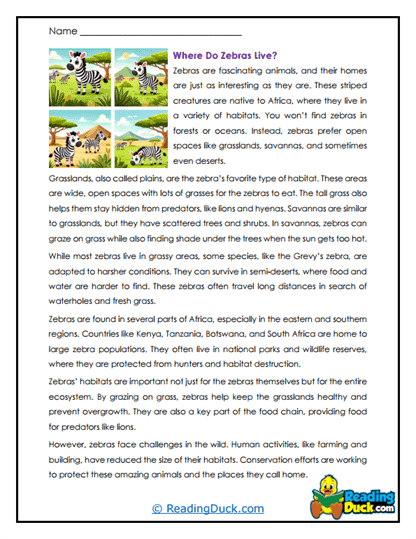
Readers travel across Africa's plains, deserts, and woodlands to learn where zebras thrive. The passage connects habitat to adaptation and environmental balance. It builds vocabulary and geographical understanding. Surprise: zebras' grazing actually "landscapes" the savanna, clearing paths that help other animals follow their lead.
Grassland Grazers
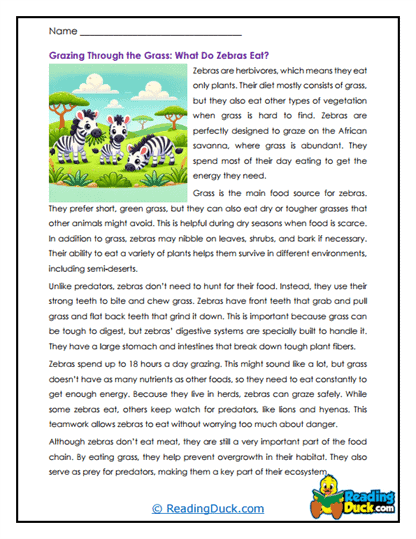
Students explore the zebra's vegetarian diet and how grazing maintains healthy ecosystems. The text explains digestive adaptations and ecological impact. It reinforces cause-and-effect relationships and biological vocabulary. Tasty tidbit: zebras eat so much tough grass that their teeth never stop growing!
Herd Life
This passage follows zebras through a typical day of grazing, grooming, and galloping with friends. Students build sequencing skills and social-behavior comprehension. It connects teamwork and safety through real-life examples. Heartwarming note: zebras use gentle nibbles and neck rubs to bond-it's their version of a hug.
Family Bonds
Students dive into zebra family life, from courtship to caring for foals. The passage teaches life-cycle sequencing and biological vocabulary. It also encourages empathy through stories of parental protection. Adorable fact: zebra foals recognize their mothers' stripes within hours of birth-it's their first "name tag" in the wild.
Growing Stripes
This worksheet traces a zebra's life stages, from playful foal to mature herd member. Students practice summarizing and sequencing in life-science contexts. It highlights development and environmental adaptation. Cool fact: young males form "bachelor herds" until they're old enough to lead their own families-a wildlife version of college roommates!
Striped Talk
Students decode zebra language through brays, snorts, and ear flicks. The passage sharpens inferential reading and builds understanding of nonverbal cues. It also draws connections between animal and human communication. Fun detail: zebras use ear position like emojis-ears back for angry, forward for curious, sideways for relaxed.
Survival Stripes
Readers confront the dangers zebras face from predators, drought, and habitat loss. The text builds cause-and-effect comprehension and awareness of human impact. It supports environmental literacy and problem-solving skills. Hopeful note: protected reserves across Africa are helping zebra populations rebound in style.
Ecosystem Helpers
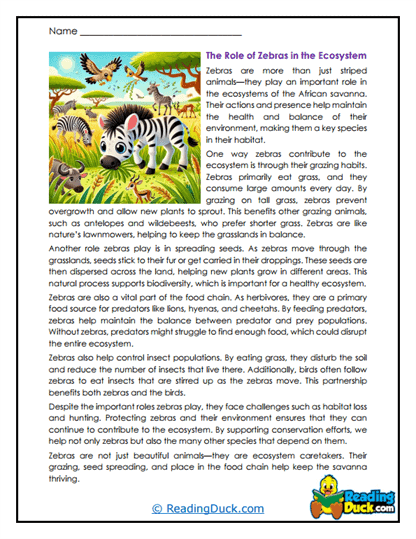
This worksheet explores how zebras shape entire ecosystems with their grazing and seed-spreading habits. Students synthesize information about biodiversity and interdependence. It builds systems thinking and ecological vocabulary. Bonus: zebra droppings fertilize the soil-turns out, stripes and sustainability go hoof-in-hoof.
Speed Masters
Students learn how zebras move-walking, trotting, galloping, and zigzagging their way past predators. The passage ties anatomy to movement and survival. It enhances sequencing, science vocabulary, and cause-effect comprehension. Fast fact: when chased, zebras often switch directions mid-run, leaving even cheetahs dizzy!
Nature Partners
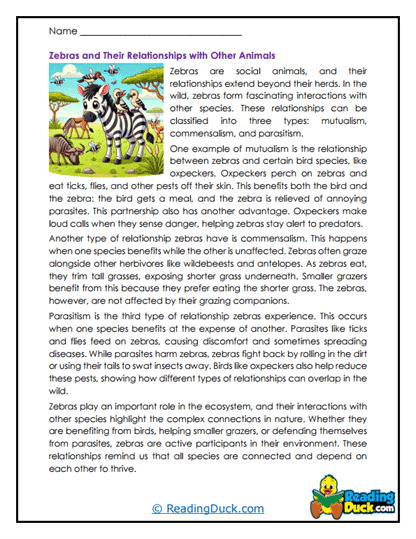
This reading uncovers zebra friendships and rivalries in nature. Students identify mutualism, commensalism, and parasitism through real examples like oxpeckers, grazers, and parasites. It strengthens classification and critical reasoning. Quirky tidbit: oxpecker birds act as zebra "tick removers" and early-warning alarms-a truly win-win spa service.
All About the Zebra
Where It Lives
Zebras roam across Africa's vast savannas, grasslands, and open woodlands. They thrive wherever grass and water meet, forming migrating herds that travel great distances. Some even survive in mountainous or desert regions by adapting their grazing habits. Wherever you find a horizon and a breeze-you'll likely find stripes.
What It Eats
Zebras are dedicated herbivores with a taste for tough grass. Their strong teeth and digestive systems are perfectly tuned for constant grazing. By trimming overgrown vegetation, they make room for new plant life to sprout. Every meal they take feeds a hundred more living things down the line.
How It Acts
Life in a zebra herd is all about communication, cooperation, and quick reflexes. They groom one another, take turns keeping watch, and stay tightly knit when predators approach. Their teamwork keeps the whole group safe and social. Think of them as a perfectly synchronized marching band-only furrier and faster.
How It Survives
Speed, stripes, and smarts are a zebra's survival trio. Their camouflage confuses predators, while herd alertness gives them early warnings. Zebras can run for miles, leap rivers, and adapt to new grazing grounds with ease. They're the ultimate athletes of the grasslands-graceful and grounded.
How It Raises Babies
Zebra mothers are protective and attentive, guiding their foals through the first perilous months. Foals walk within minutes and gallop within hours-a true sprint start to life. The herd protects the young, teaching vigilance and unity. Every stripe in the family matters.
Is It in Danger?
Yes-zebras face threats from habitat loss, hunting, and drought. Conservation programs and wildlife parks across Africa are working hard to protect them. Each protected herd helps restore ecosystem balance. When zebras thrive, so do the plains they call home.
Make sure to bookmark our website now.
Enjoy all our free reading worksheets.
Our materials adhere to the principles of the Science of Reading.