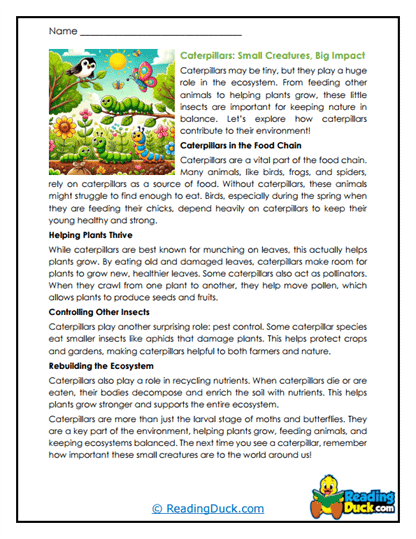
Caterpillars are the quiet artists of the natural world-slowly munching leaves, stretching their soft bodies, and preparing for one of nature's most astonishing transformations. With tiny legs, bendy bodies, and colors ranging from leaf-green to warning-bright, these crawling cuties spend their days eating, hiding, and growing until the moment they're ready for metamorphosis. They may seem simple, but inside every caterpillar is a butterfly or moth waiting to emerge.
Studying caterpillars gives students a front-row seat to life cycle science: growth, molting, chrysalis formation, and dramatic transformation. These creatures demonstrate survival strategies like camouflage, mimicry, and chemical defenses, teaching learners how even tiny animals navigate big challenges. Their relationships with plants, predators, and ecosystems reveal important lessons about interdependence in nature.
Our Caterpillar Worksheets guide students through nonfiction reading packed with science and discovery. Each passage builds comprehension skills, vocabulary, sequencing, and critical thinking, all while tapping into the wonder of metamorphosis. It's a perfect blend of literacy and biology-full of wiggles, leaves, and big surprises in small packages.
Meet the Worksheets
Leaf Wigglers
Students follow caterpillars from the moment they hatch to their final molting stage as they prepare for metamorphosis. The passage describes rapid growth, soft bodies, camouflage, and chrysalis or cocoon formation. It strengthens sequencing and vocabulary about life cycles. Fun fact: some caterpillars can grow more than 1,000 times their original size-nature's fastest eaters!
Colorful Crawlers
This worksheet spotlights the shapes, textures, and bold colors of caterpillars, from fuzzy bodies to spines and eye-spot mimics. Students learn how appearance helps with survival. It builds descriptive vocabulary and scientific observation. Wild twist: some caterpillars pretend to look like snakes to scare off hungry predators-drama with purpose.
Habitat Hiders
Readers explore the many environments where caterpillars live, from forests to gardens. The passage connects habitat needs to food availability and camouflage strategies. It strengthens environmental vocabulary and comprehension. Cool note: some caterpillars hide under leaves during the day and snack only at night-stealthy little leaf ninjas.
Leaf Lunchers
Students learn how caterpillars chow down on milkweed, parsley, leaves, and other host plants using strong jaws. The passage links diet to growth and energy for transformation. It supports cause-and-effect reasoning. Hungry truth: a single caterpillar can eat dozens of leaves before it's ready to metamorphose-snacking for science!
Daily Wiggles
This worksheet describes daily routines of crawling, eating, resting, and staying safe. Students track a typical caterpillar schedule while learning about solitary behavior and camouflage. It builds sequencing skills and vocabulary. Fun fact: caterpillars often stay still for long periods-not lazy, just digesting their enormous meals.
New Beginnings
Students explore reproduction from the adult butterfly or moth's perspective-choosing host plants, laying eggs, and beginning new life. The passage builds understanding of biological cycles and environmental needs. It strengthens comprehension of time-ordered explanations. Interesting detail: some butterflies can smell the right leaf for egg laying from several feet away!
Cycle Stages
This worksheet breaks down the four life stages: egg, larva, pupa, and adult. Students follow clear transitions and learn how metamorphosis transforms bodies. It enhances sequencing and scientific vocabulary. Fascinating fact: inside the chrysalis, a caterpillar's old tissues reorganize into wings, eyes, and antennae-nature's construction zone.
Quiet Signals
Readers discover how caterpillars communicate using leaf vibrations, chemicals, colors, and movements. The passage explains warning scents, clicking sounds, and visual signals. It strengthens interpretive reading. Fun twist: some caterpillars send "don't eat me!" messages by shaking leaves dramatically-forest theatrics at their finest.
Forest Risks
This worksheet introduces the predators and dangers caterpillars face-birds, wasps, weather, diseases, and more. Students connect threats to defense strategies like mimicry and bright warning colors. It builds analytical comprehension and survival vocabulary. Brave truth: only a small percentage of caterpillars make it to adulthood-survival takes strategy!
Eco Helpers
Students learn how caterpillars support ecosystems by feeding birds, recycling nutrients, and shaping plant growth. The passage highlights their roles in food chains and soil enrichment. It reinforces ecological thinking and vocabulary. Big lesson: even tiny leaf munchers help keep nature running smoothly.
Smooth Movers
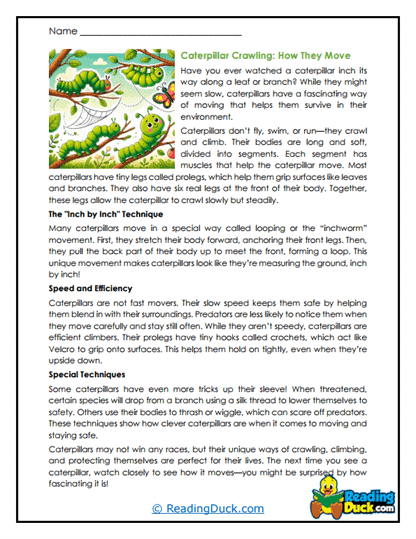
This worksheet explores caterpillar crawling styles-prolegs, gripping pads, looping inchworm movements, and upside-down travel. Students connect body structure to movement and safety. It supports descriptive comprehension and critical comparison. Cool fact: some caterpillars fling themselves off branches to escape predators-emergency exits, caterpillar-style.
Nature Partners
Students examine caterpillars' relationships with plants, ants, parasitoid wasps, flies, and more through mutualism, parasitism, and commensalism. It strengthens classification and ecological vocabulary. Amazing detail: certain caterpillars "pay" ants with sweet secretions in exchange for protection-nature's tiny teamwork contracts.
All About the Caterpillar
Where It Lives
Caterpillars live wherever plants grow-forests, gardens, meadows, orchards, and even city backyards. They seek leafy shelters with enough food and places to hide. Their colors help them blend into bark, branches, and greenery. Wherever leaves wave in the breeze, hungry caterpillars aren't far behind.
What It Eats
Caterpillars are plant-eaters with strong jaws built for chewing leaves, stems, and flowers. Each species prefers certain host plants, creating unique plant-animal relationships. Their nonstop eating fuels massive growth and metamorphosis. Every bite prepares them for the amazing transformation ahead.
How It Acts
Caterpillars spend their days eating, crawling, resting, and hiding from predators. They move slowly but deliberately, always seeking fresh leaves. Their behaviors protect them and support steady growth. Simple actions create extraordinary results later in life.
How It Survives
Caterpillars survive through camouflage, mimicry, spines, chemicals, and careful hiding. Their flexible bodies and many legs help them cling to branches and avoid danger. Frequent molting allows them to grow quickly. Every adaptation keeps them alive long enough to transform.
How It Raises Babies
Caterpillars don't raise young themselves, but they are the essential middle stage between egg and adult. Butterflies and moths choose perfect plants where eggs can hatch safely and larvae can immediately start eating. Each generation depends on the plants-and timing-chosen by the adults.
Is It in Danger?
Yes-caterpillars face threats from habitat loss, pesticides, predators, and climate shifts. Losing host plants puts entire species at risk. Conservation efforts like planting native flowers and reducing chemicals help protect them. Safeguarding caterpillars today ensures more butterflies tomorrow.
Make sure to bookmark our website now.
Enjoy all our free reading worksheets.
Our materials adhere to the principles of the Science of Reading.